

General News
Are We Entering a Fully Digital Financial Economy?

By Bidemi Oke
Every civilisation has been built on one invisible infrastructure. The Romans built roads. The Industrial Revolution built electricity. The Internet built information. The next economy may be built on something far less tangible.

Trust
That sounds counterintuitive because we have spent centuries believing that money is the foundation of every economy. It isn’t. Money has never been the foundation; it has simply been the mechanism through which trust is exchanged. Every major financial innovation, from coins and paper notes to credit cards, online banking and blockchain, has been humanity’s attempt to solve the same problem: “how do we help strangers trust one another without ever meeting?”
Seen through that lens, today’s financial revolution looks very different.

Most discussions about digital finance revolve around whether cash will disappear. We debate mobile wallets, central bank digital currencies, cryptocurrency, real-time payments and digital banking. Yet these conversations often mistake the visible change for the actual transformation.
The real shift is not that money is becoming digital. The real shift is that trust is becoming programmable. That single idea explains why the financial landscape is changing faster than many people realize.
For decades, finance has depended on institutions to create confidence. Banks verified identities, governments authenticated currencies, contracts relied on lawyers, payment networks validated transactions and every exchange involved an intermediary whose primary role was to reassure two parties that the system could be trusted.
Technology is quietly rewriting that arrangement
Today, identities can be verified digitally. Transactions can be authenticated within seconds, smart contracts can execute agreements automatically once predefined conditions are met, and artificial intelligence can detect suspicious activity before humans notice it. Increasingly, confidence is being built into the infrastructure itself rather than added afterwards.
This is why I believe we need a new way to think about the evolution of finance, not as a journey from cash to digital payments, but as “three generations of financial trust”.
The first generation was Physical Trust. Trust was tied to tangible assets like gold, paper currency, handwritten signatures and face-to-face interactions. Confidence came from what people could physically see and hold.
The second generation was Institutional Trust. As economies expanded, institutions became the guarantors of financial confidence. Banks, regulators, payment networks and financial intermediaries enabled transactions at a scale impossible through personal relationships alone. Trust shifted from physical objects to established organisations.
We are now entering the third generation: Programmable Trust.
Here, trust is embedded directly into technology. Verification happens automatically. Payments settle in real time, financial services become integrated into everyday experiences instead of existing as separate destinations. Increasingly, people interact with trusted systems rather than trusted institutions alone. That distinction is more profound than it first appears.
Many organisations still measure digital transformation by counting how many services have moved online, but digitising an existing process is not the same as redesigning how trust flows through an economy. Converting paperwork into an application does not automatically create a digital financial ecosystem.
This explains why some economies process millions of digital transactions every day yet continue to face friction, inefficiency and limited financial inclusion. The missing ingredient is rarely another payment platform. More often, it is interoperable infrastructure, trusted digital identity, consistent regulation and systems capable of working together seamlessly.
In other words, the future of finance will not be determined by who builds the fastest application. It will be determined by who builds the most trusted ecosystem.
This has significant implications for Africa. The continent has rightly earned global recognition for accelerating digital financial adoption. Yet the next opportunity extends beyond increasing transaction volumes. The greater challenge is designing financial infrastructure where payments, identity, data, compliance and commerce interact intelligently rather than operating in isolation.
That is where long-term competitive advantage will emerge. Perhaps the greatest irony of all is that the more advanced finance becomes, the less visible it will appear.
People rarely think about the internet protocols that power a video call or the cloud infrastructure supporting an online purchase. Likewise, future generations may hardly think about payment rails, settlement networks or blockchain architecture. Financial experiences will simply happen securely, instantly and almost invisibly.
History suggests that successful technologies eventually disappear from our attention not because they become less important, but because they become so reliable that we stop noticing them altogether.
So, are we entering a fully digital financial economy? Perhaps that is no longer the right question.
A more useful question is whether we are entering an economy where trust itself becomes digital infrastructure because if that is true, then the organisations shaping the future of finance are not merely moving money more efficiently.
They are redesigning how entire economies create confidence at scale and that may prove to be the most valuable innovation of all.
Bidemi Oke is the Chief Executive Officer of FlashChange, a fintech platform focused on secure digital asset exchange. He is an entrepreneur and vibrant leader, recognized for driving innovation and redefining access in the financial technology industry.



Nigeria Hydrological Service Agency (NIHSA) has warned of possible floods in parts of Adamawa, Bauchi, Edo, Imo, Enugu, Akwa Ibom, Cross River, Kaduna, Plateau, Niger, Benue, and Borno states within the next seven days.

According to information posted on NIHSA X handle, the Agency announced medium flood advisory in force for the next 7 days across Adamawa, Bauchi, and 11 other States.
“Localised inundation is forecast along the main channel; named communities below sit on the projected footprint. Stations: Saminara on the Karam river, Waya Dam Site on the Waya river, Amber on the Amber river.
“Adamawa; Lemsa, Lamurde, Numan Exposure: 147 comm. 49 schis 40 hith 6 mkts17 relig. Bauchi-Bauchi, Ningi, Shira. Exposure: 4 comm. Kaduna; Chikun, Giwa, Igabi, Jaba, Jema’a, Kachia, Kaura, Kauru, +6 more. Exposure: 1 comm.
“Borno-Gubio, Mobbar. Exposure: 680 comm. 8 schls 6 hith 5 mkts 21 relig. Edo-Akoko-Ed, EtsakoEa, EtsakoWe, Ikpoba-Okha, Orhionmw, OviaNort, OviaSo.. Exposure: 3 comm.
“Imo-Aboh-Mba, Oguta, Ohaji/Eg, Okigwe, Owerri North, Owerri West. Exposure: 3 comm. 7 more states affected and severity LGAs”.
NIHSA advised people in the affected areas to “do NOT cross flooded roads, bridges, or fast-moving water on foot or by vehicle.
“Clear drainage channels and river-mouth blockages; avoid building or living in the floodplain and move people, livestock and valuables from the floodplain to pre-identified higher ground,” NIHSA stated.
General News
First Trustees Advocates Estate Planning as an Essential Tool in Every Wealth Creation Strategy

First Trustees Limited, a subsidiary of FirstHoldCo Plc., and a leading provider of fiduciary and trusteeship services in Nigeria, is encouraging individuals, professionals, entrepreneurs, and investors to view Estate Planning not as an end-of-life exercise, but as a strategic investment tool for protecting, preserving, and transferring wealth across generations.

As more Nigerians focus on wealth creation through businesses, real estate investments, and other income-generating assets, experts are emphasizing that building wealth is only one part of the equation.
Equally important is creating structures that ensure those assets remain protected, properly managed, and seamlessly transferred to succeeding generations in accordance with the asset owner’s wishes. Importantly, Estate Planning is not solely for the wealthy, it is a prudent step for anyone with assets, dependants, or a business to protect, regardless of age, profession, or net worth.
Speaking on the importance of Estate Planning, Ereifemi Akeredolu, Managing Director/CEO, First Trustees Limited, noted that Estate Planning should be considered a core pillar of every long-term financial strategy.
“Many people focus on creating wealth but give litle thought to preserving it. Estate Planning is a wealth protection strategy that helps individuals safeguard their assets, secure their family’s future, and ensure that the value they build today continues to benefit future generations.”
Using tools such as Trusts, Wills, and advanced succession plans, individuals can build structures that support wealth preservation, business continuity, asset protection, and intergenerational wealth transfer.
For entrepreneurs and business owners, Estate Planning serves as a powerful tool for ensuring business sustainability, helping organizations remain stable and operational regardless of unforeseen circumstances.
First Trustees continues to emphasize and educate on the importance of Estate Planning as a comprehensive strategy for proactive planning. It remains one of the most important financial decisions an individual can make: it provides clarity, minimizes uncertainty, and protects assets from unnecessary erosion and disputes. It also creates financial security for loved ones, supports business succession and continuity, and facilitates long-term investment and legacy planning.
General News
Nearpays, Nigerian Fintech Becomes First African Startup to Win UN’s AI for Good Innovation Factory

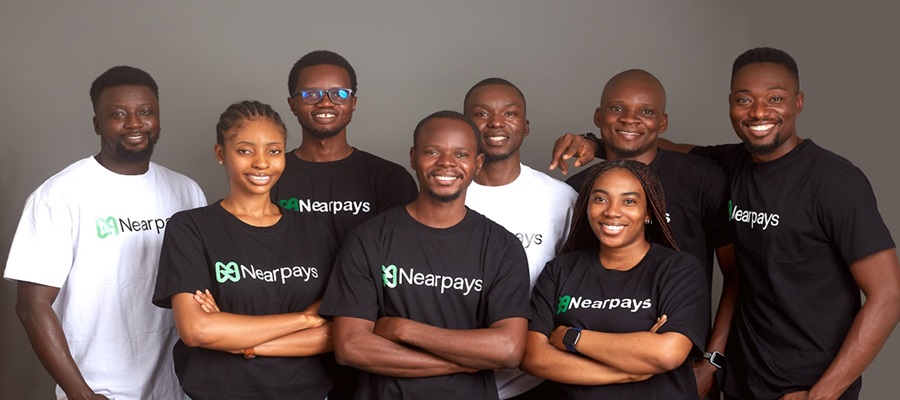
Nearpays, Nigerian fintech, has won the AI for Good Innovation Factory grand finale — the first African startup ever to take the global title in the competition, which runs as part of the United Nations’ AI for Good Global Summit.

The competition drew more than 500 startups worldwide, each pitching AI solutions aimed at social and economic challenges.
The summit itself is organised by the UN through the International Telecommunication Union (ITU) in partnership with several UN agencies, convening governments, researchers, startups, and technology companies around AI’s role in development.
Nearpays’ route to the title ran through Johannesburg, where it won the African regional competition, before advancing to the global finals in Geneva.
There, the company progressed through the semi-finals and claimed the grand finale — a first for the continent.
The company describes the win as bigger than a corporate milestone, calling it a victory for African innovation and proof that technology built to solve local problems can compete, and win, on the world stage.
Nearpays was founded to close a stubborn gap in African payments: small and medium-sized businesses that can’t afford or access traditional point-of-sale terminals.
Cost, availability, and deployment hurdles have kept many merchants — particularly in rural and underserved communities — locked out of digital payments.
Its answer is SoftPOS: an AI-powered platform that turns compatible Android smartphones into payment acceptance devices, letting merchants take contactless card payments with nothing more than their phones. AI is embedded across the platform, supporting payment processing, compliance, fraud detection, and business operations.
Crucially, the platform was built for African infrastructure realities — it works both online and offline, so merchants can keep accepting payments even without internet connectivity.
The company credited its team’s years of product development and customer engagement for the result, and thanked the UN, the ITU, and the AI for Good initiative for building a platform where innovators can apply AI to real-world problems.
It also said it hopes the win encourages more African founders to build technology that answers local needs while competing internationally.
For Nearpays, the title closes one chapter and opens another, as the company pushes on with expanding digital financial infrastructure across Afric

Next Currency Crisis May Turn $300Bn in Stablecoins into National Currencies

NIHSA Warns States of Possible Flood within Seven Days

FG to Raise N1.2 Trillion via Fresh Bond Offer – DMO

Gigbanc Nigerian Fintech Startup Closes Shop after 3 Years

Mbunabo, Nigerian Filmmaker Accuses Ghana TV Stations of Pirating Nollywood Films

NRC, Ponzi Scheme Collapses Resulting Loss of Billions of Naira

Nigeria Launches FreeTV Nationwide

NASENI Moves to Digitize CCB’s 5m Assets Declaration and Operations

Lebara Nigeria Launches Lebara Play, Africa’s First Telecom-Owned Micro-Drama Platform

CANAL+ Partners Samsung to Pre-Load DStv Stream on New Samsung TVs In Nigeria, Other African Countries




 News2 days ago
Xora Finance, Fintech Firm Refuses to Hire Nigerians over Alleged Dishonesty

 Telecom2 days ago
NCC Advances Dig Once Policy, Engages Stakeholders on Cost-Based Framework for Duct Sharing

 Telecom2 days ago
NCC to Keynote Telecom Sector Sustainability Forum 7.0

 General News2 days ago
FG Secures Fresh $208.3m World Bank Loan for Cash Transfer
 News2 days ago
How Ponzi Scheme Victims can Seek Legal Remedies — Lawyers

 News2 days ago
PalmPay Nigeria Appoints Samuel Oluyemi as Chief Operating Officer

 Telecom1 day ago
MTN Nigeria Slashes Cost of Broadband Internet Router, Unwraps New Data Bundles for Low-Budget Users

 General News2 days ago
SERAP Sues INEC over Alleged N800Bn 2027 Tinubu Campaign Fund