

E-Financial
ICSFS Ranks First in the IBS MENA Sales League in the MENA Region


ICS Financial Systems Limited (ICSFS), the global software and services provider for banks and financial institutions, is delighted to announce that it has won the first place in the IBS MENA Sales League 2014, and ranked number one amongst universal banking system providers in the Middle East and North Africa core banking market for the past four years.
The IBS Sales League Table is an annual international ranking of core banking systems sales that comprises over 30 of the leading banking system suppliers in addition to other pure conventional players.
It evaluates their strengths, weaknesses, various systems and verifies their user lists to form an unbiased picture of the merits of each supplier and its new name wins.
Robert Hazboun, managing director of ICSFS, commented: “We are very proud to be ranked by IBS Intelligence as the First Best Selling Core Banking Software Provider, MENA. ICSFS closed outstanding deals with leading banks in the MENA region over the past years. We are delivering innovative solutions, and are dedicated to continue providing distinguished financial products and services worldwide.”
Wael Malkawi, Executive Director for Business Development at ICSFS, stated: “Our top ranking in the prestigious IBS MENA Sales League Table is a great recognition of our achievements. As it is not our first time to be ranked in IBS Sales reports, we marked high positions as one of the top ten Universal banking providers in IBS Sales League Tables since 2006. Being ranked number 1 for the past 4 year proves our solid growth and demand for our great products”
The UK based IBS Intelligence is the definitive source for independent, in-depth news, research and analysis of the financial technology market.
IBS provides a comprehensive range of industry reports, guides and other resources, including IBS Journal and the annual IBS Sales League Table, as well as specialist consulting and research services and training.
ICS BANKS provides a complete suite of banking business modules with a rich sweep of functionality and features, addressing business needs and automating accounting processes, as needed, to improve a bank’s business performance.
ICS BANKS has always been a pioneer in utilizing the latest technology to serve financial institutions. In addition to its embedded Service-Oriented-Architecture (SOA), the system is deployed in a multi-tiered setup that runs on a web thin client, J2EE environment.


Nigeria Deposit Insurance Corporation (NDIC), acting as liquidator of the defunct Gulf Bank Plc., has instituted two separate actions at the Federal High Court in Lagos against Wema Bank Plc.

The combined claims amount to approximately N125,384,535,500, arising from two distinct sets of disputed high-value properties in Banana Island, Lagos, alongside an alleged improper cash transaction of N401 million.
Both suits were filed under the Failed Banks (Recovery of Debts and Financial Malpractices in Banks) Act and form part of NDIC’s long-running efforts to recover and liquidate outstanding assets of the defunct Gulf Bank nearly two decades after its collapse.
The two actions, though related, concern distinct sets of six properties each, acquired through different shell companies allegedly used by the defunct bank.
The first suit concerns six properties in Banana Island purchased in the name of Euston Wenberg Engineering Company Limited, described in the pleadings as a shell company used by Gulf Bank.
These plots situate in Zones J, K, L and P, have a combined area of approximately 13,794.145 square metres.
At the prevailing market rate of N4,500,000 per square metre, NDIC values these properties at N62,073,652,500.
The second suit concerns a separate set of six properties in Banana Island acquired through Bacad Finance and Investment Limited (later renamed Supra Commercials Limited), another entity in which the defunct bank held over 80 per cent shareholding.
These plots have a combined area of approximately 13,979.974 square metres, valued at N62,909,883,000 at the same per-square-metre rate.
In addition, the second suit claims recovery of N401,000,000 allegedly collected by Wema Bank from the NDIC’s agent bank, United Bank for Africa (UBA), in September 2009.
The Governor of the Central Bank of Nigeria revoked Gulf Bank Plc’s banking licence by notice published in the Official Gazette of the Federal Republic of Nigeria (Volume 93, Number 3, Government Notice No. 7) dated January 16, 2006, and the Federal High Court, Lagos Division, subsequently made a winding-up order on November 27, 2006, appointing NDIC as liquidator.
On the basis of those instruments, the Corporation maintains it is legally mandated to trace, recover, and liquidate all outstanding assets of the defunct bank for the benefit of depositors and creditors.
In the first suit, NDIC alleged that Gulf Bank acquired six Banana Island plots between 1998 and 2003 using Euston Wenberg Engineering Company Limited as a vehicle.
The internal records of the defunct bank reportedly treated the acquisition as a loan account, an arrangement NDIC contended shows the assets remain beneficially owned by Gulf Bank.
NDIC further alleged that Wema Bank took custody of these properties purportedly to secure an interbank deposit of N771.79 million, but that a joint CBN/NDIC special examination conducted in September 2005 found no record in Gulf Bank’s books confirming that any such deposit existed.
The examination report, dated September 30, 2005, found the defunct bank’s explanations unsatisfactory and no supporting documentation was subsequently produced.
According to NDIC, Wema Bank later presented two managers’ cheques from Access Bank and Intercontinental Bank, both dated September 2005 totaling N250 million in favour of Euston Wenberg Engineering Limited, which NDIC framed as instruments for a purchase rather than a recovery of a deposit.
NDIC contended that the purported sale at N250 million was commercially implausible, given that a single property in Banana Island at that time was worth in excess of N500 million.
In the second suit, NDIC also alleged that Gulf Bank injected N20 million into Bacad Finance and Investment Limited in 2001 to increase its share capital, and later invested a further N60 million in the company in 2003.
The defunct bank ultimately held over 80 per cent of Bacad Finance’s shares and used the entity to acquire a second set of six Banana Island plots.
The pleadings record that the defunct bank intended to develop the properties as a luxury residential estate of 72 flats, to be called Bacad Estate, in partnership with Shelter Afrique.
NDIC alleged that Wema Bank, without any valid mortgage, court order, or proprietary interest, took custody of these properties and later claimed to have sold them for N524 million by way of managers’ cheques dated 2006 and 2007.
NDIC described this claimed sale price as grossly implausible given that each property was worth over N4 billion by that period.
Separately, NDIC stated that in June 2009 it wrote to Wema Bank approving payment of N1,635,616.44 as the full outstanding deposit due to the bank as at January 16, 2006, the date Gulf Bank went into liquidation.
Notwithstanding that communication, NDIC alleged that in September 2009 Wema Bank collected N401 million from UBA, NDIC’s agent bank, without lawful justification, and that the Corporation has no record showing Wema Bank was owed any sum beyond the approved N1.635 million.
Wema Bank, through its counsel, Dr Oladapo Olanipekun (SAN), Mr Kehinde Ogunwunmiju (SAN) and Mr Tunde Afe-Babalola (SAN) have filed a preliminary objection challenging the court’s jurisdiction.
The bank relies on the Failed Banks Act, the Companies and Allied Matters Act (CAMA) 2020, the Limitation Law of Lagos State, and Sections 6(6) and 251(1) of the 1999 Constitution.
Wema Bank argued that NDIC’s claims do not arise from any loan, credit facility, guarantee or banking transaction between the parties, as required under the Failed Banks Act, and that the bank was never a customer of Gulf Bank in respect of any credit facility.
The bank further contended that the suits disclose no debtor-creditor relationship and that NDIC lacks locus standi because the disputed properties were allegedly owned by Bacad Finance and Investment Limited (now Supra Commercials Limited), a separate legal entity.
According to Wema Bank, the matter is fundamentally one of property ownership rather than banking debt recovery, placing it outside the Federal High Court’s jurisdiction under Section 251(1) of the Constitution.
The bank also argued that any cause of action, if it existed at all, arose between 2006 and 2007 and is now statute-barred under the Limitation Law of Lagos State, and accuses NDIC of abusing court process by attempting to circumvent limitation laws with a stale claim.
Wema Bank is asking the court to strike out or dismiss both suits.
The matters have been adjourned to June 25, 2026 for further proceedings.


OneWallet microfinance Bank is partnering Zenith bank and MTN to build a platform that will provide digital financial services to support the growth of Small and Medium Scale Enterprises (SMEs) businesses in Abia State.

Dr. C Darl Uzu, Chairman of OneWallet, who disclosed this while launching the platform for traders at the Ariaria International Market, Aba, Abia State said it was meant majorly for traders and the SMEs because they are the bedrock of the Nigerian economy.
According to Dr. Uzu, “We want to expand the inclusion of small businesses in digital financial services by making it easy for them to make and receive payments on affordable digital devices, hence the UnionBell Smart phones and POS.
“We want to help SMEs to access financial support and loan easily to grow their business, and also help businesses to build the history and credibility they require for future growth and expansion.”
He said OneWallet was not created just as a payment application, but as a business support platform designed around the real needs of SMEs.
Dr. Uzu said the choice of Ariaria International Market as the pilot for the platform was intentional since the market is one of the strongest symbol of enterprise in Nigeria.
“We are not here however to teach Ariaria people how to trade because Ariaria already understands business, but we are hear to support Ariaria business energy with tools that can help businesses do more, reach more customers, organize better and prepare for bigger opportunities; we are here to help Ariaria innovate and grow.”
He thanked MTN, Zenith bank and the leadership of the traders for partnering OneWallet to provide the platform that help businesses to expand.
A representative of MTN at the launch, Dr. Ernest Chieke described OneWallet as a platform for individuals and SMEs which intend to move their businesses forward.
He expressed joy that his firm was partnering OneWallet to bring solution to SMEs’ financial problems.
Carl Akwarandu who represented Zenith bank at the event said the bank decided to partner OneWallet because it has a unique product that will make small businesses grow faster.
He promised that Zenith bank would give OneWallet all the support it needs to make it number one microfinance bank in the country.
The Director of OneWallet, Dr. David Nwosu described the microfinance bank a one stop-touch for SMEs growth.
He said at OneWallet, collateral are not needed to obtain loan, but the individual’s business history.
A member of the board of the microfinance bank, Wiedong Wang, commended Dr. Uzu for establishing OneWallet.
He expressed optimism that with the help of its partners, OneWallet will excel.
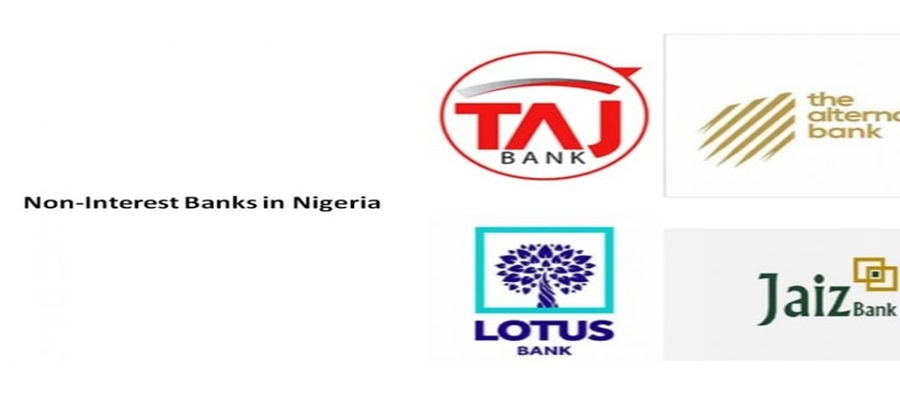
Central Bank of Nigeria (CBN) has warned non-interest financial institutions against governance and compliance risks capable of undermining public confidence and financial stability in the country’s growing Islamic finance sector.

Interest-free banks, often known as non-interest or Islamic banks, operate without charging or paying traditional interest (Riba).
The warning was contained in a press statement issued by the apex bank following the 2nd Annual Interactive Session between the CBN Financial Regulation Advisory Council of Experts and the Advisory Committees of Experts of Non-Interest Financial Institutions held at the CBN Auditorium in Abuja.
Speaking through Dr Rita Sike, director of the Financial Policy and Regulation Department, Philip Ikeazor, deputy governor, Financial System Stability, said the rapid expansion of the industry had increased exposure to operational and regulatory vulnerabilities.
The statement read, “The Deputy Governor, however, observed that as the industry grows in size, sophistication, and interconnectedness, it faces unique risks, particularly non-compliance risk, governance challenges, operational vulnerabilities, and emerging technological risks.
“He warned that such risks, if not properly managed, could undermine public confidence, financial stability, and the overall credibility of the non-interest finance ecosystem.”
According to the CBN, the engagement was part of ongoing efforts to strengthen Shariah governance, improve regulatory clarity, and reinforce risk management standards within the non-interest financial services industry.
The apex bank noted that non-interest financial institutions continued to play an increasingly important role in Nigeria’s financial system by providing ethical and Shariah-compliant alternatives to conventional banking.
It stated that the institutions were also contributing to financial inclusion, real sector financing, micro, small, and medium enterprises development, and shared prosperity.
The CBN further explained that the establishment of FRACE and the mandatory constitution of ACEs across all non-interest financial institutions were designed to institutionalise a harmonised governance framework for the sector.
According to the statement, sustained interaction between FRACE and ACEs remained critical to ensuring that regulatory expectations were properly understood and consistently implemented across the industry.
“The objectives of today’s session include fostering the institutionalisation and effective operation of a robust Shariah governance system within Non-Interest Financial Institutions, and providing a structured platform for dialogue, knowledge-sharing, and collaboration,” Ikeazor was quoted in the statement.
In his remarks, Prof Bashir Umar, deputy chairman of FRACE, said the interactive session was aimed at strengthening governance within the non-interest finance sub-sector and promoting constructive engagement between regulators and industry advisory committees.
He also commended the management of the CBN for reviving the session, which was first introduced in 2014.
Earlier in her welcome remarks, Sike reaffirmed the apex bank’s commitment to building a strong and well-governed non-interest financial services industry.
She noted that the growing diversity of products and delivery channels, particularly the emergence of Islamic fintech, had increased the need for stronger regulatory oversight and continuous engagement among industry stakeholders.
“The growing diversity of products, institutions, and delivery channels, particularly with the emergence of Islamic fintech, underscores the need for continuous dialogue, sound regulatory oversight, and robust advisory input from scholars and practitioners,” she said.
The session featured technical presentations on Shariah non-compliance risks in non-interest banks and the role of Islamic fintech in driving financial inclusion.
Participants at the event included members of FRACE, chairmen and members of various ACEs, managing directors of non-interest banks, senior CBN officials, and representatives of the Bank of Industry and the Securities and Exchange Commission.

World Bank Blocks Social Media Comments from Nigerians over Loan Backlash

Nigerians Lose N12.5bBn to Telecom-Related Financial Crimes – PwC

Jumia Nigeria Records Strong Q1 2026 Growth as Technology-Led Strategy Drives Market Expansion

Lagos Plans New Cybersecurity Centre

LG Electronics Strengthens Household Energy Efficiency in Nigeria with Advanced Inverter Refrigerator Solutions

MTN, VDT, Zoracom, Digital Realty Back 2026 Girls in ICT Campaign

Vitel Wireless Partners Fintechs to Expand Access to Services

Kaspersky Discovers Vulnerability in Qualcomm Snapdragon Chips that can Lead to Data Loss & Device Compromise

MTN Suspends Data, Airtime Borrowing Service over New FCCPC Lending Rules

Bank Customers to Pay N1,500 for ATM Card Issuance, Replacement – CBN




 Telecom2 days ago
NCC Says Telecom Industry on Course to Improve Quality of Service

 News2 days ago
Kaspersky Challenges IT Leaders with Next-generation Cyber Protection Simulations

 Telecom2 days ago
Africa to get AI Data Centres Through Three-way Partnership

 General News2 days ago
FG to Balance Innovation with National Security with Stronger Drone Regulations

 News2 days ago
FG, World Bank Launch $65m SPESSE Funding for 24,000 Nigerians

 Telecom2 days ago
Distinguished Industry Veteran Dr. Olusola Teniola to Chair NDSF 2026

 Broadcasting2 days ago
FG to Launch Nationwide Free Digital TV Platform June 17

 News1 day ago
The Nigeria Prize for Science & Innovation Records New Height as 2026 Edition Attracts 237 Entries