

/home/kenneth/web/nigeriacommunicationsweek.com.ng/public_html/wp-content/themes/zox-news/parts/post-single.php on line 153
">
Warning: Undefined array key 0 in /home/kenneth/web/nigeriacommunicationsweek.com.ng/public_html/wp-content/themes/zox-news/parts/post-single.php on line 153
Warning: Attempt to read property "cat_name" on null in /home/kenneth/web/nigeriacommunicationsweek.com.ng/public_html/wp-content/themes/zox-news/parts/post-single.php on line 153
Anco, PMG Meet to Harmonize Postal Reform

A meeting between the leadership of Association of Nigerian Courier Operators (Anco), a body representing the interest of courier operators, and the postmaster general of the federation (PMG) Alhaji Mori Baba was held in Abuja last week.
The meeting according to the president of ANCO, Mr. Toyin Olufade was to harmonize grey areas in the postal reform bill that were not acceptable to the courier body.
Toyin Olufade said the Abuja meeting was sequel to their earlier meeting held with the Courier Regulatory Department (CRD) in Lagos as a way of expressing their little reservation over some aspects of the reform bill especially in the areas of the commission’s board composition where there was no private sector nomination, while submitting that the term postal reform should be expressly stated to mean postal and courier reform.
Communications
Week
wanted to know the position of the postal commission bill which the minister of state for information and communications, Alhaji Ibrahim Nakande said in Lagos recently that the federal government would be coming out soon with its implementation, but the ANCO president responded ‘about the position of the bill, we do not know its status. The last meeting we had with the Senate was last year and in collaboration with Nigerian International Air Couriers Association (NIACA) we produced the profile of the industry with other stakeholders which we presented to concerned stakeholders and we expressed our reservations on certain aspects of the bill which we wanted addressed. In the document, we gave the history of Express business in Nigeria.’
Olufade said the delay being experienced in passing the bill may have emanated because the senate directed that those issues raised by the organizations be looked into which he said have now been trashed out and that it is expected that very soon government will come up with the legislation.


Warning: Undefined array key 0 in /home/kenneth/web/nigeriacommunicationsweek.com.ng/public_html/wp-content/themes/zox-news/parts/post-single.php on line 493
Warning: Attempt to read property "cat_ID" on null in /home/kenneth/web/nigeriacommunicationsweek.com.ng/public_html/wp-content/themes/zox-news/parts/post-single.php on line 493

Board and management of Communication Week Media Limited, publishers of Nigeria CommunicationsWeek, at the weekend announced that this year’s Africa’s Beacon of ICT Merit and Leadership lecture will focus on Impact of AI and IoT on business operational efficiency.

Africa’s Beacon of ICT Merit and Leadership lecture, widely regarded as the most prestigious annual event available in the ICT industry in Nigeria is in its 17th year.
The lecture holds on May 30, 2026 at Oriental Hotel Lekki, Lagos, according Ken Nwogbo, editor-in-chief of
Nigeria CommunicationsWeek the organizers of the event.
He said that this year’s event “is digital transformation edition” to recognise and celebrate organizations and individuals in the ICT industry that have impacted in digital transformation of the economy.
“Most of these organizations and individuals have consistently being voted by our readers as leaders in their areas of operations and we have decided to reward them in this special edition, tag: ‘Digital Transformation Edition 2026’ he said,”.
He added that, Digital transformation, driven by AI and IoT, will fundamentally boosts business operational efficiency by automating complex tasks, enabling real-time data analysis, and reducing costs.
“IoT technology optimizes resources, predict maintenance needs, and enhance decision- making, allowing companies to streamline workflows and improve productivity across sectors like manufacturing and logistics.
“It is an emerging technology that has impacted lifestyles and has changed the way we think and act, and the way we interact with each other.
It has also changed the way we work as it enables very large-scale monitoring, control, and automation, and has impacted the digital transformation of organizations in different industries”, he said.
According to him, “the transformative power of Artificial Intelligence exists as a bringing force in organizational communication. AI tools perform repetitive jobs, deliver simultaneous translations, and register team communication patterns, which lead to better understanding of group interactions. AI chatbots help manage customer support inquiries thus enabling staff members to dedicate their efforts toward complex work activities”.
The Africa’s Beacon of ICT Merit and Leadership Distinguished (ABoICT Lecture 2026) is designed to explore efforts to put Nigeria on the global Information and Communications Technologies map.
The lecture series however is reserved for distinguished achievers in the ICT sector.
Past lecturers included Dr. Ernest Ndukwe, then executive vice chairman, Nigeria Communications Commission (NCC); Uche Orji, managing director/chief executive officer, Nigeria Sovereign Investment Authority (NSIA); Biodu Omoniyi, Managing Director/CEO, VDT Communications; Ayotunde Coker, former Managing Director, Rack Centre Limited; Prof. Adewale Obadare, chief visionary officer, Digital Encode; Dr. Oluseyi Akindeinde, founder,
Hyperspace & NeuraL AI and John Obaro, CEO and founder of Systemspecs; Prof. Isa Pantanmi, former minister of Communications and Digital Economy; among others.

One a quiet Wednesday, February 22, 1956, in Ubomiri, Mbaitoli, Imo State, the family of Chief and Lolo Ebenezer Ekeh leaped for joy at the birth of Leonard Stanley Nnamdi Ekeh- their second son.

Leonard Stanley Nnamdi Ekeh
His birth was both cosmic, and disruptive as his journey down this 70 years on earth has proven.
Leonard Stanley Nnamdi Ekeh, popularly know as Leo Stan Ekeh or LSE is human by birth but profound, rare and has higher consciousness.
Imbued with deep intuition, intense creativity, and compassionate nature, Leo Stan possesses critical thinking ability.
He has relentless drive to succeed across multiple facets of life. This is a self-made construct driven by his deep spiritual and purposeful living, rather than just mere survival.
Despite the recurring and abrupt reversal of government policies, which leave companies including his hemorrhaging, Leo Stan has remained committed and actively participate in the development and nation-building of Nigeria.
Am one of the lucky people to have known him up close and personal for nearly 30 years.
He has endured lots of back biting and campaigns of calumny from competitors and even betrayals from least expected people.
But his tenacity makes him stand firm on his beliefs regardless of feelings, or circumstances.
He has stumbled in businesses, failed in some ventures; but he always get right up. At one point, he nearly lost his head selling international commodities.
LSE takes every loss with equanimity as a dogged fighter.
A serial entrepreneur and with eyes for great minds, Leo Stan does not just walk through life; he leaves a trail of light, lifting everyone around him with kindness and wisdom. And there are testimonials.
For me, he is a pillar of strength and a beacon of hope. My benefactor.
He is also a benefactor to many. He has a way of making associates feel vital, loved, and valued.
Today is his Platinum Birthday but his roads have not always been paved with gold.
His early life was as ordinary as it can be, LSE attended Holy Ghost College, Owerri for his secondary education.
During his early years, he wanted to own the biggest transport company in Nigeria.
He later went to India for his university education, where he received a Bachelor of Science degree in Economics from Punjab University.
Leo Stan believes that studying in India was a great turning point in his life because he found the economy of India a realistic economy”.
He later also earned an MSc in Risk Management from the University of Nottingham.
At 70, he attained his height by trust in God, determination and CAN DO attitude.
Today, his business opinions and advisory are welcome around the world.
Leo Stan once told me “I saw myself from the beginning even when my parents were alive as an orphan. It drives me.”
He has three brothers and two sisters, His mother was a dietitian, and his father was a nurse
“I come from a lineage of people who served God dedicatedly. I am a miracle child and I remember my mother had always predicted that I would be great. I have siblings but I live my life as if I am the only child of my parents” he said
He believes that technology makes life more exciting and helps improve the lives of people around Nigeria and indeed the world.
His solid prints in the business world is well documented. He has his hands in his hands in several businesses including ICT, e-commerce, broadcasting, oil and gas, media publishing and real estate.
Leo Stan is a man of many firsts: he pioneered a new world of digital economy at a time the country was deeply analogue both in the workplace and in schools.
The Nigerian media industry, from advertising to newspapers, owes him much gratitude for changing their operational processes and methodologies from mundane, medieval analogue to the robust and elegant digital platform.
Within 30 years, he has transformed a start-up that sprouted from a make-shift apartment that also doubled as his home into a digital conglomerate with incursions into oil and gas, entertainment and property.
Leo Stan started Zinox Technologies Limited in 2001 to manufacture computers.
He ensured that at launch Zinox Computers already had the WHQL certification, the first in sub-Saharan Africa, consolidated 5 years later with the attainment of the NIS ISO 2000: 9001 QMS Certification.
In October 2013, the company announced the production of its computer tablet line named Zipad
Task Systems, Technology Distributions Limited, Konga (Africa’s foremost truly composite e-commerce outpost combining offline-online mix in service delivery), Konga Radio, and TD Mobile, to name a few, complete the ensemble of businesses in his thriving conglomerate.
In all his companies, there is a growth pathway for every employee.
He deliberately creates a system that rewards every hardworking and dedicated employee.
From drivers sponsored to universities and returning to the conglomerate as degree holders to persons who joined the organisation as janitors working their way up the corporate ladder, he has brought his humanity to bear on people around him.
Making some lowly staff home-owners and sponsoring indigent students to universities at home and abroad comes to him as a routine.
Just a few days ago, ahead of his 70th birthday, he offered University scholarships to additional 1,000 Nigerian indigent wizkids to study Computer Science in Federal Universities. He is committing about N10 billion to the scholarship scheme.
This is so the country’s private and public sectors have a new generation of tech wizkids to support the economy’s growth.
Recall that his group has trained and retrained over 3000 Nigerians and donated tech centres to over 25 institutions nationwide just to mention a few.
The former alter boy and chorister in his local community Catholic Church at Ubomiri, now a multi-billionaire, has stayed humble.
He draws a distinct line between capitalism and welfarism.
Leo Stan is great man, a leader with unparalleled integrity and a heart of gold.
He has earned over 6o international and local awards over many years of incisive entrepreneurship, was equally singled out and honoured by former President Olusegun Obasanjo on the occasion of Nigeria’s Independence Anniversary on October 1, 2001 with an ICON OF HOPE award as a pride to modern Nigeria and as a model for Nigerian youths.
Again, President Obasanjo honoured him with another national award – the Order of the Federal Republic (OFR) in 2003.
A Fellow of the Nigeria Computer Society, the umbrella body of all computer associations in Nigeria, he was also awarded the pioneer ICT Personality of the Year by this professional body.
In November 2019, Ekeh was honoured by President Muhammadu Buhari with the National Productivity Order of Merit award for his sustained leadership in the area of Information and Communications Technology (ICT).
With over four Doctorate Degrees (Honorary) and fifteen fellowships from recognized institutions and as a former global advisor to Microsoft, as well as Forbes Best of Africa Leading Tech Icon Award his outstanding entrepreneurship.
Leo Stan is Ochiririozuo Ubomiri, Ebekuo Dike, Ideato and Iyi of Mbaitoli

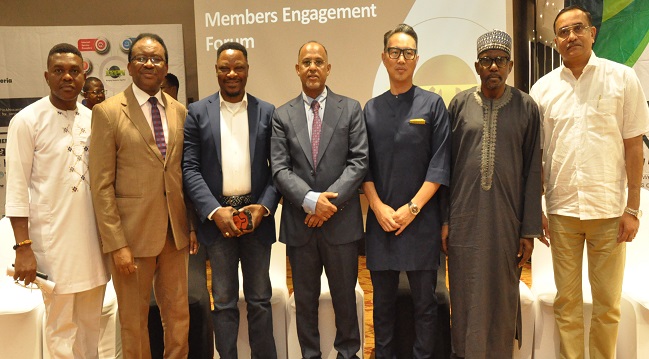
Internet Exchange Point of Nigeria is positioning as a regional Internet Exchange hub for West Africa in terms of infrastructure and traffic. Muhammed Rudman, chief executive officer, IXPN, stated this at its 2026 members engagement forum held in Lagos. He noted some of the major milestone IXPN achieved last year to include one terabit of traffic recorded in March 2025.

“At that time, we became the 63rd internet exchange point in the world. Among all the exchanges in Europe and America and in the entire world, we become the number 63 in the world. To achieve that one terabit of traffic. Again, we were able to achieve two terabits of traffic within seven, eight months of the year.
“We achieve this by ensuring that we push for members to upgrade, those that were on 1 Gig to 10 Gig, those on 10 Gig to 100 Gig. We had a strategic infrastructure upgrade across our networks, put 400 Gig enable switches, increase our fiber links to all the data centers and we onboarded 17 new members last year. All the trainings and the operational excellence ensured that our network is up and running 24/7,” he said.
Industry Impact
The impact of that one terabit traffic is data sovereignty. “We were able to domesticate. Based on the survey we conducted, 54% of our members said that they are exchanging 50% of their traffic and above locally, which is really, significant one.
“We are also setting up a benchmark for other African IXPs. I can assure you that in all the community driven internet exchange points in Africa, we are the number one. There’s a community driven internet exchange point in South Africa that was established 10 years before IXPN. There is one in Kenya that was established 6 years before IXPN, but we are way ahead of them when it comes to internet traffic.
“We are also promoting intra African connectivity. As at today, we have customers from Niger, from, Burkina Faso, trying to reach to Nigeria. Recently, we onboarded a very large company in Ivory Coast, to connect to Nigeria.
“Gradually, Nigeria is tilting towards becoming the regional hub for West Africa, where you see Internet Service Providers coming to achieve that. And in terms of the traffic, in 2015 we were at four Gigabits per second. It moves to 21 in 2017 and 52 gigabits per second.
“But by the year 2023 it has reached 540 gigabits. By 2024 we have reached 900 gigabits. But by the end of 2025 we have achieved the two terabits of traffic”.
Network Infrastructure Development
Some of the technical feet IXPN achieved includes, deployment of sFlow; which is a peer to peer traffic analysis. “We’re able to see what members are exchanging between themselves and between the data centers, not the actual content or information, but rather the volume of traffic, and also between our data centers. And based on this, we’re able to do the upgrades.
“We did a multiple link upgrades from 300 Gigabits last year from Digital Realty to Equinix. It was 300 Gig as at the end of 2024, and by 2025, we’ve increased that to 500 gigabits per second. Digital Realty to Rack Center, it was 200 Gigabits per second. We also upgraded that to 500 Gigabits per second.
Open Access Data Centre to Equinix. We’ve upgraded from 20 Gigabits per second to 200 Gigabits per second. We always monitor the ports, and based on that, we increase immediately we reach the threshold of 80%.
“We did an upgrade on the IXP manager. This allows each member to have a login portal to see the traffic they are exchanging and other details, the port as well as to do their own configuration,” he added.
Technical Project Milestones
Microsoft connected cache. “We deployed Microsoft content cache and that has been deployed in Lagos. It was 25 Gigabits per second as of 2024 by 2025 we had to upgrade the infrastructure to 75 Gigabits per second servers, that will be able to accommodate all the Microsoft updates they are doing, exports, download and among others.
“This is part of the content that Microsoft is not providing locally, but we got those servers deployed, and our intention is by next year to see how we can replicate this across the country. Last year, we also deployed the same server in Abuja so that the Abuja people and the Kano people can reach that content without coming back to Lagos.
The Google Global Cache (GGC); “We are hosting all these at IXPN. We also upgraded from 53 Gigabits per second servers in 2024 to 153 Gigabits per second. And this is a huge traffic of YouTube. And as we speak, we are also working towards upgrading those servers,” he explained.
Strategic Partnerships
“We signed an MoU last year between us and an IXP in Senegal, when we went for West African peering forum. A lot of African ISPs are looking to us to see how we can guide them and support them.
“For example, internet exchange point from Gabon, internet exchange point from Rwanda and ISPs in Africa are looking at us as a model to copy, and we tend to support them. We also had a strategic partnership with CIRA, the Canada Internet Registry Association, which is similar to Nira, the Nigerian Internet Registration Association, to have their secondary authoritative servers into Nigeria as an anycast instance. And when they are hosting that, they are hosting other top-level domains as well, like alibaba.info.org.ca, are also hosted with us.
“Since they launched last year, we have seen a traffic of over 1000 DNS responses per second. Presently, there are 13 global root servers in the world, and those 13 servers are the ones that translate your IP address into a domain name. Any website you browse, you put a domain name, it translates into an IP address and its chain of referrals, Nigeria has.ng as a country, called Top Level Domain”.
Earlier in his welcome address, Charles Nmeregini, Business Development Manager, IXPN, said that the members engagement forum is more than an annual country. “Today, we pause to celebrate the milestone, the milestone that we have reached together, the milestone that have bolstered our local traffic exchange, reduce latency and significantly lower the cost of Internet access across the nations and beyond.
“However, today is equally about the horizon. It is a strategic moment as we unveil our 2026 service road map, a forward-looking rubbing designed to deepen interconnection, enhance service delivery and unlock new value across the ecosystem. In an era defined by rapid technological shift, standing still is not an option.
“This forum will spotlight exclusive, strategic business opportunities, new avenues for growth, enhanced pairing capabilities and innovative service model tailored to give your organization a competitive edge. We are not just exchanging data, we are exchanging ideas that will drive the next wave of Nigeria digital economy,” he added.

ABoICT Lecture 2026 to Focus on Impact of AI, IoT on Business Operational Efficiency

Leo Stan @ 70: Blessed and Bruised by Country, Eyes Next Disruption

IXPN Positions as the Regional Internet Exchange Hub for West Africa

Pheelz Shares His Journey on Glo-Sponsored African Voices

AI-Driven Memory Chip Fuels Global Phone Price Surge
Nigeria’s 9 Top FinTech Firms Valued at $10.6Bn in January 2026

Firm Detected a Fivefold Surge in QR Code Phishing Attacks in the Second Half of 2025

Kaspersky Launches OT Calculator to Align Cybersecurity Investments with Business Goals

CBN Upgrades Licences of Opay, Moniepoint, Kuda, Palmpay, Paga to National Status

NITDA, NBC Explore Strategic Collaboration on Digital Transformation, Media Regulation




 Telecom2 days ago
Banks, Telcos Settle Four-Year Dispute over N300Bn USSD Debt

 General News1 day ago
How JustMarkets Is Empowering African Traders with Global Market Access

 E-Financial2 days ago
ACAMB Educates Content Creator to Curb Misinformation on Bank Recapitalisation

 General News2 days ago
PalmPay Unveils First Batch of Winners in #LoveWithPalmPay Campaign

 Telecom1 day ago
Group Condemns Gabon’s Social Media Shutdown Amid Protests

 E-Financial2 days ago
FirstCap MD says Payment Security Remains Biggest Barrier to Bankable Gas and Power Projects

 E-Business1 day ago
Mutual Benefits Assurance Settles ₦5.9bn Claims in January 2026

 General News2 days ago
Court Freezes MCSN Copyright Levies amid Record Label Legal Battle