

E-Business
#DemoAfrica2014, ‘Africa Getting Its Act Together’-Johnson


The DEMO Africa event finally kicked off at the Lagos Oriental Hotel in Nigeria to an expectant audience of top investors, IT buyers, IT consumers, Government officials and IT enthusiasts from across Africa.
Speaking at the opening ceremony, Dr. Mrs. Omobola Johnson, minister of Communication Technology, said the combination of an ‘Africa Rising’ and one that still has to overcome challenges represents a significant opportunity for African start-ups especially those in the tech sector.
Johnson while reflecting on Africa of past and present recalled that, “On May 13th2000, The Economist, an international current affairs magazine, had on its cover page a silhouette of the African continent, within it was the image of an armed guerrilla fighter; its caption read: ‘The Hopeless Continent’.
“Within the pages of that edition, the prognosis on Africa encapsulated the prevailing beliefs held not only by the majority of those living outside its borders, but also by those that considered themselves ‘trapped’ within it. Africa –a starving, poor, disease ridden, fractured, war-torn, corrupt, dying mass of humanity … described by former UK Prime Minister, Tony Blair, as a “scar on the conscience of the world” .
“Fast forward a decade; December 3rd 2011, the cover page of The Economist bears the image of a boy running across a savannah landscape at sunrise, flying a rainbow coloured kite shaped in the image of the African continent. The caption reads: ‘Africa Rising’. Within its pages the magazine paints a scenario of dynamism, resilient entrepreneurial activity, fledging… yet growing economies, nascent… yet stabilising democracies, a population getting healthier and more educated, an expanding middle class signifying a potential to even out the distribution of wealth.
“An Africa, that is ‘getting its act together’. 54 countries of different ethnicity, culture , language and different levels of development, home to 1.1bn people, the second fastest growing regional economy (second to Asia) and home to more than half of the world’s fastest growing economies”.
She however, noted that in spite the efforts, Africa still has its challenges, which IBM has encapsulated and coined as Africa’s Grand Challenges which include education, access to water, energy, healthcare, financial inclusion, public safety and transport and agriculture.
The Minister said: “The combination of an Africa Rising and one that still has to overcome challenges represents a significant opportunity for African start-ups especially those in the tech sector.
“Mobile subscriptions in sub-Saharan Africa are forecasted to exceed 635 million by the end of this year (2014) and predicted to rise to around 930 million by the end of 2019.
The increase in the number of mobile subscribers has fuelled increases in mobile internet use in Africa and we are considered to be at the cusp of a mobile internet revolution. Predictions are that mobile internet use in Africa will increase twenty fold in the next five years … this is double the estimated growth rate in the rest of the world. Lower priced devices (in particular smartphones and tablets), increase investment in network infrastructure, and increase availability of spectrum for mobile broadband, are among the factors that will drive this growth.
“One report that highlights this potential predicts that the Internet can contribute up to 300 billion United States dollars to Africa’s GDP by 2025; and this is from an estimated 18 billion in 2013 .
“This translates directly to opportunities to generate income, to create wealth, to create jobs, new business opportunities, economic expansion etc. … the very opportunities African governments are looking for and need to transform their economies and the economic lives of their populations”.
Over the next two days, the Continent will witness 40 African start-ups pitch their solutions to these great opportunities and challenges with a hope to secure funding and support to take their ideas and innovations to the next level.
She added that the Nigerian government has done and will continue to do her bit to support the software development industry.
The DEMO Africa event finally kicked off at the Lagos Oriental Hotel in Nigeria to an expectant audience of top investors, IT buyers, IT consumers, Government officials and IT enthusiasts from across Africa.
Also speaking, Harry Hare, executive producer of DEMO Africa commended the participants for showing such great enthusiasm towards finding the much needed solutions for Africa.
“It is inspiring to see that, now, more attention is being accorded the pursuit of solutions to problems that are uniquely African. The continent has one of the most diverse and talented pool of young people and finally, we are seeing a real intent by authorities to utilize the massive power within these brains to bring positive change, especially through technology.”
The DEMO Africa forum has seen serious minds put together through various organized forums including the LIONS@frica Summit and the Pan African Angel Investors forum held yesterday.
Ben White, VC4Africa’s CEO and Founder, added: “Going into the third year of DEMO Africa, we are excited to introduce a new exclusive investor-only event as part of the DEMO Africa 2014 event. This is the next step in making sure the leading innovators from across the continent are going to get the backing they need to achieve scale. At the same time, we see angel networks emerging across the continent. Now is the time to bring them together in a shared conversation about how best to move forward.”
This year’s event has been organized in collaboration with the LIONS@FRICA partners such as Microsoft, Nokia, US State Department, DEMO, USAID, African Development Bank, VC4Africa among others) and Nigeria’s Federal Ministry of Information and Communication Technologies and sponsored by Nigeria Information and Technology Development Agency (NIITDA), Software Giant Microsoft, USADF, Department of State, Evernote, SWELL, Airtel, Bank of Industry, Nigeria Interbank Settlement System, Accenture, MTN, Oasis Management Company, Tony Elumelu Foundation and Main One.


Nigeria’s data protection industry has grown into a N16.3 billion ecosystem within three years of formal regulation, according to the Nigeria Data Protection Commission (NDPC).

Olufemi Ibitayo, head of Finance Management and Control, NDPC, announced the milestone at the Regional Data Governance Exchange in Nairobi, Kenya, where he represented Dr Vincent Olatunji, national commissioner and chief executive officer, NDPC.
Presenting Nigeria’s progress, Ibitayo said the country’s strong regulatory framework and the establishment of an independent data protection authority have strengthened confidence in the digital economy and enhanced Nigeria’s reputation as a destination for foreign investment.
The Regional Data Governance Exchange, organised by the Data Governance in Africa Initiative and hosted by the Office of the Data Protection Commissioner in Nairobi, brought together African data protection authorities to strengthen institutional capacity, deepen collaboration and promote peer learning on data governance. Photo: NDPC
He said the Commission’s “Compliance First, Not Punishment” approach encourages organisations to meet their obligations through dialogue and voluntary compliance, while ensuring effective regulatory oversight.
Ibitayo added that the NDPC is developing regulatory technology solutions, a regulatory sandbox and a data privacy innovation laboratory to further strengthen Nigeria’s data governance ecosystem and support future growth.
United Nations Commission on International Trade Law (UNCITRAL)
The ongoing UNCITRAL session has brought together delegates from Nigeria, Australia, China, Ghana, France, the United States and other member states to develop harmonised legal frameworks aimed at facilitating secure, trusted and efficient cross-border digital commerce. Photo: NDPC
Meanwhile, Olatunji reaffirmed Nigeria’s commitment to global data governance during a meeting with Nigeria’s Permanent Representative to the United Nations, Ambassador Jimoh Ibrahim.
He made the remark on the sidelines of the ongoing United Nations Commission on International Trade Law (UNCITRAL), where Nigeria is participating alongside delegates from several member states to advance harmonised legal frameworks for secure and trusted cross-border digital commerce.
The NDPC boss highlighted the Commission’s achievements since its establishment, noting that strategic institutional reforms have positioned Nigeria as a leading voice in the global data protection ecosystem.
He said the country’s data protection framework has continued to earn international recognition, adding that the Commission remains committed to promoting trusted data governance as a driver of digital transformation, economic growth, innovation and sustainable development in line with the Renewed Hope Agenda of President Bola Ahmed Tinubu.
During the meeting, Ambassador Ibrahim commended the Commission’s progress since the enactment of the Nigeria Data Protection Act 2023 and called for the establishment of a comprehensive national data bank to support evidence-based policymaking, research and national development.
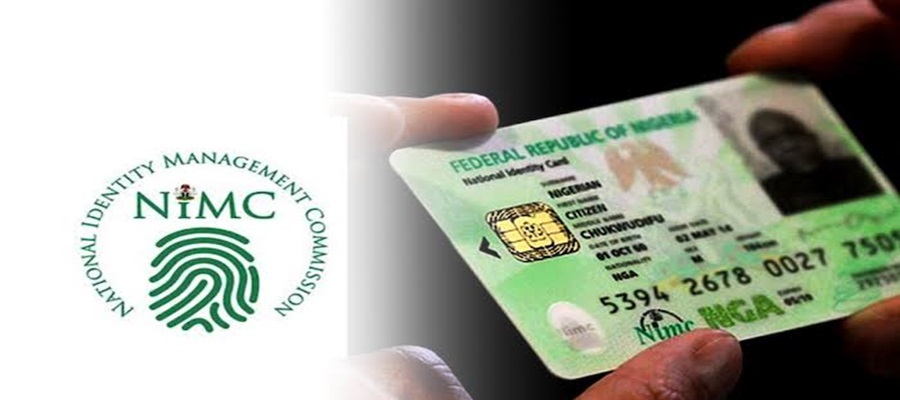
National Identity Management Commission (NIMC) has said thet more than 136 million Nigerians and legal residents have been enrolled in the National Identity Database (NIDB).

In a statement on Tuesday, Kayode Adegoke, head of corporate communications, NIMC, said Abisoye Coker-Odusote, chief executive officer (CEO) of the commission, announced the milestone during a courtesy visit to the ministry of budget and economic planning.
In April 2025, NIMC said over 117.36 million Nigerians had been enrolled as of February 28, 2025.
The visit was part of the commission’s ongoing stakeholder engagements with ministries, departments and agencies (MDAs) on the implementation of the NIMC Act 2026.
Presenting the new Act, Coker-Odusote said the legislation repeals and replaces the 2007 NIMC Act, modernising Nigeria’s digital identity ecosystem by positioning the national identification number (NIN) as the country’s foundational identity under the “one person, one identity” policy.
She said the law also establishes NIMC as the root certificate authority for the national digital infrastructure and introduces stronger data protection and cybersecurity measures, as well as digital credentials.
“The Federal Government remains committed to enrolling and issuing NINs to all Nigerians and legal residents within the shortest possible time,” Coker-Odusote said.
She added that NIMC is ready to collaborate with the ministry of budget and economic planning to leverage the NIN for economic planning and national development initiatives.
Speaking during the visit, Abubakar Atiku Bagudu, the minister of budget and economic planning, reaffirmed the federal government’s commitment to the implementation of the NIMC Act 2026.
Bagudu described the legislation as “a transformative milestone” that would strengthen Nigeria’s digital identity ecosystem and accelerate national planning and development.
He commended the NIMC director-general and the commission’s leadership for their efforts in securing the passage of the legislation, noting that it provides “a solid legal foundation for a trusted, secure, and inclusive national identity management system”.
The minister, however, said the true measure of the Act’s success would lie in its implementation and the benefits it delivers to Nigerians.
“The true measure of the Act’s success will lie in its effective implementation and the tangible benefits delivered to citizens,” he said.
Bagudu also called for stronger collaboration across the federal, state and local governments to build public confidence in the national identity system and eliminate the duplication of identity databases across government institutions.
He said the NIN should serve as Nigeria’s single, universally accepted identity standard, supporting efficient service delivery and good governance.
On June 26, President Bola Tinubu signed the NIMC Act 2026 into law, repealing the commission’s 2007 establishing Act.
At the time, Olubunmi Tunji-Ojo, minister of interior, said the legislation would strengthen Nigeria’s legal framework for digital identity management, cybersecurity and secure digital authentication, while reinforcing the NIN as the country’s foundational identity credential under the “one person, one identity” principle.

Plateau State Public Complaints Commission (PCC), an agency of the state established to investigate complaints of abuse of office, administrative injustice and other forms of official misconduct is allegedly collecting personal information from members of the public through its website with no privacy policy.

According to investigation by Foundation for Investigative Journalism (FIJ), PCC is falling short of a key transparency requirement under Nigeria’s data protection laws.
FIJ found on Tuesday that PCC collects personal information from members of the public through its website despite providing no privacy policy explaining how that information is collected, processed, stored or protected.
The commission serves as the state’s ombudsman, receiving complaints free of charge against public institutions and private organisations on issues including wrongful dismissal, victimisation and administrative negligence.
Yet, while its online complaint portal requests personal information such as names, phone numbers, email addresses, subject lines and complaint details, visitors are given no privacy notice explaining what becomes of that information after it is submitted.
The omission means visitors are not told why their information is being collected, how long it will be retained, the legal basis for processing it or the rights available to them as data subjects.
WHAT IS THE POSITION OF THE LAW?
The guidelines issued by the National Information Technology Development Agency (NITDA) are explicit: every government website is required to have a privacy policy.
Section 10.4 (i, ii) of the NITDA guidelines mandates all government websites to exercise diligence when collecting personal details or information about visitors on their websites.
The requirement is intended to ensure transparency and accountability in the handling of personal information, allowing visitors to understand why their data is collected, how it will be used and the safeguards in place to protect it.
Similarly, the Nigeria Data Protection Act (NDPA) 2023 requires data controllers to provide privacy notices to individuals before, or at the point of, collecting their personal information.
Such notices are expected to disclose, among other things, the purpose for collecting the data, the legal basis for processing it, the period for which it will be retained and the rights available to data subjects.
Section 27 of the NDPA states:
(1) Before a data controller collects personal data directly from a data subject, the data controller shall inform the data subject of the – (a) identity, residence or place of business of, and means of communication with the data controller and its representatives, where necessary;
(b) specific lawful basis of processing under section 25(1) or 30(1) of this Act, and the purposes of the processing for which the personal data are intended;
(c) recipients or categories of recipients of the personal data, if any;
(d) existence of the rights of the data subject under Part VI;
(e) retention period for the personal data;
(f) right to lodge a complaint with the Commission in accordance with section 46 (1) of this Act; and
(g) existence of automated decision-making, including profiling, the significance and envisaged consequences of such processing for the data subject, and the right to object to and challenge such processing.
Without a privacy policy, visitors have no way of knowing the commission’s data-handling practices or the safeguards, if any, in place to protect the personal information they submit through the website.
At press time, the Plateau State Public Complaints Commission’s website had no privacy policy.

CAC to Sanction Companies with Incomplete Business Letters From August 1

BVN Enrollments Hit 69.55m- NIBSS

CBN Warns against Rejection of N100 Banknotes

Data Protection Industry Hits N16.3Bn in 3 Years- NDPC

NCC Seeks Cost-Based Pricing Framework for Ducts

NASENI Moves to Digitize CCB’s 5m Assets Declaration and Operations

Mobile Internet Gender Gap Widest in Africa – GSMA

Nigeria Launches FreeTV Nationwide

CANAL+ Partners Samsung to Pre-Load DStv Stream on New Samsung TVs In Nigeria, Other African Countries

CredibleVoteNG Opens Free Access to all Polling Units in Nigeria after INEC Demanded N1.Bn for Register




 News1 day ago
NRC, Ponzi Scheme Collapses Resulting Loss of Billions of Naira

 General News2 days ago
IHS Nigeria, FCT-HSES Concludes Clean Cooking Energy Campaign “Project Breathe Clean Air” in Abuja

 E-Business2 days ago
Kaspersky Transforms Threat Intelligence Reporting into an Interactive Content Hub

 News2 days ago
Microsoft to Lay Off 4,800 Workers

 Broadcasting2 days ago
NELFUND Investigates 34 Universities Over Students’ Missing Tuition Refunds

 Telecom2 days ago
Airtel Africa Cuts Diesel Dependence by 9.1m Litres

 Telecom2 days ago
A New Blueprint – How Strategic Collaboration is Rewriting the Narrative on Youth Drug Abuse

 News2 days ago
Access Bank, Fifth Chukker and UNICEF Renew Commitment to Expanding Educational Opportunities for Nigeria’s Most Vulnerable Children