

General News
Identity Card Scheme Helps in National Planning– Bickersteth

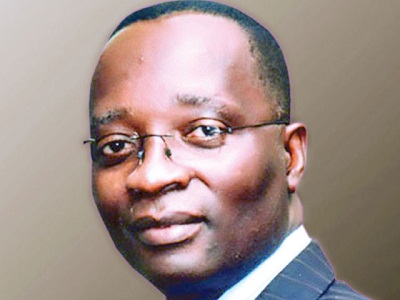
Adesola Bickersteth is the general manager Chams City , a world-class ICT company.
Bickersteth is a seasoned Internet specialist who has distinguished himself professionally in the ICT industry with bias in e-Commerce arena over the past eleven years.
The graduate of Electronics and Electrical Engineering has worked on major international and local projects before joining Chams. He spoke to chike onwuegbuchi and funmi ilesanmi.
Agreement Signed with National Identity Card Scheme
I am sure you will agree with me that in Nigeria, it is so difficult for us to have an accurate number on population.
In order for us to have the actual number on how many people who are truly Nigerians living in Nigeria or abroad; we need to capture that data moving from one local government to state government and of course looking at it from the federal level. In order for us to have the actual number, we need to have an identity. As responsible Nigerians, we owe it to ourselves to carry a national identity card. This will go a long way in avoiding foreigners who claim to be Nigerians defrauding us. It is mandatory for the federal government to ensure that each Nigerian carries a national identity card that we can use to our benefit. This is how the government can plan effectively in terms of providing health services. You know how many people live in a particular local government, you know how much fund to make available to them for the provision of basic amenities, without data it is impossible to plan effectively and that is why we have shortcomings. It is a wonderful thing we are doing and we are grateful to the government for giving us an opportunity to do something that will benefit all Nigerians.
Relevance of National Identity Card
Yes, the national ID card is relevant. The goal here is to synchronize it into a card that will have a multipurpose effect. It is going to be the same for all Nigerians regardless of region.
Capacity to Handle the Contract
I can assure you that our leaders in government did not award us the contract with their eyes closed. They were referred to us when they traveled abroad to source for the machinery to get this done. They were referred to Chams on the ground that we have what they were looking for. The government took the right and appropriate steps to ensure that we have the machinery and capacity to deliver. This was thoroughly investigated before we were awarded the contract.
Benefits of LASG Biometric Card
There are a lot of benefits to it and I am so happy that we have a wonderful governor in the person of Fashola. I guess intelligence is playing out here. He knows the relevance and importance of this and that is why his administration is revenue generation driven by way of us paying our taxes and levies because by doing that you are socially responsible to the community you live in. This is where money is generated from to provide the immediate infrastructure we need. Without data, planning will be done with the eyes closed and this is where we have missed it in time past and I am happy that Chams as a company and Chams City as a business unit are contributing to the success of capturing the data of all Lagosians. We are not restricted to Lagos alone; most states are catching up because they have seen the value in doing this. If I knew that instead of doing a guess work, we have 10 million people living in Lagos, that way we will be able to plan better. We cannot continue to demand and not give back to the state. Our own way of helping is to capture the biometrics of all Lagosians so that the government would have the information to plan adequately. We cannot continue to chase shadows. For example, in Canada, it is mandatory within 10 days to provide your new address to the ministry for them to know that this individual has moved to another neighbourhood so that when allocations are made, they know who gets more and who gets less. It is a crucial information and we have been getting positive responses.
Proof of Biometrics Registration
By capturing that data, it would be very relevant not just to Lagos State but to all states in Nigeria. The information would be stored here and we are going to have backups and everyone would definitely carry a card.
Offering Competitive Training
We believe strongly in giving back to the society. Aside that, in everything we do, we put our trust in God because what we do is highly sensitive. You need the fear of God to be consistent and effective in delivering. We did our feasibility study and we know how much the cheapest IT training costs. Instead of going out there to pay N10,500 for the cheapest IT training, we charge N5,000 for any e-learning course. The only requirement for anyone to use our facility is to be registered and enrolled by way of biometrics because you are coming into an environment where we have secured information; therefore, we need to capture who you are and store it. You will be required for the first time to pay N4,500 for one month access depending on your course duration. In comparism to how much is paid outside, it is very cheap. At the moment we have 850 professional courses that we offer online at the convenience of your home. If you want to come into our facility, you can be rest assured of electricity 24/7. We provide an environment conducive for people to learn and at an affordable rate. We live in the real world so we know what it takes.
Outsourcing IVR to Telcos
We do not outsource to telcos, it is an in-house thing. We have different packages that would be affordable to all, no matter how small the business is. Instead of employing physical bodies which would be more expensive, the smallest business owner can afford to have an IVR service. We reach out to a lot of people. We have different options in our call centres, companies can either bring in bodies or train them but we provide them seats. A seat costs N90,000 per month or if you want to supply the individual and everything else that comes with it, it is N150,000 a month. There would be no more excuses why people cannot reach you or if you want certain information relayed to your customers consistently, we would show you what the price structure would look like. It would be of huge benefit to Nigerians in terms of general information about any key place in Nigeria. You do not have to rely on anyone to tell you where to go in case you need something. We have been deprived of access to information for so long. You can get the information whenever you need it because information is power.
Guinness World of Records Awards
The award means a lot. We are the largest digital mall in the whole world. The closest to us is in New York with 670 Pcs in one location. We have 1,000 Pcs in this location, 1,000 at our Abuja location and in the next six months we would have a larger structure than this in McCarthy at Onikan in Lagos. In about a month’s time, we would have another location in Abuja and the plan for 2010 is to have additional seven locations across Nigeria. Hopefully, in the next three years, we would be present in all key states in Nigeria because we are universal. What the award has done for us is to ensure that we always put the right foot forward and we are always thinking ahead. That is why as part of our slogan, innovation in the future tense, that is continuous innovation. It is about trust in God, hardwork, dedication, creativity, the total package is endless.
Expansion Policy
It is the law of demand and supply. We have seen the need in Lagos and Abuja. We are working very hard to come up with structures in Benin, Enugu, Port Harcourt, Ibadan and Kano. It might not be as big as what we have in Lagos but it is definitely coming. We do not want to take on too many projects all at the same time. We refocus our energy because we have seen the demand for it. A lot of money is involved in the project and we are being proactive in the steps we are taking but you can be rest assured that Nigerians will feel us all over the country.
Use of Biometrics to Solve Fraud Problems
Biometrics is all about capturing fingerprints and no two people have the same DNA. It is unique to each individual unless someone cuts off someone else’s thumb and puts it there. Before they could even achieve that, I am sure the bank must have been notified. For extra protection of our individual identity in banks, biometrics is the answer.
Level of Discussion with Banks
I do know that banks have come up with a chip and pin card which is a better technology that can be effectively managed to prevent fraud. Already, banks are taking steps but ours would be an added value. We are doing everything we can to support the banks and we are indirectly supporting Nigerians to ensure we are secured from ATM fraud. We have a responsibility as individuals to ensure that our pin is not written anywhere but in our brain. We owe it to ourselves to be security conscious.
Services Offered by Chams
Chams City is a growing nationwide network of world class digital facilities that can be used by government agencies, institutions, organizations and service providers as well as individuals to enhance their operations, business activities and electronic transactions. Also, Chams City has the world record for the largest number of Pcs in one digital facility and has been certified by the Guinness Book of World Records. Chams City offers 1,000 fully network Pcs in a location that enables processing and activation of a wide range of transactions simultaneously. Until Chams City, the world’s largest digital mall in New York offered not more than 670 Pcs.
In terms of facility users, agencies become merchants on our platform and use our facilities to conduct their businesses, they go out there, source for the business, come in here and we provide the facilities not the service. A lot of people make the mistake of referring to Chams as a service provider but we do not provide service because we do not want to compete with our clients.
We also have training rooms, call centre with IVR (Interactive Voice Response) capability, test centres, virtual offices and conference rooms. We have different rooms, different centres within the facility itself for business owners and individuals to come in and conduct their businesses.
We provide unrivalled high level platform for the execution of writing computer based examinations. We have over a thousand fully network large screen computers where prospective employers can test and streamline large number of applications.



Federal government has launched Credit for Laptops, Internet, Connectivity and Knowledge Digital Devices (C.L.I.C.K.D.), a new consumer credit initiative, to provide affordable financing for locally assembled laptops and other digital devices.

L-R: Mr Uzoma Nwagba, managing director and chief executive officer, CREDICORP, and Dr Bosun Tijani, minister of Communications, Innovation and Digital Economy, at the launch
The initiative by the Nigerian Consumer Credit Corporation (CREDICORP) and the Federal Ministry of Communications, Innovation and Digital Economy, is aimed at equipping Nigerians with the tools needed to participate in the country’s growing digital economy.
During the launch, Dr Bosun Tijani, minister of Communications, Innovation and Digital Economy, described access to credit as critical to improving productivity and driving economic growth.
Dr Tijani said no nation could achieve sustainable development without a strong credit system that enables individuals and businesses to access resources needed to become more productive.
He noted that in today’s digital age, technology has become indispensable for education, innovation and wealth creation.
The minister explained that many talented young Nigerians possess the skills required to succeed in the digital economy but remain constrained by their inability to own computers and other digital tools.

Drawing from his personal experience, Dr Tijani recalled how his first laptop as a student in the university opened doors to international opportunities and eventually inspired him to establish one of Nigeria’s pioneering technology hubs.
He said the new programme would ensure that more young Nigerians are not denied similar opportunities because of financial barriers.
According to him, the initiative aligns with President Bola Tinubu’s vision of building a one-trillion-dollar economy by expanding access to technology, boosting productivity and supporting local manufacturing.
Mr Uzoma Nwagba, managing director and chief executive officer, CREDICORP, described the programme as a strategic investment in Nigeria’s future workforce and digital transformation.
Mr Nwagba said that while improvements in internet connectivity and digital skills training have positioned Nigeria for the Fourth Industrial Revolution, access to devices remains a major challenge preventing many young people from fully participating in the digital economy.
He explained that C.L.I.C.K.D. would bridge that gap by providing affordable consumer credit that enables beneficiaries to acquire laptops and other internet-enabled devices while they develop in-demand digital skills
Federal government has launched a N482.4 million investment fund to support 12 tech-enabled Nigerian startups.

The initiative under the federal government of Nigeria’s Investment in Digital and Creative Enterprises (iDICE) Programme was implemented by the Bank of Industry (BoI).
The initiative in a statement said applications have been opened for Growth Lab, a 12-week acceleration programme that will select the 12 tech-enabled Nigerian startups, from the six geopolitical zones, for intensive growth support, investment readiness training, and access to up to $350,000 in funding.
According to Ife Adebayo, national coordinator of the Programme, growth lab was designed to support startups that have achieved early traction and are seeking the expertise, networks, and investment required to scale following the implementation of Founders Lab.
“Growth Lab is the Startup Bridge accelerator programme, designed for startups that have developed an MVP and require structured support to scale. The programme focuses on strengthening venture fundamentals and preparing companies for external investment.
“The programme targets startup founders who are seeking the support, networks, expertise, and investment readiness required to accelerate growth and strengthen their position within the Nigerian innovation ecosystem,” he said.
He added that selected founders will gain access to structured growth support, investment readiness preparation, access to industry experts, market expansion pathways, a $100,000 cash investment (or Naira equivalent) for 7.5% equity upon entering the programme (terms and conditions apply), and up to $250,000 in potential follow-on investment should certain growth conditions be met.
“Eligible startups must be at the post-MVP stage, demonstrate evidence of market validation through users, customers, pilots, partnerships, waitlists or any other demand signals, and be willing to participate fully in the hybrid programme,” he said.
The programme will run as an intensive 12-week hybrid experience, including virtual engagements and two physical weeks in Lagos focused on collaboration, learning, and business growth.
The statement said applications opened on July 15, 2026, and will close on August 19, 2026.
According to him, female founders are strongly encouraged to apply. Selection will be conducted through a clearly defined, merit-based evaluation process aligned with published criteria.
iDICE is a $618 million federal government initiative backed by international lenders to boost the technology and creative sectors.
It provides young entrepreneurs with business skills training, mentorship, and access to capital through funds and accelerator programs like the iDICE Startup Bridge.

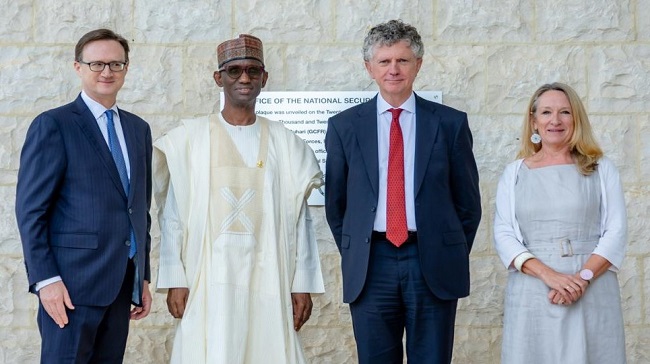
Nigeria and The United Kingdom held the fourth Security and Defence Partnership (SDP) Dialogue at the Office of the National Security Adviser (ONSA) in Abuja, recently. The dialogue, an important pillar of the bilateral Strategic Partnership, was opened by the National Security Adviser to the Federal Government of Nigeria, Nuhu Ribadu, and the United Kingdom’s National Security Adviser, Jonathan Powell.

Building on the third dialogue hosted in London in July 2025, the fourth SDP dialogue included inter alia, regional and domestic security challenges, human rights and non-kinetic solutions, defence staff talks, cyber and hybrid threats, as well as cross-government discussions on strategic trends, counter terrorism, fraud and illicit finance. Senior representatives from across the Governments of Nigeria and the United Kingdom participated, reflecting the breadth and extent of the partnership.
Nigeria and the United Kingdom agreed to deepen cooperation based on mutual accountability and delivery of commitments while working in a spirit of partnership.
Defence co-operation
The United Kingdom and Nigeria’s defence partnership continues to strengthen in the support of peace and stability in the region. Following on from the successes of previous SDP dialogues, the United Kingdom renewed its long-term commitment to Nigeria’s Armed Forces, including through efforts to counter the threat from Uncrewed Air Systems (UAS) and Improvised Explosive Devices (IED), via joint doctrine, training, technical advice and lessons learning, as well as exploring the development of Special Operations Forces.
The United Kingdom reaffirmed its support for Nigeria’s Joint Doctrine and Warfare Centre, and for strengthening Nigeria’s Maritime Domain Awareness capability. Both parties recognised the success of the hydrography partnership. The United Kingdom committed to continue supporting the National Hydrographic Agency to enhance autonomy and regional influence.
Both governments underscored their shared commitment to deepening cooperation on maritime security in the Gulf of Guinea. Recognising the critical importance of regional stability and secure trade routes, both governments committed to aligning efforts to combat illicit maritime activities, and transnational threats. Nigeria and the United Kingdom also agreed to explore opportunities to strengthen their defence trade relationship.
Countering hybrid threats
Nigeria and the United Kingdom reaffirmed their cooperation on countering hybrid threats, including cyber security and Foreign Information Manipulation and Interference (FIMI). Both sides welcomed progress under the existing Cyber Memorandum of Understanding [2024 to 2027] and agreed to further collaboration on threat intelligence sharing and a new phase of targeted programme partnership.
In this context, the United Kingdom and Nigeria recognised the challenged posed to open societies by hybrid threat actors and our shared assessment. Both countries committed to advancing a new structured framework for cooperation on countering hybrid threats.
This will include the advancement of concrete cyber resilience initiatives, a formalised intelligence-sharing mechanism, robust joint capability-building programmes, and cooperation on counter-hybrid threat strategies, in order to effectively counter mis/disinformation, cyber-attacks, transnational organised crime, and other hybrid threats, whilst upholding human rights and the rules-based international order. Both sides will seek to widen the conversation on hybrid threats.
Joint efforts will continue to build national capabilities, including through programme delivery and targeted support, while addressing developing risks, including from emerging technologies, and supporting Nigeria’s efforts to enhance its role in promoting regional resilience across West Africa.
Countering terrorism and violent extremism
Building on commitments agreed at the third dialogue, Nigeria and the United Kingdom agreed to deepen their partnership on counter terrorism and countering violent extremism. Both sides identified shared priority areas, including strengthening multi-agency coordination, enhancing intelligence and information exchange, as well as reinforcing crisis preparedness and protective security.
Both sides appreciated their continued collaboration on aviation security. The United Kingdom reinforced its support for capacity development efforts at Lagos and Abuja airports to build on progress made to date. Both sides agreed to continue working together in support of Nigeria’s efforts to roll-out the Multi-Agency Anti Kidnap Fusion Cell at the State level.
Continued cooperation will support the operationalisation of Nigeria’s counter terrorism architecture, particularly the National Counter Terrorism Centre, alongside efforts to build capabilities in investigations, forensics and strategic communications. Both sides agreed to renew their support to Nigeria Police Force’s Counter Terrorism Unit with a technical needs assessment planned for late 2026.
Nigeria and the United Kingdom have renewed their commitment to preventing violent extremism through non-kinetic approaches including Disarmament, Demobilisation and Reintegration (DDR) and implementing a comprehensive, whole-of-society approach to building sustainable peace under Nigeria’s national security framework. They welcomed the development of a national policy framework on DDR, and the United Kingdom committed to continuing support to implement the framework at national and state levels following formal sign-off.
Recognising the importance of justice in effective responses to terrorism, the United Kingdom welcomed the commitment and concrete actions by Nigeria to expedite terrorism cases through remote court proceedings, alongside other latest efforts to counter terrorism.
This includes the ongoing phases of mass trials at the Federal High Court, demonstrating Nigeria’s determination to deliver timely, effective, and human rights-compliant investigations and prosecutions of terrorism crimes. Both countries also committed to work together on human rights compliance and recognised the importance of transparency, accountability and respect for human rights as integral to effective counter terrorism cooperation.
Human rights and non-kinetic solutions
Nigeria and the United Kingdom reaffirmed the central role of human rights and non‑kinetic approaches in achieving sustainable security outcomes. Both sides welcomed progress since the third SDP dialogue and agreed to deepen cooperation on civilian protection, accountability, conflict prevention, and the Women, Peace and Security (WPS) agenda.
Both sides reviewed ongoing efforts, including Nigerian Armed Forces’ civilian harm mitigation measures, and underscored the importance of strengthening practices, ensuring transparent investigation of incidents, and embedding lessons learned to reduce harm and maintain public confidence. On accountability, both sides emphasised the need for robust mechanisms to investigate violations by both state and non-state actors.
The United Kingdom welcomed the involvement of the National Human Rights Commission with the Nigerian Air Force’s investigations into recent air strikes. The United Kingdom offered support to strengthen the National Human Rights Commission’s capacity to document and investigate abuses by non-state actors.
Recognising the importance of Nigeria’s upcoming national elections, both sides noted the importance of effective election security before, during and after polls, including efforts to protect voters and institutions, public order management in line with international standards, and reducing the risk of violence.
On preventing conflicts and violent extremism, both sides highlighted the importance of strengthening early warning and early response systems, improving coordination, and strengthening ability of peacebuilding agencies to ensure timely preventive action. On WPS, both sides welcomed progress on Nigeria’s third National Action Plan and committed to advancing participation, protection, and prevention, with the United Kingdom’s continued support for implementation. The United Kingdom offered continued technical assistance in support of Nigeria’s relevant national and state-level strategies in these areas.
Both sides agreed to explore a National Counter Terrorism Centre led quarterly working-level mechanism, with the National Human Rights Commission, to track progress on session agreements and reaffirmed their shared commitment to accountability, transparency, and civilian protection.
Fraud and illicit finance
Building on commitments agreed at the third Security and Defence Partnership dialogue and the State Visit of President Bola Ahmed Tinubu to London thereafter, the United Kingdom and Nigeria reiterated their shared ambition to tackle fraud and illicit finance.
Both sides welcomed progress on strengthening cooperation, including efforts to enhance public–private partnerships, increase capabilities to jointly tackle fraud, improve asset recovery processes and oversight of virtual assets and cryptocurrencies, as well as recognised the growing relationship between illicit financial networks and hybrid threats.
Further collaboration will focus on enhancing mechanisms to support informal bilateral and international cooperation, including timely operational engagements on relevant requests, while addressing evolving fraud threats through strengthened intelligence exchange, joint analysis and coordinated enforcement action. A joint action plan will advance delivery against shared priorities.
Both countries also committed to continued capacity building to support investigation, prosecution and judicial responses, reinforcing a coordinated approach to protect the members of the public in Nigeria and the United Kingdom from serious and organised fraud and financial crimes. Nigeria and the United Kingdom committed to continuing efforts to embody regional and global leadership on the issue of fraud.
Regional security co-operation
Nigeria and the United Kingdom exchanged views on the evolving regional and domestic security environment, noting the deteriorating situation in the Sahel and its impact across West Africa. Both sides reaffirmed Nigeria’s prominence and role as a key factor in promoting peace and stability across Africa over the years.
To this end, both sides agreed upon the importance of Nigeria leveraging its regional relationships and its participation in significant regional platform including through the Economic Community of West African States (ECOWAS) and emphasised the importance of continued outreach and collaboration with countries in the Alliance of Sahel States (AES).
The United Kingdom and Nigeria welcomed the analytical exchange on security and hybrid threats held in advance of the Forth SDP and committed to continuing these as part of future dialogues. Against this backdrop, both countries reaffirmed their intention to deepen cooperation on regional security.
The United Kingdom welcomed the efforts of Nigeria on progress made towards transitioning the National Counter Terrorism Centre to a Regional Centre of Excellence. The United Kingdom expressed its continued support to Nigeria’s regional counter terrorism efforts and welcomed Nigeria’s decision to join the International CT Academy in Ivory Coast (AILCT) to share its expertise across West Africa and the Sahel. The importance of strengthening coordination, information sharing and burden-sharing between regional initiatives were recognised.
Both sides acknowledged the increasing cross-border nature of threats, alongside the impact of hybrid challenges on regional stability, and agreed to work together to support effective regional leadership and partnership.
Implementation and accountability
Finally, Nigeria and the United Kingdom emphasised the importance of sustained delivery and structured engagement to ensure progress on agreed priorities. Both sides agreed to maintain close coordination, through ongoing monitoring of implementation and continued cross-government collaboration.
To support this, officials were tasked to take forward agreed actions and to review progress ahead of the next Security and Defence Partnership Dialogue, to be hosted by the United Kingdom in 2027. It was agreed the Dialogue will continue to support delivery of the United Kingdom–Nigeria Strategic Partnership as well as provide a platform to strengthen cooperation across shared security and defence priorities.

NPC Opens Nationwide Digital Birth, Death Registration Platform

FG Launches C.L.I.C.K.D., Consumer Credit Scheme for Tech Devices

Airtel Nigeria Expands Retail Footprint to Strengthen Customer Access Nationwide

Ovaloop Technologies Unveils Digital Tools to Formalize SMEs Operations Across Africa

Kaspersky Survey Highlights the Need for Smartphone Security

NRC, Ponzi Scheme Collapses Resulting Loss of Billions of Naira

NASENI Moves to Digitize CCB’s 5m Assets Declaration and Operations

Lebara Nigeria Launches Lebara Play, Africa’s First Telecom-Owned Micro-Drama Platform

CANAL+ Partners Samsung to Pre-Load DStv Stream on New Samsung TVs In Nigeria, Other African Countries

Tokenization, Blockchain Technology will Transform Financial Institutions – IMF




 News2 days ago
Adebutu, PDP Chieftain Accuses Nigerian Governors of Embezzling LG Allocations

 E-Financial2 days ago
NDIC Urges Youths to Shun Ponzi Schemes, Embrace Savings

 E-Financial2 days ago
Access Holdings Sells 7.44% Stake in Ghana Unit

 News2 days ago
NIMASA Unveils Accelerator Scheme to Drive Innovation, Sustainable Growth

 E-Business2 days ago
SERAP to Sue NASS over Bill Empowering NDPC to Regulate Social Media

 E-Financial2 days ago
NRS Issues July 31 Deadline for e-Invoicing Compliance

 News2 days ago
ICPC Secures Final Forfeiture of N941m Linked to IPPIS Fraud

 News2 days ago
eBusinessLife Advocates Greater Support for Girls in ICT as Students Showcase AI Innovations