

General News
Jovago Showcases Rewards of Online Hotel Booking- Zmyslowski


Marek Zmyslowski is the managing director of Jovago.com who left Poland for Nigeria, in 2013, to launch the platform, an online hotel booking service.
Before joining Africa Internet Holding, Zmyslowski, successfully co-founded and exited online ventures in Poland.
He is an internet geek, fashion enthusiast, and sports addict.
He is also a former snowboard instructor, holding a racing license. In this interview with peter ugwu, he explained the drive behind the concept and how it can benefit the Nigerian tourism space.
Jovago.com Entrance into Nigerian Market
We actually launched in August last year. Before that we had couple of months of preparations. I can gladly say that we are growing very fast because the market has the opportunity to develop now.
We started as an online traveling agency that secures online booking for Nigerian travelers. And we launched in Nigeria, we have been able to grow and launched Senegal, Kenya, and even in Pakistan.
That is where our hubs are. Presently, we have Jovago represented in sixteen sub-Saharan African. We focus on Sub-Saharan Africa, largely because the demonstration and experience we had in Pakistan with similar experience; for instance, Nigeria.
These countries share similar challenges and opportunities. Also, we want Jovago to be a strong African brand and help in developing Sub-Saharan Africa as destination for (business) tourism.
Steps Taken by Jovago to Promote Tourism
There are so many ways to promote tourism industry. We are focusing a particular area of our strength. What we can see in Sub-Saharan Africa, Nigeria in particular, though a huge number, but the number of hotels are growing by the day.
Just last year, in Nigeria, international hotel chains signed contracts to build more hotels in the country than in any country in the world. Suffice it to say that Nigeria has become the largest hospitality market in the world.
At the same time, there are many hotels operating in the country that have been focused on corporate travelling arrangement, but with growing competition they have started to lose customers.
They do not understand what is going on; therefore, they have to wake up, re-strategize and embrace individual customers, welcome customer service, additional services and work on new ways to find customers.
This is where Jovago comes in to place. Of course, we have growing interest among international travelers coming in and going out of Africa, coupled with the growing number of hotels. The problem is, it has not been easy for the customer to find the hotel.
So, we come into place. We built and inventory of hotels in Africa, verified and put them online. We have the descriptions and did the reviews and to whoever is looking for hotels online, we give him the inventory has can trust, because getting a befitting hotel at a choice location, sometimes gets complicated.
It is like having many companies in one place; many restaurants, nightclubs and the rooms. Then, the hotels have to think of getting customer’s attention.
So, it is hard for the hotel managers to keep up with technology. In the traveling industry technology has changed, in a tremendous way, how customers behave. Before now, people never believed they can buy flight ticket from the mobile phone. This is changing very rapidly and hotels are finding it difficult to cope; but we know the business and the online marketing. Thus, we provide the platform to reach out to customers, and that is one way to promote tourism.
Jovago’s Important Role in the Market
There are two major things that differentiate us from other national and international players. First, we have the biggest inventory of hotels in Africa. Just in Nigeria, we have more than 5,000 hotels and in Africa, we have over 20,000 others and 200,000 worldwide.
Secondly, we are different from any African traveling agency, because every hotel on our platform was physically verified by our staff.
Someone went there, met with the hotel manager, shake hands, discussed the corporation, signed a copy of the agreement, get to know the staff, saw the rooms, restaurants; made the pictures, and wrote the descriptions. So, this is the guarantee: whatever you see on the website is that you will feel physically when you actually lodge into the hotel.

Dealing With Dishonest Partners (Hotels)
If we discover that, probably, after our visitations, did the reviews and signs an agreement, the hotel management fails to retain the standard, we take actions. In extreme cases, such hotel gets deleted from the platform immediately.
But that could have happened, probably, just once since we launched. Every hotel gets reviews, which is important for them, because when you run a business, may be you are going bankrupt, the reason is: you do not know why.
Sometimes, you are getting more customers or losing them, you do not know why. Every time a customer visits the hotel we get a feedback such as the likes and dislikes over the services.
We pass the comments to the hotel; this is why the growing number of reviews is very important to the customer. It helps both the customer to make decisions and the hotel management to improve on their services.
Essentially, trust is an important aspect of any thing (business) that has to do with online. You wouldn’t make payments with your credit cards if there was no trust. The whole banking system in the whole world is based on trust. It is not easy to convince an African customer to pay online. Nevertheless, we cannot force our customers to shun it.
We can only keep promoting activities that will attract their focus and give them opportunity for trial. By the time they succeed, trust is being built.
There was a customer that booked a hotel (online) under Jovago, that was his first experience on anything that as to do with online transaction. He had positive experience and continued. That was very important for us. Aside the verification as a unique selling proposition of Jovago, our customer service is very strategic.
It may sound boring or unfounded, but it is true that in Nigeria, such as banks, in fact, big companies, customer service has not been given adequate attention. While it is improving, there are areas to be addressed.
You can compare what we do with international big players like Booking.com; everything is fully automated. Of course, the booking process is very simple. As the customer books online, our customer service starts, because we will keep in touch with both parties (the hotel & the customer).
We will make sure you remember about the booking a day or two to the very date; make sure you have a taxi, for example from the airport. We will also assist in you locating the hotel via a map. Then, while you are there, if you wouldn’t mind, we will send you an email.
Jovago/Lufthansa
As a way of expatiating on the programme; we are an online booking platform, providing cheap, fast and convenience and safety.
But in Nigeria, only about five percent of all the hotel rooms available are booked online. People still prefer to call or go through a travel agency or take the risk of going to a city, sit back in a taxi and tell the driver to get him somewhere, thinking there will be a free room.
That, to me, is very stressful. If you do not know there is an opportunity to book online, of course, you will not seize the opportunity.
We are doing a lot of offline activities in a way of brand awareness marketing processes, just to communicate to our customers there is a place called Jovago.com.
We do not know if the potential customer will need the hotel now or in a month time. But the time he needs a hotel, he will remember Jovago. Therefore, we came up with an idea to organize a competition in partnership with Lufthansa airlines, a big and reliable company too. We intend giving, for instance couples, romantic getaways, etc.
Bringing Remaining 95% Hotels In Nigeria Online
Yes, it is possible, just that it will take some time. The reason is that there are no short cuts. It requires a lot of offline marketing activities, direct contact with the customers. Meanwhile, we need to understand the habit of the potential customers.
So, we go to conferences, talk to people and help them book for the first time. It is a time consuming activity, but we have the opportunity to get their attention.
The first time experience is always good for them embrace the platform. This course is something most hotels didn’t plan for while they were setting up.
For instance, we are an online company but we do a lot of offline activities too. We have to visit the hotel, plan your logistics and we have to be proactive too.
Jovago Partnership with UNICEF
This is our approach; being in Africa and doing business in Africa entails Africa gives you so many opportunities. You hire people and eventually grow your business. We feel responsible to give back.
Of course, when you hire someone and pay him salary, it is like feeding the entire people in the home, but we feel that this is not enough.
We have seen cases where very ambitious people get trapped on the way because when they were born, probably, somebody or circumstances made it that he was not registered; he was not issued a birth certificate. Such problem can limit someone success.
So, we decided on this.
We cannot do change everyone, but we can make a difference in this area. If everyone does something differently, a lot of things will change.
As people book for hotels, they can add a token of about $5 to UNICEF. We will help to collect the money and send to UNICEF for distribution to countries for help increase the rate of issuance of birth certificate to which ever child is born.
Market Share in Nigeria
It is really hard to say because the competitors do not share their numbers with us. And we do not like to share it with them too, because we are at the early level and every company would want to protect itself.
However, I can boldly say that we have been seeing month-to-month growth in traffic; it is a two digit number.
But this can be sustainable if we will be focused on online marketing activities. The online is not all that big yet; we have to create market for ourselves. To be honest, I think when other players enter the market; it will boost the market too.
How? First, it makes you think. Every time you would want to improve on your services and the customers will feel better. It is like a race; when you run a lone, you may not run as when you have ten people around. Secondly, we are at the stage where the market is not rated. It is still the tip of the iceberg. There are a lot of offline activities, but we are building the market.
Promoting ePayment through Online Hotel Booking
We are actually partnering some card companies who are willing to offer discount to their cardholders who would want to use the e-payment channels to book for their hotels. We are in partnership with two international and two local payment operators.
We have an e-payment integrator on our website that meets international standards in terms of cyber security. Since we started, we have not recorded any case of fraud. We try to communicate the obvious advantages when you book online.
It is faster, simpler and very much comfortable. We build the trust by ensuring everything is secured. By paying online, you need not carry cash.
We make sure the hotel is paid and no one will harass you on arrival. Most importantly, you get discount for booking online. For a company like Jovago, when we deal with cash, we have to process it. This is one of the ultimate reasons the Nigerian financial sector is promoting cashless society; dealing with cash costs so much money.


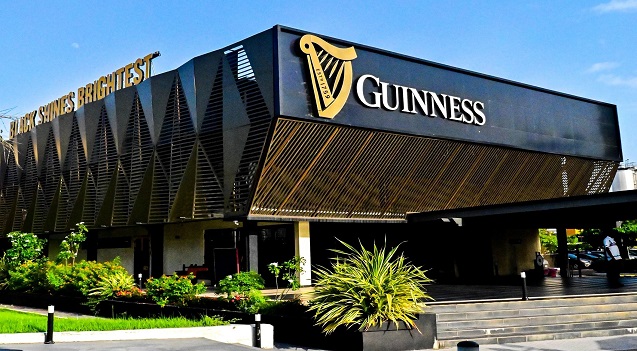
Guinness Nigeria has officially begun rewarding consumers under its nationwide ‘Open For More’ National Consumer Promotion (NCP), with an impressive ₦17 million in rewards to 107 winners during the campaign’s first live draw held on July 31, 2026.

The inaugural draw instantly transformed the fortunes of consumers across the country, producing seven new millionaires, who each received ₦1 million, alongside 100 additional winners, who each walked away with ₦100,000. The milestone marks the beginning of a series of weekly live draws that will see hundreds more Nigerians rewarded throughout the promotion.
The seven ₦1 million winners are Marcus Barieepie, Ani Valentine Ogochukwu, Okafor Sochima, Taiwo Adebola, Zubair Rukayat, Oluwatobi Femi, and Ebubechukwu Okolo.
The live draw was conducted under the supervision of the Federal Competition and Consumer Protection Commission (FCCPC) to ensure transparency and fairness. Representatives of the commission present included Dr. Olubunmi Otti, Zonal Coordinator, FCCPC Southwest, and Mrs. Abosede Ogundeji, Surveillance and Investigation Officer.
Speaking during the draw, Ramanathan S, representing Guinness, said the promotion reflects the brand’s enduring commitment to celebrating and rewarding the consumers who have supported Guinness over the years.
“For decades, Nigerians have made Guinness a part of their milestones and celebrations. Today, we are proud to give back by putting ₦17 million directly into the hands of 107 consumers in our very first draw. This is only the beginning. Over the coming weeks, many more Nigerians will experience life-changing rewards as we continue to celebrate the loyalty of the people who have made Guinness part of their stories.”
He added that all weekly draws will continue to be streamed live across Guinness Nigeria’s official platforms, enabling consumers to witness the winner-selection process in real time and reinforcing the transparency and credibility of the promotion. He also encouraged eligible consumers nationwide to participate, noting that every valid entry presents another opportunity to win.
The ‘Open For More’ National Consumer Promotion offers consumers the chance to win ₦1 million every day, ₦100,000 cash prizes for 1,000 winners, and a Toyota Land Cruiser Prado as the grand prize. Altogether, the promotion will reward consumers with more than ₦400 million in cash and prizes.
To participate, consumers simply need to purchase specially marked bottles of Guinness Foreign Extra Stout or Guinness Smooth, locate the unique code beneath the crown cork or can lid, and enter the code via the designated campaign platform.
With ₦17 million already won in its opening draw, the campaign is off to a remarkable start, reinforcing Guinness Nigeria’s commitment to rewarding consumer loyalty through transparent processes and unforgettable experiences that go beyond the product. Consumers are encouraged to look out for specially marked promotional packs and follow Guinness Nigeria’s official communication channels for updates, winner announcements, and details of upcoming draws.

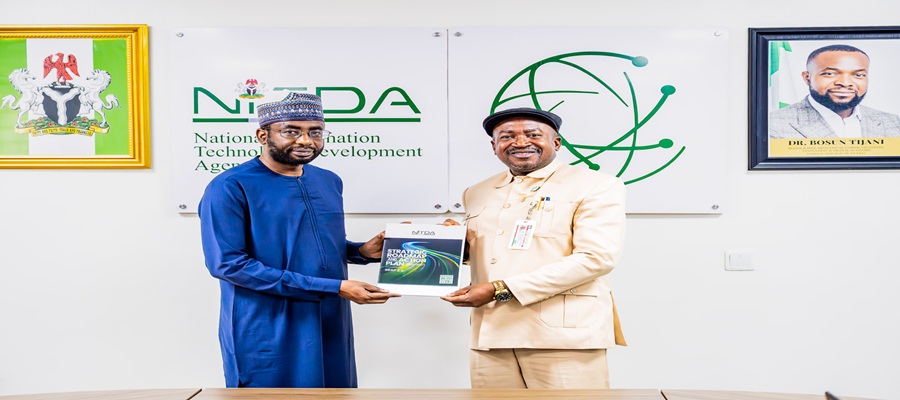
National Information Technology Development Agency (NITDA) has expressed readiness to deepen collaboration with Nigerian universities to promote research, innovation and technology-driven solutions to local challenges.

NITDA, UniAbuja
NITDA’s Director-General, Kashifu Inuwa Abdullahi, stated this when the management of Yakubu Gowon University, formerly the University of Abuja (UniAbuja), led by its Vice-Chancellor, Prof. Hakeem Fawehinmi, paid a familiarisation visit to the agency’s headquarters in Abuja.
Abdullahi said stronger collaboration between NITDA and tertiary institutions was essential to building a robust innovation ecosystem, developing practical skills and positioning Nigeria for technology-driven economic growth.
He stressed the need for increased investment in research, particularly in emerging technologies such as Artificial Intelligence (AI), Internet of Things (IoT), blockchain, cybersecurity and cloud computing.
“We need to invest more in in-depth research with universities to build a robust research ecosystem that will help us develop solutions.
“Research will focus on harnessing AI, IoT, blockchain, cybersecurity and cloud technology, among other emerging technologies, to improve our lives and grow our digital economy,” he said.
The DG described universities as critical talent factories required to achieve Nigeria’s digital transformation aspirations.
“NITDA has a vision to make Nigeria a digitally empowered nation. You (UniAbuja) are the talent factory, and we cannot achieve our vision without talented Nigerians.
“The only way to achieve that is by working with institutions like yours. So, we need to build talent,” he said.
Abdullahi also advocated the integration of AI education across disciplines in tertiary institutions, saying students needed practical digital skills to remain relevant in the evolving world of work.
“We can work together to explore ways of introducing AI across the board as a general study course in tertiary institutions.
“Elements of AI should be included in every field of study to equip our students with the hands-on skills for navigating the real world,” he said.
According to him, NITDA is already collaborating with key education sector stakeholders, including the Federal Ministry of Education, National Universities Commission (NUC), National Board for Technical Education (NBTE) and National Commission for Colleges of Education.
He said the agency was also working to promote digital literacy programmes across all levels of education to ensure that graduates acquire skills relevant to industry requirements.
Earlier, Fawehinmi said the university’s visit was aimed at seeking NITDA’s partnership and support in strengthening digital infrastructure and technology-based training at the institution.
He expressed appreciation for NITDA’s contributions to the Digital Geoscience Centre at the university.
The Vice-Chancellor said the university was willing to collaborate with NITDA on joint research, capacity-building initiatives and innovation programmes capable of contributing to Nigeria’s socio-economic development.
“We could go into partnership with you to provide data, collaborative engagements, staff exchanges and joint research hubs, so that we can produce high-level human resources.
“The university is committed to serving as a strategic academic partner to NITDA by providing academic expertise required to advance your national digital transformation initiatives,” he said.
The proposed collaboration is expected to strengthen the link between academic research and industry needs while creating opportunities for technology innovation, skills development and practical solutions to Nigeria’s socio-economic challenges.
A New Mexico court has ordered Meta, the parent company of Facebook and Instagram, to pay $567 million to address the alleged harms caused to young people by its social media platforms.

Meta
The ruling by Judge Bryan Biedscheid came in the second phase of a landmark trial concerning the impact of Meta’s platforms on children and teenagers.
The judge said $420 million of the amount would be dedicated to treatment services for young people, while the remaining funds would support awareness and prevention programmes, screening services and other related costs over the next five years.
The latest financial order comes on top of $375 million in civil penalties awarded against Meta in March after a jury found that the company knowingly harmed children’s mental health and concealed information about child sexual exploitation on its platforms.
During the second phase of the trial, prosecutors asked the court to order fundamental changes to Meta’s platforms, including measures to reduce addictive features, improve age verification and prevent child sexual exploitation through stronger privacy settings and increased oversight.
The court subsequently ordered Facebook and Instagram to introduce banner notifications and informational screens explaining their safety features, recommended practices and tools for addressing inappropriate comments.
The platforms must also regularly display the information, while an educational campaign in New Mexico will be subject to review by the state.
New Mexico Attorney General Raúl Torrez said the ruling sent a clear message that technology companies could be held accountable when their product designs knowingly exposed children to risks.
“Today’s decision is a victory for every parent who has worried about what social media is doing to their child and every child who deserves to grow up safer online,” Torrez said in a statement.
Meta said it would appeal the ruling.
“We work hard to keep people safe on our platforms and have been transparent about the challenges of identifying and removing bad actors and harmful content,” the company said.
The company said it remained confident in its record of protecting teenagers online and would continue to defend itself against what it described as claims that misrepresented the facts.
On age verification, the court said federal children’s privacy laws restricted Meta’s ability to apply certain verification tools to children under 13.
The court cited the Children’s Online Privacy Protection Act (COPPA), which limits the collection of personal information from children under 13.
Rather than imposing a blanket age-verification requirement exclusively on Meta, the judge ordered the company to continue improving its age-assurance tools in New Mexico.
The tools include the use of artificial intelligence to estimate users’ ages based on signals such as their social connections and the type of content they post and consume.
Meta was also ordered to attempt to develop a dedicated model for predicting whether users are under 13 within the next two years.
Additionally, the company must request proof of age from Facebook and Instagram users in New Mexico whom it estimates to be under 13.
Where Meta determines that a user is under 13, or under 18 but cannot determine a specific age, it must treat the user as being under the applicable age threshold until the user verifies their age.
The court further ordered Meta to partner with schools or a child-safety organisation to establish a reporting portal through which school officials can flag users suspected to be under 13.
Meta must also delete personal information it has collected from users under 13 and submit progress reports twice a year detailing its compliance with the court-ordered measures.
The ruling comes as Meta faces thousands of lawsuits from families alleging that children have been harmed by social media use.
The company is also preparing for another trial in California amid the growing litigation over the impact of social media platforms on young people.

World Bank Debars United Aviation Services, Owner over Fraudulent Activities

NITDA Introduces Cloud Certification Boost Data Localisation Compliance

Enugu State Approves Land for ITF’s Digital Fabrication Centre

BOI Opens N250Bn Bond Offer to Fund Businesses

Guinness Rewards Consumers with ₦17 Million in First Week of ‘Open for More’ Promo Draw

From Scarcity to Scale: What Africa Can Learn from India’s Agricultural Transformation

BON Establishes Six Ad Hoc Committees to Modernize Broadcasting

EFCC Busts NIS Visa Overstay Racket, Uncovers N700m in an Account

Fact-Check: Elon Musk’s “Tesla Pi Phone” is Internet Rumor

NBC Tasks Broadcasting Stations over 2028 DSO Global Deadline




 E-Financial2 days ago
Access Holdings Deepens Sustainable Finance Impact, Expanding Green Assets to ₦92.14 Billion

 News2 days ago
Ogbaga, Abuja Lawyer to Sue Telcos, DStv over Alleged Unfair Practices

 Telecom2 days ago
MTN Moves Closer to Full IHS Takeover

 Telecom2 days ago
Airtel Nigeria Unveils Hundreds of Retail Shops in Wide Expansion of Customer Touch Points

 E-Financial2 days ago
NAICOM Revokes Nigeria Reinsurance’s Licence over Failure to Meet MCR

 News2 days ago
NAICOM Issues New Licences to 43 Recapitalized Insurers

 E-Financial2 days ago
SEC Begins Full e-Registration for Capital Market Services

 E-Financial2 days ago
TeamApt, Awabah Partner to Bring Micro-Pension Contributions to POS Terminals Nationwide