

/home/kenneth/web/nigeriacommunicationsweek.com.ng/public_html/wp-content/themes/zox-news/parts/post-single.php on line 153
">
Warning: Undefined array key 0 in /home/kenneth/web/nigeriacommunicationsweek.com.ng/public_html/wp-content/themes/zox-news/parts/post-single.php on line 153
Warning: Attempt to read property "cat_name" on null in /home/kenneth/web/nigeriacommunicationsweek.com.ng/public_html/wp-content/themes/zox-news/parts/post-single.php on line 153
Vague Condition of Offer Kills Courier Business –Olufade

Hasty conclusion of contract deals between courier companies and some of their clients in the capital market has been described by Toyin Olufade, national president, Association of Nigeria Courier Operators (Anco) as one of the things that is killing the courier business. Olufade said most of the times bulk mailers are in a hurry to ink their deals with courier firms claiming that they are late, and in that condition he said they will impress on courier companies to do the job first and come back for negotiation on terms of the contract. The Anco president said immediately the job is done the big companies don’t pay as promised. Olufade said such practice is killing the industry and making liquidity not to be available to execute the job properly. He advised courier companies to see that terms of contract with bulk mailers are clearly spelt out including the payment rate and date of payment. Olufade said the ideal thing is that courier firms expect payment for job done after submitting the invoice for the job even as he said courier companies would begin to blacklist companies that owe courier companies.
In several fora, Simon Emeje, head, Courier Regulatory Department had also hankered on the need for courier operators not to cheapen themselves by getting involved in contracts that are not well spelt out with bulk mailers just to be seen as being busy. He advised courier firms to take time to state what they want in any offer before sealing the deal. Emeje said that absence of the necessary conditions of offer makes courier operators to be at the apron strings of bulk mailers who sometimes owe courier companies as long as six months after completing the job even though money may have been budgeted for the payment of the job done .


Warning: Undefined array key 0 in /home/kenneth/web/nigeriacommunicationsweek.com.ng/public_html/wp-content/themes/zox-news/parts/post-single.php on line 493
Warning: Attempt to read property "cat_ID" on null in /home/kenneth/web/nigeriacommunicationsweek.com.ng/public_html/wp-content/themes/zox-news/parts/post-single.php on line 493
Nullsec Nigeria, a threat actor, has claimed responsibility for leaking the identities of operatives and sensitive internal data linked to the Economic and Financial Crimes Commission (EFCC).

Ola Olukoyede, chairman, EFCC
The leak raises fresh concerns over cybersecurity vulnerabilities within Nigerian public institutions and safety the agency’s operatives.
The breach surfaced on April 21 on a dark web forum, where a user identified as “ki4t,” reportedly affiliated with the group, published details of the dataset.
The exposed data is said to include agent names, phone numbers, operational code names, and password hashes tied to EFCC personnel.
The breach allegation comes amid growing concerns over cyber risks facing government agencies, following a recent reported compromise involving the Corporate Affairs Commission (CAC).
Cybersecurity analysts say that if confirmed, the exposure of such sensitive operational data could pose risks to both personnel security and ongoing enforcement operations, particularly if password hashes are successfully decrypted or linked to other compromised systems.
The development adds to increasing pressure on public institutions to strengthen digital infrastructure, access controls, and internal cybersecurity protocols as threat actors continue to target government databases.
Authorities are yet to confirm the extent of the alleged breach or whether any mitigation measures have been activated.
Nigeria has lately experienced a growing activities of hacktivists defacing websites and leaking data.
General News
Leo Stan Ekeh Foundation to Open Portal for 1,000 University Tech Scholarships on Monday

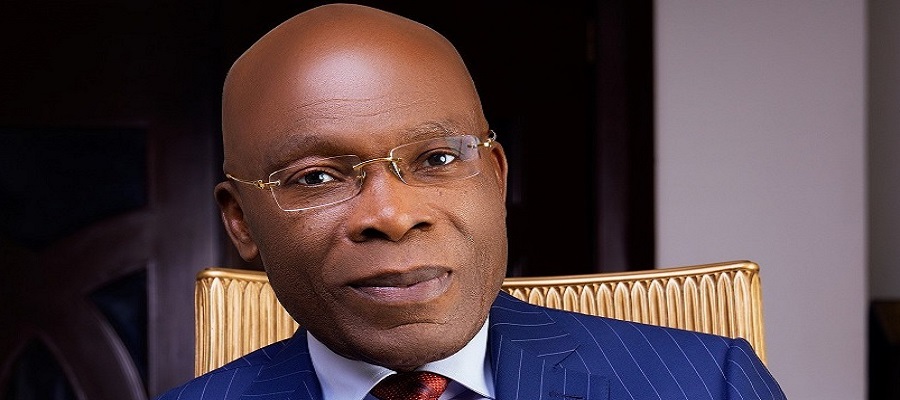
The Leo Stan Ekeh Foundation (LSEF), in collaboration with TD Africa, Konga Group, Zinox Technologies, and Task Systems, is set to officially launch its highly anticipated scholarship programme aimed at empowering 1,000 exceptional Nigerian indigent whiz-kids in the field of technology.

Leo Stan Ekeh
The dedicated application portal, initially scheduled to go live on April 22, will now launch on Monday, April 27, 2026, following final technical enhancements to ensure a seamless, secure, and transparent application experience for prospective candidates nationwide.
This landmark initiative, first announced by Leo Stan Ekeh, Africa’s foremost tech icon and chairman of Zinox Group, forms part of his unwavering commitment to national development and youth empowerment.
The programme was unveiled on February 22, 2026, when Ekeh marked his 70th birthday. Rather than host an elaborate celebration befitting a man of his stature, he chose to channel resources into a cause that would create long-term impact for an economy, offering university scholarships to indigent but brilliant Nigerian youths to study Computer Science in federal institutions.
Building on a legacy of over 6709 beneficiaries trained over four decades by him and his companies, Mr. Ekeh at the time said the goal is to nurture a new generation of highly skilled technology professionals capable of supporting both the private and public sectors, while positioning Nigeria for greater competitiveness in the global digital economy.
This vision reflects his decades-long commitment to building sustainable positive disruptive capacity within Nigeria’s technology ecosystem that shall alter the nation’s GDP.
The scholarship programme is designed to transcend mere financial support, offering beneficiaries access to a comprehensive ecosystem powered by the initiative’s distinguished partners. Beneficiaries will receive technical support, mentorship by very successful members of Nigeria Compute Society, and industry exposure to ensure that recipients are equipped with practical, market-relevant skills.
This multi-faceted approach ensures that scholarship beneficiaries gain not only theoretical knowledge but also hands-on experience and professional networks that will propel their careers in technology.
By leveraging the combined expertise and infrastructure of these industry leaders, the initiative is poised to deliver a transformative learning experience that prepares young Nigerians to compete effectively on the global stage. Beneficiaries will emerge as future-ready innovators capable of driving digital transformation across sectors and contributing meaningfully to Nigeria’s economic growth.
The initiative builds on the longstanding legacy of Leo Stan Ekeh, whose contributions to Nigeria’s technology landscape and by extension Africa have spanned decades and fundamentally reshaped the nation’s digital infrastructure. From pioneering indigenous computer manufacturing through Zinox Technologies to driving digital transformation across public and private sectors, Ekeh has consistently demonstrated a commitment to building sustainable technological capacity within Nigeria.
His investments in digital infrastructure, talent development, and indigenous innovation have positioned Nigeria as a formidable player in the global technology landscape.
This scholarship programme represents the latest chapter in that transformative journey, directly addressing the critical need for skilled technology professionals in an increasingly digital global economy.
As anticipation builds ahead of the April 27 launch, interested applicants are advised to visit the Konga.com website and click the Foundation banner on 1000 Tech Scholarships Awards where the application link and detailed participation guidelines will be published on the launch date. The organisers have assured that the selection process will be merit-driven, inclusive, and transparent, with a focus on identifying truly outstanding young talents from across Nigeria’s diverse regions.
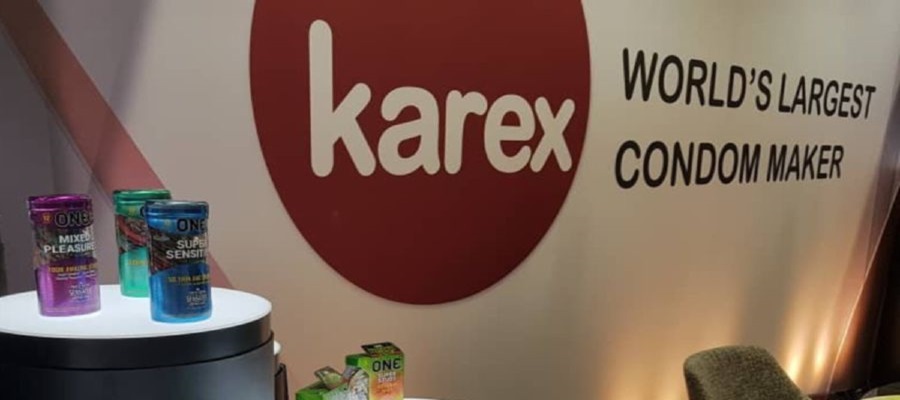
Karex, world’s largest condom maker, plans to raise prices by up to 30 percent due to supply disruptions linked to the Iran war.

This means that safe sex could get more expensive if the war continues to disrupt global supply chains, according to Goh Miah Kiat, CEO, Karex.
Kiat told old Reuters that rising freight costs and shipping delays have increased demand and forced the company to pass costs to customers.
Broader supply chain issues and higher oil prices could impact many everyday products that rely on petrochemicals.
“The situation is definitely very fragile, prices are expensive… We have no choice but to transfer the costs right now to the customers,” Goh told Reuters.
Karex joins a growing list of companies that are bracing for supply chain disruptions amid the ongoing war in Iran.
Based in Malaysia, Karex produces condoms, personal lubricants, gloves, medical catheters and probe covers.
The company manufactures male latex condoms including ONE, Trustex, Carex and Pasante, and it can produce over 5 billion condoms annually. Karex also exports to more than 130 countries, according to its website.
“We’re seeing a lot more condoms actually sitting on vessels that have not arrived at their destination but are highly required,” Goh said.

Breaking News…Hackers Allegedly Expose EFCC Data, Operatives’ Identities

Leo Stan Ekeh Foundation to Open Portal for 1,000 University Tech Scholarships on Monday

Karex, World’s Top Condom Maker to Hike Prices due to Iran war

US Library Blames Hackers for Viral Posts Urging Violence in Nigeria

IshowSpeed’s African Tour was ‘Spy Job,’ for Elon Musk- Seun Kuti

NBC Boss Urges Content Ceators to Participate in DSO

NITDA Takes Over National Digital Architecture System

DLM SPV PLC Lists ₦9.00bn AAA-Rated Medium-Term Notes on FMDQ Exchange, Sets Benchmark in Corporate Bond Market

FG Shifting Focus to “Meaningful Connectivity” to Drive Inclusion – Minister

Jury Finds Meta, Google Liable for Woman’s Social Media Addiction




 E-Business3 days ago
Lagos Unveils Cybersecurity Guidelines to Tackle Rising Digital Threats

 News3 days ago
FG Borrows N100Bn from Unclaimed Dividends, Dormant Bank Accounts

 Telecom3 days ago
NBC Warns Broadcasters Against Bullying Guests, Passing Opinions as Facts

 E-Financial3 days ago
CitiTrust Heads to Appeal Court over Alleged Ponzi Scheme

 Telecom3 days ago
WATRA Secretary sees Resilience as a Critical Link in West Africa’s Digital Economy

 Telecom3 days ago
Why Nigeria Must Embrace .ng Now – NiRA Reveals Five Critical Steps

 Telecom3 days ago
Tech Shake-Up: Snap Cuts Hundreds as AI Drives Efficiency Push

 E-Business3 days ago
Laundry Without Interruptions: Why LG Auto Restart Washing Machines Are Perfect for Nigerian Homes