

General News
Broadband Supply not Well Stimulated Yet– Oladepo

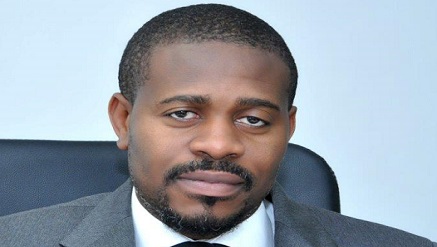
Kazeem Olawale Oladepo, general counsel, MainOne had prior to joining MainOne was director, Corporate Strategy and Development at Starcomms Plc.
He had also served as the head of Legal/Regulatory Services and the Company Secretary of Starcomms.
Oladepo has core expertise in legal, regulatory, commercial activities and strategic transactions and has extensively been involved in implementing strategic policies within the Nigerian telecommunications industry.
He is a member of the Board of Trustees of the Association of Licensed Telecoms Operators of Nigeria (ALTON), the industry body for all telecommunications operators in Nigeria. He spoke to chike Onwuegbuchi on issues around broadband penetration.
High Volume of Unutilized Broadband Capacity
The best way to appraise this is to take a demand and supply side approach to understanding the constraint with internet penetration and pervasiveness.
Demand factors are things that drive more uptake or usage. Whilst the operators have a role to play through price reduction to encourage uptake, this side of the push is more reliant on policy and to a large extent positive externalities of what government policies and economic index suggests.
The cost of access devices for instance is one; availability of relevant and attractive content is another, amongst others. If you have to procure your drivers’ license through an online portal for instance, or you can do several of your government or your child’s educational support resources on-line, then more people will use internet services and the operators can see volume.
These demand side factors are not well stimulated yet, although there are efforts at the policy level that are currently being addressed by the federal government through the National Broadband plan.
On the supply side, we are dealing with the provision of the services to consumers. The submarine infrastructure is a component and we have adequate capacity on that to provide services.
The terrestrial infrastructure continues to be a challenge, as earlier highlighted. There is a policy side to it in terms of cost and more favourable operating environment, with issues of ‘Right of Way’ fees and approval lead time being some of the constraints that are being experienced, albeit now starting to relax with government intervention and support.
But the issues are still there and continue to delay roll-out. The NCC Infraco model is also expected to improve optimization in this area as it should relieve the operators of certain cost of service delivery through subsidies for shared infrastructure and guarantee a degree of orderliness in the deployment of infrastructure.
We are bidding for this project and are quite confident that the process has been transparent so far and will bring significant improvement to the supply side factors.
Internet Services in Nigeria and Those of Developed Markets
Let us begin with the structure of the market. We are a wholesale operator, not retail or mass market service provider.
The mobile operators and medium size ISPs constitute the retail end of the market. In terms of the structure of the ecosystem, the internet is not necessarily locally domiciled here in Nigeria, it’s an interconnection of networks sitting in several large exchanges where large enough operators are connected to provide access for their customers.
For an operator to get connected at these exchanges it needs to go through a gateway. The submarine cable infrastructure is a gateway, just as the satellite is also a gateway that was pervasively used prior to the advent of the submarine infrastructure, albeit at very expensive prices and less efficient service level.
The submarine cable is an infrastructure that takes you from Lagos to the exchange in London where everybody else is peering internet traffic.
There is a significantly huge cost to getting that infrastructure set up between Nigeria and London.
The build cost alone for MainOne is $240M of monies raised at very high cost of capital which is peculiar to the Nigerian operating environment.
This does not include the additional cost of building distribution networks terrestrially that were not there in Nigeria due to the absence of common carrier, open access, networks, available in advanced countries with cheaper internet prices.
These are some of the key considerations, from a cost perspective, that we need to keep in view when we talk about comparative cost of wholesale bandwidth in Nigeria versus the United Kingdom or other developed markets.
Internet Services and Pricing
We need to be mindful of the level of internet usage and attendant volume of bandwidth consumption that the operators in Nigeria are currently seeing on their network.
Without doubt, volumes do drive reduction in prices as we have observed even with the trend in Nigeria, where wholesale prices have fallen from over 1,500USD per Mbps to about 200USD per Mbps.
Today in Nigeria, we see latent demand rise slowly but steadily. Currently, I doubt if there is any operator in Nigeria exhausting up to 10% of the capacity they have on their submarine cable, meaning that the investment is at least 90% underutilized, a constraint, of course, on their ability to generate revenue to recover not only its cost; but also earn margin on the investment.
When compared with developed markets such as the United Kingdom, and operators that are largely Tier I operators (AT&T, TATA, Interoute, PCCW, etc.), their wholesale prices in Europe are far lower as these operators do not have the constraints that are peculiar to our market.
The transmission cost of moving traffic from location to location is almost nothing, since you do not need to move the capacity 7,000 kilometers away from the tele-house. They have huge volume and are largely Tier One operators who do not even have to pay one another to share traffic.
They mainly do peering (exchange) of traffic at no monetary cost.
If you have huge traffic, you can come to the table and say “I have X volume of traffic”, and you will have other operators available to swap traffic. If we have the volume of internet traffic out of Nigeria that you will see for instance in UK and we can peer, the cost of upstream provisioning that we pay to other operators for Internet Transit in Europe will be eliminated, but this will not remove the cost of transmission between Nigerian and London and the operational cost associated with providing the services. Those costs remain a significant cost differentiator between cost of wholesale Internet Transit services in the United Kingdom and Nigeria.
Achieving Accessibility of Broadband
Sincerely, I have seen this report and I am a bit worried at the source and veracity of the information. It’s absolutely untrue, since this is margins and when you start to talk about margins you are talking about your revenue versus your cost in reality. I don’t know what the assumptions are really for such so-called margin.
I don’t even know where the cost that is mentioned in the report came from. The information is ambiguous to the extent that it does not say if this is based on a per month, annum or per quarter pricing.
Internet capacity is sold with several variables in perspective, including volume, tenure (whether it is a 1 year, 5 years or 15 years IRU contract) and the location of the customer, particularly since you have to factor the additional cost of last mile delivery into the price.
We have looked at our structure generally and we can’t find anything that seems to correlate with the price point that was put in public domain by the authors’ of the article. Our price model, is similar to those of the other operators, since we all have incurred cost on the submarine cable infrastructure and are also connected to the same global internet exchanges in London through various Tier 1 operators.
We therefore, do not have those exaggerated margins. Undoubtedly, we operate a healthy business that has maintained an excellent operational track-record and a healthy run rate to pay its obligations as at when due as well as expand its operations through additional investments; such as a data center project..
Overall and in terms of objective, the focus has always been beyond high margins. If we had been fixated on exceedingly high margin, we would have done a marginal reduction in price when we came into the market, knowing fully well that we had larger volume of capacity than the incumbent, together with a more efficient network.
But we came in and reduced prices at about 80% to ensure that we can encourage the market to deliver the volume that will boost Internet usage and make the services sustainable and more affordable to the public.
The notion that we make that kind of margin is erroneous and perhaps mischievous, given market realities.

MainOne and Broadband Penetration in Nigeria
I think we have touched on some aspect of it already, such as driving prices down at the point of entry into the market; this is clearly an indication of our commitment to expand the pervasiveness of broadband services in Nigeria. This business started with the key objective of bridging the digital divide between Africa and the rest of the world and that has not changed.
We have been a part of several initiatives, both as champions or supporters of those initiatives that continue to drive broadband penetration in Nigeria. As far as the policy level, we actively supported the National Broadband Plan, driving awareness to the issues that ensure that everybody understands the need to drive the market externalities that affects the growth of broadband penetration in Nigeria.
We will continue to do more to support current growth and are also supporting small companies, giving E-commerce entrepreneurs capacity at subsidized rates to foster growth of their businesses. We are doing the e-initiative with Lagos State Government, where we built into Yaba for the i-HQ project to drive innovation etc. and are supporting a lot of educational institutions through our Research and Education Network projects.
In terms of prices ever going down? Yes, they are and certainly they will continue, but a lot of things need to add up, some of which are already beginning to happen, thanks to the regulatory imperative and government shifting attention more to providing an enabling environment.
The biggest issue is still infrastructure to support the delivery of the services in reality, availability of this infrastructure and the price of access to it, are still not competitive. Connecting a customer in Abuja remains far more expensive than the cost of connecting Lagos to London as we have maintained and this will remain so until we have the appropriate regime to force anti-competitive pricing of terrestrial infrastructure down and compel open access to the infrastructure.
Driving the market externalities from a demand and supply perspective would also help. If we see more government services going on-line and educational institutions ramping up more capacity, we will see incremental volume that allows the operators to keep revenue steady for continuing operations and sustainability of the networks, so that we can continue to provide the services at current efficiencies.


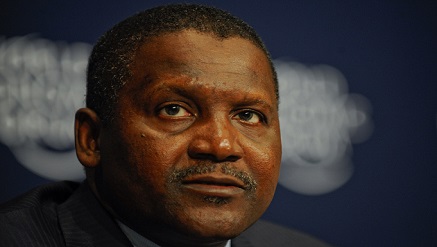
Aliko Dangote, Africa’s richest man, plans to dedicate one-third of his wealth to charity as part of his succession plan, Halima Dangote, his daughter, has revealed.

Aliko Dangote
Halima, a trustee of the Aliko Dangote Foundation, disclosed this in an interview with Bloomberg published on Tuesday, saying the billionaire had secured the support of his family to commit 33 per cent of his estate to philanthropy.
According to the Bloomberg Billionaires Index, Dangote’s net worth is estimated at $35.1 billion, meaning one-third of his current wealth would be worth about $11.7 billion if his fortune remains at that level.
Halima explained that her father views philanthropy as a key part of his legacy and has incorporated it into the family’s long-term succession plans.
She said Dangote had structured his estate to ensure that charitable giving continues across generations, particularly in areas such as healthcare and education.
“He sort of put all the structure in place whereby we focus a lot on health and education. He actually donated 25 per cent to the foundation. If you look at it, it is what we call in Sharia Code in Islam; it means he has donated 33 per cent of his whole inheritance to his foundation,” she said.
Halima added that Dangote believes giving back is central to the success of his businesses and the family’s values.
She said the billionaire asked her, her two sisters, and his mother to sign the agreement allowing 33 per cent of his inheritance to be dedicated to humanitarian causes.
The planned donation builds on Dangote’s longstanding philanthropic activities through the Aliko Dangote Foundation, which was established in 1994.
According to Halima, the foundation received an endowment of $1.25 billion about a decade ago and has since received an additional $700 million in funding.
She said about 70 per cent of the foundation’s spending goes to programmes in Nigeria, while 20 per cent supports projects across Africa, with the remaining funds directed to initiatives in other parts of the world.
The foundation’s interventions focus on healthcare, education, nutrition, and humanitarian support, including partnerships that contributed to the eradication of wild poliovirus in Africa.
Dangote’s planned charitable commitment adds to increasing global attention on billionaire philanthropy.
Although the proposed 33 per cent allocation is below the 50 per cent commitment associated with the Giving Pledge, it would rank among the largest philanthropic commitments announced by an African billionaire.
Earlier this year, Dangote was named among the world’s most influential philanthropists by TIME magazine’s inaugural TIME100 Philanthropy list, recognising the impact of the Aliko Dangote Foundation, which reportedly spends more than ₦50 billion annually on programmes across Africa.

Nigeria Atomic Energy Commission (NAEC), has said that there are plans for Nigeria to begin to generate electricity from nuclear sources.

Mr Anthony Godwin Ekedegwa, chief executive, NAEC stated this when he recently visited Mr Umar Yusuf Girei, acting managing director, National Inland Waterways Authority (NIWA),in Abuja.
He was at NIWA’s office to solicit the support of NIWA in achieving the numerous advantages of using nuclear energy technology in the country.
According to him, the partnership of critical stakeholders in Nigeria will position the country well in developing and maintaining its nuclear power plant.
The NAEC chief said Nigeria intends to begin the generation of electricity from nuclear sources instead of fossil-based power plants and hydro-based power plants, stressing that for Nigeria to develop, there is a need for the country to diversify its energy needs.
In his remarks, Mr Girei assured NAEC of his agency’s readiness to collaborate on the advancement of a nuclear power plant in Nigeria.
He promised the full support of NAEC for the success of a nuclear power plant in the country, saying that as the organisation saddled with the responsibility of regulating and developing Nigeria Inland Waterways, his entity is strategically positioned to play a critical role in the federal government’s quest for sustainable energy through the new technology.

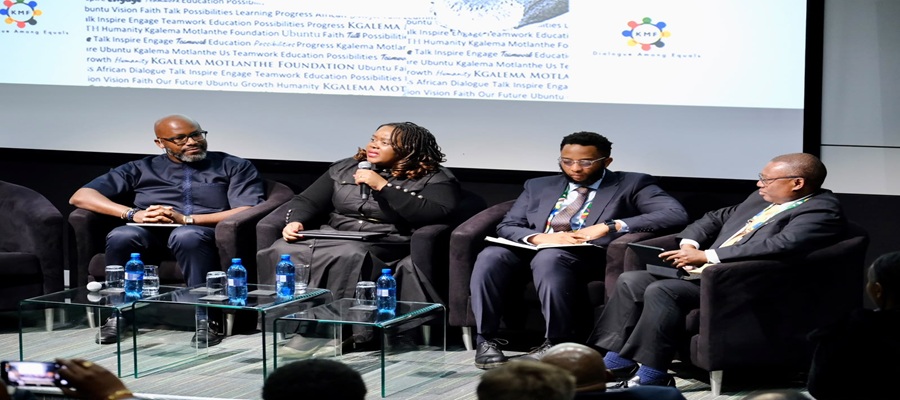
In a powerful call for continental solidarity, Ralph Mupita, Group CEO of MTN, has asserted that the future of the African continent depends on the dismantling of xenophobic barriers.

Speaking at the Kgalema Motlanthe Foundation (KMF) Winter Seminar, Mupita framed migration as a fundamental characteristic of the African identity, urging South Africa and other nations to embrace integration over exclusion.
He emphasised that the survival of African enterprises depends on a borderless approach to trade and talent. “The digital economy we’re fast moving to knows no borders.” Mupita declared, noting that the mindset of exclusion is an outdated relic that hinders the continent’s ability to compete globally.
He argued that for Africa to leverage the African Continental Free Trade Area (AfCFTA), the psychological barriers of xenophobia must be eradicated.
Providing a stark financial justification for this stance, Mupita highlighted MTN’s own operational reality as a blueprint for Pan-African success. “We earn about 80 to 82% of our earnings from outside South Africa,” he revealed, illustrating that the prosperity of South African-born entities is inextricably linked to their success across the rest of the continent. This figure underscores the interdependence of African economies and the danger of isolationist policies.
Mupita’s stance was strong advocating for unity: “The future of Africa will not be determined by the borders that separate us, but by the economic opportunities that connect us. Governments must set predictable policy and regulations.
Businesses will follow and allocate resources and capital. Together, we can build a continent where opportunity is more evenly shared and prosperity is more widely created.”
Analysts observing the seminar noted that Mupita’s remarks come at a critical juncture where economic volatility often fuels nationalist rhetoric. By tying the fight against xenophobia to the balance sheet, MTN is positioning Pan-Africanism beyond the moral imperative to its function as a business necessity. The CEO stressed that “Migration is part of who we are,” suggesting that the movement of people is the primary engine for the movement of capital and innovation.

Fact-Check: Elon Musk’s “Tesla Pi Phone” is Internet Rumor

Dangote Plans to Donate One-Third of Wealth to Charity as Legacy

NDPC Directs DCPMIs to Register with Agency or Face Legal Consequences

Malpass, Ex World Bank Chief Raises Alarm over Nigeria’s Secretive Debt Structures

How and Why Apps Deplete Data – ALTON

NRC, Ponzi Scheme Collapses Resulting Loss of Billions of Naira

EFCC Busts NIS Visa Overstay Racket, Uncovers N700m in an Account

Tokenization, Blockchain Technology will Transform Financial Institutions – IMF

From Scarcity to Scale: What Africa Can Learn from India’s Agricultural Transformation

BON Establishes Six Ad Hoc Committees to Modernize Broadcasting




 News3 days ago
See Verified 20 Countries Nigerian Passport Holders Can Travel Visa-Free

 E-Business3 days ago
Report Says Cybercriminals Deploy Malware to Hijack Crypto Wallets, Monitor Browsers Telegram

 Telecom3 days ago
NCC, REA Partner to Cut Telecom Costs with Renewable Energy

 Telecom3 days ago
Subscribers, Telcos Warn FCCPC over Airtime Lending Enforcement

 E-Business3 days ago
NPC Opens 131 Births, Deaths Registration Centres in Anambra

 General News3 days ago
AfDB, Nigeria Urge African Control of Mineral Resources

 News2 days ago
History as Lagos Becomes First Nigerian State to Launch Greenhouse Gas Registry

 E-Business2 days ago
UNN to Partner Firm on AI, Smart Mobility Innovation Centre