

General News
Top 3 Trends in Economy, Finance and Trade for 2015

2015 will see the global economy grow at its fastest-rate in three years. The acceleration is built on stronger growth in the USA. The low oil price looks likely to be a feature of the year as does the weak recovery in the Eurozone which risks fizzling out all together with the spectre of deflation hanging over the region.
Overall, the outlook for the global economy continues to be uncertain as risks remain pronounced.
From peak to weak oil
In December 2014 the oil price fell to below US$65 per barrel and in 2015 we are forecasting US$82.0 (Europe Brent Spot Price) for the year as a whole.
The low price is down to an excess of supply over demand as the US and Canada have become large producers and supplies (unusually) have not been affected by the turmoil in the Middle East.
This has come at a time of subdued demand due to the economic slowdown in the Eurozone and the manufacturing slowdown in China.
There will of course be winners, losers and those that break even from the low price. Winners are the large oil importing countries such as India and Japan.
Losers will be the major oil producers, including the Gulf States but more notably those suffering from other economic problems such as Russia and Venezuela.
Russia is over-reliant on energy resources and a low oil price will add to its economic woes and is already weakening the rouble.
Countries that import oil at the same time as producing their own may find the low price offsets itself. China is one example.
In addition Canada and the US may find that extracting their supplies becomes less and less cost-effective.
US resurgent
We are forecasting a strong year for the US economy, with real GDP growth currently estimated to come in at 3.3%.
This will be the strongest rate of growth for 10 years and with it the USA will be a significant contributor to global economic growth. Its relatively small export sector (exports accounted for 9.4% of GDP in 2013) enable it to withstand global economic conditions to some extent. In particular, according to the OECD, it is more insulated from a Eurozone slowdown than other major economies such as Japan and the UK.
The situation is not all rosy though – in particular wages are stagnating despite an increasingly strengthening labour market. In 2014 we estimate that the average wage per hour remained unchanged in real terms over 2013 and we forecast a rise of just 0.9% in 2015.
This contributes some fragility to the recovery, as wage growth is needed to drive consumer expenditure. It also adds complexity to the Fed’s debate on when to raise interest rates.
Eurozone in the doldrums (again)
The second half of 2014 and 2015 brings a sense of déjà vu with regards to the economic situation facing the Eurozone.
In 2015 we are forecasting real GDP growth of 1.1%. The region is suffering from subdued productivity growth, high unemployment and is weighed down by debt. We are not currently expecting the Eurozone economy to shrink but we are expecting growth to be anaemic at best.
This time the situation is compounded by lowflation and the threat of deflation which haunts the currency bloc.
In November 2014 inflation fell back to a five year low of 0.3%. In 2015 we are forecasting inflation of 0.6% in the Eurozone, with major economies such as Spain and Italy coming in at just 0.0%. Deflation is a concern as it increases the debt burden, suppresses investment and consumer spending, with business unsure of ROI and consumers holding off for lower prices.
This can quickly spiral into a vicious circle and fears are that the Eurozone could face a Japanese-style lost decade.
Up in the air
These are three trends amongst many to watch in 2015 including further geopolitical tensions, the birth of new economic groups – ASEAN’s AEC and the Eurasian Economic Union, sluggish trade growth and the strong US dollar. 2015 should see another incremental step towards a stronger global economy, but the recovery remains fragile and risks are such that there remains a danger that it could be derailed.


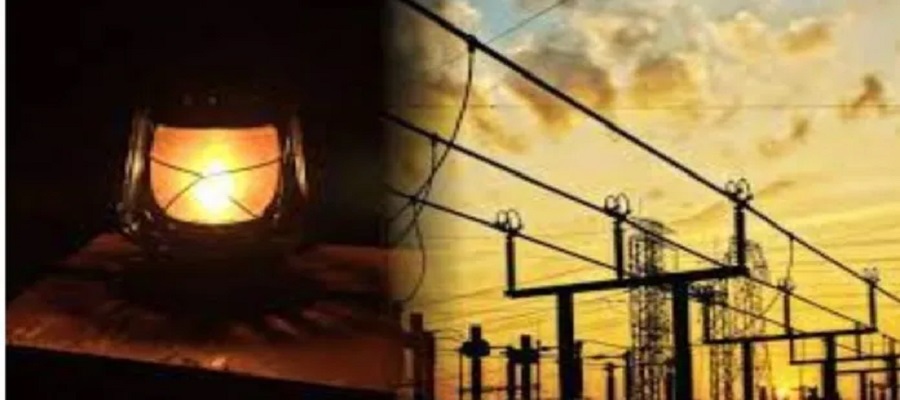
Lagos State Government has unveiled an ambitious roadmap to end the “culture of blackouts” and establish a 24-hour electricity market driven by private sector investment, smart metering and independent power generation across the state.

Biodun Ogunleye, commissioner for Energy and Mineral Resources, middle at the press briefing
Biodun Ogunleye, commissioner for Energy and Mineral Resources, disclosed this during the 2026 Ministerial Press Briefing held in Alausa, Ikeja, on Monday, where he presented the achievements and strategic direction of the ministry under the Babajide Sanwo-Olu administration.
Ogunleye said the state had commenced aggressive reforms following the implementation of the Lagos State Electricity Law 2024, describing the initiative as a major step towards making Lagos the leading subnational electricity market in Africa.
According to him, the administration’s long-term objective is to deliver between 95 and 100 per cent grid availability, achieve full metering penetration and reduce energy losses to single digits by 2030.
“The administration’s plan for a farewell to the culture of blackouts rests on strong regulatory institutions, investor-friendly policies, independent power generation and full metering,” Ogunleye said.
He disclosed that the Lagos State Electricity Regulatory Commission (LASERC), had already begun licensing operators, enforcing regulatory standards and strengthening consumer protection mechanisms within the emerging electricity market.
Ogunleye revealed that 14 licences and permits had already been issued to compliant operators, while the state planned to commence a 100 per cent metering initiative from July 2026.
The commissioner said Lagos was also developing an Artificial Intelligence-powered monitoring system known as the “Electric Eye of Lagos” to provide real-time visibility across electricity trading and power delivery activities statewide.
According to him, the state was finalising market rules, grid interface guidelines and consumer supply codes to support a competitive and investor-friendly electricity ecosystem.
Ogunleye disclosed that Lagos currently has 12 Independent Power Producers under regulation, with seven already fully operational commercially.
He added that the state government was facilitating strategic energy infrastructure projects to improve reliability and industrial growth.
Among the major projects highlighted was the 37.7-kilometre Badagry electricity infrastructure corridor, which includes three high-voltage distribution towers crossing the Gbaji Lagoon and the rehabilitation of 33kV lines linking Gbaji, Seme, Owode and Apa.
The commissioner also announced plans for a major Lekki-Epe Integrated Energy Corridor featuring a 132kV bulk transmission line stretching from Ajah to Alaro City alongside a parallel gas pipeline network.
Ogunleye stated that the government had significantly expanded public lighting infrastructure through the deployment of 42,000 smart solar streetlights across major roads and highways in Lagos.
He said 22,000 conventional streetlights had already been replaced with solar-powered systems on corridors including Gbagada-Oshodi Expressway, Lekki-Epe Expressway, Lagos Island Expressway and Ikorodu Road.
The commissioner further disclosed that nearly 40,000 solar-powered streetlights were now operational across the state.
On power interventions in public institutions, Ogunleye said Gbagada General Hospital now enjoys between 21 and 22 hours of uninterrupted electricity daily following the installation of 2MVA and 1MVA transformers.
He added that renewable energy upgrades had also been completed in 52 secondary schools and 11 primary healthcare centres through lithium-ion battery replacement projects.


Paradigm Initiative (PIN) has thrown its support behind an ongoing constitutional case before the High Court of Tanzania challenging restrictions on access to X, formerly known as Twitter, in the East African country.

A determination on the matter is expected on May 22, 2026.
The case was filed in 2025 by Tanzanian lawyers, Tito Elia Magoti and Kumbusho Dawson Kagine, as a public interest constitutional challenge against the Minister for Communications and Information Technology, the Tanzania Communications Regulatory Authority (TCRA), and the Attorney General.
The applicants are seeking judicial intervention on the constitutionality of actions restricting access to digital platforms under the Constitution of the United Republic of Tanzania and the Basic Rights and Duties Enforcement Act.
The dispute stems from restrictions imposed on May 20, 2025, which have rendered X inaccessible to users in Tanzania except through the use of Virtual Private Networks (VPNs).
The applicants argued that the restriction violates constitutional rights guaranteed under Articles 18, 20 and 29, including freedom of expression, access to information and freedom of assembly.
They further contended that the measures were blanket in nature, disproportionate in impact and introduced without public consultation or clear legal justification.
According to court filings, the restriction has disrupted access to public health information, affected digital and media-related livelihoods, constrained journalistic activities and undermined civic participation.
The applicants also noted that forcing citizens to rely on VPNs imposes additional financial and potential legal burdens while fragmenting communication within the country.
Supporting the suit, PIN said restrictions of such nature undermine constitutional guarantees and risk establishing disproportionate state control over digital spaces.
Executive Director of PIN, Gbenga Sesan, said the case raises critical questions about the limits of state power in regulating digital platforms.
“Where restrictions are imposed, they must meet constitutional thresholds of legality, necessity and proportionality.
“Blanket disruptions of access to widely used platforms threaten not only freedom of expression but also the broader ecosystem of civic participation and access to information,” Sesan said.
In response, the respondents denied claims that the restriction on X in Tanzania constitutes a global concern.
They maintained that the action was lawful and necessary to ensure public safety, public health and public morals.
The respondents further argued that the owner of X had been given prior notice to comply with Tanzanian laws and procedures before the restriction was imposed.
They said access to the platform was restricted due to the owner’s alleged failure to comply with local regulatory requirements.
The case remains pending before the High Court of Tanzania, with observers saying its outcome could define constitutional boundaries for digital platform restrictions and shape digital rights jurisprudence across the region.
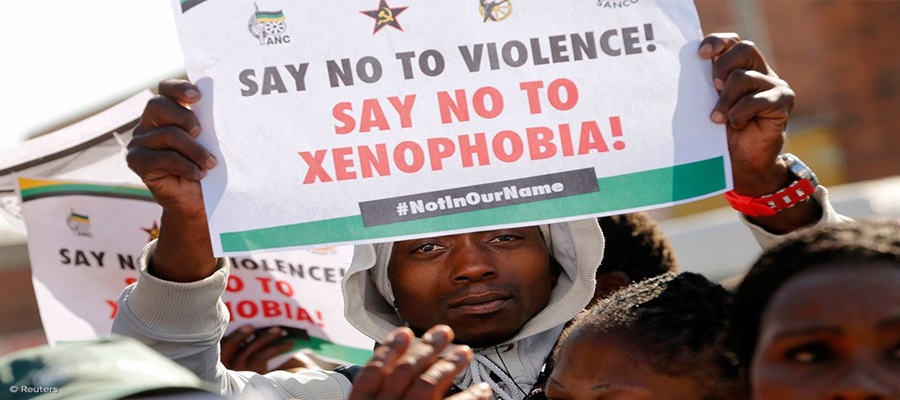
Anonymous Nigeria, hacktivism, known for launching coordinated cyberattacks and protests in support of socio-political movements, has threatened to leak stolen South African government data unless its demands were met.

The group, called for the department to stop xenophobic attacks on Nigerians in South Africa, or it will expose the data.
“They call themselves correctional services, but they can’t correct the citizens. What a shame,” the group said in its Telegram channel, MyBroadband reported.
“They killed a lot of Nigerians while the so-called correctional services watched and the ministry of justice.”
It is immediately know if Anonymous Nigeria is affiliated to Nullsec Nigeria.
But in a post on a hacker forum, Nullsec Nigeria included a link showcasing an example of data stolen from the department.
It included two bid invitation notices, bid results, a copy of the bids received, and a notice of a bid awarded in various formats.
“We’ll expose all your evil deeds for the world to see, unless this attack stops. But if not, we’ll leak everything they got,” Nullsec Nigeria said.
“Unless the government of South Africa ends these xenophobic attacks on Nigeria, we’ll expose everything about you, your evil deeds will be exposed, and the world shall know.”
MyBroadband asked the Department of Correctional Services about the claimed breach and Nullsec Nigeria’s demands, but it did not immediately respond to our questions.
Nullsec Nigeria also claimed responsibility for breaching several other entities in South Africa, while responding to an X post about its OpSouthAfrica campaign in its Telegram channel.
“I wanna express something here. I saw a report on the #OpSouthAfrica hack by Nullsec Nigeria, but it was stolen by another person,” it said. “Tag the real breachers next time.”
In a separate thread on the hacker forum, Nullsec Nigeria also claimed responsibility for breaching the Ephraim Mogale Local Municipality’s systems.
It claimed to have hacked the local government’s website and threatened to expose “everything you got for others to see how heartless you are. You killed mothers, brothers, students.”
Nullsec Nigeria said the breach and the threats were in response to the xenophobic attacks on and killing of Nigerians and the South African government’s supposed silence on the issue.
“These attacks are still going on in the dark, and we’ll expose them all. If the South African government doesn’t act first, the whole of South Africa will suffer,” it said.
“This is just a wave. These documents are about 11GB, but we decided to pull just this one.”
Its post included two images: one for a public hearing and another, a handwritten tender document for the appointment of an insurance service provider.
It also included a link to several other documents, including an old annual report, council resolutions, financial statements, and various other notices.
The Nigerian Government recently announced plans to bring citizens back to the country from South Africa after violent protests over foreign nationals in the country erupted earlier in May.
President Cyril Ramaphosa condemned the protests and criminal acts directed at foreign nationals in his From the Desk of The President weekly newsletter on 11 May 2026.
He emphasised the recent demonstrations and attacks did not represent the views of the South African people, nor the government’s policy.
“These are the acts of opportunists who are exploiting the legitimate grievances, particularly those of the poor, under the false guise of ‘community activism’,” The President said.
“Some of these people are assuming functions that only state officials are permitted to perform, including stopping people to check identification and conducting searches of private property.”
He added that such lawlessness would not be tolerated, regardless of who the perpetrators or victims were.

Identy.io, US Firm Eyes 1Bn Biometric Verification Transactions in Nigeria

FG Says All Taxable Nigerian Must Obtain Taxpayer ID

SEC Sets June 1 for Transition to T+1 Settlement Cycle

Lagos Unveils Plan for 24-hour Electricity Supply in the State

EFCC Which Handles Sensitive Data, Financial Records has No Privacy Policy on Website- FiJ

MTN, VDT, Zoracom, Digital Realty Back 2026 Girls in ICT Campaign

Vitel Wireless Partners Fintechs to Expand Access to Services

Kaspersky Discovers Vulnerability in Qualcomm Snapdragon Chips that can Lead to Data Loss & Device Compromise

Bank Customers to Pay N1,500 for ATM Card Issuance, Replacement – CBN

FCCPC Licenses 5 Firms for Airtime, Data Lending as Telcos Step Aside




 General News2 days ago
Xenophobic Attacks: Anonymous Nigeria Threatens to Leak South African Stolen Data

 Telecom2 days ago
MTN Targets 8m Homes in Fibre Expansion Drive

 E-Financial2 days ago
Chapel Hill Denham Says Banks Lose N2.5 Trillion Annually to High CRR in New Report

 E-Financial2 days ago
Lagos Sanctions 15 Money Lending Firms for Operational Violations

 Telecom2 days ago
GBB Says Cross-border Partnerships Key to Africa’s Digital Transformation

 E-Financial2 days ago
AfDB Approves $200m for BoI to Support MSMEs

 News2 days ago
WHO Says Ebola Outbreak Worse than Reported

 News2 days ago
Digital PayExpo 2026 to Convene Africa’s Most Influential Payments Leaders in Lagos