

/home/kenneth/web/nigeriacommunicationsweek.com.ng/public_html/wp-content/themes/zox-news/parts/post-single.php on line 153
">
Warning: Undefined array key 0 in /home/kenneth/web/nigeriacommunicationsweek.com.ng/public_html/wp-content/themes/zox-news/parts/post-single.php on line 153
Warning: Attempt to read property "cat_name" on null in /home/kenneth/web/nigeriacommunicationsweek.com.ng/public_html/wp-content/themes/zox-news/parts/post-single.php on line 153
War against Fake Courier Companies

As the value of courier services becomes more relevant and important to both personal and business interactions especially in this information age when modern means of transportation and communication has evolved, courier companies are springing up by the day.
Present day courier service has wider tentacles using extensive network of men, machine and ingenuity. In Nigeria, especially in Lagos, Port Harcourt and Abuja, you can hardly cover a pole without sighting either a courier billboard advert or a courier agency
However, the bourgeoning courier business in Nigeria has also attracted players who rather than follow the proper channel of acquiring courier license would go all out to catch in on the new openings in the sector without getting a license from the Courier Regulatory Department. The proliferation in the sector has become so alarming to the extent that somebody delivering a paper on courier event recently quoted the number of courier companies in Nigeria to be 700. The outrageous number was borne out of naivety that not all courier companies operating in Nigeria are registered. According to her, within the same building her office (Asset Management company) is located, there are several courier companies operating in the same building.
This is the stack reality of how the industry is, where the number of unlicensed courier companies by far outnumber the registered ones. The Courier Regulatory Department of Nipost was created as a child of circumstance to sanitize the courier industry in Nigeria and true to expectation; the department has done so much within its mean resources to bring sanity into the industry. Looking at the achievements of the regulatory body, courier operators have variously agitated that it be empowered by the government to enable it face the onerous challenges weighing it down. They argue that the regulatory responsibility handled by the CRD vide Decree 41 of 1992 is highly limited in powers and that this limitation has not allowed the department to regulate the way it should even though it has recorded breathtaking achievements in the industry .
Under the leadership of Dr Simon Emeje, the CRD has been able to transform the courier industry from the mess it was some years ago to the level it is now. However the war is far from being won though the department has been launching attacks on illegal courier companies almost on monthly basis irrespective of where the fake courier company is located in Nigeria. The regulatory department has also reassured that more raids will be launched on some illegal courier companies already identified and penciled down for attack. The efforts of men of the CRD have saved several millions of naira for genuine courier companies who are already facing a lull in their business as a result of the economic recession. As the year is winding up, courier companies are also required to renew their licenses to enable them operate in the New Year. The activities of the fake courier operators cut down the income of the licensed ones such that many of the registered firms are facing extinction.
In the whole process, government seems unperturbed by the activities of illegal courier operators who have constantly made the pockets of registered ones to be bleeding. Illegal courier companies operate in a different world and it can only take adequate measures to be able to contend with the scourge. The CRD is handicapped to battle illegal courier operators squarely.
The way out of this is to empower the Courier Regulatory Department by making it a commission independent of Nipost. The commission will create a business environment conducive for postal operations on behalf of the federal government of Nigeria, facilitate, promote and ensure the implementation of the Universal Service Obligation (USO) of the government as recommended by the Universal Postal Union (UPU). The activities of the commission will also contribute greatly to the economic development of Nigeria considering the fact that the post is a major segment of the communications industry. With adequate regulation in place, the industry is capable of attracting more local and foreign investors which will impact greatly on our economy.


Warning: Undefined array key 0 in /home/kenneth/web/nigeriacommunicationsweek.com.ng/public_html/wp-content/themes/zox-news/parts/post-single.php on line 493
Warning: Attempt to read property "cat_ID" on null in /home/kenneth/web/nigeriacommunicationsweek.com.ng/public_html/wp-content/themes/zox-news/parts/post-single.php on line 493


Nigeria has launched FreeTV, a broadcasting platform, designed to provide households across the country with free access to digital broadcasting, improved picture quality, and a wide range of local and international content without subscription fees.

The announcement was made in a post on the official X handle of the Presidency, describing the initiative as part of President Bola Ahmed Tinubu’s Renewed Hope Agenda, which prioritises inclusion, expanded access to opportunities, job creation, support for local enterprise and the use of technology to improve daily life for citizens.
According to the statement, FreeTV forms part of Nigeria’s Digital Switch-Over (DSO) programme and is intended to ensure that no Nigerian is excluded as the country transitions fully from analogue to digital broadcasting.
The platform will offer access to more than 100 national, regional and state-owned channels, covering news, sports, films, music, children’s programming, educational content, as well as dedicated Yoruba, Hausa and Igbo language channels.
The Presidency noted that the service will be accessible through satellite, terrestrial transmission and a dedicated FreeTV mobile application, enabling coverage for users in urban centres, rural communities and previously underserved areas that were not fully captured in earlier DSO pilot phases.
It also clarified that Nigerians will not need to purchase new television sets to access the service. Existing televisions can work with compatible DVB-T2 or DVB-S2 decoders, while users with already compatible free-to-air devices may not require additional equipment.
Speaking ahead of the launch, Charles Ebuebu, director-general, National Broadcasting Commission (NBC), said the initiative reflects the administration’s broader digital inclusion strategy.
“FreeTV speaks directly to President Bola Ahmed Tinubu’s vision of Renewed Hope towards expanding access, creating opportunity and ensuring that every Nigerian, regardless of location or income, can benefit from the digital economy. With FreeTV, families across Nigeria can enjoy quality digital television without a monthly subscription, while our local content producers, technicians and young creatives gain new platforms and new jobs,” he said.
The statement added that the platform will also strengthen Nigeria’s creative and broadcast industry through regional production hubs in Lagos, Abuja, Port Harcourt, Enugu, Kano and Benin, creating employment opportunities for content creators, editors, camera operators, sound engineers and other media professionals.
The Presidency further disclosed that the final analogue switch-off remains scheduled for December 31, 2028, urging Nigerians to begin preparations by confirming decoder compatibility and downloading the FreeTV mobile application ahead of rollout.

Nigerian Postal Service (NIPOST) has reaffirmed its commitment to implementing a National Digital Postcode System to assign a unique digital address to every addressable building across the country.

Speaking at the unveiling of the Post Code Delineation Model Validation 2026 in Abuja, Tola Odeyemi, postmaster general and chief executive officer, NIPOST, said the initiative would establish a machine-readable standard location-address framework for buildings nationwide.
“Postcode is basically a framework used to have a machine-readable standard location address for every addressable building in Nigeria,” Odeyemi said.
She explained that the project would place Nigeria among the first countries in Africa to develop a postcode system down to the unit level, ensuring that each standing building is assigned a unique code.
According to her, the digital postcode system is expected to enhance service delivery, logistics operations, emergency response, and national planning by improving the identification of locations across the country.
Odeyemi noted that the diversity of Nigeria’s geography necessitated different approaches to address mapping and postcode allocation.
“Nigeria is a large country. We have all the way from the top of Nigeria, which is almost like the Sahel, to the Savannah, to the Middle Belt, to the tropical South and even to the riverine areas.
“The logic that will work for Jigawa is not the same logic that will work for Bayelsa because they have completely different geographical expressions, density of buildings, population distribution, and topography,” she said.
She said the postcode delineation process was designed to ensure that postcode boundaries align with existing administrative structures and do not overlap local government boundaries.
“Delineation has to make sure the postcode does not pass administrative boundaries, and it must not go across two local government areas,” Odeyemi stated.
The NIPOST boss further explained that the validation exercise involves testing aerially mapped polygons against actual settlement patterns and geographical realities in different parts of the country.
“To test the polygons we have drawn aerially, we must ensure they accurately reflect realities on the ground. For example, the density of buildings in Lagos, particularly in Mushin, is very different from the density of buildings in Abuja. We are making sure that density maps and topographical features are properly captured for each state in Nigeria,” she said.
She described the Post Code Delineation Model Validation exercise as a critical stage in the agency’s broader digital addressing initiative, which seeks to create a comprehensive and standardised postcode framework for the country.
Nigeria has long grappled with an inefficient addressing system, making it difficult to accurately identify locations for postal services, logistics, emergency response, and public planning.
NIPOST’s National Digital Postcode System is part of efforts to create a standardised and technology-driven addressing framework that assigns a unique code to every addressable building in the country.

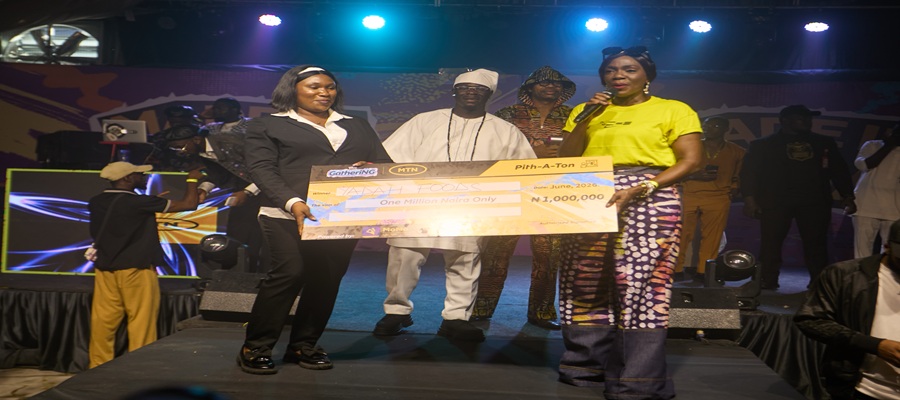
Nigeria’s fast-rising youth culture and innovation community, The Gathering on 100, is heading to Enugu, with registration now open for gamers, performers, DJs, creatives, and culture enthusiasts.

MTN
The Enugu edition will take place on June 19, 2026, at ICC Hall, Okpara Square, and will bring together a new audience for the platform’s signature blend of music, gaming, live performance, community engagement, and youth-driven entertainment.
The Gathering on 100 first gained national attention in Lagos, where it transformed the National Stadium, Surulere, into a continuous 100-hour ecosystem of activity from April 22–26, 2026.
The event combined culture, commerce, entrepreneurship, gaming, fashion, and live entertainment, attracting thousands of young participants and creating opportunities for emerging talent and businesses.
The movement most recently arrived in Aba, where thousands of young people gathered for a weekend of culture, commerce and entrepreneurship, reinforcing the platform’s growing appeal across different communities and audiences.
The move to Enugu is being framed by organisers as a deliberate expansion into one of Nigeria’s largest student and youth populations. Home to major institutions including the University of Nigeria, Nsukka (UNN), Enugu State University of Science and Technology (ESUT), the Institute of Management and Technology (IMT), Godfrey Okoye University and Coal City University, Enugu attracts thousands of young people from across the country each year, creating a vibrant community shaped by education, creativity, entertainment and entrepreneurship.
This concentration of young talent has helped fuel a growing ecosystem of creators, performers, gamers, digital entrepreneurs and small business owners.
In recent years, the city has hosted an increasing number of technology, entertainment and youth-focused events, reflecting the growing demand for platforms that bring together creativity, opportunity and community.
These dynamics make Enugu a natural next stop for The Gathering on 100, a platform built around showcasing talent, fostering connections and creating opportunities for young Nigerians.
Registration for the Enugu edition is now open through The Gathering’s official website, with participation available across multiple categories including gaming, rap battles, DJ competitions, dance, live performances and entrepreneurship.
A key highlight of the event will be the Pitchathon, where emerging founders and business owners will have the opportunity to present their ideas before a panel of judges for a chance to secure grant funding and support for business growth.
The gaming segment will feature competitive tournaments and interactive experiences designed for both casual and serious players, while rap battles and DJ showdowns will spotlight rising talent from Enugu and neighbouring states.
Attendees can also expect a large scale rave experience, live entertainment and community driven activities designed to bring together different corners of the region’s youth culture under one roof.
Beyond the entertainment, organisers say The Gathering on 100 is designed to create real opportunities for young people to connect, collaborate and gain visibility for their talents, ideas and businesses.
As the movement continues its expansion across Nigeria, the Enugu edition is expected to showcase the city’s unique blend of creativity, ambition and cultural influence while providing a platform for the next generation of innovators, performers and entrepreneurs.

Nigeria Launches FreeTV Nationwide

NIPOST Plans Digital Postcodes for Every Building in Nigeria

Enugu to Host The Gathering on 100 as MTN-Backed Youth Movement Expands Across Nigeria

Prof. Dzidonu Urges Universities to Produce Deep Thinkers for AI Age

FG Debunks Claims of Plans to Introduce Telecoms, Fuel Taxes

CBN Extends PoS Geo-Fencing Enforcement Deadline to August 2026

NCC Drafts New Rules for Virtual Mobile Operators

London Strengthens Global Investment Ties with Africa @ First Ever London-Africa Business Summit

FG Targets Alleged N3tn Capital Flight, Opens Airtime Credit Market to Nigerian Fintechs

Easybuy Partners WAWUAfrica to Upskill 10 Million Youths and Women, Boosting Nigeria’s Economic and Financial Inclusion




 E-Business2 days ago
Galaxy Backbone @ 20, Pledges Nationwide Connectivity, Data Sovereignty

 E-Financial2 days ago
CBN Orders Banks, Fintechs to Host Payment Data Locally

 E-Financial2 days ago
Analysts Warn of Growing “Crowded Trade” in Foreign Exchange Markets

 Telecom1 day ago
MTN Foundation Commits N32Bn in Projects across Nigeria

 Telecom2 days ago
Nigeria Innovation Summit 2026 Set to Convene West Africa’s Brightest Minds to Shape the Future of Innovation

 Telecom2 days ago
UK Bans TikTok, Instagram, Facebook for Under-16s in Landmark Crackdown

 News2 days ago
PalmPay Joins Industry Leaders @ Digital Pay Expo 2026

 E-Financial2 days ago
ACAMB Kicks-off 30th Anniversary Celebration With Tree Planting Initiative