

Telecom
NCC, Stakeholders Move to Utilise 70/80GHz Spectrum Band


Ubiquitous broadband availability and affordability have become panaceas in measuring countries’ readiness to play in 21st Century world; and its transformative power as an enabler for economic and social growth makes it an essential tool for empowering people, creating an environment that nurtures the technological and service innovation, and triggering positive change in business processes as well as in society as a whole.
In line with this, the Nigerian Communications Commission (NCC) on Thursday convoked a Stakeholder Consultative Forum in Lagos on plans and licensing of 70/80GHz Spectrum Band.
Nigeria, in the comity of telecommunications advancing nations, is noted for its sheer size and diversity with attached challenges, both for policy-makers and service providers.
The speed and scale of take-up for mobile phones, for instance, has been staggering but until recently this has not been matched by Internet take-up.
However, NCC believes that mobile broadband has accelerated the number of Internet users and looks set to increase overall levels of penetration in the future through the by exploring options for licensing users in the 70/80 gigahertz (GHz) Spectrum band.
The 71-76 and 81-86 GHz bands, widely known as “e-band”, are permitted worldwide for ultra high capacity point-to-point communications.
Meanwhile, e-band propagation characteristics are comparable to those at the widely used microwave bands, and with well characterized weather characteristics allowing rain fade to be understood, link distances of several miles can confidently be realized.
Industry stakeholders, service providers, investors, financiers, VAS providers, and experts joined NCC’s management to chart the way forward for the licensing of service providers in this band within the Nigerian telecom industry.
In an address to the stakeholders, Dr. Eugene Juwah, executive vice chairman of NCC, observed that the 70/80 gigahertz (GHz) Spectrum band is yet to be fully explored and exploited in Nigeria.
Juwah added that beyond the Spectrum band usage and application lie the critical part of how to share the resources for the common good of the investor community, the service provider community and the consumer community.
The EVC who was represented by Alhaji Mohammed Bintube, a member of NCC board, said, “The challenge is how to balance the interest of the stakeholders and yet deliver the values available or derivable from this scare resource”
“On our part, we are also looking at how to align these potentials with the existing services and how it will affect the future outlook of the industry. Our zeal to achieve ubiquitous broadband availability across our nation is not a hidden agenda. We believe that effective and efficient sharing or allocation of the radio spectrum in the 70/80 GHz Band, for commercial use will provide a fillip in that direction”.
The NCC Boss said they had looked at the spectrum and the several licensing models and pricing schemes, believing that inputs from the diverse segments of the industry would enrich the Commission’s decisions.
On his part, Austin Nwaulune, director, Spectrum Administration at NCC, reiterated the economic benefits of the Spectrum Band, adding that e-band wireless systems offer the most compelling alternative to buried fiber with the following advantages over competing high capacity wireless technologies.
Apart from the robust weather resilience, long distance transmissions, guaranteed interference protection, and low cost, rapid license availability, e-band Spectrum band also offers the highest data rates of any wireless technology, with systems available that offer 1 Gbps and above full-duplex throughput.
He said that with budget friendly pricing regime NCC will licence the Spectrum band, the apex regulator hopes to, “address the growing demands by operators for data centric, high speed and high capacity links for metropolitan environment, as it is replica of fibre in the air. It will further assist the Commission’s drive for national Broadband Wireless Access (BWA) initiative and reduce the pressure and management challenges experienced with the Traditional Microwave Frequency Bands”.
Nwaulune also said, the measure will ensure broadband services become more accessible and pervasive with quality that is desirable.
Meanwhile, Mr. Ken Spann, MD/CEO, WaveTek Nigeria limited, testified that during the test-run of the Spectrum Band processes on Apapa-Surulere axis in Lagos, they found the wireless systems offer the most compelling alternative to buried fiber with competing high capacity wireless technologies.
Engineer Lanre Ajayi, president, Association of Telecommunication Company of Nigeria (ATCON), also applauded NCC for the decision to engage industry stakeholders on the plan and licencing.
According to him, experiences in the past were not too palatable to the operators who were meant to adhere strictly to NCC regulations without options of adding inputs.
At same time, NCC said that operators are expected to be professionals in the management of the process and adhere strictly to technical issues that may arise.
The process, Nwaulune said, will be in form of ‘light licencing’, but not without some evaluations, essentially, to ensure the licensees are discouraged for keeping the licences becoming dormant.


An Australian federal court has upheld a fine against social media platform X over failures to comply with child internet safety regulations, bringing to an end a three-year legal dispute between the company and Australian authorities.

The case stemmed from a demand issued in February 2023 by Australia’s online safety regulator, the eSafety Commission, requesting detailed information on how the platform, then known as Twitter, was combating the spread of child sexual abuse material online.
Following the platform’s transition to X under billionaire entrepreneur Elon Musk, regulators accused the company of submitting incomplete responses to repeated requests for information.
A federal court had earlier ruled in October 2024 that X was legally obligated to comply fully with the notice issued by the regulator.
On Thursday, the court ordered the company to pay a fine of 650,000 Australian dollars (approximately 464,900 U.S. dollars).
Federal Justice Michael Wheelahan said the penalty was necessary to ensure compliance by large technology firms.
“A penalty near the maximum is appropriate in the case of the respondent, which is a substantial corporation, so that it operates as a real deterrent and is not simply a cost of doing business,” he said.
Australia has emerged as one of the leading countries advocating stricter regulation of major technology platforms.
The country recently introduced world-first legislation aimed at banning children under the age of 16 from accessing certain social media platforms.
Countries including France, United Kingdom and Canada are reportedly considering similar measures following consultations with Australian authorities.
Reacting to the judgment, eSafety Commissioner Julie Inman Grant said transparency remained essential in holding technology companies accountable.
“Meaningful transparency is critical to holding technology companies to account,” she said.
“This is not only a key part of our work as Australia’s online safety regulator, it also provides the Australian public with important information about how these companies are tackling the worst-of-the-worst content on their platforms,” she added.
Telecom
MTN Nigeria Tops Gender Equality Rankings After Major Workplace Transformation, IFC Report Reveals

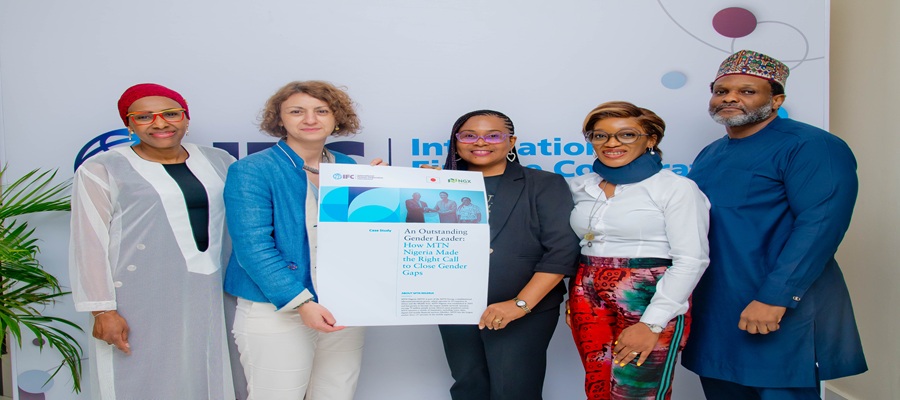
MTN Nigeria Communications Plc has been featured in a newly published case study by the International Finance Corporation (IFC), highlighting how leading companies are advancing gender equality through practical, business-led actions under its Nigeria2Equal programme.

MTN Nigeria
The case study spotlights MTN Nigeria’s transformation into a top performer in workplace gender equality following its participation in the programme between 2021 and 2023.
During this period, the company moved from 13th position to become the top-performing organisation from 30 most capitalised companies listed on the Nigerian Exchange Group. The report was based on an independent assessment conducted by Equileap and verified by PwC.
In the IFC case study, Karl Toriola, Chief Executive Officer of MTN Nigeria, stated, “A diverse, inclusive, and equitable workforce is critical to the success and sustainability of our business.
“We are committed to promoting gender inclusiveness, equality, and empowerment internally as well as across our ecosystem to ensure that interventions are holistic and position women to thrive effortlessly.
“If we must narrow the gender gap and address the disproportionate representation of women in the private sector, I believe that business leaders and CEOs must disproportionately allocate resources to support women across all levels.”
Implemented in partnership with the Nigerian Exchange Group, the Nigeria2Equal programme is designed to reduce gender gaps across leadership, employment, and entrepreneurship in Nigeria’s private sector.
MTN Nigeria joined the initiative in 2021, making commitments across these areas while strengthening its broader advocacy for gender equality.
According to the IFC publication, MTN Nigeria built on its existing diversity and inclusion framework by adopting a more structured and data-driven approach to gender equality. With IFC’s advisory support, the company undertook diagnostics to identify gaps, introduced targeted policies, and aligned its practices with global standards.
A major milestone outlined in the report is MTN Nigeria’s attainment of the EDGE MOVE certification in 2023, a globally recognised benchmark for workplace equity.
This achievement made it the first wireless telecommunications company in Africa and the second organisation in Sub-Saharan Africa to reach this level, reflecting progress across leadership representation, pay equity, organisational culture, and flexible work policies.
The case study also details a range of initiatives implemented by the company, including targeted recruitment and promotion of women, strengthened mentorship programmes, expanded parental leave policies, and deliberate efforts to increase the participation of women-led businesses within its value chain.
These actions contributed to measurable improvements in female representation, including achieving gender balance at the executive level.
Beyond internal policies, MTN Nigeria expanded its role in advancing gender equality through advocacy and transparency. The company became a signatory to the UN Women’s Empowerment Principles and now reports gender-focused initiatives and targets in its annual disclosures.
The IFC case study positions MTN Nigeria as an example of how sustained leadership commitment, independent assessment, and measurable actions can drive meaningful progress on gender equality within the private sector.
MTN Nigeria says it will continue to build on this momentum, with a target of achieving a 50:50 gender balance across its workforce by 2030, while deepening efforts to create inclusive opportunities for women across its operations and ecosystem.
Telecom
Microsoft, Partners Launch ‘LINGUA Initiative’ to Save African Languages From Digital Extinction
Microsoft.com has launched the LINGUA Africa Open Call, a new initiative aimed at strengthening the development of inclusive artificial intelligence solutions for African languages and underserved communities across the continent.

LINGUA Africa Initiative
The programme, unveiled in partnership with the Gates Foundation, Masakhane African Languages Hub, and Google.org, seeks to close the widening AI language gap that continues to exclude thousands of African languages from modern digital systems.
According to Microsoft, many African languages remain significantly underrepresented in AI datasets, models, and tools, limiting access to digital services in areas such as healthcare, education, agriculture, financial inclusion, and government services.
The company said the initiative is designed to support the creation of open language resources, AI models, translation tools, datasets, and sector-focused applications that can help communities interact with technology in their native languages.
Howard Lakougna, senior program officer at the Gates Foundation, said the initiative aims to remove barriers that have historically slowed AI innovation across Africa.
“LINGUA Africa seeks to encourage bold and innovative thinking by breaking down barriers that have long held back AI progress across the continent,” Lakougna stated.
The open call is inviting proposals from universities, nonprofits, startups, research institutes, cultural organisations, social enterprises, and collaborative consortia working in the public interest. Organisations outside Africa may also apply, provided they demonstrate meaningful partnerships with African institutions or communities.
Selected projects will receive funding support, Azure and Google Cloud compute credits, as well as technical collaboration opportunities from Microsoft’s AI for Good Lab and other ecosystem partners.
Microsoft outlined three key categories for support under the initiative:
· Data creation projects focused on building, documenting, validating, or translating African language datasets and resources;
· Model and tool development initiatives for AI models, benchmarks, and infrastructure;
· Sectoral applications deploying AI language technologies in real-world settings such as healthcare, education, agriculture, financial inclusion, and public services.
Funding support could range from up to $50,000 for data-focused projects to as much as $450,000 in cash for high-impact sectoral applications, alongside additional compute credits totally $1,050,000.
The initiative builds on Microsoft’s broader work around low-resource languages and follows the earlier LINGUA Europe programme, which supported AI resources for underrepresented European languages.
Africa is home to more than 2,000 languages, yet only a small fraction are represented in major AI systems and large language models.
Researchers have repeatedly warned that the lack of African language representation in AI could deepen digital inequality and limit participation in the emerging AI economy.
Recent research efforts across the continent have highlighted the growing need for African-led AI infrastructure and datasets.
In Nigeria, researchers continue to push for broader representation of minority languages beyond Hausa, Igbo, Yoruba, and Nigerian Pidgin, which currently dominate most local AI language research.
Microsoft said all supported projects under LINGUA Africa will be expected to contribute openly licensed resources that can be reused in research, open-source models, and practical applications.
Applications for the programme will close on June 15, 2026.
Interested applicants can access more information through Microsoft’s official website

LG Electronics Showcases Advanced HVAC Solutions at Mega Clima Nigeria 2026

FG Unveils AI Public Services Platform

Australian Court Upholds Fine Against X Over Child Safety Compliance Failures

MTN Nigeria Tops Gender Equality Rankings After Major Workplace Transformation, IFC Report Reveals

Microsoft, Partners Launch ‘LINGUA Initiative’ to Save African Languages From Digital Extinction

MTN, VDT, Zoracom, Digital Realty Back 2026 Girls in ICT Campaign

Vitel Wireless Partners Fintechs to Expand Access to Services

Kaspersky Discovers Vulnerability in Qualcomm Snapdragon Chips that can Lead to Data Loss & Device Compromise

Bank Customers to Pay N1,500 for ATM Card Issuance, Replacement – CBN

FG Okays 112 as Toll-Free National Emergency Response Number




 News3 days ago
Systems, Not Skin Colour, Hold the Key to Africa’s Development, Says Evans Woherem

 Telecom2 days ago
Google unveils Gemini-powered advertising, commerce tools at Marketing Live 2026

 E-Financial2 days ago
Griffin Capital Group Launches Integrated Financial Services Group Positioned to Strengthen Capital Formation in Nigeria, Africa

 Telecom2 days ago
Nigeria gets AI-ready Lagos data centre

 E-Business2 days ago
Kaspersky Detected More than 92,000 Malware Attacks Disguised as AI Services in Four Months

 E-Financial2 days ago
CBN to Simplify Bank Alerts over Rising Customer Complaints

 Telecom2 days ago
Telcos in Nigeria, other Emerging Markets Squeezed by Diesel Crisis

 Telecom2 days ago
ipNX Seeks Coordinated Action on Fibre Deployment @ National Dig-Once Forum