

E-Business
Mobile Money Stirs New Mobile Revolution

Mobile phones, once exclusive preserve of the rich now presents an opportunity to start a second wave of mobile money revolution in Nigeria.
As The Economist reported mobile phones have evolved in a few short years to become tools of economic empowerment for the world’s poorest people.
These phones compensate for inadequate infrastructure, such as bad roads and slow postal services, allowing information to move more freely, making markets more efficient and unleashing entrepreneurship.
All this has a direct impact on economic growth: an extra ten phones per 100 people in a typical developing country boosts GDP growth by 0.8 percentage points, according to the World Bank. More than 4 billion handsets are now in use worldwide, three-quarters of them in the developing world. Even in Africa, four in ten people now have a mobile phone. In Nigeria, there are more than 70 million subscribers.
With such phones now so commonplace, a new opportunity beckons: mobile money, which allows cash to travel as quickly as a text message. Across the developing world, corner shops are where people buy vouchers to top up their calling credit.
Mobile-money services allow these small retailers to act rather like bank branches. They can take your cash, and (by sending a special kind of text message) credit it to your mobile-money account. You can then transfer money (again, via text message) to other registered users, who can withdraw it by visiting their own local corner shops. You can even send money to people who are not registered users; they receive a text message with a code that can be redeemed for cash.
By far the most successful example of mobile money is M-PESA, launched in 2007 by Safaricom of Kenya. It now has nearly 7m users—not bad for a country of 38m people, 18.3m of whom have mobile phones.
Similar schemes are popular in the Philippines and South Africa but not in Nigeria.
Extending mobile money to Nigeria would have a huge impact.
It is a faster, cheaper and safer way to transfer money than the alternatives, such as slow, costly transfers via banks and post offices, or handing an envelope of cash to a bus driver.
Rather than spend a day traveling by bus to the nearest bank, recipients in rural areas can spend their time doing more productive things.
Mobile money progress has however been impeded by banks, which fear that mobile operators will eat their lunch, and by regulators, who worry that mobile-money schemes will be abused by fraudsters and money-launderers.
In many countries mobile money has been blocked because operators do not have banking licences and their networks of corner-shop retailers do not meet the strict criteria for formal bank branches.
Banks and regulators elsewhere should take note. Instead of lobbying against mobile money, banks should see it as an exciting chance to exploit telecoms firms’ vast retail networks and powerful brands to reach new customers.
Tie-ups between banks and operators will help reassure regulators. But they, too, need to be prepared to be more flexible. People who want to sign up for mobile-money services should not, for example, have to jump through all the hoops required to open a bank account.
Concerns about money-laundering can be dealt with by imposing limits (typically $100) on the size of mobile-money transactions, and on the maximum balance. And inflexible rules governing the types of establishments where cash can be paid in and taken out ought to be relaxed.


E-Business
Jumia Nigeria Records Strong Q1 2026 Growth as Technology-Led Strategy Drives Market Expansion

Jumia has announced strong first-quarter 2026 performance results, with Nigeria emerging as one of the company’s standout growth markets across Africa, reinforcing the country’s position as a critical driver of the company’s long-term expansion strategy.

According to the company’s Q1 2026 financial results released May 7th, 2026, Nigeria recorded a 42% year-on-year increase in physical goods Gross Merchandise Value (GMV), making it one of Jumia’s strongest-performing markets during the period.
Commenting on the performance, Temidayo Ojo, CEO of Jumia Nigeria, said, “Nigeria continues to demonstrate the strength and resilience of its digital commerce ecosystem. The growth we recorded in Q1 reflects increasing consumer confidence, stronger engagement across our platform, and our continued investment in technology, logistics, and customer experience.”
“We are seeing more Nigerians embrace e-commerce not just for convenience, but as a trusted part of everyday life. Our focus remains on building a platform that is more accessible, more reliable, and more relevant to the evolving needs of Nigerian consumers and sellers,” Ojo further mentioned.
The company attributed its broader growth trajectory to disciplined execution, operational efficiency, and increased deployment of technology and AI-driven systems across its operations.
According to the report, Jumia leveraged artificial intelligence and automation across operations, finance, customer support, cybersecurity, seller management, logistics, and technology teams to improve service quality while reducing operational costs company-wide.
The company also noted that technology and content expenses declined year-on-year due to ongoing headcount optimisation and savings from renegotiated technology contracts, while operational leverage continued to improve. They further highlighted increased use of AI tools among its technology teams, alongside automation in call centres and operational systems, as part of efforts to scale sustainably while improving efficiency across African markets.
Across the platform, Jumia reported significant gains in customer retention and marketplace engagement. Quarterly Active Customers reached 2.5 million, while physical goods orders climbed to 5.9 million in Q1 2026.
The company also expanded usage beyond major urban centres, with 62% of total orders now coming from secondary cities and upcountry regions, emphasising the growing reach of digital commerce across Africa.
Despite global economic pressures, including rising memory chip and CPU prices and supply chain disruptions linked to ongoing Middle East conflicts, the company reaffirmed its path toward profitability. Jumia stated that it remains on track to achieve Adjusted EBITDA breakeven and positive cash flow in Q4 2026, with full-year profitability targeted for 2027.

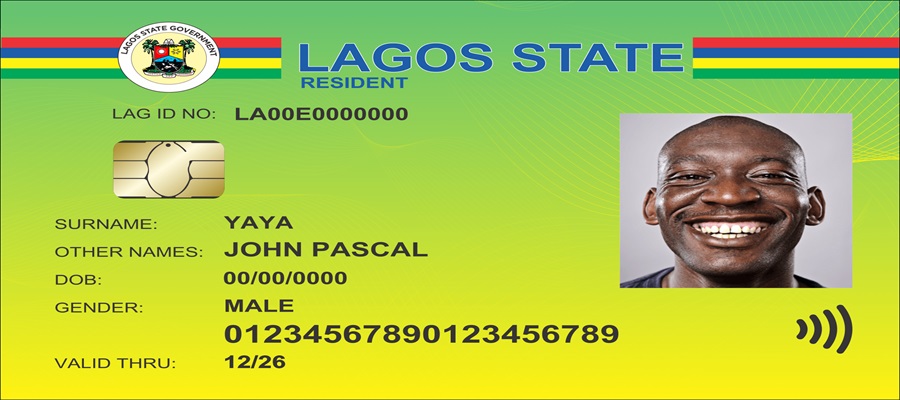
Lagos State government has disclosed that more than 6.4 million residents have so far been captured under the Lagos State Residents Registration Agency (LASRRA) exercise as part of efforts to strengthen governance, planning and service delivery across the state.

Tobosun Alake, commissioner for Innovation, Science and Technology, revealed this during the ongoing ministerial press briefing marking the second-term anniversary of Governor Babajide Sanwo-Olu.
According to Alake, a total of 6,465,667 residents have been enrolled in the residency database, comprising 4,058,333 adults and 2,407,224 children.
The commissioner described the Lagos Identity Card Project, popularly known as LAG ID, as a major component of the state government’s strategy to improve governance efficiency and public service delivery under the THEMES development agenda.
He explained that the initiative was designed to provide government with a reliable and comprehensive population database capable of supporting planning, policy implementation and effective allocation of resources.
Alake noted that the agency operates an open framework that allows government institutions and private sector partners to independently participate in the system while leveraging a centralised data-sharing infrastructure.
According to him, the arrangement creates opportunities for partnerships, improved information management and enhanced value for both residents and businesses operating within Lagos.
The commissioner added that the initiative would further expand opportunities linked to the Lagos Residents Card and deepen the state’s digital transformation drive.
Speaking on security and digital enforcement, Alake disclosed that the state’s Safe City initiative had significantly increased digital traffic enforcement across Lagos.
He revealed that about 86,000 traffic violations were tracked within a few months, bringing the cumulative figure to about 737,000 recorded cases.
On technology-driven governance, the commissioner highlighted the role of Art and Technology Lagos, an annual conference organised by the Eko Innovation Centre in collaboration with the Lagos State Government.
According to him, the conference brings together technology stakeholders, policymakers, innovators and government officials to drive conversations around the development of a smarter and digitally connected Lagos.
Alake also stated that Lagos currently leads the country in data protection compliance, revealing that the state now has 109 certified data protection officers responsible for ensuring compliance and safeguarding residents’ data.
He explained that the government’s digital platforms now generate robust analytics that help authorities understand public interaction with online services.
“With technology, the state government has been able to know that an average 250,000 visit monthly,” he said.
“When we see our daily visitors on our online platform we are able to tell how many people are visiting our platforms, what they are clicking on and what they are using.
“Some of the services they are related with so we have backend analytics to tell us the number of visitors. I think the back end analytics is very robust and we respond to questions very quickly,” Alake added.
The commissioner further disclosed that the state had completed about 3,000 kilometres of fibre optic duct infrastructure extending to areas such as Alimosho, Ikorodu and Ibeju-Lekki.
He added that the government was planning to expand the infrastructure to 5,000 kilometres through partnerships with private sector investors.
E-Business
Firm Shares Insights into Ransomware Trends and Tactics @ International Anti-Ransomware Day-2026

On International Anti-Ransomware Day, May 12, Kaspersky shares a report with an overview of ransomware trends that marked 2025 and insights into what the threat landscape holds in 2026.

According to Kaspersky Security Network, in 2025 Latin America had the highest share of organisations with ransomware attacks detected (8.13%), followed by the Asia-Pacific region (7.89%), Africa (7.62%), Middle East (7.27%), the Commonwealth of Independent States (CIS, 5.91%) and Europe (3.82%).
The report highlights the rise of “encryption-less” extortion attacks, the use of post-quantum cryptography by ransomware groups, and the persistent use of Telegram channels by cybercriminals to distribute compromised data sets and credentials.
Despite a slight decline in the overall share of organisations attacked by ransomware in 2025 compared to 2024, users remain at significant risk as attackers industrialise their operations, automate intrusion methods, and increasingly focus on stealing and leaking sensitive data rather than simply encrypting systems.
One of the trends in 2025 is the continued rise of endpoint detection and response (EDR) “killers” – tools specifically designed to disable endpoint security solutions before executing the malware itself. EDR killers have become a standard component of attacks, which means more deliberate and methodical intrusions.
Researchers also noted the emergence of ransomware families adopting post-quantum cryptography standards – this was predicted by Kaspersky previously. The development signals a concerning shift toward encryption methods that could resist future quantum computing decryption attempts.
The role of Initial Access Brokers (IABs) – cybercriminal intermediaries that sell pre-compromised corporate access through underground forums and messaging platforms – is growing. RDWeb portals (websites through which devices can be controlled remotely) are increasingly targeted as ransomware groups continue to industrialise attacks through “Access-as-a-Service” operations. As a result, the barrier to launching ransomware attacks declines.
Telegram channels and dark web forums continuously function as platforms for the distribution and for the sale of compromised data sets and accesses including those that were obtained as a result of ransomware attacks.
A major underground forum, RAMP, which also functioned as a platform through which threat actors advertised their ransomware services and published service‑related updates, got seized by authorities in January 2026.
Another underground forum, LeakBase, where malicious actors distributed exfiltrated and compromised data, was seized in March 2026. However, while law enforcement agencies are actively shutting down dark web platforms and ransomware data leak sites, similar portals may appear over time.
Active groups
Among the most active ransomware groups in 2025 based on data leak sites, Kaspersky identified Qilin as the dominant ransomware-as-a-service (RaaS) operator following RansomHub’s seizure of operations. Clop ranked as the second most active group, with Akira in the third place.
While several major ransomware groups stopped operation in 2025, new actors emerge. Looking at 2026, the Gentlemen is one of the most important new ransomware actors due to the group’s rapid growth, structured operations, and increasing focus on data-centric extortion. The group may include attackers formerly associated with other major ransomware operations.
The Gentlemen exemplify a broader shift in the ransomware ecosystem away from chaotic, high-noise campaigns toward scalable, business-like extortion models focused primarily on stealing sensitive data and leveraging reputational and regulatory pressure rather than relying solely on disruptive file encryption.
“Ransomware has evolved into a highly organised ecosystem focused on monetising stolen data, disabling defences, and scaling attacks with business-like efficiency. Threat actors are quickly adapting, weaponising legitimate tools, exploiting remote access infrastructure, and even adopting post-quantum cryptography years earlier than many expected.
“The purpose of Anti-Ransomware Day is to raise global awareness about the threats posed by ransomware and to promote best practices for prevention and response, and we urge all users to stay secure, set up layered defences, invest in backups and boost cyberliteracy levels to counter attacks,” comments Fabio Assolini, Lead Security Researcher at Kaspersky GReAT.
On Anti-Ransomware Day and beyond, Kaspersky encourages organisations to follow these best practices to safeguard from ransomware:
- Enable ransomware protection for all endpoints. There is a free Kaspersky Anti-Ransomware Tool for Business that shields computers and servers from ransomware and other types of malware, prevents exploits and is compatible with already installed security solutions.
- Always keep software updated on all the devices you use to prevent attackers from exploiting vulnerabilities and infiltrating your network.
- Focus your defence strategy on detecting lateral movements and data exfiltration to the Internet. Pay special attention to outgoing traffic to detect cybercriminals’ connections to your network. Set up offline backups that intruders cannot tamper with. Make sure you can access them quickly when needed or in an emergency.
- Companies from non-industrial sector can protect themselves by installing anti-APT and EDR solutions that enable capabilities for advanced threat discovery and detection, investigation and timely remediation of incidents. Organizations can also provide their SOC teams with access to the latest threat intelligence and regularly upskill them with professional training.

Xenophobic Attacks: Anonymous Nigeria Threatens to Leak South African Stolen Data

WHO Says Ebola Outbreak Worse than Reported

Chapel Hill Denham Says Banks Lose N2.5 Trillion Annually to High CRR in New Report

Lagos Sanctions 15 Money Lending Firms for Operational Violations

FirstBank, Visa Launch Multicurrency Signature, Naira Debit Cards

MTN, VDT, Zoracom, Digital Realty Back 2026 Girls in ICT Campaign

Vitel Wireless Partners Fintechs to Expand Access to Services

Kaspersky Discovers Vulnerability in Qualcomm Snapdragon Chips that can Lead to Data Loss & Device Compromise

Bank Customers to Pay N1,500 for ATM Card Issuance, Replacement – CBN

FCCPC Licenses 5 Firms for Airtime, Data Lending as Telcos Step Aside




 General News2 days ago
World Bank Blocks Social Media Comments from Nigerians over Loan Backlash

 Telecom2 days ago
NITDA, FMCIDE Deepen Collaboration on Nigeria’s Digital Transformation

 E-Business2 days ago
Jumia Nigeria Records Strong Q1 2026 Growth as Technology-Led Strategy Drives Market Expansion

 Telecom2 days ago
Nigerians Lose N12.5bBn to Telecom-Related Financial Crimes – PwC

 General News2 days ago
LG Electronics Strengthens Household Energy Efficiency in Nigeria with Advanced Inverter Refrigerator Solutions

 Telecom2 days ago
NITDA Showcases Nigeria’s Startup Framework as Model for Angola

 News2 days ago
Only 1 in 3 Families Fully Secure their Devices, Kaspersky Study Reveals

 Telecom2 days ago
Upperlink, ICANN, Others Rally Global Participation for UA Day 2026