

General News
ARCHOS Unleashes Fusion Storage for Nigerian Users

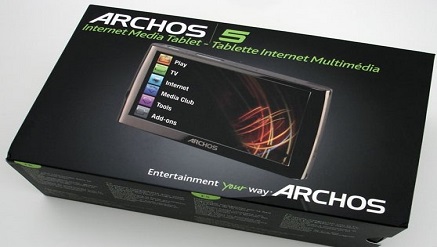
Since the debut of Archos brand in Nigeria early this year, the Company that pioneers the portable audio and video player market, and now specializing in Android Tablets and Smartphones, it has repeatedly revolutionized the market for consumer electronics since 1988.
Today, ARCHOS offers its own line of Android Tablets and Smartphones, as well as a full line of OEM devices.
In 2000, ARCHOS launched the Jukebox 6000, the first MP3 player combined with a hard disk.
In 2008, ARCHOS launched the first generation Internet Tablets, and then the first ever Android powered tablets in 2009.
In 2013, ARCHOS launched its first generation of Smartphones with the ARCHOS Platinum series. ARCHOS has offices in the United States, Europe and Asia.
ARCHOS is quoted on Compartment C of Eurolist, Euronext Paris.
The Company has not rested on its oars to fulfilling her promises by making Nigerians have good value for their money.
ARCHOS Fusion Storage, a software innovation, recently unveiled by the French brand at this year’s Mobile World Congress in Barcelona, will be available via update (Over the Air) from today, May the 5th, 2015 on the ARCHOS 101 Oxygen, ARCHOS 50 Diamond, ARCHOS 52 Platinum, and ARCHOS 50b Helium.
It merges the internal memory capacity of the device itself with that of the Micro SD card in order for users to enjoy more applications or content.
A Long-Awaited Feature By Android Users
Ademola Olukotun, country manager, said that the R&D team of ARCHOS worked on the lower layers of the operating system from Google and its Kernel core.
It thus provides a much-needed storage option for users of Android tablets or smartphones.
This feature automatically reconciles the memory allocation problem between the internal storage and microSD card while providing increased capacity.
Key Features f ARCHOS Fusion Storage
-The touch stone for the user is that significant space is gained to hold more applications and content.
Upon activation of the merged storage, data is automatically accommodated in the internal memory of the tablet or smartphone and is then sorted.
The application files will be sent primarily to the internal memory of the tablet or smartphone, while data, photos, videos, and more will be directed to the memory card.
The space of the device is thereby increased and optimized considerably.
-Another advantage is a reversibility of the process.
The fusion of internal storage with the external storage SD card is seamless: the user can choose to return to the original separated settings at any time.
Free And Availability
The ARCHOS Fusion Storage feature is available for activation from May the 5th, 2015, free of charge, to the holders of the ARCHOS 50 Diamond models, ARCHOS 52 Platinum, ARCHOS 50b Helium, and the ARCHOS 101 Oxygen tablet.
New products in the Xenon line (ARCHOS 62 Xenon and ARCHOS 59 Xenon) integrate this innovation from launch.



A recent study – Nigeria’s Credit Landscape Report 2025 – has revealed a striking paradox in the nation’s financial ecosystem, revealing that while more Nigerians are becoming financially included, only about 6% of adults currently access credit through formal financial institutions.

Published by Credit Direct in June 2026, the report highlights that although more than 64% of Nigerian adults are financially included, formal credit penetration remains significantly low. Credit to the Nigerian private sector stands at just 13.1% of GDP, well below peer African economies such as Kenya and South Africa. The findings point to persistent barriers to credit access for households, entrepreneurs and small businesses, despite improving economic conditions and growing business activity across key sectors of the economy.
The report also notes that Nigeria’s real sector recorded sustained expansion throughout 2025, with manufacturing, services and agriculture posting positive growth indicators, creating increased demand for working capital and business financing.
Reacting to the findings, Mutual Benefits Assurance Plc said the report reinforces the urgent need for a more holistic approach to financial inclusion, one that combines access to finance with savings, insurance protection and long-term financial planning.
The leading insurer noted that while access to credit remains important for economic growth, financial protection mechanisms are equally essential in helping individuals and businesses withstand economic shocks.
Through its diverse portfolio of solutions, Mutual Benefits continues to provide Nigerians with tools to build, preserve and protect wealth. These include education-focused protection plans, life assurance products, savings-oriented solutions, motor and property insurance and business protection products designed to safeguard livelihoods and future goals.
According to the Managing Director, Mutual Benefits Assurance Plc, Femi Asenuga: “The conversation around financial inclusion must go beyond opening bank accounts and accessing loans. True financial empowerment is achieved when individuals and businesses can access financing opportunities while also protecting their income, assets, families and future aspirations from unforeseen risks.
“For many Nigerian families and business owners, a single unexpected event such as a medical emergency, fire incident, business disruption or loss of income, can erase years of financial progress. This is why insurance and disciplined savings remain critical pillars of long-term financial resilience.”
The report further reveals that Microfinance Banks account for only 5.4% of Nigeria’s total loan book, underscoring the need for stronger support for SMEs and underserved communities that often struggle to access conventional bank financing.
As part of its commitment to advancing financial inclusion, Mutual Microfinance Bank continues to deliver accessible financing solutions tailored to the needs of small businesses, traders, salary earners, entrepreneurs and emerging enterprises across Nigeria. As at December 31, 2025, the Bank had disbursed loans totaling N1.372 billion, further strengthening access to formal credit for individuals and businesses across its target segments. This growth trajectory continued into 2026, with the loan portfolio rising to N1.558 billion by the end of Q1 2026, reflecting sustained momentum in supporting productive economic activity
Asenuga added: “Small businesses remain the backbone of Nigeria’s economy, yet many continue to face significant barriers in accessing affordable financing. Through Mutual Microfinance Bank, we are helping to bridge this gap by providing flexible financial solutions that enable entrepreneurs to grow, create jobs and contribute meaningfully to economic development.
“At the same time, we encourage individuals and businesses to think beyond borrowing by adopting a culture of saving, risk management and financial protection. Sustainable prosperity is built not only by generating income but also by protecting it.”
With economic activity expected to strengthen further and demand for financing projected to increase across several sectors, Mutual Benefits believes that the future of financial inclusion in Nigeria will depend on creating an ecosystem where access to credit, savings and protection work together to improve financial well-being.
The company reaffirmed its commitment to supporting Nigerians through innovative insurance solutions and accessible financial services that empower individuals, families, and businesses to build resilience, pursue opportunities confidently, and achieve lasting financial security.
Mutual Benefits Assurance Plc is one of Nigeria’s leading insurance companies with over 30 years of experience in providing reliable and innovative life and non-life insurance solutions to individuals, families and businesses. Through innovation, customer-centricity and a commitment to financial inclusion, the company continues to deliver value, protection and peace of mind to customers across Nigeria.
On its part, Mutual Microfinance Bank is committed to expanding access to financial services for individuals, micro-enterprises and small businesses through innovative savings products, accessible financing solutions and customer-focused banking services that promote economic empowerment and financial inclusion.
General News
Trashverse Recycling Technology Emerges Winner as MTN’s The Gathering on 100 Pitchathon Concludes with N5m Awarded in Aba


MTN Nigeria has successfully concluded the Aba leg of its youth cultural and creative movement, The Gathering on 100. The 18-hour event marks a significant milestone for entrepreneurship in Eastern Nigeria.

The event, which took place at the Prime Time Event Centre in Osisioma from June 14 to 15, 2026, transformed the venue into a tech hub for young innovators in Aba.
The Pitchathon had 10 standout startups compete for a total prize pool of ₦5 million. The competition showcased the immense potential of Aba’s youth, encouraging them to live life to the fullest through technological and creative excellence.
The participating startups, representing a cross-section of Aba’s burgeoning innovation ecosystem, impressed judges with solutions ranging from logistics to artisanal tech. Among the finalists were Trashverse Recycling Technology Limited founded by Charles Ikechukwu, Yadah Food, founded by Deborah Enyinnaya and Utytrends Global Ventures led by Utibe Akwa.
After a rigorous evaluation by judges Chiemela Anosike, Dr. Chime Chimezie-Uche, and Justina Nwokedi, the winners were officially announced. Trashverse Recycling Technology Limited, led by Charles Ikechukwu, claimed the first-place prize of ₦2.5 million.
Ikechukwu, founder of Trashverse Recycling Technology Limited, shared his excitement “Winning this pitchathon is a dream come true for our team. The support from The Gathering on 100 and MTN validates our vision and provides the financial backing we need to scale our production and serve more customers in Aba and the global stage.”
Utytrends Global Ventures secured the second-place prize of ₦1.5 million, while Yadah Food took home ₦1 million. These founders showcased solutions that blended local ingenuity with scalable technological frameworks, reinforcing Aba’s reputation as a powerhouse of Nigerian manufacturing and entrepreneurial spirit.
The Gathering on 100’s Pitchathon provided a platform for these early-stage founders to validate their business ideas before an audience of investors and industry stakeholders. For the winners, the funding serves as a catalyst to scale their operations and fulfill market demands, effectively bridging the gap between innovative concepts and industrial-scale production.
Reflecting on the Pitchathon, the Regional Manager, Operations, Southern Region, MTN Nigeria, Ifeanyichukwu Odom, said “Aba has always been a city of creators, innovators, and dreamers. Today, we witnessed young people expressing their passions across business, creativity, culture, and technology. The Gathering is about giving them a platform to be seen, heard, and celebrated.”
She noted that the Pitchathon had showcased the depth of talent and innovation emerging from the region, with participants presenting solutions capable of creating meaningful impact in their communities. “The Pitchathon winners made one thing clear, the Eastern Nigeria startup ecosystem is not waiting to be discovered. It is already forming, and it is ready when structure and support meet ambition. Through the power of connectivity and digital innovation, MTN remains committed to helping young Nigerians unlock their potential and Live It 100.”
This Aba edition built on the momentum of the Lagos edition held at the National Stadium, Surulere, in April, where eight startups received ₦45 million in funding. With its Aba execution, MTN has deepened access to opportunity and visibility for the next generation of business leaders.


Dominion Consultancy Concepts has officially announced the second edition of the KidsCook Showdown, a unique educational and creative cooking competition designed to foster leadership, teamwork, creativity and accountability among children ages 6 to 8.

Following its successful debut in 2025, this latest edition marks a significant milestone by securing the official approval of the Lagos State Universal Basic Education Board (LASUBEB). For the first time, the initiative will shine a spotlight on public education, featuring 20 children within the ages of 6 to 8 years old, selected from 10 public primary schools across the Kosofe Local Government Area.
The KidsCook Showdown is far more than a typical cooking contest. Under the close guidance of professional chefs, the young participants will work in teams to tackle fun, high-energy culinary challenges.
Rather than focusing solely on the final dish, a panel of judges will evaluate the children on essential life skills: teamwork, confidence, time management, communication, and hygiene.
Speaking about the vision behind the program, Enitan Tanimowo, Director of Dominion Consultancy Concepts, emphasised the importance of introducing children to household chores early.
“Our goal is to inspire children to see cooking not just as a chore, but as a fun, creative way to develop themselves, learn discipline, and build confidence and these skills help them into the future,” Tanimowo stated.
“By expanding into our public schools with LASUBEB’s vital support, we are ensuring that children from all backgrounds get an equal opportunity to develop leadership and accountability in a structured, inspiring environment.”
Tanimowo added that the initiative directly aligns with the United Nations Sustainable Development Goals—specifically SDG 3 (Good Health and Well-being) and SDG 4 (Quality Education)—by using hands-on, practical learning to promote balanced nutrition and social development. The event is bringing together parents, teachers, and professionals to champion the next generation.
The grand scale of this edition is made possible through the robust corporate and media backing of industry-leading brands. This year’s KidsCook Showdown is proudly supported by Zuri Seasoning, Ribena, Channels TV, Integrated Indigo Limited, and other partners committed to youth development and impactful community engagement in Nigeria.
Together, these partners are helping transform the kitchen into a classroom where future leaders are shaped, one recipe at a time.

Nigeria Launches FreeTV Nationwide

NIPOST Plans Digital Postcodes for Every Building in Nigeria

Enugu to Host The Gathering on 100 as MTN-Backed Youth Movement Expands Across Nigeria

Prof. Dzidonu Urges Universities to Produce Deep Thinkers for AI Age

FG Debunks Claims of Plans to Introduce Telecoms, Fuel Taxes

CBN Extends PoS Geo-Fencing Enforcement Deadline to August 2026

NCC Drafts New Rules for Virtual Mobile Operators

London Strengthens Global Investment Ties with Africa @ First Ever London-Africa Business Summit

FG Targets Alleged N3tn Capital Flight, Opens Airtime Credit Market to Nigerian Fintechs

Easybuy Partners WAWUAfrica to Upskill 10 Million Youths and Women, Boosting Nigeria’s Economic and Financial Inclusion




 E-Business3 days ago
AI-Powered Cyber Threats Put Nigerian Banks on Alert

 E-Financial2 days ago
CBN Orders Banks, Fintechs to Host Payment Data Locally

 E-Business2 days ago
Galaxy Backbone @ 20, Pledges Nationwide Connectivity, Data Sovereignty

 E-Financial2 days ago
Analysts Warn of Growing “Crowded Trade” in Foreign Exchange Markets

 Telecom2 days ago
Nigeria Innovation Summit 2026 Set to Convene West Africa’s Brightest Minds to Shape the Future of Innovation

 Telecom2 days ago
UK Bans TikTok, Instagram, Facebook for Under-16s in Landmark Crackdown

 News2 days ago
PalmPay Joins Industry Leaders @ Digital Pay Expo 2026

 E-Financial2 days ago
ACAMB Kicks-off 30th Anniversary Celebration With Tree Planting Initiative