

News
Vodacom Business Provides Internet Connectivity to Lagos School


The Federal Science and Technical College, Yaba, is well-known for producing some of the country’s best students in the science and technical fields at secondary school level.
To help improve the results of the school even further, Vodacom Business Nigeria has stepped in and provided WiFi services for students and teachers in classrooms, laboratories, workshops and staff offices. Vodacom Business Nigeria also sponsored a 220KVA powered generator to help keep the school connected during power outages.
Guy Clarke, managing director of Vodacom Business Nigeria, said, “Internet penetration in Nigeria is still low, especially in public schools. With the Power to You Project, we aim to bridge the digital divide that exists in communities and schools without access to ICT. It’s for this reason that we’re proud to be able to provide this connectivity to The Federal Science and Technical College, Yaba.”
Speaking at the handover ceremony was Chris Ugorji, principal, Federal Science and Technical College, Yaba, who said, “The vision of the college is to provide the scientific and technical skills, required to produce self-reliant young men and women, ready for tertiary institution and the ICT industry. The sponsorship of high-speed internet access and power generator by Vodacom guarantees this vision and we are happy to be beneficiaries of this project”.
The Vodacom Power to You Project supports public and private schools in the country by ensuring that students and teachers have access to ICT and new telecommunication technologies. The power of the internet is invaluable and connectivity has the potential to transform education and accelerate economic growth in Nigeria.


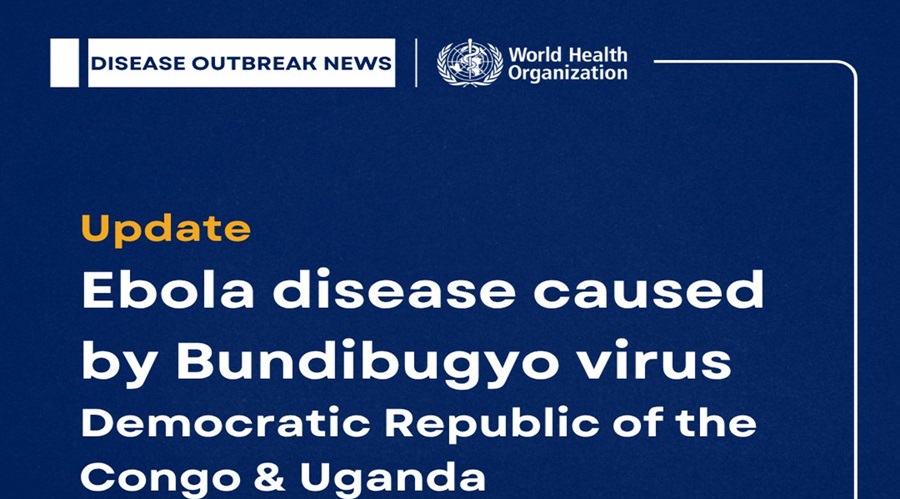
World Health Organisation (WHO) at the weekend declared the Ebola outbreak linked to the rare Bundibugyo virus strain a global public health emergency.

WHO said there is currently no approved vaccine or specific treatment for this strain of Ebola.
At home, Nigeria Centre for Disease Control and Prevention (NCDC) said there is “no confirmed case of Ebola Virus Disease in Nigeria” but had tightened surveillance against the deadly virus.
The outbreak, linked to the rare Bundibugyo strain of Ebola, has already caused dozens of deaths in Congo and spread into Uganda, raising fears of wider transmission across the region.
In response, Nigeria Centre for Disease Control and Prevention said that the country remains on alert because of growing movement across African borders.
Jide Idris, director-general said the agency was “closely monitoring the situation” and working with the Port Health Services and other health agencies to strengthen preparedness nationwide.
He added that surveillance has been increased at entry points and within Nigeria’s health system.
According to the WHO, the outbreak has recorded more than 240 suspected cases and about 80 suspected deaths in Congo’s Ituri province, while imported cases have also been confirmed in Uganda’s capital, Kampala.
The WHO said the outbreak is “extraordinary” because of uncertainty around the true number of infections and the lack of approved medical countermeasures for the Bundibugyo strain.
Health authorities advised Nigerians to maintain proper hygiene, avoid contact with infected persons and report symptoms such as fever, weakness, vomiting and bleeding to the nearest health facility immediately.
Nigeria was declared Ebola-free in 2014 after successfully containing an outbreak brought into the country by an infected traveler from Liberia.


Africa’s digital payments ecosystem will take center stage as Digital PayExpo 2026 returns to Lagos on June 17–18, 2026, at the Landmark Centre, Victoria Island, under the theme: “Seamless Digital: Fostering Pan-African Market Expansion in the AI Era.”

At a time when artificial intelligence, cross-border commerce, and financial inclusion are redefining Africa’s economic future, the event is set to convene over 3,000 senior executives, policymakers, fintech innovators, and global technology providers.
The speaker lineup reflects a powerful blend of regulatory leadership, private sector innovation, and pan-African expertise.
Among the headline speakers:
- Dr. Rakiya Yusuf, Director, Payment Systems Supervision, Central Bank of Nigeria — a key architect in Nigeria’s payment system reforms.
- Dr. Folasade Femi-Lawal, Country Manager & Area Business Head (West Africa), Mastercard — a leading voice in digital payments expansion across Africa.
- Clara B. Arthur, Managing Director, GhIPSS (Ghana) — driving Ghana’s interoperable payment ecosystem.
- Wacera Maina, Chief Operations Officer, Kenwitch Kenya — an expert in East Africa’s payment infrastructure evolution.
- Akeem Lawal, CEO, Interswitch Group — a pioneer in Africa’s fintech growth story.
- Ngover Ihyembe-Nwankwo, Executive Director, NIBSS — shaping Nigeria’s core payment infrastructure.
The conference will explore:
- AI-powered financial services
- Cross-border payment systems and interoperability
- Cybersecurity and trust frameworks
- SME financing and financial inclusion
- Infrastructure for a unified African digital economy
With participation from banks, fintechs, telcos, regulators, and global payment networks, Digital PayExpo 2026 is positioned as a critical marketplace for ideas, partnerships, and investment flows. Register: https://digitalpayexpo.com/register
Sponsorship Enquiries: [email protected]

On International Day of Families observed on May 15th, a global Kaspersky study* reveals that while 47% of respondents talk about online safety, only 33% secure all their family devices – highlighting the need for proactivity from Family Digital Managers.

As online threats develop and every generation joins the online space, cybersecurity habits have become an essential part of life for every family. Typically, in every family, one or two people become so-called Family Digital Managers, responsible for managing subscriptions, setting up new devices, or thinking about cyber protection. Kaspersky has conducted a survey to find out what measures modern families take to stay safe online.
According to Kaspersky’s data, a significant portion of respondents adopt an educational approach to cybersecurity within their families:
47% regularly coach elderly relatives and children on safe online practices
45% advise family members to adopt password manager solutions
42% encourage the use of multi-factor authentication (MFA)
An equal 42% actively review and adjust privacy settings on both family devices and critical online accounts
Although a growing awareness of the importance of proactive, family-focused digital protection can be observed, when it comes to the implementation of security solutions, the trend is slightly different. 10% of respondents take no measures at all to protect their loved ones online, rising to 21% among those aged 55+.
As for the parental control apps, 67% of families with children under 18 years use this tool to monitor and secure their kids’ online activity. Parental control, such as the Kaspersky Safe Kids solution, can help restrict children’s access to inappropriate content and also gently manage their online habits by limiting access to certain websites and apps, controlling their screen time, and even enhancing their physical security by tracking their geolocation.
The most worrying number is that only 33% of respondents – just 1 in 3 – install security solutions on all family members’ devices. Kaspersky experts highlight that the current threat landscape shows that mobile devices and tablets as well as PCs all require comprehensive cyber protection, as they are often targeted by cybercriminals.
According to the survey, only 30% of respondents set up new devices for their families. Setting up a new device is not often regarded as a step that contributes to cyber safety; however, some actions performed before the device is put into use can significantly enhance its security.
For instance, experts recommend installing a security solution first, to scan the device for hidden threats and make web browsing safe from the first queries. What’s more, reviewing privacy settings on a new device allows you not to share data that you would like to keep private with some applications and services.
The research also shows that the older generation (55+) is generally less included in family security habits. Around 1 in 5 (21%) of this age group globally do not take any measures to protect their family online and only a quarter (24%) install security solutions for family members. The most popular security measure among them turns out to be a password manager, as 40% of this age group recommend their family members to use it.
“We are now using a lot of gadgets and digital services, and with every new device and every additional hour spent online, the potential entry points for cybercriminals continue to grow, exposing us to a wider range of cyber threats. At the same time, not every generation adapts to these rapid changes with the same ease.
“That’s why having someone in the family take on the role of a ‘Family Digital Manager’ can be so valuable, especially when it comes to protecting kids and elder people from digital cyberthreats, give advice and help with the use of trusted security solutions,” comments Brandon Muller, Technical Expert at Kaspersky.

Xenophobic Attacks: Anonymous Nigeria Threatens to Leak South African Stolen Data

WHO Says Ebola Outbreak Worse than Reported

Chapel Hill Denham Says Banks Lose N2.5 Trillion Annually to High CRR in New Report

Lagos Sanctions 15 Money Lending Firms for Operational Violations

FirstBank, Visa Launch Multicurrency Signature, Naira Debit Cards

MTN, VDT, Zoracom, Digital Realty Back 2026 Girls in ICT Campaign

Vitel Wireless Partners Fintechs to Expand Access to Services

Kaspersky Discovers Vulnerability in Qualcomm Snapdragon Chips that can Lead to Data Loss & Device Compromise

Bank Customers to Pay N1,500 for ATM Card Issuance, Replacement – CBN

FCCPC Licenses 5 Firms for Airtime, Data Lending as Telcos Step Aside




 General News2 days ago
World Bank Blocks Social Media Comments from Nigerians over Loan Backlash

 Telecom2 days ago
NITDA, FMCIDE Deepen Collaboration on Nigeria’s Digital Transformation

 Telecom2 days ago
Nigerians Lose N12.5bBn to Telecom-Related Financial Crimes – PwC

 E-Business2 days ago
Jumia Nigeria Records Strong Q1 2026 Growth as Technology-Led Strategy Drives Market Expansion

 General News2 days ago
LG Electronics Strengthens Household Energy Efficiency in Nigeria with Advanced Inverter Refrigerator Solutions

 Telecom2 days ago
NITDA Showcases Nigeria’s Startup Framework as Model for Angola

 News2 days ago
Only 1 in 3 Families Fully Secure their Devices, Kaspersky Study Reveals

 Telecom2 days ago
Upperlink, ICANN, Others Rally Global Participation for UA Day 2026