

General News
NASS Leadership: Intrigues As APC Fails to Enact Will

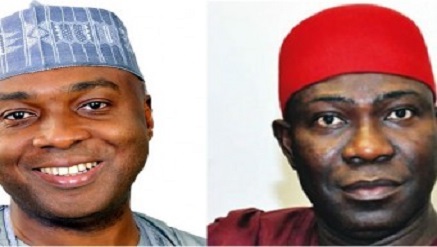
The ruling All Progressives Congress (APC) suffered a crucial setback on Tuesday; as it failed to have its chosen candidates elected leaders of both arms of the National Assembly, according to Daily Independent.
The development, aside putting the party in power in very difficult position with the federal legislature, has dealt a blow on the authority of the APC, especially its strongman, Asiwaju Bola Tinubu, believed to have orchestrated the party’s position.
Daily Independent reported that in what was a clear repeat of the 2011 scenario in the House of Representatives when the then opposition Action Congress of Nigeria (ACN) connived with rebellious members of the then ruling Peoples Democratic Party (PDP), to deny the PDP the chance of installing its chosen candidate as Speaker.
This time, in what some see as payback time, PDP members in the Senate and House of Representatives connived with some members of the APC who were unhappy at the party’s choices to elect Senator Bukola Saraki and Yakubu Dogara as Senate President and Speaker respectively.
The APC leadership had picked Senator Ahmed Lawan and Femi Gbajabiamila as the party’s candidate for the position at a mock election held last Saturday.
The intrigues surrounding the fight for the NASS leadership crystallized yesterday when the party members, especially those in the Senate, shunned the meeting called by President Muhammadu Buhari, early in the day, to find a solution to the challenges bedeviling the party.
Instead they appeared in the chamber, and with the support of PDP members, formed a quorum, and went ahead to elect Saraki as the Senate President un-opposed.
In a Senate of 109 members, 57 members made up mostly of PDP members converged in the Senate Chambers, got inaugurated by the Clerk to the National Assembly, Salisu Maikasuwa, who acting on the letter of proclamation forwarded to him a week ago by President Muhamnadu Buhari, set the 8th Session of the National Assembly in motion.
With calls for nomination made, Saraki was the only one nominated for the seat at a time Senator Ahmed Lawan and his supporters were at the International Conference Centre, waiting for the arrival of President Buhari and the Saraki team.
He emerged un-opposed, following which affirmation vote was taken to ratify his election.
The PDP, however, played a fast one on the APC members when one of the PDP members and the immediate past Deputy President of the Senate, Ike Emweremadu, was nominated as Deputy President candidate to slug it out with Ali Ndume of the APC and Saraki’s running mate.
With their numerical advantage, the PDP members outwitted the few APC senators in the chamber, voting en-mass for Ekwerenmadu.
According to Daily Independent, those who know say Ekwerenmadu’s emergence was not happenstance, because on Monday night, news broke that Saraki had in the bid to win the support of the PDP caucus, agreed to support the bid to return the Deputy Senate President, who served for eight years to his prime job.
The emergence of Ekweremadu as Deputy Senate President is the first time a mixed leadership is presiding over the Senate.
With the “palace coup” in the Senate effectively executed, the battle field was shifted to the House of Representatives where the PDP members had struck an agreement with the Yakubu Dogara team offering him their support to emerge as Speaker against the candidature of Femi Gbajabiamila, the APC’s anointed candidate.
The animosity between the two camps was openly displayed even before the Clerk to the National Assembly was done with the assignment in the Senate.
As soon as the news filtered in that Saraki and Ekweremadu had clinched the seats in the senate, the supporters of Dogara both in the PDP and APC threw caution to the wind by engaging in wild jubilation, shouting “PDP” “PDP” “PDP”.
Ironically, Dogara in his last two elections into the parliament, was elected on the platform of PDP but about nine months ago, decamped to the APC to actualize his third term bid.
The lawmakers who supported Dogara did not hide their disdain for Gbajabiamila as they booed him when he entered the chamber at about 10.30 am.
However, the tide changed some minutes later when his supporters who were also at the ICC waiting to attend the meeting called by the President, came in, in droves.
Both camps began to engage each other in war of praise singing, causing much noise in the chamber.
At about 1:03 pm, the clerk of the House of Representatives Mohammed Sanni Omolori, concluded the roll call of members after the Clerk to the National Assembly, Maikasuwa had read the proclamation letter from President Muhammadu Buhari, in accordance with the law.
Of the 360 members, two persons were absent, leaving the floor to the 258 members to engage in the election of the principal officers.
With call for nominations made, Jibrin Abdulmumin, stood up to nominate Dogara for the position of Speaker, which was seconded by Chike Okafor.
Dogara accepted the nomination to the admiration of his supporters.
Minutes after, Mohammed Sanni from Bauchi state nominated Gbajabiamila for the contest and was seconded by Shuaibu Philips from Edo state.
As soon as Gbajabiamila accepted his nomination, the Clerk announced that secret ballot system would be adopted.
Members were called in a group of 10 and in alphabetical order of state of origin and asked to vote by writing the name of their preferred candidate.
The voting commenced at about 1:30 pm.
When the voting were concluded, and the ballots counted, Dogara emerged victorious with 182 votes, beating Gbajabiamila by a slim margin of 8 votes, as the APC adopted candidate scored 174 votes.
Wild jubilation erupted in the chamber, as Dogara’s supporters hugged one another while some supporters of Gbajabiamila who could not stomach the defeat were seen crying openly, while leaving the chambers.
The desire of the PDP to take absolute control of the lower parliament was however thwarted as members refused to nominate Leo Ogor, the immediate past Deputy Leader of the House, for the Deputy Speaker position. Ogor was said to have rallied the PDP members for Dogara, because he was promised the Deputy Speaker seat as compensation.
As soon as it dawned on Ogor that he had been edged out, he stormed out of the chambers angrily even before the nomination was made openly.
It took the intervention of some PDP members to bring him back into the chamber, and even then, he sat with anger openly visible on his face.
When nominations were made, Lasun Yusuf, an APC member from Osun State was nominated and put in the ring with Mohamned Tahir Monguno who was the Deputy Speaker-designate on the Gbajabiamila ticket. Yusuf garnered 203 votes to Monguno’s 153.
While the voting for the Deputy Speaker seat was still ongoing, the leadership of the APC in a statement issued by the party’s National Publicity Secretary, Lai Mohammed, raised objection to the game that played out on the floor of the House and the Senate Chamber.
Meanwhile, celebration broke out in Bauchi State as soon news of Dogara’s emergence filtered in.
He represents the Bogoro Dass/Tafawa Balewa Federal Constituency of the state. Youths, women and political groups, Muslims and Christians were almost united in celebration as almost every man on the street of Bauchi was elated with the emergence of Dogara as the 8th Speaker.
Dogar, 48, is from Gwaranga village in Bogoro Local Government Area of Bauchi State.
He scored 182 to beat his main rival, Femi Gbajabiamila, who represents Surulere Federal Constituency, Lagos state, in a keenly contested election. Gbajabiamila scored 174.



A recent study – Nigeria’s Credit Landscape Report 2025 – has revealed a striking paradox in the nation’s financial ecosystem, revealing that while more Nigerians are becoming financially included, only about 6% of adults currently access credit through formal financial institutions.

Published by Credit Direct in June 2026, the report highlights that although more than 64% of Nigerian adults are financially included, formal credit penetration remains significantly low. Credit to the Nigerian private sector stands at just 13.1% of GDP, well below peer African economies such as Kenya and South Africa. The findings point to persistent barriers to credit access for households, entrepreneurs and small businesses, despite improving economic conditions and growing business activity across key sectors of the economy.
The report also notes that Nigeria’s real sector recorded sustained expansion throughout 2025, with manufacturing, services and agriculture posting positive growth indicators, creating increased demand for working capital and business financing.
Reacting to the findings, Mutual Benefits Assurance Plc said the report reinforces the urgent need for a more holistic approach to financial inclusion, one that combines access to finance with savings, insurance protection and long-term financial planning.
The leading insurer noted that while access to credit remains important for economic growth, financial protection mechanisms are equally essential in helping individuals and businesses withstand economic shocks.
Through its diverse portfolio of solutions, Mutual Benefits continues to provide Nigerians with tools to build, preserve and protect wealth. These include education-focused protection plans, life assurance products, savings-oriented solutions, motor and property insurance and business protection products designed to safeguard livelihoods and future goals.
According to the Managing Director, Mutual Benefits Assurance Plc, Femi Asenuga: “The conversation around financial inclusion must go beyond opening bank accounts and accessing loans. True financial empowerment is achieved when individuals and businesses can access financing opportunities while also protecting their income, assets, families and future aspirations from unforeseen risks.
“For many Nigerian families and business owners, a single unexpected event such as a medical emergency, fire incident, business disruption or loss of income, can erase years of financial progress. This is why insurance and disciplined savings remain critical pillars of long-term financial resilience.”
The report further reveals that Microfinance Banks account for only 5.4% of Nigeria’s total loan book, underscoring the need for stronger support for SMEs and underserved communities that often struggle to access conventional bank financing.
As part of its commitment to advancing financial inclusion, Mutual Microfinance Bank continues to deliver accessible financing solutions tailored to the needs of small businesses, traders, salary earners, entrepreneurs and emerging enterprises across Nigeria. As at December 31, 2025, the Bank had disbursed loans totaling N1.372 billion, further strengthening access to formal credit for individuals and businesses across its target segments. This growth trajectory continued into 2026, with the loan portfolio rising to N1.558 billion by the end of Q1 2026, reflecting sustained momentum in supporting productive economic activity
Asenuga added: “Small businesses remain the backbone of Nigeria’s economy, yet many continue to face significant barriers in accessing affordable financing. Through Mutual Microfinance Bank, we are helping to bridge this gap by providing flexible financial solutions that enable entrepreneurs to grow, create jobs and contribute meaningfully to economic development.
“At the same time, we encourage individuals and businesses to think beyond borrowing by adopting a culture of saving, risk management and financial protection. Sustainable prosperity is built not only by generating income but also by protecting it.”
With economic activity expected to strengthen further and demand for financing projected to increase across several sectors, Mutual Benefits believes that the future of financial inclusion in Nigeria will depend on creating an ecosystem where access to credit, savings and protection work together to improve financial well-being.
The company reaffirmed its commitment to supporting Nigerians through innovative insurance solutions and accessible financial services that empower individuals, families, and businesses to build resilience, pursue opportunities confidently, and achieve lasting financial security.
Mutual Benefits Assurance Plc is one of Nigeria’s leading insurance companies with over 30 years of experience in providing reliable and innovative life and non-life insurance solutions to individuals, families and businesses. Through innovation, customer-centricity and a commitment to financial inclusion, the company continues to deliver value, protection and peace of mind to customers across Nigeria.
On its part, Mutual Microfinance Bank is committed to expanding access to financial services for individuals, micro-enterprises and small businesses through innovative savings products, accessible financing solutions and customer-focused banking services that promote economic empowerment and financial inclusion.
General News
Trashverse Recycling Technology Emerges Winner as MTN’s The Gathering on 100 Pitchathon Concludes with N5m Awarded in Aba


MTN Nigeria has successfully concluded the Aba leg of its youth cultural and creative movement, The Gathering on 100. The 18-hour event marks a significant milestone for entrepreneurship in Eastern Nigeria.

The event, which took place at the Prime Time Event Centre in Osisioma from June 14 to 15, 2026, transformed the venue into a tech hub for young innovators in Aba.
The Pitchathon had 10 standout startups compete for a total prize pool of ₦5 million. The competition showcased the immense potential of Aba’s youth, encouraging them to live life to the fullest through technological and creative excellence.
The participating startups, representing a cross-section of Aba’s burgeoning innovation ecosystem, impressed judges with solutions ranging from logistics to artisanal tech. Among the finalists were Trashverse Recycling Technology Limited founded by Charles Ikechukwu, Yadah Food, founded by Deborah Enyinnaya and Utytrends Global Ventures led by Utibe Akwa.
After a rigorous evaluation by judges Chiemela Anosike, Dr. Chime Chimezie-Uche, and Justina Nwokedi, the winners were officially announced. Trashverse Recycling Technology Limited, led by Charles Ikechukwu, claimed the first-place prize of ₦2.5 million.
Ikechukwu, founder of Trashverse Recycling Technology Limited, shared his excitement “Winning this pitchathon is a dream come true for our team. The support from The Gathering on 100 and MTN validates our vision and provides the financial backing we need to scale our production and serve more customers in Aba and the global stage.”
Utytrends Global Ventures secured the second-place prize of ₦1.5 million, while Yadah Food took home ₦1 million. These founders showcased solutions that blended local ingenuity with scalable technological frameworks, reinforcing Aba’s reputation as a powerhouse of Nigerian manufacturing and entrepreneurial spirit.
The Gathering on 100’s Pitchathon provided a platform for these early-stage founders to validate their business ideas before an audience of investors and industry stakeholders. For the winners, the funding serves as a catalyst to scale their operations and fulfill market demands, effectively bridging the gap between innovative concepts and industrial-scale production.
Reflecting on the Pitchathon, the Regional Manager, Operations, Southern Region, MTN Nigeria, Ifeanyichukwu Odom, said “Aba has always been a city of creators, innovators, and dreamers. Today, we witnessed young people expressing their passions across business, creativity, culture, and technology. The Gathering is about giving them a platform to be seen, heard, and celebrated.”
She noted that the Pitchathon had showcased the depth of talent and innovation emerging from the region, with participants presenting solutions capable of creating meaningful impact in their communities. “The Pitchathon winners made one thing clear, the Eastern Nigeria startup ecosystem is not waiting to be discovered. It is already forming, and it is ready when structure and support meet ambition. Through the power of connectivity and digital innovation, MTN remains committed to helping young Nigerians unlock their potential and Live It 100.”
This Aba edition built on the momentum of the Lagos edition held at the National Stadium, Surulere, in April, where eight startups received ₦45 million in funding. With its Aba execution, MTN has deepened access to opportunity and visibility for the next generation of business leaders.


Dominion Consultancy Concepts has officially announced the second edition of the KidsCook Showdown, a unique educational and creative cooking competition designed to foster leadership, teamwork, creativity and accountability among children ages 6 to 8.

Following its successful debut in 2025, this latest edition marks a significant milestone by securing the official approval of the Lagos State Universal Basic Education Board (LASUBEB). For the first time, the initiative will shine a spotlight on public education, featuring 20 children within the ages of 6 to 8 years old, selected from 10 public primary schools across the Kosofe Local Government Area.
The KidsCook Showdown is far more than a typical cooking contest. Under the close guidance of professional chefs, the young participants will work in teams to tackle fun, high-energy culinary challenges.
Rather than focusing solely on the final dish, a panel of judges will evaluate the children on essential life skills: teamwork, confidence, time management, communication, and hygiene.
Speaking about the vision behind the program, Enitan Tanimowo, Director of Dominion Consultancy Concepts, emphasised the importance of introducing children to household chores early.
“Our goal is to inspire children to see cooking not just as a chore, but as a fun, creative way to develop themselves, learn discipline, and build confidence and these skills help them into the future,” Tanimowo stated.
“By expanding into our public schools with LASUBEB’s vital support, we are ensuring that children from all backgrounds get an equal opportunity to develop leadership and accountability in a structured, inspiring environment.”
Tanimowo added that the initiative directly aligns with the United Nations Sustainable Development Goals—specifically SDG 3 (Good Health and Well-being) and SDG 4 (Quality Education)—by using hands-on, practical learning to promote balanced nutrition and social development. The event is bringing together parents, teachers, and professionals to champion the next generation.
The grand scale of this edition is made possible through the robust corporate and media backing of industry-leading brands. This year’s KidsCook Showdown is proudly supported by Zuri Seasoning, Ribena, Channels TV, Integrated Indigo Limited, and other partners committed to youth development and impactful community engagement in Nigeria.
Together, these partners are helping transform the kitchen into a classroom where future leaders are shaped, one recipe at a time.

IMF Warns of New Risks for Monetary Policy over $59Bn Crypto Inflows into Nigeria

AI-Powered Loan Recovery Pilot Rakes in N69m for VeendHQ

MTN Foundation Commits N32Bn in Projects across Nigeria

NCC Begins Review Telecom Termination Rates after 8 Years

Stakeholders Endorse Hybrid Model for Nigeria’s Digital Switch

CBN Extends PoS Geo-Fencing Enforcement Deadline to August 2026

NCC Drafts New Rules for Virtual Mobile Operators

TD Africa, HPE Drive Conversations on the Future of Intelligent Networking

London Strengthens Global Investment Ties with Africa @ First Ever London-Africa Business Summit

Easybuy Partners WAWUAfrica to Upskill 10 Million Youths and Women, Boosting Nigeria’s Economic and Financial Inclusion




 E-Business2 days ago
AI-Powered Cyber Threats Put Nigerian Banks on Alert

 E-Business2 days ago
CSOs Raise Alarm over Nigeria’s Data Protection Crisis

 General News2 days ago
₦5m up for Grabs as 10 Startups Clash at the Gathering on 100 Pitchathon Aba

 E-Financial2 days ago
CBN to Expand eNaira for Salaries, Pensions and Welfare Payments

 General News2 days ago
CBN Moves to Stop Banks From Using Customers’ Money for Fintech Subsidiaries

 Telecom2 days ago
NITDA Reveals Why AI Could Be Nigeria’s Biggest Wealth Creator, Not Oil

 E-Financial2 days ago
CBN to Bar HoldCos from Influencing Banks’ Lending Decisions

 Telecom2 days ago
NASENI Unveils Ambitious Plan to Produce 600 Million Diagnostic Kits Annually