

News
Carmudi.com Global Gas Prices Analyses Closes-Up on Average Nigerian


Global consumer demand for petrol has steadily grown thanks to low oil prices combined with economic growth, according to the International Energy Agency.
In 2014, global oil demand was 92.6 million barrels per day, and demand for 2015 is expected to increase by 1.4 million barrels each day, to a total of 94 million.
This phenomenon truly spans the globe; gas prices have decreased from the pumps in Pakistan to stations in Senegal.
But while most countries have seen savings, the price of gas differs wildly across the globe.
Carmudi, the leading online car platform, examined the fuel price and general affordability of petrol in eighteen emerging markets.
Nigeria:
In Africa, it comes as no surprise that fuel prices in Nigeria, the biggest oil producer in the region, are among the cheapest standing at $0.46 per litre or 5.6% of the national average income per day.
Fuel prices look different for those East African countries with significantly lower average incomes.
Rwanda:
In Rwanda, where fuel costs $1.17, the average person makes only $1.55 per day.
One liter accounts for over 75% of a typical daily income, almost a full day’s work.
Indonesia
In Indonesia, where fuel subsidies have been cut by the government since early 2015, most people are forced to spend over 30% of their daily earnings to buy a single litre of petrol.
Sri Lanka
In Sri Lanka a single litre of fuel costs $0.96, taking up to nearly 45% of the national average daily.
Mexico vs Vietnam
Fuel prices in Mexico, the world’s seventh largest oil producer, are similar to prices in several Asian countries such as Vietnam, where a litre is priced at $0.92 and $0.97, respectively.
Despite the similar prices, the average daily income in Mexico is almost three times more than Vietnam.
It takes 7.8% of a day’s wage in Mexico to buy a litre; whereas, in Vietnam it costs more than 25% of the average daily income.
Saudi Arabia, UAE
Fuel prices in the oil wealthy Middle East are incredibly low, and that, coupled with the high average daily income, makes it the best place to own a gas guzzler.
Prices range from $0.15 per liter in Saudi Arabia, OPEC’s largest oil producer (average daily income $143.60), to $0.26 in Qatar, the world’s third largest oil producer (average daily income $382.60), to $0.47 in the United Arab Emirates, the world’s eighth largest oil producer (average daily income $170.00).
Carmudi created an infographic using Q2 2015 prices and 2014 average income data compiled from sources including Nigeria National Bureau Statistics, Philippines Bureau of Labor and Employment Statistics, The Pan African Bank, Crédit Agricole, Trading Economics, Global Petrol Prices, and World Vision. 2014 income data were used for all countries except Vietnam (2015) and Sri Lanka (GDP per capita).
Petrol price for Myanmar is Q2 2014.
Carmudi was founded in 2013 and is currently available in Bangladesh, Cameroon, Congo, Ghana, Indonesia, Ivory Coast, Mexico, Myanmar, Nigeria, Pakistan, Philippines, Qatar, Rwanda, Saudi Arabia, Senegal, Sri Lanka, Tanzania, United Arab Emirates, Vietnam, and Zambia.
The vehicle marketplace offers buyers, sellers and car dealers the ideal platform to find cars, motorcycles and commercial vehicles online.



Elon Musk is poised to become the world’s first trillionaire after SpaceX, his company, confirmed plans to go public.

Elon Musk
Because Musk owns the majority of the shares, it could push his net worth over the trillion dollar mark.
The entrepreneur is known for his leadership of Tesla, SpaceX, X, and xAI.
Musk has been the wealthiest person in the world since 2025; as of May 2026, Forbes estimates his net worth to be $788 billion.
SpaceX has filed for a blockbuster public listing in the United States, paving the way for what could become the largest stock market debut in Wall Street history.
The company, formally known as Space Exploration Technologies, announced plans to begin trading under the ticker symbol “SPCX” as early as next month.
The listing values SpaceX at about $1.25 trillion, with Musk’s majority ownership potentially worth more than $600 billion alone.
Combined with his existing holdings in companies including Tesla, the IPO could push Musk’s personal wealth above the $1 trillion mark.
The long-awaited filing also offered investors a rare look into SpaceX’s finances.
The company reported $18.6 billion in revenue last year but recorded a net loss of $4.9 billion. In the first quarter of this year, SpaceX generated $4.7 billion in sales while posting a $4.3 billion net loss.
Financial disclosures showed the company holds $102 billion in assets, including rockets, launch infrastructure and satellite systems, while carrying debts totalling $60.5 billion.
Despite the losses, analysts suggested investors were unlikely to be deterred given SpaceX’s dominance in commercial space launches and satellite internet services.
Ruth Foxe-Blader, managing partner at Citrine Venture Partners, described the planned flotation as “extremely exciting.”
“SpaceX is just an absolutely sprawling, enormous project with so many different selling points, and so many points that really point to the future,” she said.
SpaceX operates the Starlink satellite internet network and also owns Musk’s artificial intelligence company, xAI.
The IPO filing revealed that xAI recently reached a major commercial agreement with rival AI company Anthropic, maker of the Claude chatbot.
Under the arrangement, Anthropic will reportedly pay $15 billion annually to access data centre infrastructure linked to xAI operations in the American South.
The filing also disclosed that SpaceX expects to incur more than half a billion dollars in legal costs from multiple ongoing lawsuits and regulatory disputes.
Among the cases listed were claims alleging that xAI’s chatbot Grok had been used to create sexualised deepfakes of women and girls, alongside patent infringement disputes, music copyright claims, data breach allegations and investigations into compliance with European Union content moderation rules.
Musk has previously said he plans to dissolve xAI as a standalone company and pursue his AI ambitions directly under SpaceX.
The filing came shortly after Musk lost a high-profile legal battle against OpenAI and its chief executive Sam Altman.
Musk had accused OpenAI of abandoning its non-profit mission after shifting towards a commercial model, but a jury dismissed the lawsuit, ruling that he had waited too long to bring the claims.


African financial services platform Moniepoint has partnered with open banking software-as-a-service provider tell.money to deploy a transaction security system in the UK market.

The companies said the partnership will allow Moniepoint to implement Confirmation of Payee, an account name-checking service designed to verify recipient details before payments are processed.
The integration will be rolled out through Monieworld, Moniepoint’s UK remittance subsidiary, as part of the company’s broader European expansion strategy.
Tell.money will provide the underlying verification technology, which the companies said is intended to reduce misdirected payments and help protect users against cross-border fraud.
Ravi Jakhodia, CEO of Monieworld, said: “Our goal with Monieworld is to build financial services for Africans in the diaspora.”
He added that tell.money was selected because it manages compliance and accreditation requirements, allowing the fintech company to focus on customer service.
Moniepoint is entering a competitive UK-to-Africa remittance market that includes established providers such as Wise, WorldRemit and Remitly, as well as African fintech firms including Flutterwave’s Send App.
According to data from the World Bank’s KNOMAD programme, remittance flows to low- and middle-income countries are estimated at about $620 billion annually, with digital -first platforms capturing increasing market share through open banking integrations and automated compliance systems.
The rollout reflects a broader trend of African fintech firms expanding into developed markets by adopting local regulatory and open banking standards.
Industry analysts expect diaspora-focused platforms to evolve beyond money transfers into services such as multi-currency banking, credit and investment products.

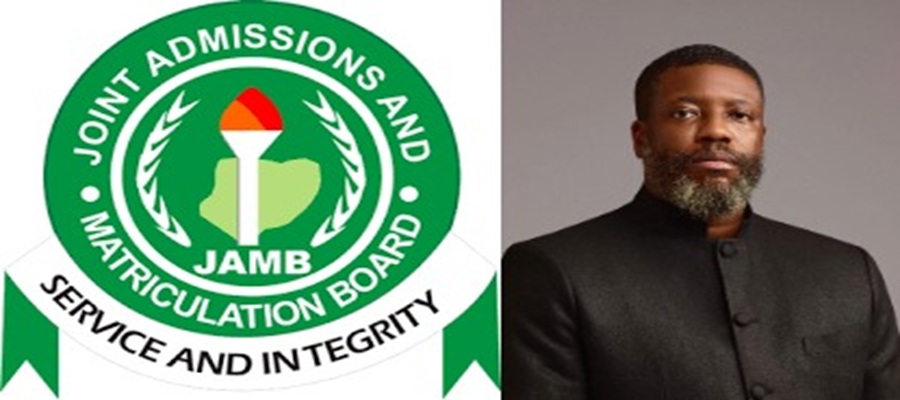
President Bola Ahmed Tinubu has appointed 39‑year‑old Professor Segun Aina as the new Registrar of the Joint Admissions and Matriculation Board (JAMB), succeeding Professor Is‑haq Oloyede whose two‑term tenure expires on July 31, 2026.

Professor Segun Aina
Aina, who will turn 40 in July, will become the youngest registrar in JAMB’s history, marking a generational shift in the leadership of Nigeria’s premier tertiary‑admissions body.
In a statement issued in Abuja by the President’s Special Adviser on Information and Strategy, Bayo Onanuga, the new registrar was described as a distinguished academic and systems expert with extensive experience in national examination systems, digital infrastructure and public‑sector institutional reform.
A professor of Computer Engineering at Obafemi Awolowo University, Ile‑Ife, Aina holds a Bachelor of Engineering in Computer Systems Engineering from the University of Kent, an MSc in Internet Computing and Network Security and a PhD in Digital Signal Processing, both from Loughborough University, United Kingdom. He also completed the Senior Management Programme at Lagos Business School.
His early career with JAMB began during his National Youth Service Corps scheme, where he gained foundational experience in national admissions and data‑driven institutional processes; those insights have since shaped his contributions to examination reform and systems optimisation.
At 39, Aina became one of Nigeria’s youngest professors of Computer Engineering and has advised federal and state governments on system design, digital transition and operational reform, while also consulting major examination bodies such as NECO and NABTEB on ICT systems and examination integrity.
He is a member of the Council for the Regulation of Engineering in Nigeria (COREN), the Nigerian Society of Engineers (NSE), the Institute of Electrical and Electronics Engineers (IEEE) and the Institution of Engineering and Technology (IET).
President Tinubu expects Aina to leverage his experience, knowledge and practical insight to further strengthen JAMB’s operations and to build on the achievements recorded under Professor Oloyede’s leadership.

NCC Begins Review of Nigeria Telecoms Policy after 26 Years

STBMAN Warns of “Broadcasting Crisis”, Urges Tinubu to Halt NBC’s DSO

MTN to Turn its African Tower Network Into a Distributed AI Compute Grid

Elon Musk to Become First World’s Trillionaire with SpaceX Historic IPO

Army Acquires New Drones to Boost Surveillance, Precision Strikes — COAS

MTN, VDT, Zoracom, Digital Realty Back 2026 Girls in ICT Campaign

Vitel Wireless Partners Fintechs to Expand Access to Services

Kaspersky Discovers Vulnerability in Qualcomm Snapdragon Chips that can Lead to Data Loss & Device Compromise

Bank Customers to Pay N1,500 for ATM Card Issuance, Replacement – CBN

FCCPC Licenses 5 Firms for Airtime, Data Lending as Telcos Step Aside




 General News2 days ago
UAE’s Exit from OPEC: Eroding Pricing Power, Saudi Arabia’s Response, and the Implications for Nigeria

 General News2 days ago
US to Deploy Wireless Technology in Nigeria, Others

 Telecom2 days ago
Lagos Warns against Fake Emergency Calls, Says Rising Misuse Put Lives at Risk

 E-Financial2 days ago
Court Orders Globus Bank to Pay Firm N256m for Breach of Contract

 E-Financial2 days ago
AFC Invests $100m in Africa-focused Technology Fund Managers

 News2 days ago
Systems, Not Skin Colour, Hold the Key to Africa’s Development, Says Evans Woherem

 General News2 days ago
Pantami, Ex Minister of Communication Withdraws from Gombe APC Governorship Primaries over Alleged Electoral Violations

 Telecom2 days ago
Google, Blackstone Invest in AI Cloud Venture to Meet Data Centre Demand