

General News
FDI in Africa Hit all Time High at $128Bn- Report


Although the number of foreign direct investments (FDI) fell by 8.4% in 2014, capital investment into Africa surged to US$128b, a year-on-year increase of 136%, according to the recently released EY 2015 Africa Attractiveness Survey and the average investment increased to US$174.5m per project, up from US$67.8m in 2013.
Charles Brewer, managing director of DHL Express Sub-Saharan Africa (SSA), said that this is positive for the continent’s outlook, highlighting that FDI in the region is being stimulated by a number of megadeals, instead of numerous smaller deals.
“The perception of investing in Africa has traditionally been rather negative, coupled with the fear of the unknown. However, in 2014, traditional investors refocused their attention on the continent, attracted by its strong macroeconomic growth and outlook, improving business environment, a rising consumer class, abundant natural resources and infrastructure development. These factors have resulted in global capital investment and job creation hitting an all-time high during 2014 on the continent”.
Brewer said that efficient infrastructure is critical for ensuring the effective functioning of the continent.
“As it stands, underdeveloped infrastructure drives up logistics costs, and it is estimated that supply chain costs are up to nine times more expensive in Africa in comparison to other regions in the world.”
“With increased FDI and continued macro-economic growth, I believe that Africa will be an economic powerhouse in the future. The region is abound with untapped opportunities and has much scope for growth.”
Brewer says that it is for this reason that DHL Express continues to see SSA as one of the most prominent areas of growth for the business globally, and therefore continue to invest significantly in the region.
“DHL Express continues to invest significantly in SSA in order to ‘Lift The Platform’, toexpand our capabilities and cater for continued growth across all markets, with planned investment of millions of Euros across SSA in 2015. Major projects underway include upgrades to facilities and shipment handling systems in South Africa, Kenya, Uganda, DRC, Rwanda, Angola, Zimbabwe and Botswana. Later this year, we will begin planned upgrades in Ghana, Nigeria, Ethiopia, Benin, Cameroon, Guinea Republic, Gabon, Tanzania, Mauritius and Cote D’Ivoire.”
“In addition to facility upgrades, we have a number of vehicle and technology upgrades taking place this year, along with ongoing employee and SME development programs.”
“Continued focus and investment in market-leading infrastructure will better connect Africa to the rest of the world, and create more opportunities for African businesses, allowing them to trade across borders and with new target markets. DHL Express is committed to not only connecting others to Africa, one of the world’s largest frontiers for growth, but to making the rest of the world the next frontier for Africa,” Brewer said.


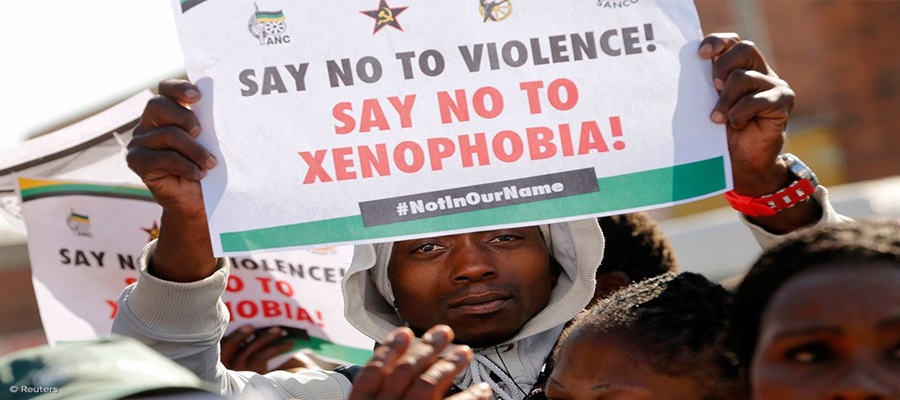
Anonymous Nigeria, hacktivism, known for launching coordinated cyberattacks and protests in support of socio-political movements, has threatened to leak stolen South African government data unless its demands were met.

The group, called for the department to stop xenophobic attacks on Nigerians in South Africa, or it will expose the data.
“They call themselves correctional services, but they can’t correct the citizens. What a shame,” the group said in its Telegram channel, MyBroadband reported.
“They killed a lot of Nigerians while the so-called correctional services watched and the ministry of justice.”
It is immediately know if Anonymous Nigeria is affiliated to Nullsec Nigeria.
But in a post on a hacker forum, Nullsec Nigeria included a link showcasing an example of data stolen from the department.
It included two bid invitation notices, bid results, a copy of the bids received, and a notice of a bid awarded in various formats.
“We’ll expose all your evil deeds for the world to see, unless this attack stops. But if not, we’ll leak everything they got,” Nullsec Nigeria said.
“Unless the government of South Africa ends these xenophobic attacks on Nigeria, we’ll expose everything about you, your evil deeds will be exposed, and the world shall know.”
MyBroadband asked the Department of Correctional Services about the claimed breach and Nullsec Nigeria’s demands, but it did not immediately respond to our questions.
Nullsec Nigeria also claimed responsibility for breaching several other entities in South Africa, while responding to an X post about its OpSouthAfrica campaign in its Telegram channel.
“I wanna express something here. I saw a report on the #OpSouthAfrica hack by Nullsec Nigeria, but it was stolen by another person,” it said. “Tag the real breachers next time.”
In a separate thread on the hacker forum, Nullsec Nigeria also claimed responsibility for breaching the Ephraim Mogale Local Municipality’s systems.
It claimed to have hacked the local government’s website and threatened to expose “everything you got for others to see how heartless you are. You killed mothers, brothers, students.”
Nullsec Nigeria said the breach and the threats were in response to the xenophobic attacks on and killing of Nigerians and the South African government’s supposed silence on the issue.
“These attacks are still going on in the dark, and we’ll expose them all. If the South African government doesn’t act first, the whole of South Africa will suffer,” it said.
“This is just a wave. These documents are about 11GB, but we decided to pull just this one.”
Its post included two images: one for a public hearing and another, a handwritten tender document for the appointment of an insurance service provider.
It also included a link to several other documents, including an old annual report, council resolutions, financial statements, and various other notices.
The Nigerian Government recently announced plans to bring citizens back to the country from South Africa after violent protests over foreign nationals in the country erupted earlier in May.
President Cyril Ramaphosa condemned the protests and criminal acts directed at foreign nationals in his From the Desk of The President weekly newsletter on 11 May 2026.
He emphasised the recent demonstrations and attacks did not represent the views of the South African people, nor the government’s policy.
“These are the acts of opportunists who are exploiting the legitimate grievances, particularly those of the poor, under the false guise of ‘community activism’,” The President said.
“Some of these people are assuming functions that only state officials are permitted to perform, including stopping people to check identification and conducting searches of private property.”
He added that such lawlessness would not be tolerated, regardless of who the perpetrators or victims were.
World Bank has restricted comments on its Instagram page after thousands of Nigerians flooded the platform begging them to stop lending money to Nigeria.

The protest erupted after reports that President Bola Ahmed Tinubu is seeking a fresh $1.25 billion dollar loan for approval on June 26.
Some Nigerians asked the World Bank to provide more details about the purpose of the loan and how the funds would be managed.
Others said the country should reduce dependence on foreign loans and focus on improving local revenue.
The federal government has continued to defend its borrowing plans.
Officials say the funds will support economic reforms, development projects and efforts to strengthen the economy.
Nigeria remains one of the major borrowers from the World Bank in Africa, with different administrations securing loans over the years for infrastructure, social programmes and economic support.


The Lagos State Government plans to establish a Cybersecurity Operations Centre to strengthen protection of government systems, digital services and citizen data amid rising cyber threats linked to the city’s expanding digital economy.

Tunbosun Alake, Lagos commissioner for innovation, science and technology, said the centre would help secure the infrastructure supporting online payments, e-government services, cloud platforms and technology-driven business operations across the state.
According to Alake, the facility will monitor, detect and respond to cyber threats targeting government networks, digital transactions and sensitive public data.
The move comes as Lagos accelerates its smart city agenda through investments in broadband infrastructure, digital identity systems and automated public services.
Alake said Lagos had already deployed 109 Data Protection Officers across Ministries, Departments and Agencies, which he described as the highest number among Nigerian states, to strengthen compliance with data protection regulations.
Alongside the proposed cybersecurity centre, the state also launched the Lagos Campus Network Upgrade project aimed at improving digital infrastructure within the public sector.
The upgrade is expected to improve network performance, automate internal government processes and enhance digital engagement with residents. The cybersecurity initiative follows the release of Lagos State’s cybersecurity guidelines in April.
The framework recommends measures including multi-factor authentication, vulnerability testing, encrypted backups and tighter endpoint security controls.
The guidelines align with Nigeria’s Cybercrime Act 2024, the Nigeria Data Protection Act 2023 and the National Cybersecurity Policy and Strategy 2021.

Xenophobic Attacks: Anonymous Nigeria Threatens to Leak South African Stolen Data

WHO Says Ebola Outbreak Worse than Reported

Chapel Hill Denham Says Banks Lose N2.5 Trillion Annually to High CRR in New Report

Lagos Sanctions 15 Money Lending Firms for Operational Violations

FirstBank, Visa Launch Multicurrency Signature, Naira Debit Cards

MTN, VDT, Zoracom, Digital Realty Back 2026 Girls in ICT Campaign

Vitel Wireless Partners Fintechs to Expand Access to Services

Kaspersky Discovers Vulnerability in Qualcomm Snapdragon Chips that can Lead to Data Loss & Device Compromise

Bank Customers to Pay N1,500 for ATM Card Issuance, Replacement – CBN

FCCPC Licenses 5 Firms for Airtime, Data Lending as Telcos Step Aside




 General News3 days ago
World Bank Blocks Social Media Comments from Nigerians over Loan Backlash

 E-Business3 days ago
Jumia Nigeria Records Strong Q1 2026 Growth as Technology-Led Strategy Drives Market Expansion

 Telecom3 days ago
NITDA, FMCIDE Deepen Collaboration on Nigeria’s Digital Transformation

 Telecom3 days ago
Nigerians Lose N12.5bBn to Telecom-Related Financial Crimes – PwC

 General News3 days ago
LG Electronics Strengthens Household Energy Efficiency in Nigeria with Advanced Inverter Refrigerator Solutions

 News3 days ago
Only 1 in 3 Families Fully Secure their Devices, Kaspersky Study Reveals

 Telecom3 days ago
NITDA Showcases Nigeria’s Startup Framework as Model for Angola

 Telecom3 days ago
Upperlink, ICANN, Others Rally Global Participation for UA Day 2026