

Telecom
Nokia Networks Makes LTE Networks IoT Ready #MWCS15


Nokia Networks launches its IoT connectivity solution for LTE core and radio networks which makes existing LTE networks IoT ready.
Operators can now prepare their current networks for the business opportunities of the IoT era and related machine-to-machine (M2M) traffic. Following an easy 3-step approach, operators can smoothly migrate their LTE core network to IoT overlay.
Starting with subscriber data management they can move on to gateways and mobility management. This stepwise approach allows them to flexibly migrate their core domains so they can tackle the mix of mobile broadband and M2M traffic in a cost efficient way while keeping operational impact at minimal level.
Today’s mobile networks are primarily optimized for smartphone traffic. As IoT applications will bring new requirements for the network infrastructure such as the number and type of connected devices and traffic patterns, operators can already today prepare their networks for the corresponding shift in services and traffic.
The new IoT connectivity solution consists of two elements: Nokia’s Core for IoT and its enhanced Smart Scheduler for LTE radio.
Benefits of Nokia’s Core for IoT at a glance:
Drives down total cost of ownership (TCO) for IoT solutions on operators’ networks and allows for a business mix of high ARPC* and low ARPC* M2M traffic;
Improves operational efficiency by about 35% compared to legacy networks and provides 40% better CPU utilization e.g. for smart meter traffic;
Open APIs allow for real-time data mining, service control and integration, making it much easier to ensure network optimization and service enablement for IoT applications and
Programmability enables operators to cope with a multitude of applications and proactively reduce signaling traffic, e.g. by adjusting the timer value for service based paging for connected cars.
Nokia’s enhanced Smart Scheduler in a nutshell:
In addition to optimizing LTE and TD-LTE cell capacity and smartphone user experience, it will unleash the IoT potential of today’s 4G networks
With self-adapting algorithms in Flexi Base Stations, it adapts to the IoT device traffic profile, which will become more relevant with the increasing variety of IoT use cases from stationary metering applications to demanding vehicle-to-infrastructure communications
It reduces signaling load in the network, enhances responsiveness of the service and lowers power consumption of the IoT modem
It improves connection quality even at the cell edge with minimized impact on network capacity
According to Dustin Kehoe, head of Telecom Research and Practice Lead, IDC, “LTE will be the technology of choice for M2M and IoT applications, as it provides the robust connectivity and flexibility to support the mix of high and low data rates needed for M2M and IoT traffic. And it does all that very cost-effectively. However, for LTE to thrive in the IoT world, operators will need to address economies of scale as well as IoT-specific security demands.”
Michael Clever, head of Mobile Broadband Core Cluster at Nokia Networks, also said: “While IoT represents a major growth opportunity for operators, they need to prepare their networks well. Nokia’s IoT connectivity solution is a key building block required to efficiently manage the related M2M traffic. A secure connectivity layer will then open up further opportunities for management and application platforms, as well as analytics and user services.”
Did you know?
GSMA industry estimates indicate that there will be at least 1 billion cellular M2M connections needed for the IoT by 2020 (Infographic: Internet of Things: The evolution of M2M © GSMA Intelligence 2015)
The thousands of IoT applications can be divided into the following verticals: connected car & fleet, public safety & security, connectivity & IT, home & consumer, smart city, retail & services, medical, health & wellness, utilities & environment and industry.
And they can be further split into multiple application domains and individual applications.
LTE-M modules will be 80% less complex than standard LTE modules, and highly cost competitive when it comes to connecting billions of things and devices with battery lives of >10 years, enabling a myriad of use cases that no other pre-5G technology can match.
By focusing on the human possibilities of technology, Nokia embraces the connected world to help people thrive. Our three businesses are leaders in their fields.
Nokia Networks provides broadband infrastructure software and services, HERE provides mapping, navigation and location intelligence, and Nokia Technologies provides advanced technology development and licensing.
Nokia Networks, which provides broadband infrastructure, software and services, operates at the forefront of our industry.
From the first ever call on GSM to the first call on LTE, it sets the pace of innovation, a record that continues with future technologies such as 5G.



The blockade of the Strait of Hormuz caused by the US and Israel’s war with Iran is placing fresh pressure on emerging market telecom operators, many of which remain heavily reliant on diesel generators to keep their networks running.

According to developingtelecom, with around 20% of the world’s oil supply disrupted and crude prices climbing above US$120 per barrel for the first time since 2022, operators across Africa, the Middle East and Asia are being hit by soaring energy costs at a time when demand for connectivity continues to rise. Markets including Pakistan, the Philippines and parts of Sub-Saharan Africa are among the hardest hit due to their dependence on imported fuel and unreliable national electricity grids.
Industry analysts warn the crisis could accelerate the telecom sector’s shift towards renewable energy and alternative network back-up solutions such as satellite connectivity, as diesel becomes increasingly expensive and operationally unsustainable.
Emerging markets bear the brunt
Crude oil prices rose above US$120 per barrel at the end of April, their highest level since 2022.
Emerging markets have been hit hardest, particularly countries that have failed to diversify their energy supply chains.
The Philippines is currently facing a major crisis, with 98% of its oil imports sourced from the Middle East. Pakistan has also seen supplies of liquefied natural gas disrupted, making daily life increasingly difficult for households and businesses alike.
For the telecoms sector, it is unsurprisingly operators in emerging markets that are bearing the brunt of the energy shock.
Many rely heavily on diesel generators to power base stations and telecom towers, particularly in remote areas with little or no access to national electricity grids. As a result, the challenge of connecting underserved communities is becoming even steeper.
According to environmental certification organisation Gold Standard, developing countries host an estimated 350GW to 500GW of diesel generator capacity spread across 20 million to 30 million sites, in many cases exceeding the capacity of national grids themselves. Even before the latest conflict, diesel power was already costly, averaging around US$0.30 per kilowatt-hour and significantly more in remote regions where the unconnected often live.
Gold Standard estimates annual spending on generator fuel reaches between US$30 billion and US$50 billion.
Diesel dependence driving operational pressure
CrossBoundary Energy estimates that around 70% of Africa’s half a million telecom towers rely on diesel generators, accounting for between 30% and 60% of tower operating expenditure. Fuel costs for operators across parts of Africa have surged by 40% to 60% over the past two years, with the Strait of Hormuz disruption adding further pressure.
Nigeria has been highlighted as one of the markets facing the most acute energy challenges, with grid availability in some regions falling as low as 40% to 50%. In rural areas of the Democratic Republic of Congo, telecom infrastructure is almost entirely dependent on diesel due to the absence of national grid access.
Across Sub-Saharan Africa, between 60% and 80% of telecom towers experience daily grid outages lasting between eight and 12 hours.
The demand for energy is only expected to rise further as operators continue expanding 4G coverage and rolling out 5G networks across emerging markets.
Renewable energy gains momentum
According to MTN Consulting, renewable energy accounted for just 23% of global telecom energy consumption in 2024, up from 10% in 2019.
However, much of that progress has been driven by operators in Europe rather than developing regions.
Operators including Turkcell, Tele2, Telia, Deutsche Telekom, KPN, Swisscom, A1 Telekom Austria, Telefonica, Telecom Italia and Liberty Global were highlighted by MTN Consulting as benefiting from long-term “foresight” as competitors elsewhere face increasingly volatile energy costs.
Operators forced to rethink network resilience
Ismail Patel, senior analyst for Enterprise Technology and Services at GlobalData, said energy concerns are now becoming inseparable from telecom strategy in emerging markets.
“Energy policy is increasingly being integrated into telecoms policy,” Patel said.
“Diesel is used in markets where there are unreliable electricity grids or frequent loadshedding. Thus far, diesel has been a core part of the business model, not just as a back-up for powering towers. The whole ecosystem of diesel – which involves manually delivering fuel to towers and manpower – is also part of the model.”
Patel warned that rising diesel costs caused by geopolitical instability will ultimately push up the price of connectivity or squeeze already-thin operator margins in highly price-sensitive markets.
“Operators will be forced to re-evaluate the most optimal back-up power mechanisms for their networks, including clean energy upgrades,” he said.
“This includes solar panels, which are susceptible to theft but do not have the immediate resale value of diesel, which is even more prone to unauthorised misappropriation.”
He added that satellite connectivity could emerge as a medium-term alternative for network resilience, particularly as direct-to-device (D2D) satellite services mature.
“Within this context, satellite as a back-up coverage mechanism might feature in the medium term, with both US and Chinese LEO satellite operators in a prime position to offer back-up connectivity to devices in place of towers,” Patel said.
“As the digital divide decreases and more underserved communities become dependent on connectivity, it will become far less economical for operators and governments to tolerate outages.”
Rather than being driven primarily by sustainability goals, Patel argued the shift towards renewable and satellite-powered infrastructure may ultimately become an economic necessity.
“Operators will start to look at greener options and satellite not because they are green or necessarily offer better coverage, but because they are becoming more cost-effective compared to diesel,” he said.
Patel identified Pakistan, Bangladesh, much of Sub-Saharan Africa including Nigeria and South Africa, Lebanon, and rural regions of India, Indonesia and the Philippines as among the markets most exposed to the crisis.


Kasi Cloud Datacentres has launched an AI-ready hyperscale data centre in Lagos, marking a significant step in Nigeria’s digital infrastructure expansion and cloud localisation ambitions.

The company said the facility, known as LOS1, was developed on approximately four hectares in the Maiyegun area of Lekki, Lagos, adjacent to six subsea cable landing stations, including Equiano and 2Africa.
According to Kasi Cloud Datacentres, the campus is designed to scale to about 100MW of critical IT capacity once fully developed.
The company added that LOS1 has been engineered to support high-density artificial intelligence (AI) and accelerated computing workloads alongside enterprise cloud and connectivity platforms, while delivering sub-50ms latency for in-country services.
Kasi Cloud Datacentres said Nigerian enterprises currently spend an estimated $850 million annually on foreign cloud infrastructure, resulting in capital outflows and data being hosted under foreign legal jurisdictions.
The company said LOS1 provides what it describes as Nigeria’s first institutional-grade, AI-ready alternative built locally and aligned with the country’s National Cloud Policy 2025, which requires sensitive government and financial data to be hosted domestically.
Johnson Agogbua, founder and CEO of Kasi Cloud Datacentres, said: “For too long, Africa’s data has powered someone else’s economy.
“Today, that changes. This flag-off marks the transition from development into commissioning and operational readiness as we deliver world-class sovereign cloud and AI infrastructure, built in Lagos, for Africa’s digital future.”
Aminu Umar-Sadiq, managing director and CEO of the Nigerian Sovereign Investment Authority (NSIA), a foundational investor in Kasi Cloud Datacentres, views digital infrastructure as a key driver of Nigeria’s long-term economic transformation.
NSIA said in its 2025 annual report that Kasi Cloud Datacentres is helping to advance Nigeria’s digital infrastructure as an indigenous hyperscale data centre platform.
Umar-Sadiq added: “We target high-impact projects that transform critical sectors of economic growth, including initiatives like Kasi Data Centre.
“We expect that the transformative impact of this infrastructure on the domestic tech space will reposition Nigeria. The board and management of the Authority are proud to be associated with this development.”
Mark Adams, Co-Founder of Kasi Cloud Datacentres, said: “Africa represents one of the most compelling long-term digital infrastructure growth markets globally.
“As global cloud, AI and content platforms continue expanding into emerging markets, Nigeria — and Lagos specifically — is uniquely positioned to become the strategic digital gateway for the continent. Kasi LOS1 is the infrastructure that makes that possible.”
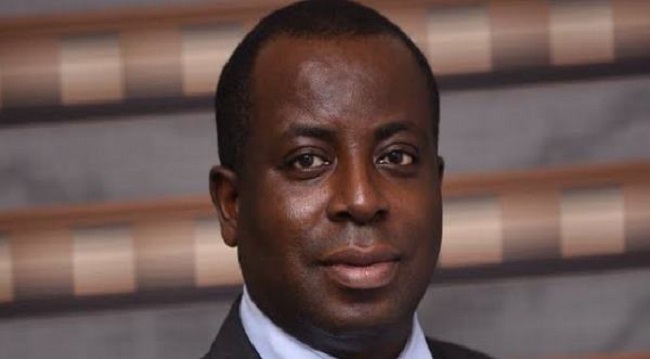
ipNX has called for stronger policy enforcement across government and industry to address the persistent challenges affecting fibre infrastructure deployment, following key discussions at the 8th Policy Implementation Assisted Forum (PIAFO) National Dig-Once Event held in Lagos on 16th April, 2026 at the Radisson Blu, Ikeja.

The forum, themed “Accelerating Nigeria’s Digital Backbone: Dig-Once Policy, Project BRIDGE and Strategies for Effective Fibre Deployment,” brought together industry stakeholders to address inefficiencies in broadband rollout and the growing rate of network disruptions across the country.
In his keynote address on the day, President of the Association of Telecommunication Companies of Nigeria (ATCON), Tony Emoekpere, reinforced the need for improved execution of existing policies.
“We have strong policies in place, but execution remains our biggest challenge. The dig-once framework presents a clear opportunity to reduce inefficiencies, minimise service disruptions, and optimise infrastructure investment across the sector,” he said.
Speaking at the forum, Dr Olusola Teniola, Director, Strategic Business Initiatives, ipNX, emphasized the importance of aligning infrastructure development with Nigeria’s digital ambitions.
“The future of Nigeria’s digital economy depends on how efficiently we deploy and protect our fibre infrastructure. A coordinated dig-once approach is not just a cost-saving mechanism; it is a strategic imperative that ensures resilience, scalability, and sustainability of our networks.
At ipNX, we believe that collaboration between public and private stakeholders is critical to unlocking the full value of broadband connectivity across the country” he said.
A major highlight of the discussions was the revelation that road construction accounts for approximately 60 per cent of telecom network outages in Nigeria, underscoring the urgent need for a coordinated “dig-once” approach. The policy advocates the installation of fibre ducts during road construction or rehabilitation, enabling multiple operators to deploy infrastructure without repeated excavation.
On the first panel session, “Who Digs, Who Deploys, Who Protects: Developing the Ultimate Framework for Aligning Roles in Sustainable Fibre Expansion” Deputy Director, Strategic Business Initiatives, ipNX, Segun Okuneye, highlighted the shared responsibility required to safeguard critical telecom infrastructure.
“Protecting fibre infrastructure must be a collective effort involving government, operators, and local communities. While regulatory frameworks such as the Critical National Information Infrastructure designation are steps in the right direction, enforcement and awareness remain key to reducing the frequency of fibre cuts and ensuring service continuity for millions of Nigerians,” he noted.
Stakeholders at the forum collectively identified several critical issues and recommendations for improving fibre deployment in Nigeria, including, the adoption of shared infrastructure models to reduce duplication and unnecessary road excavation and leveraging emerging technologies, including real-time fibre monitoring systems, to improve fault detection and response times.
The discussions also highlighted the gap between Nigeria’s existing broadband capacity and actual utilisation, with significant infrastructure still under-leveraged due to distribution and access challenges.
ipNX reaffirmed its commitment to supporting initiatives that enhance connectivity, drive digital inclusion, and enable sustainable infrastructure development. As a pioneer in Nigeria’s broadband FTTH ecosystem, the company continues to advocate for policies and partnerships that will strengthen the nation’s digital backbone and unlock new opportunities across sectors.

CBN to Simplify Bank Alerts over Rising Customer Complaints

Otedola Plans $100m Investment in Dangote Refinery ahead of Proposed IPO

Telcos in Nigeria, other Emerging Markets Squeezed by Diesel Crisis

Immigration, Lasaco Assurance Partner on Institutional Growth

Nigeria gets AI-ready Lagos data centre

MTN, VDT, Zoracom, Digital Realty Back 2026 Girls in ICT Campaign

Vitel Wireless Partners Fintechs to Expand Access to Services

Kaspersky Discovers Vulnerability in Qualcomm Snapdragon Chips that can Lead to Data Loss & Device Compromise

Bank Customers to Pay N1,500 for ATM Card Issuance, Replacement – CBN

FCCPC Licenses 5 Firms for Airtime, Data Lending as Telcos Step Aside




 E-Financial3 days ago
FG Says All Taxable Nigerian Must Obtain Taxpayer ID

 News3 days ago
FG Unveils Free Tax Dispute Resolution Platforms for Nigerians

 News3 days ago
EFCC Which Handles Sensitive Data, Financial Records has No Privacy Policy on Website- FiJ

 E-Business3 days ago
TD Africa, HPE Drive Conversations on the Future of Intelligent Networking

 Telecom3 days ago
Relief for SMEs as NACAN Launches Fight Against Expensive Broadband in Nigeria

 E-Business3 days ago
Identy.io, US Firm Eyes 1Bn Biometric Verification Transactions in Nigeria

 News3 days ago
Moniepoint DreamDevs Bootcamp Second Cohort Set for Demo Day

 General News3 days ago
Lagos Unveils Plan for 24-hour Electricity Supply in the State