

General News
GTBank Sponsors First Black Artist’s Exhibit

Guaranty Trust Bank Plc is set to sponsor the first exhibit by a black artist on the world famous fourth Plinth, Trafalgar square in London.
By this, the bank is once again set to reinforce its position as a foremost African financial brand and a proudly African, Truly international institution.
The work, ‘Nelson’s Ship in a Bottle’ was created by leading British Born, Nigerian Artist, Yinka Shonibare MBE and would be unveiled on the 24th of May, 2010.
Commissioned by the Mayor of London, the artwork will be the first commission on the Fourth Plinth to reflect specifically on the historical symbolism of Trafalgar Square and is also the first of such commissions by a black artist.
Explaining the artwork, Yinka Shonibare, the creator said the work is a celebration of London’s immense ethnic wealth, giving expression to and honoring the many cultures and ethnicities that are still breathing precious wind into the sails of the UK. “A ship in a bottle is an object of wonder. Adults and children are intrigued by its mystery.”
The ship’s 37 large sails will be made of exuberant and richly patterned textiles commonly associated with African dress and symbolic of African identity and independence. Tying together historical and global threads, the work considers the legacy of Britain’s expansion in trade and Empire, made possible through the freedom of the seas that Nelson’s Victory provided.
Tayo Aderinokun, managing director and CEO of Guaranty Trust Bank and an avid art enthusiast remarked that the bank was extremely proud to be sponsoring a unique artwork for an iconic location by an accomplished artist.
“Yinka’s work is being exhibited in the same year as Nigeria celebrates the 50th anniversary of its independence. The multiculturalism of London is a key component of the legacy of colonialism, and we hope that this high-profile and important work helps to create a similar debate in Nigeria in such an important year,” he added.
Boris Johnson, the mayor of London speaking on exhibit said: “Set against the backdrop of one of the most iconic symbols of Britain’s seafaring heritage, Yinka Shonibare’s ship, with its riot of colour, makes a powerful statement that will intrigue and inspire in equal measure. “It is a stunning work, with history and culture from West Africa to East Asia, woven in its sails, much as the threads of those places and their people are woven in the fabric of the capital. It is also particularly timely, with its message of the complex relationship between Africa and Europe coming as Nigeria marks its 50th year of independence. This is clearly the work of an artist at the top of his game, and I’m sure Londoners will enjoy it greatly.”


Central Bank of Nigeria (CBN)and the Nigerian Communications Commission (NCC) have proposed that customers must receive refunds within 30 seconds for failed airtime and data purchases to curb persistent billing complaints in the telecommunications sector.
This was indicated in the Exposure Draft of the Joint CBN–NCC Framework for Resolution of Failed Airtime and Data Purchase Transactions, which was published on the website of the CBN on Monday.
The landmark exposure draft, dated 5 February 2026, seeks to “institutionalise clear accountability” and establish a “coordinated approach to consumer redress” across the financial and telecommunications sectors.
The most significant shift in the proposed framework is the introduction of standardised, automated timelines for resolving failed transactions.
Currently, Nigerians often face long delays when airtime purchases fail at the bank, aggregator, or Mobile Network Operator level.
To solve this, the regulators have proposed a 30-second window for automated reversals. Section 6.0 (ii) of the draft exposure, which dwelt on failed transactions, especially as it relates to unfulfilled airtime/data delivery, proposes a time to refund the purchaser of 30 seconds “if the transaction failed at the bank level… Failed transaction delivery from NCC Authorised Licensees… Failed transaction delivery from MNO to the NCC Authorised Licensee.”
The draft emphasised that stakeholders must “automate reversal processes across all stakeholders” to ensure that refunds require no human intervention from the customer.
The draft exposure also stated that “all parties involved in airtime and data transactions shall take the following actions to ease usage and facilitate consumer satisfaction: a. Stakeholders must immediately connect ONLY to relevant authorised licensees of the NCC and CBN. b. MNOs and banks must only connect to NCC Authorised Licensees/MNO digital channel partners for airtime and data vending… Notifications of failure create final settlement obligations between MNO and NCC-authorised licensees… The NCC and CBN will audit stakeholder compliance jointly or individually at quarterly or other intervals as may be determined.”
From a business and oversight perspective, the regulators are proposing a Central Monitoring Dashboard to be hosted jointly by the CBN and NCC, which will track reversals, Service Level Agreement breaches, and customer complaints in real-time.
“There shall be a Central Monitoring Dashboard hosted by CBN/NCC for tracking reversals, SLA breaches, and customer complaints. This will facilitate the establishment of a real-time national ‘Failed Transactions Dashboard’ with a uniform error code with end-to-end visibility across the value chain’, read the draft exposure.
This is designed to eliminate the “unclear ownership of liability” that often occurs when banks and telcos blame each other for failed recharges. To support this, banks and MNOs will be required to maintain and share daily reports of successful and failed cases.
The proposed framework also addresses the common problem of “lost” money when customers recharge ported phone numbers. The draft mandates that MNOs must validate a phone number against the ported number database before processing any recharge. If the system identifies a number as ported out or invalid, it must “proactively stop recharges” and send a failure code back to the bank to ensure the customer is not debited.
For erroneous recharges sent to the wrong person, the framework sets clear protocols: below N20,000, MNOs will request the recipient’s consent before a reversal, and when it is above N20,000, an affidavit of indemnity or notarised letter is required to process the recovery.
The CBN and NCC in the exposure draft signalled they will take a firm stance on compliance. Both agencies will conduct joint quarterly audits of all stakeholders, including banks, payment service providers, and MNOs, to verify compliance with the new rules. The regulators have warned they will “impose penalties for any breach” of the framework’s provisions.
Banks and other financial institutions have until 10 February 2026 to submit their inputs on the draft before it is finalised. Once implemented, the framework is expected to significantly restore “subscriber trust” in Nigeria’s digital financial ecosystem.


Federal government has unveiled a new digital platform to connect millions of women to finance, skills training, and market opportunities, in what officials call the country’s largest technology-driven women’s inclusion initiative to date.

The Happy Woman App Platform, which was unveiled at the Presidential Villa in Abuja, would serve as a single interface for women to access funding facilities, business development support, governmental initiatives, and critical services.
The digital drive comes as Nigeria grapples with expanding gender gaps in financial access, with women much less likely than males to maintain bank accounts or obtain formal credit, limiting their capacity to grow informal enterprises they primarily run.
Yet women remain central to the economy, accounting for a large share of micro and small enterprises that contribute nearly half of the country’s GDP.
According to the Social Institutions and Gender Index, only about 35 percent of Nigerian women have a bank account at a financial institution, compared with 55 percent of men, underscoring the depth of persistent financial exclusion and the urgency of targeted interventions.
The launch coincided with the expansion of the Nigeria for Women Programme, which the administration now plans to scale nationwide to reach 25 million women.
President Bola Tinubu, represented by vice president Kashim Shettima, said the scale-up is central to Nigeria’s economic growth strategy.
“A nation that relegates its women is a nation bound for implosion,” he said, adding that women must be placed “at the centre of national planning and productivity.”
The expanded programme builds on a pilot phase in six states that reached over one million women, many organised into Women Affinity Groups to access grants, savings schemes and livelihood support.
The government says the new app will streamline beneficiary registration, payments and training, reducing leakages and improving delivery.
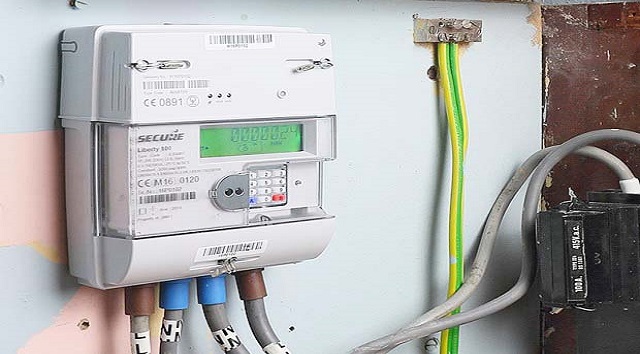
MOJEC International Limited has revealed that it deployed over 400,000 smart meters nationwide in 2025, representing a significant year-on-year growth for the indigenous smart meter manufacturer.

This performance reflected a 33.3 percent increase over the 300,000 meters deployed in 2024, highlighting the scale and acceleration of MOJEC’s metering operations.
Chantelle Abdul, group managing director, attributed the sustained impact to deliberate investments in infrastructure, people, and technology.
“MOJEC operates two state-of-the-art meter production facilities with a combined installed capacity of up to five million meters annually. This scale enables us not just to meet current demand, but to support Nigeria’s long-term metering and energy efficiency goals,” she said.
She further noted that MOJEC’s expansive installer ecosystem, comprising over 5,000 trained professionals nationwide, remains a critical enabler of its delivery advantage, ensuring speed, quality, and compliance across diverse terrains and markets.
The company stated that the deployment surge reflected growing confidence by Distribution Companies (DisCos) and sector stakeholders in MOJEC’s technical capacity, delivery speed, and end-to-end metering solutions.
According to Monday Ubogu, MOJEC’s head of installation, the scale and consistency of delivery set the company apart.
“Within the first three quarters of the year, MOJEC completed about 300,000 installations, accounting for roughly 40 percent of total installations nationwide during that period.
“The momentum continued into the final quarter with an additional 150,000 meters deployed, highlighting our operational depth and nationwide reach,” he said.
Ubogu added that MOJEC’s performance builds on decades of sector engagement, spanning key national metering initiatives including CAPMI, MAF, Vendor Financing, MAP Phases I & II, and NMMP 0, with the company having deployed nearly four million meters since the privatisation of NESI.
According to the company, a substantial portion of the deployment was driven by MOJEC Meter Asset Management Company (M3AC), the Group’s asset management subsidiary, which accounted for about 350,000 installations.
CBN, NCC Propose Instant Refunds for Failed Airtime, Data

FG Launches the Happy Woman App Platform

Lasaco Assurance Gets Shareholders Approval to Advance Capitalization Plans

Ecobank Nigeria to Host Customer Forum on Strengthening Regional Integration for Economic Transformation

Lagos to Establish West Africa’s Premier International Financial Centre

Firm Detected a Fivefold Surge in QR Code Phishing Attacks in the Second Half of 2025

US invests $115m in counter-drone tech for World Cup security

Nigerian Terra Industries Secures $11.8m for Expansion

Nigeria Targeted with 4,622 Cyber-attacks Per Week in December 2025

Firm Detected a Scam Exploiting OpenAI’s Teamwork Features




 E-Financial2 days ago
Alawuba Advocates Security, Bankable Projects, Infrastructure Development to Promote South-East Vision

 Telecom1 day ago
NCC Committed to Regional Digital Integration – Maida

 E-Financial1 day ago
CBN Expresses Concern Over Foreign Investments in Nigeria Fintechs

 General News1 day ago
Indigenous Firm Deploys 400,000 Smart Electricity Meters in 2025

 E-Financial1 day ago
BOI Secures CBN Nod for Sharia Banking, Unlocks Ethical Funding Boom

 Telecom1 day ago
ITU Top Director Visits NITDA, Boosts Nigeria’s Digital Literacy Push

 E-Financial1 day ago
UBA’s Easy and Instant Account Opening Thrills Returnee

 News1 day ago
EFInA Unveils Research Fellowship Programme to Deepen Financial Inclusion Impact