

Telecom
Critics Not Fair to NCC, Misunderstand Role- Ojobo


Apart from its core functions of ensuring robust regulation of telecommunication service providers who are encouraged to treat the subscribers as kings and queens, the Nigerian Communication Commission (NCC) is often seen by some critics as a law enforcement agency that should perhaps arrest and prosecute erring operators.
“This should not be so” according to Director, Public Affairs, Mr Tony Ojobo.
Ojobo said that NCC as a regulator of choice in Africa carries on its mandate according to the NCC Act of 2003 and several regulatory templates and guidelines.
“That is why we have embarked on the current phone-in-live programme on radio stations across the country to explain to everybody in an interactive format what our activities are and our limit” Ojobo stated during some radio programs that took place in the South South and South East geopolitical zones of the country, recently.
In response to what role NCC plays Ojobo explained:
“The Nigerian Communication Commission is the agency of Government that is responsible for regulating the Telecommunication Industry and our role includes licensing of all Telecommunication Operators, including vendors of telecommunication equipment, it also includes Type Approval of telecommunication equipment and devices including cellphones.
“The NCC Type-Approves all of these kinds of equipment. The Commission’s functions also include Consumer Education, Consumer information and Consumer Protection, setting up of standards for operators in the industry.
“It includes monitoring the compliance of operators and service providers to the terms, the conditions and obligations that we have in their licenses.
It also includes creating access and ensuring that there is access to telecommunication and that there is competition in the industry in such a way that Nigerian Consumer have value for money for services that are provided for them . In a nutshell I will say these are the functions of the Commission”
He said the NCC has offices in Abuja, Enugu, Port Harcourt, Kano, Ibadan and Lagos.
“We have a customer contact center which is a toll free Number, 622, which is our contact center Number for resolving complaints from services provided from the Telecom operators We are also on the Facebook, on Twitter and on YouTube.
“Our website is www.ncc.gov.ng now if you go to that website there is a lot of information including subscribers statistics , including policy statements. We also have the icons for the Facebook,YouTube and Twitter when you go to the Facebook icon, click on it and you are right there on our Facebook page, click on the twitter icon and you are there on our twitter page, the same thing goes for you tube and all are very active and as matter of fact, while we are on air a staff of the commission and the department is actually uploading the information we are generating here real time online now , on our Facebook page, that is exactly the kind of thing and those are the platforms that are used to reach out and are quite interactive on our Facebook also people post their complaints and they can get response and they will get answers on the Facebook and on the twitter as well”
Ojobo told listeners that NCC is absolutely proud of what has happened, refereeing to the giant strides made in telecommunications over the years in Nigeria.
He stated: “We are absolutely proud of what has happened, what we have done. As at January 2001, Nigeria had a population of 90 million to 100 million and all we could boast of were 400, 000 active lines throughout the federation, now as at May this year, 2015, there were about 146.5 million active subscribers on the networks and you know this is an idustry that operates on a 24/7 hour basis.
“There is absolutely no other services where you are serving those numbers of subscribers in a 24/7 basis. It’s only in telecoms that you have that, not even on television, not even on radio because this is a situation where someone wakes up at 2am and at 4am and there is an emergency, he picks up his phone and he makes his calls.
“A few years ago, it was not easy; now you can aspire at that. in 2001 there was just about 400,000 active lines throughout Nigeria I mean you can’t even think about that now, those days you are in Lagos and you want to send a message to the village, you have to do a letter to someone get someone that knows someone that knows someone but now, wherever you are now, whether you are in the Kitchen, whether you are in the toilet, whether you are on the road, there is access for Nigerians to communicate, and there again that is the area of Voice.
“We haven’t talked about Data , where we are talking about the internet, now as at today, we have about 89 million active subscribers on the internet in Nigeria which is actually the highest in the world.
“In terms of internet usage, now that is phenomenal and what that has done is that it has changed the way businesses are done in Nigeria, for instance, from the comforts of where you live, you can do your banking transactions, you can transfer your monies.
“Society has gone cashless because of telecommunication. Recently I needed to check into a hotel and my debit card was unavailable, immediately I sent a mail to the bank and I called the account officer and I said ‘I have just sent you a mail’ and he said ‘yes, I have seen the mail now I am going to do it right away, if you give me five minutes’. The money was paid into the account of the hotel and now that wouldn’t have happened a few years ago.
“Really, you see these things are practical things changing the way that we live our lives ,adding value to our lives as a fact what do you call it the digital life, even in broadcasting, you have it ,where now radio stations are having Facebook page, they are on youtube, they are on twitter and as your news is on , people are sending things on your Facebook and asking questions, not just on the telephone, so really these are the kinds of things that are happening today, now from comforts of people’s home people can shop. The online business is the in-thing today, which you call e-commerce where from the comforts of your home, you can do your shopping and make your payments and they deliver to your house, you are having a number of such organizations springing up today, people would have heard about Konga, and Jumia, there are here and there and also creating jobs for people and also making life easy so these are some of the things that have happened, so that is why I have told you that I am excited because it has changed the way we live our lives. There is communication, there is content”.
On the cost of telephony generally, Ojobo said:
“Well you know there are somethings you get from armchair statisticians whom just balm the figures without doing any empirical studies of the price index for telecommunications in Africa.
“Nigeria is not the highest, Nigeria is not the lowest, we are somewhere there in the middle, but I will just give you a picture of what has happened. As at 2001 when the mobile operators were licensed, people were paying fifty naira a minute as at that time, today you have as low as 11 kobo per second, in a minute that that gives you N6, 60 kobo, so when you speak for like 10 minutes so that gives you an indication of what has happened in terms of price reduction in the industry.
“There has been a slip in terms from the higher end of the cap to almost going to the floor, now that is business, everyone that is providing services, everyone that is providing a service is not a charity, people have to provide a service now you see the pricing model for the telecommunication industry rises with the cost of service provision and I give you an example.
“You know before we came to the studio I said, look telecommunication operates within an eco-system, where you have other factors affecting it and one of that is Power, right now power is a major cost for telecom operators.
“Why is it so? Now one of the major operators has about 4000 generators across the nation and he has to fuel all of his generators now one of them as at last year spent about 4 billion naira on diesel.
Of course the consumer bears the brunt of this. In other climates, where power is not an issue, the cost element is removed from the pricing cost that is moved over to the consumer but of course the good thing is that with the various effort of government in the licensing of independent power producers and now with power becoming a little bit more stable, that cost factor will be taken out, because business such as services is cost first, right the cost of services, the margin but even then we have seen a substantive shift from the upper end of the curve”.
Tariff
Regarding issues in related to the tariff rates in Nigeria in comparison to other countries, Ojobo said, “We have actually done a study and soon we are going to come out with the publication, looking at the pricing of the Telecommunication n services in Africa, especially in West Africa region”.
He added that: “there are a lot of factors involved including inflation in the economy, including all of these other factors in the eco system power and all these. Today you can see that a dollar is about N240, so really the point is that people are assuming that all things are constant. So, for telecommunications the price must keep going down even after the prices of other things keep going up, but we are not making a case for the operators here but you see the duty of the regulator is to protect the consumer and the man that is providing the service”.
NCC as a Referee
Ojobo said, “It is like referee, a referee is unbiased. A referee has the duty to tell the truth at all times, are you getting what I’m saying. Now as a matter of fact some people would like to use the service for free, free things don’t really last, you know.
He said that Service Providers could not be charity organizations as they run their businesses.
On why NCC penalises operators, he said, “It’s actually laughable really, this kind of insinuations that you have from the public, but you see, the regulator tries to maintain a very delicate balance. Now, let me put it this way, could you just imagine if one of these networks; let me just say MTN that has about 63 million subscribers if they shut down today because, for instance we revoke their license and shut them down and say they cannot operate any more, 63 million subscribers actually shut off including businesses ,including hospitals , including radio stations.
“So, you know what people want sometimes is just to withdraw licenses. All over the world regulation is a very intricate thing where you are aware of all the action including consequences of every action you take even the sanctions that you impose have consequences.
Performance Indicators
“NCC has set up what we call key performance indicators (KPI’s) which are measured on monthly basis and every quarter we look to see if the operators have been having breaches in terms of meeting the thresholds that is what is gaining to delay the sanctions.
“Now you also look at the situation where there are circumstances or factors beyond the control of the operators that led them not to be able to meet these targets. For instance if you look at places like the North East where there have been issues for a very long time, you were not having services because people couldn’t even move, where there are bombings, you are not having services because there are bombings. We look at communities where you have restiveness, where they won’t even allow the engineer to fix the problems you are having problems with the base stations and towers.
“We also have situations where Service providers have applied for base stations in states and are waiting for 12- 18 months to get approval to build additional base stations that will improve the quality of service. So when there are issues like these what we do is that we look for the network to explain why they are not able to meet the threshold now if we look at the reasons adduced and those reasons are genuine so we let them be. But when the factors that led to the degradation are factors that were factors that are avoidable, what the commission does to the service providers is sanction.
Consumers Demand for Compensation from NCC:
“We also have issues when people say look when you sanction them the money should be given to the consumer. The argument is like this: when a man goes to court and is fined, who takes the money, the money goes to the government, because it is a penalty.
“A penalty is not a compensation, there is a difference between a penalty and a compensation but of course that is not what we are saying here because you will agree with me that the Quality of Service has improved; it is not what it used to be years back. It hasn’t gotten there yet, it is a work in progress and we believe that in time as we begin to put infrastructures on ground and the governors begin to remove bottlenecks that make it difficult for operators to put infrastructures on ground.
Deployment of Infrastructure:
“There is even an engagement now where we are talking to governors, we tried to do it at the Nigerian Governors Forum the other time before they were having issues, we didn’t know which of the factions to talk to, because you know we are not politicians. It is now that they have come back we can now speak to the Governors so the states where we are having challenges and bottlenecks that are restricting infrastructure development that will improve the quality of service , those bottlenecks can be removed and of course the operators can now go in and put in infrastructure to improve the Quality of Service.”
Fight Against Cybercrime, Terrorism
On whether the NCC assists law enforcement agencies to curb terrorism, Ojobo explained:
“You will recall that some years ago, we embarked on a SIM card registration , the objective of this exercise was to ensure that there was a face to every number. We believe that this has helped substantially… in terms of strategy and what they used these information for, but of course suffice it is to say, that the SIMcard registration has helped security agents to substantially address the issues of kidnapping and other types of criminal activities where people use phones before now, people could mask numbers to make calls and you are not able to trace them. But today they can be traced, essentially technology has improved quite a bit now to the point where you are able to track any one that is making a call from any location. There are technologies now that wherever you are using your phone, you can be tracked”.
Unsolicited Text Messages:
Ojobo said: “What we have done in the area of unsolicited phone calls we need to probably differentiate between positive and negative unsolicited text messages.
“Unsolicited text messages are those messages gotten without prompting but of course you also know that there are those that come with benefits for phone users, like all those freebies…… there are also those unsolicited phone messages that bother on issues that are advisory, health issues, security issues where you have been given some tips on what to avoid.
“People get messages on the phones alerts from deep and uncertain locations. You will recall when there was the Ebola outbreak in Nigeria, the telephone line and unsolicited text messages helped a lot in educating and informing Nigerians on Ebola and the measures they needed to face in order to avoid contacting it.
“So those were positive gains and Nigeria even had global acclaim on how it used ICT to tackle Ebola in Nigeria. At the ITU, Nigeria received very generous commendation and the Minster of Communication Technology was asked to speak to the international audience on how Nigeria was able to use ICT to address the Ebola menace in Nigeria. Therfore, those messages though, unsolicited, ended up saving millions of lives.
“On the other hand, we have the unsolicited text that is negative. Here, products are sold at all times and all kinds of entreaties are made to you that are offensive.
“The Commission had a meeting with what you call the Value Added Service providers who are people who drive content and services. The Commission is also about coming out with guidelines that will specify penalties and sanctions for people who continue to flout. It is also important to say that some of these types of messages are done via the internet, they are pushed through the internet to the platform of the service provider.
“But we have asked network operators to put enough security on the platforms, firewalls that will filter out the unsolicited messages that are coming through those platforms, just as you say you have things coming in through your email, you have scams, junk mail and here are real mails, you really don’t have control over it even though you have done some phishing in your platform you still get unsolicited emails coming to you, some of them will send pictures, and those kinds of things.. There are things that go right with technology however, there are things that are unavoidable. The Commission is coming up with guidelines on this
He also offered advice to anyone who gets unsolicited text messages on their phones; “what you need to do is to send an SMS back to that number STOP send STOP to them right now if they get that they are supposed to stop sending those messages. If they continue you can go to your service provider, they have a customer care, where you will show them the evidence that you asked them that this should be stopped but it was continued, now some networks have also provided short code numbers that if you don’t want to get those messages, you opt out.
“But the point is that if you don’t want to be getting unsolicited text messages, you send information and you wouldn’t get any at all.
“So if you don’t want to be getting them, you go to your network and tell them that you don’t want to be getting such messages and you give them the information, and you won’t be getting messages anymore. Then if you have done all this and you don’t get redress then you can call NCC on our customer care number on 622 if you call 622, you can get it in English, Hausa, Yoruba and Igbo and from 8am to 6pm every day”, Ojobo concluded.


An Australian federal court has upheld a fine against social media platform X over failures to comply with child internet safety regulations, bringing to an end a three-year legal dispute between the company and Australian authorities.

The case stemmed from a demand issued in February 2023 by Australia’s online safety regulator, the eSafety Commission, requesting detailed information on how the platform, then known as Twitter, was combating the spread of child sexual abuse material online.
Following the platform’s transition to X under billionaire entrepreneur Elon Musk, regulators accused the company of submitting incomplete responses to repeated requests for information.
A federal court had earlier ruled in October 2024 that X was legally obligated to comply fully with the notice issued by the regulator.
On Thursday, the court ordered the company to pay a fine of 650,000 Australian dollars (approximately 464,900 U.S. dollars).
Federal Justice Michael Wheelahan said the penalty was necessary to ensure compliance by large technology firms.
“A penalty near the maximum is appropriate in the case of the respondent, which is a substantial corporation, so that it operates as a real deterrent and is not simply a cost of doing business,” he said.
Australia has emerged as one of the leading countries advocating stricter regulation of major technology platforms.
The country recently introduced world-first legislation aimed at banning children under the age of 16 from accessing certain social media platforms.
Countries including France, United Kingdom and Canada are reportedly considering similar measures following consultations with Australian authorities.
Reacting to the judgment, eSafety Commissioner Julie Inman Grant said transparency remained essential in holding technology companies accountable.
“Meaningful transparency is critical to holding technology companies to account,” she said.
“This is not only a key part of our work as Australia’s online safety regulator, it also provides the Australian public with important information about how these companies are tackling the worst-of-the-worst content on their platforms,” she added.
Telecom
MTN Nigeria Tops Gender Equality Rankings After Major Workplace Transformation, IFC Report Reveals

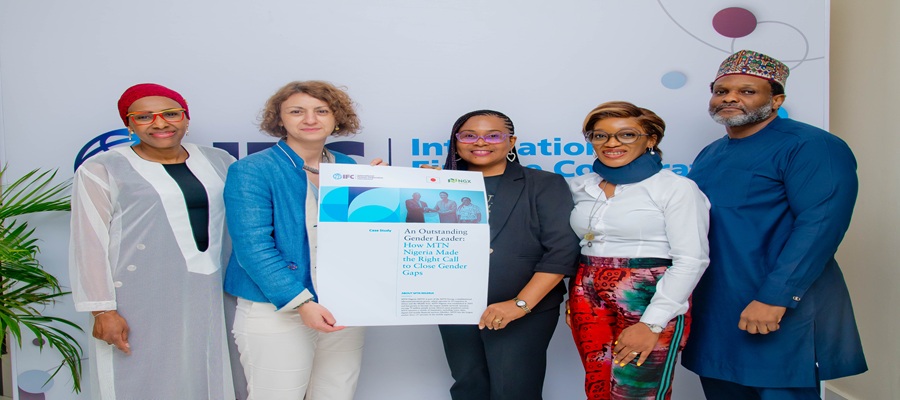
MTN Nigeria Communications Plc has been featured in a newly published case study by the International Finance Corporation (IFC), highlighting how leading companies are advancing gender equality through practical, business-led actions under its Nigeria2Equal programme.

MTN Nigeria
The case study spotlights MTN Nigeria’s transformation into a top performer in workplace gender equality following its participation in the programme between 2021 and 2023.
During this period, the company moved from 13th position to become the top-performing organisation from 30 most capitalised companies listed on the Nigerian Exchange Group. The report was based on an independent assessment conducted by Equileap and verified by PwC.
In the IFC case study, Karl Toriola, Chief Executive Officer of MTN Nigeria, stated, “A diverse, inclusive, and equitable workforce is critical to the success and sustainability of our business.
“We are committed to promoting gender inclusiveness, equality, and empowerment internally as well as across our ecosystem to ensure that interventions are holistic and position women to thrive effortlessly.
“If we must narrow the gender gap and address the disproportionate representation of women in the private sector, I believe that business leaders and CEOs must disproportionately allocate resources to support women across all levels.”
Implemented in partnership with the Nigerian Exchange Group, the Nigeria2Equal programme is designed to reduce gender gaps across leadership, employment, and entrepreneurship in Nigeria’s private sector.
MTN Nigeria joined the initiative in 2021, making commitments across these areas while strengthening its broader advocacy for gender equality.
According to the IFC publication, MTN Nigeria built on its existing diversity and inclusion framework by adopting a more structured and data-driven approach to gender equality. With IFC’s advisory support, the company undertook diagnostics to identify gaps, introduced targeted policies, and aligned its practices with global standards.
A major milestone outlined in the report is MTN Nigeria’s attainment of the EDGE MOVE certification in 2023, a globally recognised benchmark for workplace equity.
This achievement made it the first wireless telecommunications company in Africa and the second organisation in Sub-Saharan Africa to reach this level, reflecting progress across leadership representation, pay equity, organisational culture, and flexible work policies.
The case study also details a range of initiatives implemented by the company, including targeted recruitment and promotion of women, strengthened mentorship programmes, expanded parental leave policies, and deliberate efforts to increase the participation of women-led businesses within its value chain.
These actions contributed to measurable improvements in female representation, including achieving gender balance at the executive level.
Beyond internal policies, MTN Nigeria expanded its role in advancing gender equality through advocacy and transparency. The company became a signatory to the UN Women’s Empowerment Principles and now reports gender-focused initiatives and targets in its annual disclosures.
The IFC case study positions MTN Nigeria as an example of how sustained leadership commitment, independent assessment, and measurable actions can drive meaningful progress on gender equality within the private sector.
MTN Nigeria says it will continue to build on this momentum, with a target of achieving a 50:50 gender balance across its workforce by 2030, while deepening efforts to create inclusive opportunities for women across its operations and ecosystem.
Telecom
Microsoft, Partners Launch ‘LINGUA Initiative’ to Save African Languages From Digital Extinction
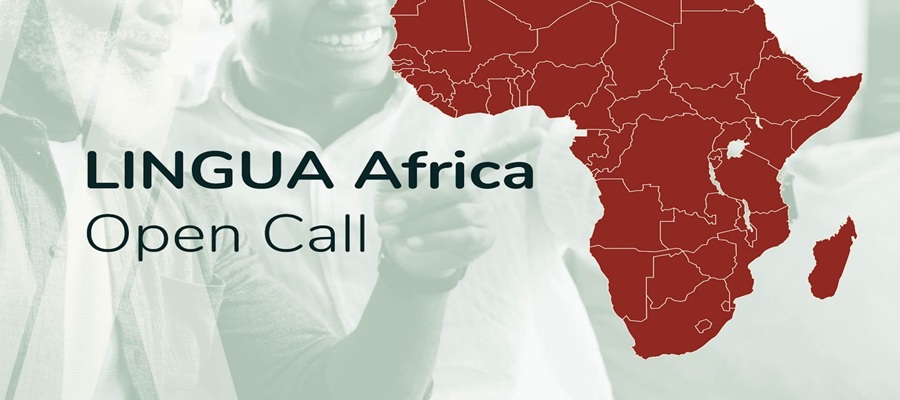
Microsoft.com has launched the LINGUA Africa Open Call, a new initiative aimed at strengthening the development of inclusive artificial intelligence solutions for African languages and underserved communities across the continent.

LINGUA Africa Initiative
The programme, unveiled in partnership with the Gates Foundation, Masakhane African Languages Hub, and Google.org, seeks to close the widening AI language gap that continues to exclude thousands of African languages from modern digital systems.
According to Microsoft, many African languages remain significantly underrepresented in AI datasets, models, and tools, limiting access to digital services in areas such as healthcare, education, agriculture, financial inclusion, and government services.
The company said the initiative is designed to support the creation of open language resources, AI models, translation tools, datasets, and sector-focused applications that can help communities interact with technology in their native languages.
Howard Lakougna, senior program officer at the Gates Foundation, said the initiative aims to remove barriers that have historically slowed AI innovation across Africa.
“LINGUA Africa seeks to encourage bold and innovative thinking by breaking down barriers that have long held back AI progress across the continent,” Lakougna stated.
The open call is inviting proposals from universities, nonprofits, startups, research institutes, cultural organisations, social enterprises, and collaborative consortia working in the public interest. Organisations outside Africa may also apply, provided they demonstrate meaningful partnerships with African institutions or communities.
Selected projects will receive funding support, Azure and Google Cloud compute credits, as well as technical collaboration opportunities from Microsoft’s AI for Good Lab and other ecosystem partners.
Microsoft outlined three key categories for support under the initiative:
· Data creation projects focused on building, documenting, validating, or translating African language datasets and resources;
· Model and tool development initiatives for AI models, benchmarks, and infrastructure;
· Sectoral applications deploying AI language technologies in real-world settings such as healthcare, education, agriculture, financial inclusion, and public services.
Funding support could range from up to $50,000 for data-focused projects to as much as $450,000 in cash for high-impact sectoral applications, alongside additional compute credits totally $1,050,000.
The initiative builds on Microsoft’s broader work around low-resource languages and follows the earlier LINGUA Europe programme, which supported AI resources for underrepresented European languages.
Africa is home to more than 2,000 languages, yet only a small fraction are represented in major AI systems and large language models.
Researchers have repeatedly warned that the lack of African language representation in AI could deepen digital inequality and limit participation in the emerging AI economy.
Recent research efforts across the continent have highlighted the growing need for African-led AI infrastructure and datasets.
In Nigeria, researchers continue to push for broader representation of minority languages beyond Hausa, Igbo, Yoruba, and Nigerian Pidgin, which currently dominate most local AI language research.
Microsoft said all supported projects under LINGUA Africa will be expected to contribute openly licensed resources that can be reused in research, open-source models, and practical applications.
Applications for the programme will close on June 15, 2026.
Interested applicants can access more information through Microsoft’s official website

LG Electronics Showcases Advanced HVAC Solutions at Mega Clima Nigeria 2026

FG Unveils AI Public Services Platform

Australian Court Upholds Fine Against X Over Child Safety Compliance Failures

MTN Nigeria Tops Gender Equality Rankings After Major Workplace Transformation, IFC Report Reveals

Microsoft, Partners Launch ‘LINGUA Initiative’ to Save African Languages From Digital Extinction

MTN, VDT, Zoracom, Digital Realty Back 2026 Girls in ICT Campaign

Vitel Wireless Partners Fintechs to Expand Access to Services

Kaspersky Discovers Vulnerability in Qualcomm Snapdragon Chips that can Lead to Data Loss & Device Compromise

Bank Customers to Pay N1,500 for ATM Card Issuance, Replacement – CBN

FG Okays 112 as Toll-Free National Emergency Response Number




 News3 days ago
Systems, Not Skin Colour, Hold the Key to Africa’s Development, Says Evans Woherem

 Telecom2 days ago
Google unveils Gemini-powered advertising, commerce tools at Marketing Live 2026

 E-Financial2 days ago
Griffin Capital Group Launches Integrated Financial Services Group Positioned to Strengthen Capital Formation in Nigeria, Africa

 Telecom2 days ago
Nigeria gets AI-ready Lagos data centre

 E-Business2 days ago
Kaspersky Detected More than 92,000 Malware Attacks Disguised as AI Services in Four Months

 E-Financial2 days ago
CBN to Simplify Bank Alerts over Rising Customer Complaints

 Telecom2 days ago
Telcos in Nigeria, other Emerging Markets Squeezed by Diesel Crisis

 Telecom2 days ago
ipNX Seeks Coordinated Action on Fibre Deployment @ National Dig-Once Forum