

General News
Buhari Hunts for Stolen Billions @ NNPC after Futile Attempt as Military Ruler

As oil minister during military rule in the 1970s, Muhammadu Buhari oversaw the birth of the Nigerian National Petroleum Corporation (NNPC).
Bloomberg reported that, now, as democratically elected president, he intends to break up the opaque bureaucracy, which manages the oil assets of Africa’s biggest crude producer, to ensure taxpayers get their fair share. History isn’t on his side.
“No Nigerian leader, including Buhari himself from the 1980s, has managed to sanitize the oil sector,” said Philippe de Pontet, head of the Africa practice at the Eurasia Group in New York.
“Buhari’s challenge is not only to depoliticize NNPC but to disentangle its vested interests and its rogue commercial operations, which won’t be easy.”
According to Bloomberg, Buhari made cleaning up the 24,000-employee colossus — the largest government-owned company — a key plank in the election campaign that toppled President Goodluck Jonathan in March.

He plans to split the NNPC in two, creating a regulator and a vehicle for investments, according to Femi Adesina, a presidential spokesman.
So far the president has fired the board and management of the company and replaced its Jonathan-appointed chief with Emmanuel Ibe Kachikwu, who was executive vice-chariman of Exxon Mobil Africa.
He has also ordered a review of oil-swap contracts and barred 113 vessels from loading oil and gas — about 250,000 barrels of Nigerian crude, about 10 percent of the country’s daily output, are stolen daily, Buhari has said.
‘Mind-Boggling’
“A lot of damage has been done to the integrity of Nigeria with individuals and institutions already compromised,” Buhari told an audience in Washington last month. “The amount involved is mind-boggling.”
Nigeria’s transparency watchdog says the NNPC has diverted more than $30 billion in oil revenue from the state since 2009. That exceeds the annual economic output of more than half the nations in Africa and roughly equals the federal budget.
The situation is increasingly desperate because, with a halving in Brent crude prices in the past year, government coffers are “virually empty,” Buhari said after less than a month in office; about two-thirds of the country’s almost 180 million people live on less than a dollar a day.
Set up to defend Nigeria’s interests with foreign majors, the company controls an aggregate 55 percent share in joint ventures with the likes of Royal Dutch Shell Plc, Exxon Mobil Corp. and Chevron Corp. Crude exports account for about two-thirds of government revenue.
Four Towers
Bloomberg said that NNPC’s four-tower headquarters building in the capital dominates Abuja’s skyline. It’s the landlord to the petroleum ministry, whose minister chairs the organization. Group managing director Kachikwu is its sixth head in five years.
For all its importance to Nigeria, the NNPC is largely inscrutable. It had the worst disclosure record of 44 energy companies analyzed in a 2011 report by anti-corruption nonprofit organizations Transparency International and the Revenue Watch Institute.
Ohi Alegbe, a spokesman for the NNPC, declined to comment, citing the pending reorganization, when contacted by phone Thursday. The NNPC consistently denies any wrongdoing.
Allegations of missing funds go back as far as when Buhari was oil minister. The Lagos-based Punch newspaper reported in 1978, a year after the NNPC took its current name, that the company failed to remit the equivalent of about $3.5 billion it owed the Treasury.
Military Investigations
In the 1990s, a military-sanctioned investigation found $12 billion in oil revenue was unaccounted for under the government of army ruler Ibrahim Babangida.
After the return to democratic rule in 1999, Nigeria signed up in 2005 to the Extractive Industries Transparency Initiative, a global effort in which governments committed to disclosing all extractive industry payments. Since then, the Nigeria Extractive Industries Transparency Initiative, or NEITI, has said at least $23.2 billion due wasn’t deposited into the national accounts from 2009 to 2011.
More recently, then-central bank Governor Lamido Sanusi alleged in a memo to Jonathan that the corporation retained as much as $50 billion in oil revenue that was due the government.
Sanusi’s claims led Jonathan to commission a PricewaterhouseCooper LLP audit for the period from January 2012 to July 2013. PwC found the NNPC had a “blank check” to spend without control and had accounting and monitoring systems filled with “significant” discrepancies.
The NNPC should refund as much as $4.29 billion to the government, the report said. Then-Petroleum Minister Diezani Alison-Madueke said on April 22 that the company had started to refund the minimum $1.48 billion the audit recommended.
Opaque Debts
Then, there’s the money it owes commercial partners.
The NNPC’s debts to its eight joint ventures have “ballooned over the years,” according to a ruling All Progressives Congress policy report submitted to Buhari after the election and obtained by Bloomberg.
In 2012, the state company paid $6.9 billion of the $10.4 billion it owed. The difference was covered by loans from international oil companies including Shell, Exxon Mobil and Total. The companies declined to comment.
Critics say any shakeup would have to resolve NNPC’s dual role as regulator and oil company.
Corruption would vanish if Buhari refocused the NNPC as just a regulator “so people like us can get on with the job,” said Kola Karim, head of a Nigerian oil explorer.
Producing about 60,000 barrels a day, Karim’s Shoreline Group, founded in 1997, could be pumping more than double that amount if the NNPC wasn’t a partner in his business and with civil servants slowing investment decisions, he said.
Senior officials in Buhari’s party are calling for even more drastic measures.
“We should replace the NNPC,” Nasir el-Rufai, the governor of northern Kaduna state, said in Abuja this month. Nigeria needs to “tackle the monster that the NNPC has become.”


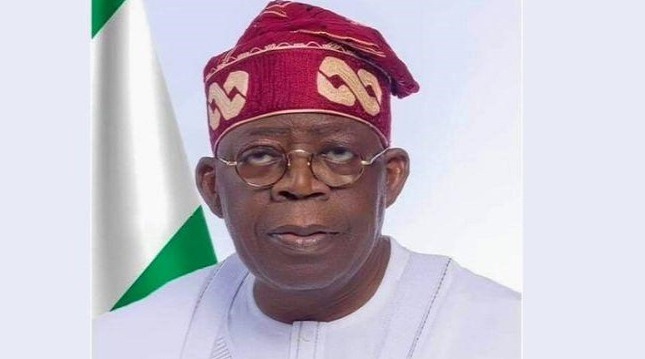
United States Government has said that Nigeria is not making significant progress in fiscal transparency, referencing gaps in the country’s budget disclosure, expenditure reporting, public procurement transparency and audit processes.

The assessment is contained in a report by the United States Department of State, which reviewed Nigeria’s fiscal transparency practices in its 2026 fiscal transparency report for countries published on Tuesday.
The report noted that the US government stated that Nigeria made some key fiscal documents available to the public, significant shortcomings remained in the disclosure of budgetary information and the management of public finances.
The report noted that “the government made its enacted budget and end-of-year report widely and easily accessible to the public, including online, but did not publish its executive budget proposal within a reasonable period.”
It also stated that while the Nigerian government had made information concerning the country’s debt obligations publicly available, its budget documents failed to provide a comprehensive picture of government revenues and expenditures.
“The government made information on debt obligations, including major state-owned enterprise debt, publicly available, but budget documents did not provide a substantially complete picture of the government’s revenues and expenditures, or break down expenditures to support executive offices in the budget,” the report stated.
The US government further raised concerns about discrepancies between Nigeria’s approved budget and the actual revenues and expenditures recorded during implementation.
It said, “Actual revenues and expenditures did not reasonably correspond to those in the enacted budget.”
The report also criticised the country’s supreme audit institution, stating that it did not meet international standards of independence and did not publish substantive reports, although it had access to the entire executed budget.
“The supreme audit institution did not meet international standards of independence or publish substantive reports but did have access to the entire executed budget,” it stated.
The assessment, however, acknowledged that Nigeria’s sovereign wealth fund had an adequate legal framework and disclosed information about its funding and the general approach to withdrawals.History
“The sovereign wealth fund had a sound legal framework and disclosed its source of funding and general approach to withdrawals,” the US government said.

The World Bank Group is supporting the expansion of Africa’s digital commerce infrastructure to help small businesses reach new markets, create jobs, and strengthen economic opportunities across the continent.

Through Jumia, Africa’s leading e-commerce platform, the investment is expected to enable approximately 60,000 local annual active sellers to participate more fully in the digital economy, support around 1,800 direct jobs, and create income-generating opportunities for more than 100,000 independent sales agents.
As digital commerce continues to grow across Africa, reliable access to online marketplaces, logistics networks, and digital payments are becoming increasingly important for entrepreneurs and small businesses seeking to expand beyond local markets. Strengthening this infrastructure can help firms increase sales, improve productivity, and connect consumers with a wider range of affordable goods and services.
To support this effort, the International Finance Corporation (IFC), the private sector arm of the World Bank Group, is investing US$25 million in equity in Jumia Technologies AG (Jumia), Africa’s largest public e-commerce platform. The investment will support Jumia’s next phase of growth across its core African markets, strengthening its integrated marketplace and logistics network.
By expanding access to digital commerce tools and services, the investment will help businesses grow, improve price transparency, and contribute to more inclusive and resilient private sector development across Africa.
“The support of the World Bank Group is a milestone for Jumia and for African e-commerce more broadly. It validates both the discipline we have brought to our business in recent years and the tangible impact our platform has on small businesses, jobs, and consumers across our eight markets. With partners like the IFC, we can accelerate the digital commerce infrastructure Africa needs” said Francis Dufay, CEO of Jumia.
“Jumia demonstrates how pan-African e-commerce platforms can expand economic opportunity at scale. Our investment supports the company’s next phase of growth while contributing to create jobs, digitizing supply chains and distributions channels and mobilizing private investment” said Farid Fezoua, Director for Equity, Funds, and Venture Capital at the International Finance Corporation, World Bank Group.

Nigerian Upstream Petroleum Regulatory Commission (NUPRC) has cautioned the public against fake recruitment offers and fraudulent employment letters circulating in the agency’s name.

Eniola Akinkuotu, head of Media and Corporate Communications of the Commission, stated that NUPRC has received reports of counterfeit and AI-generated appointment letters bearing names not known to the regulator.
The Commission also said fraudsters have been extorting money from jobseekers by promising placement within the agency.
NUPRC has reported the incidents to law enforcement and said investigations are underway.
The regulator reiterated that there is no ongoing recruitment exercise and warned members of the public not to make any payments for supposed job offers.
“Whenever the Commission decides to recruit, the process will be conducted strictly in accordance with extant laws and government regulations,” the statement said.
The Commission urged jobseekers to verify any purported offer and to rely only on official NUPRC communications for recruitment information.
The warning follows growing concerns about the misuse of digital tools, including artificial intelligence, to fabricate apparently authentic documents that can deceive the public.

Nigeria Not Making Progress in Fiscal Transparency –US

NCAA to Introduce RFID Technology to Tackle Missing Luggages

SEC Directs Operators to Subscribe to NigSac Alerts, Freeze Terrorists-Linked Funds

Davido Bets $1m in Hit-for-Hit Battle with Colleagues

GSMA Industry Services Unveils Circularity Services to Help Operators Reduce E-Waste and Unlock Value

EFCC Busts NIS Visa Overstay Racket, Uncovers N700m in an Account

Fact-Check: Elon Musk’s “Tesla Pi Phone” is Internet Rumor

NBC Tasks Broadcasting Stations over 2028 DSO Global Deadline

NBC Scraps Annual Digital Access Fee on DSO

Glo Sponsored African Voices to Feature Netflix’s “The Polygamist” Stars




 News2 days ago
Moove Achieves Unicorn Status With $250m Funding

 Telecom2 days ago
MTN Nigeria Clocks 25, Connects over 90m People

 E-Financial2 days ago
FG Suspends NAICOM’s N680m Insurance Recapitalisation Fees

 Broadcasting2 days ago
Affordable, Flexible Streaming Platforms May Kill PAYtv – Report

 E-Business2 days ago
Microsoft to Unveil Next-generation AI Chip in September

 Telecom2 days ago
Subscribers to Seek Legal Redress if Poor Quality of Service Continue in September

 E-Financial2 days ago
SEC Moves to Recover Unclaimed Dividends, Inherited Investments Nationwide

 Telecom2 days ago
ipNX Collaborates with ICT Stakeholders on the Future of Fibre-to-the-Home in Nigeria @ ATCON Forum