

News
Ekeh, Zinox Boss Says He is a Digital Orphan

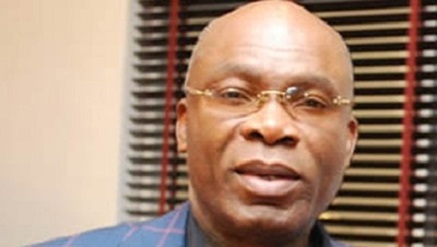
Leo Stan Ekeh, Africa’s foremost digital entrepreneur, has attributed his numerous pioneering efforts and continued relevance over the past 29 years in the technology sector to God and hard work, while sensationally declaring himself an orphan of sorts in the business world.
Ekeh who delivered an incisive talk to select postgraduate students and aspiring entrepreneurs in Dubai Marina, UAE on the sidelines of a business trip recently shared tips on how to be a success in Africa’s challenging business terrain, with its increasing difficulty to forecast trends.
In his opinion, the best way to bring home to the participants the multi-faceted dimensions of being an entrepreneur in Africa is by using himself as a case study.
“Venturing into entrepreneurship requires a determination to take pains before pleasure. Hence, an aspiring entrepreneur must see himself not only an only child but also a Field Marshall in the Army who will have to face and conquer many creative wars. Although my parents are late, I still have siblings. However, I see myself as an orphan in the digital business world as my success tools remain the dependence and reliance on God and hard work.”
Taking the participants on a trip down memory lane with experiences from his beginnings, Ekeh noted that business success begins from childhood as the decisions one takes in that stage of one’s life go a long way in shaping the future.
“Success in business as an entrepreneur is not down to serendipity or a chance occurrence. It begins from childhood: who you want to be, personal discomforts or sacrifices you are willing to take in order to build a strong foundation for your business destination in the near future. That is why elders could see a child and say this child shall be successful in future.
As a young child growing up, I had taken a decision to abstain from alcohol and cigarettes because as an entrepreneur, you are bound to encounter betrayal from those who should know better and such habits would have derailed me, especially in times of depression. As an entrepreneur, you could easily become a drunk or drug addict if you are not careful. Most successful entrepreneurs are in the real sense loners as this habit gradually builds up based on experiences of betrayal borne over the years.”
While declaring that the 21st century does not require collateral to build wealth, Ekeh identified integrity as the biggest collateral he had relied on in his over 29 years of outstanding achievements. He noted that as a Research and Development entrepreneur, there is no collateral to position other than integrity which was all he had to offer.
“My strategy from childhood as a poor fellow was to cause disruptions hence the decision to venture into technology which allows room for constant innovation. Nevertheless, I have always held fast to integrity as my biggest collateral. This has gone a long way in helping me gain the confidence of various multinational partners we do business with. Added to this is the over 18 hours I put in every day together with my wife which has helped us build the business to its present status. I have discovered the only way I can sustain my dominance in the market place is through constant innovation and this is tied to sleeping less and eating healthy. It is important that in that hunger to be successful, you institute strong auditable system and structure which sustain your business.
In Africa, you have a lot of portfolio billionaires who are also classified as entrepreneurs. These are publicly perceived billionaires created over night by their respective governments based on political connections. Some of these people don’t have offices not to talk of accountants and HR executives. Avoid these people because they end with the government in power. You have been trained and exposed to be better than all present billionaires and the future is better than today because you have less clannish burden waiting for you plus you have age on your side.”
Ekeh, who counseled the participants to exercise caution with trust, while looking out for the gaps in business which could lead to insolvency, also affirms that success comes with various pitfalls including malicious attacks and blackmail from competition and other faceless individuals.
“I have faced numerous blackmails and campaigns of calumny from various quarters, even from people who have no offices and are just out to rubbish my name. This is part of the problems we have in Africa. However, I urge you all to see these as part of the perks of being successful as no one throws stones at an unripe mango. My happiness stems from the fact that despite all these, a few people still appreciate quality and integrity, hence I urge you all to remain on the path of worthy greatness. In all the accolades I have received, two of them remain dear to me: the Icon of Hope award presented to me by former President Olusegun Obasanjo on Nigeria’s Independence Day, October 1st 2002 and my selection by the EFCC as Special Personality to cut the 5th Anniversary stamp as a worthy Nigerian. These are some of the things that keep me going,” he enthused.
Ekeh whose Zinox Technologies has deployed some of the biggest ICT projects in the country, charged the participants to leverage on the limitless opportunities on the continent to create and sustain wealth, while advising them on the need to take street-wise decisions such as avoiding excess bank loans and working hard to achieve ownership of their office space and personal residences to avoid competitors taking advantage of these to cause disruption in their lives.
He closed by stating that every entrepreneur has a divine call from God to fulfill on earth in order to make heaven.
According to Ekeh, his own call is to create thousands of creative and futuristic jobs in Africa.
“Though I have not had the greatest support of my government to achieve this, but I assure you, I am almost at the point of realizing this and this would be soon as I have found a most creative platform to achieve it and I assure before I retire soon, I shall support platforms that help me achieve this ambition. It is, therefore, important that in that ultra-ambition to create wealth you realize early what that special call from God is all about and try to fulfil them on earth,” he concluded.



National Reading Culture (NRC), an online investment platform targeting Nigerians has collapsed, resulting in the loss of billions of Naira for investors.

The website unexpectedly shut down, blocking users from withdrawing their funds and locking in their investments.
Just like all other investment scams, victims were lured with promises of doubling their money in few weeks.
When National Reading Culture eventually crashed, the operators vanished with users’ funds, leaving investors devastated.
How the Platform WorkedTask-Based Earning:
According findings, National Reading Culture lured users with promises of making money by completing simple daily tasks like reading articles, clicking links, or inviting friends.
They also offered investment tiers to earn higher daily profits, where users had to deposit their own money into the platform.
Evidence showed the website previously operated as a Chinese job search platform before rebranding into an “earning” scheme.


The Nigeria Social Insurance Trust Fund (NSITF) has signed a memorandum of understanding (MoU) with Rand Mutual Assurance (RMA) to collaborate on digital transformation aimed at strengthening worker protection systems and support economic growth.

According to RMA, the agreement was concluded during a visit by its delegation to Abuja.
The partnership will focus on institutional capability development, modernising operating models, improving service delivery and sharing knowledge between the two organisations.
Through the partnership, RMA and NSITF will collaborate to strengthen institutional capability, modernise operating models, accelerate digital transformation and improve services for workers and employers.
The organisations will also explore opportunities for knowledge exchange and the adoption of best practices in social security administration.
RMA said the agreement forms part of its broader engagement with governments, regulators and social security institutions across Africa to support improvements in governance, operational resilience and service delivery.
“Our partnership with NSITF reflects much more than the signing of an agreement,” said Mandla Shezi, group chief executive officer of RMA. “This partnership is not simply about sharing knowledge. It is about co-creating the next generation of African social security systems.”
He added: “By combining our respective strengths, we can help build institutions that are more resilient, more responsive and better equipped to protect workers while supporting national development.”
Shezi said the future of social security depends on integrated systems where prevention, insurance, healthcare, rehabilitation, technology, investment management and institutional capability work together.

Microsoft has announced plans to cut about 4,800 jobs, representing roughly 2.1 percent of its global workforce, with Xbox, its gaming division, expected to bear the largest share of the layoffs.

The company said more than 1,600 positions at Xbox would be eliminated immediately, while another 1,600 jobs would be phased out over the next year as part of a major restructuring of the gaming business.
In a memo to employees, Amy Coleman, executive vice president, Microsoft, said the company was streamlining its operations to focus on areas that deliver greater value to customers in a rapidly changing technology industry.
Asha Sharma, chief executive officer, Xbox, described the move as “the most significant restructure in Xbox history,” saying the changes are intended to position the gaming business for long-term growth rather than downsizing.

Court Declares ARCON’s N60Bn Fine against Facebook Nigeria Illegal

NIN Enrollment Hits over 136m as New ID Law Takes Effect

NRC, Ponzi Scheme Collapses Resulting Loss of Billions of Naira

Plateau PCC Collects Nigerians’ Data without Privacy Policy – FIJ

FG Suspends New Internet Regulations to Prevent Overlapping Rules

Mobile Internet Gender Gap Widest in Africa – GSMA

NASENI Moves to Digitize CCB’s 5m Assets Declaration and Operations

Nigeria Launches FreeTV Nationwide

CANAL+ Partners Samsung to Pre-Load DStv Stream on New Samsung TVs In Nigeria, Other African Countries

UK, Nigeria Launch £15m Growth Programme to Accelerate Economic Transformation




 E-Financial2 days ago
Tokenization, Blockchain Technology will Transform Financial Institutions – IMF

 General News2 days ago
NIS Deploys Advanced Surveillance Masts, other Critical Infrastructure to Boost Border Security

 Broadcasting2 days ago
Obi, NDC Presidential Candidate Faces N50Bn Defamation Claim over Alleged Podcast Remark

 E-Business2 days ago
Weebly Websites to Shut Down for Nigeria, 66 Other Countries from September

 E-Financial2 days ago
FG Denies N8 Trillion ‘Shadow Budget’, Says IMF Quoted out of Context

 Telecom2 days ago
No Plans for Fresh Tariff Hike – MTN

 General News1 day ago
IHS Nigeria, FCT-HSES Concludes Clean Cooking Energy Campaign “Project Breathe Clean Air” in Abuja

 News2 days ago
World Bank Sounds Alarm: Low Revenue, Not Debt, Is Nigeria’s Biggest Fiscal Threat