

Telecom
Huawei Launches Agile Network, IPv6 Ready Solutions in Nigeria

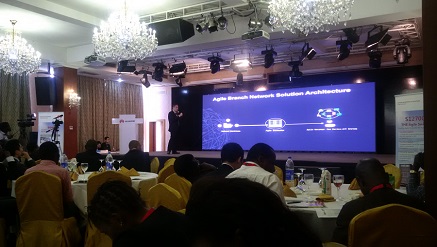
Huawei, a leading global Information and Communications Technology (ICT) solutions provider, at its ‘Huawei Network Congress (HNC) West Africa 2015’ in Lagos gathered the ICT community sharing its vision, knowledge and experience of ICT transformation trends, challenges and latest technologies, launched agile network solutions and running on internet protocol version six (IPv6).
HNC 2015 was themed “From Agility to Imagination” focusing on “introducing SDN technology” and “upgrading customer experience”.
More than 200 stakeholders from Banks, Power DisCos, Government and channel partners etc, were in attendance at the HNC 2015 including CEOs, CTOs, analysts and others.
Huawei’s Agile Network is the industry’s first network centered on services, users, and experiences.
Since its rollout in 2013, Huawei Agile Network has been deployed in nearly 200 networks for commercial use in seven (7) industries: government, finance, medical services, large enterprise, transport, education, and broadcast media.

Huawei’s Agile Network has helped customers build multiple high-profile solutions such as intelligent transport, wireless cities, smart shopping malls, and smart travel.
HNC 2015 is the forum being used to share and discuss with industry partners the practices and future of the Agile Network, with the aim of helping enterprises to quickly enter the age of agility.
“We are now in a fast-changing era where Cloud computing, Big Data, and Software-defined networking (SDN) are no strangers to us. As mobility, Bring your own device (BYOD) , and digital social networking become terms commonly used in our work and life, the rapid changes of this era are more and more evident. In such an era, IT capability is becoming an extremely important core competency for an enterprise.”, Said Mr. Shi Weiliang, vice president of Huawei West Africa Region, in the keynote address of NHC 2015.
Shi added, “Huawei’s Agile Network focuses on services and user experience instead of technologies and connectivity, and implements a tremendous transformation from ‘best effort ‘to ‘all in control’. Huawei will continue to put forth innovative business models, and enable networks to be more agile for services, to help enterprises build their own differentiated competitiveness in a better connected world.”
The ICT industry’s first agile switch, Huawei S12700, was highlighted on HNC 2015.
The S12700 agile switch was designed with services, users, and experience in mind, and can support customization on demand.
The S12700 shortens service provisioning time from two years to one month and fault location from two weeks to several seconds, and is capable of identifying failure points down to the chip level. Based on agile technology, the whole network can be virtualized into a super chassis switch, significantly simplifying network deployment and management.
At HNC 2015, Huawei has broadened the scope of its Agile Network Solution and is showcasing an end-to-end Agile Network architecture.
This more comprehensive architecture consists of agile campus, cloud data center, and high-efficient WAN sub-solutions.
It meets requirements of mobility, cloud computing, social media, big data, and Internet of Things (IoT), and brings new benefits to enterprises.
On his part, XueBin Zhu, enterprise network solution director, Huawei, said that campus network infrastructure is evolving rapidly due to the dynamic nature of enterprise mobility and BYOD rollouts, cloud services and applications, real time multi-media and UC applications.
Aside that, Zhu added that the need for a comprehensive approach to security across enterprise IT infrastructure- providing enterprises with the agility to support business and application needs continue to arise.
He said during a presentation on, “Agile network: weaving the future”, that Huawei’s vision is aligned with these trends, which along with its built-in programmable chip will afford the achievement of deriving future network needs via emerging networking architectures such as SDN.
Through its dedication to customer-centric innovation and strong partnerships, Huawei established end-to-end advantages in telecom networks, devices and cloud computing.



Clydestone Ghana Plc has filed a writ of summons and statement of claim against MTN Ghana, MTN Group Limited and Mobile Money Fintech Limited, alleging unauthorized use of its intellectual property.

The company announced the court action at the Ghana Stock Exchange, confirming proceedings in the Commercial Division of the High Court of Ghana.
The case relates to work commissioned in 2007 that Clydestone alleges was later used without authorisation or compensation.
Clydestone said the claim involves proprietary intellectual property, confidential commercial information and operational methodology developed during the engagement. The company is seeking declarations, damages and equitable remedies.
In a statement, Clydestone said MTN Ghana engaged it in 2007 to develop a commercial and operational framework for a mobile money business.
“The work was developed and delivered by the company’s founder and Group CEO, Paul Jacquaye, and included a full mobile money ecosystem covering the commercial model, operational architecture, implementation methodology and business case.”
Clydestone said the work was commissioned on the understanding that a non-disclosure agreement and memorandum of understanding would be signed.
It alleges these agreements were not finalised despite repeated requests.
The company further alleges MTN Ghana later used its proprietary work and methodology without authorisation or compensation, including in MTN Mobile Money Ghana and other markets.
Clydestone said the alleged use has continued since the launch of MTN Mobile Money Ghana in 2009.
“The wrongful use of that work has been ongoing since 2009. What has changed is the availability of independently verifiable information that documents its scale and commercial significance,” the company said.
It cited the GSMA State of the Industry Report on Mobile Money 2026 and MTN Ghana’s 2025 annual report as evidence of the platform’s scale.
According to Clydestone, the reports show approximately 19.3 million active users and annual revenue of about GHS 6.0 billion ($516m).
The company said it reviewed its records following these publications and concluded there were sufficient grounds to initiate legal proceedings.
It added that it has received no payment or acknowledgement for the work since December 2007, and that pre-action correspondence in 2026 received no substantive response.
“The Board of Directors has unanimously authorised the commencement of these proceedings,” the company said.
Jacquaye said: “This case is about accountability for commissioned intellectual property.
“When independent publications in 2025 and 2026 revealed the scale of the mobile money business, we reviewed all documentation relating to the original engagement and concluded these proceedings were necessary.”
MTN Group Limited, named as a defendant, had not commented at the time of publication.

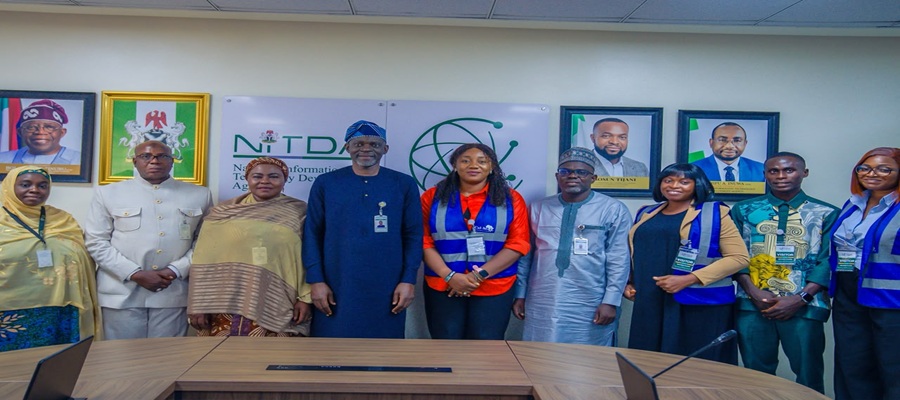
National Information Technology Development Agency (NITDA) has reaffirmed its commitment to expanding digital inclusion through strategic partnerships aimed at equipping underserved communities with digital skills and access to technology.

Mr. Oladejo Olawunmi, Director, Digital Development Services representing the Director General of NITDA, and the Executive Director of Cal-Maji Foundation, alongside members of their respective delegations, pose for a group photograph following a strategic engagement on advancing digital literacy, capacity building, and digital inclusion for women, youth, and underserved communities.
Director-General of NITDA, Kashifu Inuwa, made the commitment during a courtesy visit by the Executive Director of Cal-Maji Foundation, Mrs Faith Ayuba, to the agency’s headquarters in Abuja.
Represented by the Director of Digital Development Services, Mr Oluwunmi Oladejo, Inuwa said collaboration with community-based organisations remained central to NITDA’s vision of ensuring that no Nigerian was left behind in the country’s digital transformation journey.
He noted that feedback from beneficiary communities demonstrated the long-term impact of the agency’s interventions across the country.
“It is always gratifying to receive feedback from communities that have benefited from our interventions.
“Many of these projects were implemented years ago, and it is rewarding to know they are still creating opportunities,” he said.
The NITDA boss explained that the agency continued to monitor the performance of its intervention centres nationwide while leveraging emerging technologies to enhance digital learning and virtual capacity-building.
According to him, the National Digital Literacy Framework remains the foundation of NITDA’s efforts to equip children, students, artisans, farmers, professionals and other groups with digital competencies needed in a technology-driven economy.
Responding to requests for additional support, Inuwa disclosed that the agency would consider training community-based instructors to sustain digital literacy initiatives at the grassroots.
He encouraged the foundation to submit a formal request, accompanied by evidence of activities at its digital centre, to facilitate further intervention.
The director-general, however, acknowledged that maintaining internet connectivity across numerous intervention centres nationwide remained a major funding challenge.
He stressed the need for innovative financing models and stronger collaboration to ensure the sustainability of digital inclusion projects.
Earlier, Ayuba commended NITDA for its openness to partnerships and its commitment to supporting initiatives that deliver measurable impact in underserved communities.
She described the agency as one of the few government institutions that prioritised impactful programmes over personal connections.
According to her, the Cal-Maji Foundation focuses on improving access to education, strengthening food systems, enhancing food security and providing social protection for women and young people, particularly in remote communities.
Ayuba said NITDA’s Knowledge Access Centre, established at the foundation’s community school in a border community in Kogi State, had significantly transformed learning by providing students and residents with access to computers, internet services and digital education.
“The ICT centre became an equaliser.
“Young people who ordinarily would never have had access to computers or the internet suddenly had the opportunity to acquire digital knowledge.
“We came back simply to say thank you because this partnership has changed lives,” she said.
She disclosed that more than 1,000 children had benefited from the foundation’s educational programmes.
Ayuba also presented a former student who progressed from the community school to a Nigerian university after utilising the digital resources available at the centre.
She described the student’s achievement as evidence of the enduring impact of the collaboration.
The foundation’s executive director appealed for deeper collaboration through the training of community instructors, upgrading of computer systems and expanded access to NITDA’s digital capacity-building programmes.
She stressed that rural communities must not be left behind as Nigeria advances in emerging technologies such as artificial intelligence, cybersecurity and digital innovation.
The meeting ended with both organisations reaffirming their commitment to strengthening collaboration to expand digital opportunities, promote inclusive technology adoption and support Nigeria’s digital economy agenda.

National Information Technology Development Agency (NITDA) has unveiled the National Software Quality Assurance (SQA) Framework to improve software quality, strengthen cybersecurity and enhance public confidence in Nigeria’s digital infrastructure and government services.

The framework, approved by the Director-General of NITDA, Kashifu Inuwa Abdullahi, under the provisions of the NITDA Act 2007, establishes national standards for the design, testing and deployment of software across Federal Government institutions, regulated industries and the broader digital ecosystem.
According to the agency, the initiative is aimed at reducing costly information technology failures, improving service delivery and ensuring that software powering critical national infrastructure meets globally accepted quality standards.
The framework comprises three regulatory instruments, namely the National Software Development Guideline, the National Software Testing Guideline and the Software Testing Organisations Licensing (STOL) Guideline.
NITDA explained that the National Software Development Guideline mandates structured software development processes, secure coding practices based on the Open Worldwide Application Security Project (OWASP), standardised system documentation and compliance with Web Content Accessibility Guidelines (WCAG) 2.1 AA for citizen-facing digital services.
The National Software Testing Guideline introduces mandatory testing benchmarks covering software functionality, cybersecurity, system performance under peak demand and interoperability before deployment.
Under the STOL Guideline, independent Licensed Software Testing Organisations (LSTOs) will be accredited and regulated to evaluate and certify software before it is deployed.
The agency stated that all Federal Government software projects would now be required to undergo independent third-party testing and obtain official certification before deployment.
It added that compliance with the framework would become a mandatory requirement for obtaining IT Project Clearance.
To strengthen risk management, the framework introduces a three-tier software classification model based on the criticality of systems.
Under the classification, Class A covers high-risk and critical national infrastructure such as core banking systems, national identity platforms and electricity grid control systems.
Class B applies to medium-risk enterprise platforms, while Class C covers lower-risk internal software applications.
NITDA said Class A systems would undergo more rigorous security assessments, including advanced penetration testing and specialised audits conducted by top-tier accredited software testing organisations.
The agency identified three major benefits of the framework.
It said the initiative would improve the reliability and security of digital public services, protect government investments from software failures and cyber threats, and enhance service delivery to citizens.
It also noted that regulating independent software testing would stimulate the growth of Nigeria’s software assurance industry, create employment opportunities for technology professionals and promote indigenous innovation.
According to NITDA, the framework will further strengthen international confidence in locally developed software, enabling Nigerian technology companies to compete more effectively in global markets and attract foreign investment.
Speaking on the development, Inuwa said quality remained fundamental to building trust in Nigeria’s digital economy.
“Quality is the foundation of digital trust.
“With this Framework, every software solution serving Nigerians, whether built for government or the private sector, will meet clear national standards for security, reliability and interoperability.
“This is how we modernise government technology and position Nigerian software to compete on the global stage,” he said.
The agency disclosed that the framework would take full effect in the second quarter of 2027.
It said the implementation period would include nationwide stakeholder engagement, capacity-building programmes and the accreditation of software testing organisations.
NITDA added that an Expression of Interest (EOI) would soon be issued to qualified organisations seeking licences to operate as independent software testing bodies under the new regulatory regime.

Nwokolo, Nollywood Actor Claims Internet Fraud is “Keeping Economy Afloat’

SEC Begins Full e-Registration for Capital Market Operators

Elon Musk Launches Invite-only X Money with Visa Debit Card

CBN Fines Banks N430m for Ignoring Customers’ Complaints

Kaspersky Uncovers New Mirage Kitten Malware Used in Cyber-espionage Campaign Across Africa, Others

NRC, Ponzi Scheme Collapses Resulting Loss of Billions of Naira

EFCC Busts NIS Visa Overstay Racket, Uncovers N700m in an Account

From Scarcity to Scale: What Africa Can Learn from India’s Agricultural Transformation

Tokenization, Blockchain Technology will Transform Financial Institutions – IMF

BON Establishes Six Ad Hoc Committees to Modernize Broadcasting




 Telecom2 days ago
Fact-Check: Elon Musk’s “Tesla Pi Phone” is Internet Rumor

 News3 days ago
History as Lagos Becomes First Nigerian State to Launch Greenhouse Gas Registry

 E-Business3 days ago
UNN to Partner Firm on AI, Smart Mobility Innovation Centre

 Telecom3 days ago
AI Investment Gap Threatens Africa’s Future Growth

 Telecom3 days ago
AMCON Puts ntel Up for Sale, Seeks Investors

 E-Financial3 days ago
Remita Raises Alarm Over Nigeria’s Digital Divide, Calls for More Investment

 E-Financial2 days ago
Malpass, Ex World Bank Chief Raises Alarm over Nigeria’s Secretive Debt Structures

 Telecom2 days ago
How and Why Apps Deplete Data – ALTON