

News
Buhari Breaks Covenant, Wastes 100 Days in Office – Nigerians

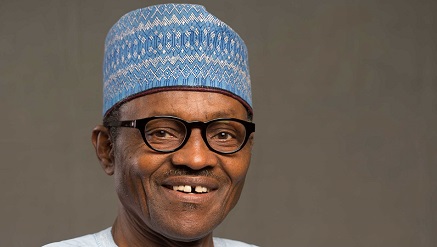
It is just days to the 100-day deadline the Muhammadu Buhari’s campaign set for itself to accomplish a raft of promises made before the March polls.
Naij.com reported that there are noteworthy indications of progress, but the new government must try to achieve more for the millions of Nigerians who put their hopes on new leader.
Buharimeter, the initiative that monitoring and holding how the president is implementing his promises, in their fresh report said that no promise is either achieved or not achieved.
According to naij.com, the ruling party has set up a mechanism to monitor and evaluate the execution of the APC’s manifesto and other vows made by Buhari during the presidential campaign.
It would be recalled that Asiwaju Bola Tinubu, national leader of the All Progressives Congress (APC) recently, urged Nigerians who have been accusing President Buhari of being too slow to allow the President at least 100 days of honeymoon.

He said change, which was at the centre of the party’s campaign ahead of the presidential election, would not be achieved with a magic wand.
Tinubu spoke with State House correspondents shortly after meeting behind closed-door with Buhari at the Presidential Villa, Abuja.
“May 29 was when this President was sworn in. It is an international norm, there is an honeymoon period, at least a minimum of 100 days’ honeymoon. And you won’t allow honeymoon at all? You said change is not coming. Change is not by magic. It is driven by the people, the spirit and the character and the planning,” he said.
But the president himself made the promises he will achieve in his first 100 days below;
“I pledge to:
Publicly declaration of my assets and liabilities
Encourage all my appointees to publicly declare their assets and liabilities as a pre-condition for appointment. All political appointees will only earn the salaries and allowances determined by the Revenue Mobilization and Fiscal Allocation Commission (RMFAC).
Personal leadership in the war against corruption
Inaugurate the National Council on Procurement as stipulated in the Procurement Act. The Federal Executive Council, which has been turned to a weekly session of contract bazaar, will concentrate on its principal function of policy making.
Review and implement audit recommendations by Nigeria Extractive Industries Transparency Initiative including those on remittances and remediation.
Work with the National Assembly towards the immediate enactment of a Whistle Blower Act
Work with the National Assembly to strengthen ICPC and EFCC by guaranteeing institutional autonomy including financial and prosecutorial independence and security of tenure of officials. Make the Financial Intelligence Unit of the EFCC autonomous and operational.
Encourage proactive disclosure of information by government institutions in the spirit of the Freedom of Information Act.
Ensure all MDAs and parastatals regularly comply with their accountability responsibilities to Nigerians through the National Assembly.
All political officer holdersearn only the salaries and emoluments determined and approved by the Revenue Mobilization and Fiscal Commission RMFAC.
Work with the leadership of the National Assembly and the Judiciary to cut down the cost of governance.
I will present a National Anti corruption Strategy.
Insurgency and Insecurity
I have had the rare privilege of serving my country in the military in various capacities and rose to become a Major General and Commander-in-Chief of the Armed Forces. I defended the territorial integrity of our nation.
I pledge to:
As Commander-in-Chief, lead from the front and not behind in the comfort and security of Aso Rock to boost the morale of fighting forces and the generality of all Nigerians.
Give especial attention to the welfare of our armed forces and their families; lost heroes and their families and the victims of insurgency.
Boost the morale of the men and women in the field by public recognition of their efforts through memorabilia, stamps, statues, regular rotation, regular payment of allowances, regular communication between the men and officers of security agencies, provision of best health care and housing for families of deceased comrades.
I will present a marshal plan to the nation that will combat insurgency, ethnic and religious violence, kidnapping and rural banditry.
Provideof the best and appropriate military and other materials the country needs to combat insurgency, ethnic and religious violence, kidnapping and rural banditry.
Establish personal relationship with governors of the affected states by insurgency, with leaders of the countries in the region and with leaders around the world to coordinate efforts to combat insurgency, oil theft, piracy and criminality.
Restore confidence in the bilateral and multilateral partnerships in addressing insurgency including procurements.
Activate regular meetings of the National Police Council to ensure the discharge of its true constitutional role in a transparent and accountable way.
As a father, I feel the pain of the victims of insurgency, kidnapping and violence whether they are the widows and orphans of military, paramilitary, civilians and parents or the Chibok girls. My government shall act decisively on any actionable intelligence to #BringBackOurGirls.
Niger Delta
I pledge to:
Restore the integrity of the Niger Delta by implementing relevant sections of the Ledum Technical Committee on human capital development, resource management and distribution, governance and rule of law, reclamation and environmental and sustainable development.
Commit myself and my administration to the phased implementation of the United Nations Environment Program’s(UNEP) recommendations on Ogoniland.
Unveil a marshal plan for the regenerative development of the Niger Delta.
Diversity
Diversity refers to the inherent complexities of the variations in the social fabric of a people. Elements of poorly managed diversities include absence of cohesion, low capacity or political will to address resulting tensions, weak institutions of the state, in-equalities in every facet, impunity, breakdown of mutual trust, rising incidences of violence and total breakdown of law and order. To quickly reverse this observable trend in our society:
I pledge to:
Continually acknowledge and consciously equality and equity in all government businesses and activities.
Implement the National Gender Policy including 35% of appointive positions for women.
Work with National Assembly to pass a National Disability Bill, which I shall immediately assent, into Law.
Immediately charge relevant MDAs to implement new building codes to ensure that people with disability have easier access.
I will lead the campaign for restoration of mutual trust and cohesion for nation building, while also working with the National Assembly to make appropriation to strengthen institutions and platforms promoting dialogue and inclusion.
I will promote amendment to the provisions of section 14:3 of the Constitution to give effect to the expansion of the scope of representation to include women and persons with disabilities.
Work with National Assembly to pass the National Disability Act and the Equal Opportunities Bill.
Health
I pledge to:
Implement the National Health Act 2014,which guarantees financial sustainability to the health sector and minimum basic health care for all and ban medical tourism by government officials.
Launch special programme to improve availability of water and sanitation.
Review occupational health laws and immediately commence enforcement of the provisions to reduce hazards in the work place.
Unveil a health sector review policy to ensure the efficient and effective management of our health systems.
Mobilize the health workforce needed for the all-round implementation of our primary health programmes for rural communities.
Agriculture
I pledge to:
Make pronouncement to make agriculture a major focus of the government and lay the institutional foundation to attract large-scale investments and capital into the agricultural infrastructural sector
Launch a massive agricultural infrastructural investments plan that will focus on production, transportation infrastructure and marketing logistics across Nigeria
Launched a massive, well-coordinated and innovatively funded Youth in Commercial Agribusiness Programme.
Establish agricultural produce pricing and marketing mechanism and institutions
Work with State and Local Governments to launch Agricultural Support Programmes that will drive state level massive agricultural land development and mechanization agenda
Revamp, revitalize and continuous improvement on the national agricultural extension and rural support service system
Initiated a holistic project aimed at promoting and securing access of standardized agricultural products to both local and international markets
Lay the groundwork for a standardized market uptake and aggregation outlets for specific agricultural produce
Initiated a comprehensive revamp of key development banks (Bank of Agriculture, Bank of Industry and Nigeria Import & Export Bank) operations to fund inclusive agricultural value chain operations
Lay the groundwork for an ambitious, massive, seamless, accessible single-digit agricultural value-chain finance programme
Initiated the process to appropriately liberalise and expand agricultural and rural insurance system with premium subventions support to farmers
Revamp the agricultural cooperative system to drive rural agriculture and improves stakes for smallholder farmers
Launch appropriate tariff rectification instrument to support import-export anomalies
Management of the Economy for prosperity
Every Nigerian deserves to benefit from the running of our collective resources. We promise not to leave any Nigerian behind in our determination to create, expand and ensure equitable and effective allocation of economic opportunities. No matter the amount of funds we generate, unless there is an efficient and effective utilization, it will only create few billionaires. Unless we fight corruption, the economy will only benefit the greedy in our society.
I pledge to:
Work with the legislature to strengthen constitutional provisions to make the meetings of the National Economic Council more periodic and predictable and its decisions more binding.
Present annual report on the state of the economy to the National Assembly and the Nigerian People.
The Preparation of Medium Term Expenditure Framework (MTEF) and annual Budget will be guided by job creation projections.
Negotiate rule-based oil revenue management process, and adopt a rule based excess crude account management process, which will entail a fixed percentage (e.g. 10% or 20%) of oil revenue each year, and also set clear rules about where the proceeds will be domiciled, when the savings can be used, by whom, and what the savings can be used for.
Work with the National Assembly to adopt a rule based, realistic and predictable oil benchmark as a basis for a more transparent management of federation account revenue and excess crude account.
Launch a Small Business Loan Guarantee Scheme in partnership with Commercial Lenders to improve access to finance for SMEs.
Automate the business registration process to ensure sole proprietorships can be opened within 24 hours and incorporated business within 5 days.
Reduce the cost of company registration to a maximum of N10, 000 for sole proprietorships to encourage formalization.
Review and regulate import duty waivers to promote transparency and accountability;
Forge partnerships with state and local governments and private sectors to promote innovation, entrepreneurship and cottage industries;
Work with the National Assembly to review and finalize work on the Petroleum Industry Bill (PIB);
Boost community and local participation in downstream through expansion and promotion of local content development;
Commence organizational reforms to curb corruption in NNPC and its subsidiaries
Industrial Relations
I pledge to:
Give political force to collective bargaining in all sectors of the economy, revive Tripartite Committee of Government, employers and workers organisations, whose task would be to constantly review matters of labour relations and the practice of industrial relations.
Undertake to institute an annual statutory tripartite body contribute towards formulation and implementation of broad macro-economic policies.
Reposition Ministry of Employment, Labour and Productivity and all relevant agencies mandated to manage labour dispute and grievance handling process to ensure pre-emptive strategies to halt the current frequent incessant strikes phenomenon.
Power
The power sector has become a monstrous demonstration of corruption. Despite investment of more than X there is nothing to show but few fat cats.
I pledge to:
War against corruption in the power sector
Tackle the issue of gas availability for the proposed power plants
Emphasis alternative sources of power such as small, medium and large hydro plants (Mambilla has capacity for 4,700 megawatts), wind, coal and solar. Efforts will be geared towards smaller and potable power supply.
Start an accelerated training of human resources for the power sector.
Work with PenCom to consider giving soft loans to power sector operators.
Youth and ICT Development
The youth are the salt of the nation. More than 60% of our population is categorized as being of youth age. The future of the nation depends on the brains of the youth and not on what is buried under the ground.
I pledge to:
Declare support for the appointment of young people with requisite qualification into key political offices to begin the incubation and mentoring for a successor political generation.
Unveil a policy that all federal contractors must employ at least 50% young people.
Work with the private sector to establish innovation fund for young people.
Encourage that girls’and boys’ education is prioritized in states where this is established to be a big problem.
Review and make pronouncements, with attendant political will and commitment, on the full implementation of the national youth policy.
Establish innovation centers in conjunction with proposed National Science Foundation and the private sector.
Include vocational skills in the curriculum of Almajiri schools so that they become self-employed.
Unveil a policy that will begin to multiply the efforts and effects of technology incubation centers to at least establish two of such centers in each of the geopolitical zone.
Establish a free-tuition and scholarship scheme for pupils who have shown exceptional aptitude in science subjects at O/Levels to study ICT-related courses.
Immediately establish linkages with friendly names to champion exchange programmes for the acquisition of IT related skills.
Extend the local content policies to cover software and hardware developments in the youth-driven markets. Put in place a quality assurance mechanism to ensure that standards are met and adhered to and make it a policy for companies to procure a % of their ICT needs from the local market.
Hold a summit of all ICT service providers, OEMs, etc both local and foreign that are doing business in Nigeria to device concrete skills transfer and capacity building models in a sustainable manner.
Conclusion: According to Chinua Achebe the problem of Nigeria is problem of leadership. You can only kill a snake from the head. Make the right decision; vote Buhari-Osinbajo on Valentine Day.



The World Bank Group has announced the 31-month debarments of United Aviation Services Limited (UNASEL), a transportation services company based in Nigeria, and Air Vice Marshal Alkali Mamu, its owner and president, “in connection with fraudulent practices under the Enhancing Niger Northeastern Connectivity Project,” according to a press release issued by the multilateral development bank.

The statement said that the project aims to enhance connectivity and road safety along the Zinder-Agadez Road section and improve access to basic socioeconomic infrastructure for selected communities in that road section.
However, according to the statement: “UNASEL and Mr. Mamu presented false experience documents in a prequalification application to qualify for a contract under the project. This was a fraudulent practice under the World Bank’s sanctions framework.”
“The debarments make UNASEL and Mr. Mamu ineligible to participate in projects and operations financed by Bank Group institutions. The debarments are part of two settlement agreements under which UNASEL and Mr. Mamu admit culpability for the underlying sanctionable practices,” it added.
The statement further said: “Per the Bank Group Sanctioning Guidelines, the settlement agreements provide for a reduced period of debarment in light of UNASEL and Mr. Mamu’s cooperation.
As a condition for release from sanction under the terms of the settlement agreements, UNASEL and Mr. Mamu commit to developing and implementing integrity compliance measures that reflect the relevant principles set out in the Bank Group Integrity Compliance Guidelines, and Mr. Mamu further agrees to complete corporate ethics training.
UNASEL and Mr. Mamu also commit to continue to fully cooperate with the Bank Group’s Integrity Vice Presidency.
“The debarments of UNA SEL and Mr. Mamu qualify for cross-debarment by other multilateral development banks under the Agreement for Mutual Enforcement of Debarment Decisions that was signed on April 9, 2010.”

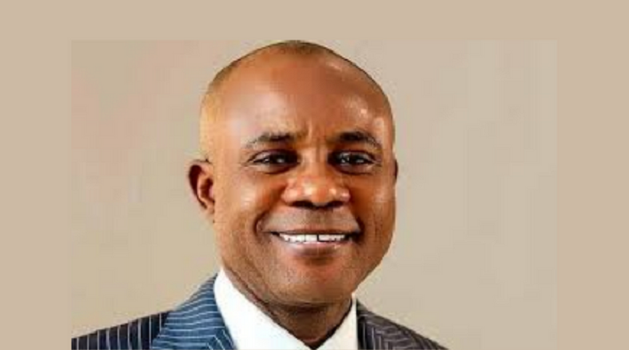
Governor Peter Mbah of Enugu State, has approved the allocation of a parcel of land in Enugu, the state capital, for the establishment of a state-of-the-art Digital Fabrication Centre by the Industrial Training Fund.

Mbah announced this while receiving a delegation from the Industrial Training Fund on a courtesy visit to the Government House, Enugu.
The ITF disclosed this on Friday in a statement signed by its Director of Press and Public Relations, Thomas Ngor.
According to the statement, Mbah described the proposed project as timely and aligned with his administration’s vision of transforming Enugu into a leading destination for investment, innovation and technology-driven industrial development.
He noted that the future of economic prosperity lies in deliberate investments in human capital and emerging technologies, adding that the state has continued to create an enabling environment for innovation, enterprise and sustainable growth.
The governor explained that his administration has made technical education compulsory in the state’s basic education system, with emphasis on digital literacy, robotics and mechatronics to prepare learners for the future of work.
According to him, many traditional trades are now driven by digital technologies, making it imperative to equip young people with relevant technical competencies that will enable them to compete globally and contribute meaningfully to economic development.
Governor Mbah further disclosed that his administration has built smart schools across the state, equipped with robotics centres, mechatronics laboratories and other modern learning facilities, to prepare youths for the evolving global economy.
He noted that artificial intelligence is expected to contribute about $20tn to the global economy in the coming years.
He therefore stressed that the state must be intentional about upskilling its citizens, adding that the establishment of the ITF Digital Fabrication Centre will significantly strengthen the state’s drive to build a knowledge-based economy, foster innovation, promote local manufacturing and create employment opportunities for its growing youthful population.
Earlier, Afiz Ogun, the Director-General of the ITF, who led the delegation, said that upon his appointment by President Bola Tinubu, he was mandated to upskill Nigerian artisans to international standards.
He explained that the Fund subsequently repositioned its technical and vocational skills development efforts through strategic initiatives, including the Skill-Up Artisans Programme, which is designed to train, certify and license Nigerian artisans to international standards.
Ogun disclosed that the Fund had already established a Digital Fabrication Centre in Ikeja, Lagos, with the capacity to produce more than 400 different products. He therefore requested the allocation of land in Enugu State to establish a similar centre with the same production capacity.
According to him, the initiative is aimed at promoting industrialisation, reducing dependence on imports and preparing Nigerians for opportunities in the Fourth Industrial Revolution.
He also reaffirmed the Fund’s readiness to enter into public-private partnerships that will transform Nigeria’s artisanal ecosystem.
Ogun further noted that digital technologies, including artificial intelligence, robotics and computer-aided manufacturing, are rapidly transforming the global economy, making it imperative for Nigeria to deliberately invest in upskilling its workforce to remain globally competitive.
The ITF delegation was later conducted on a guided tour of facilities at one of the smart schools established by the Enugu State Government.

Glovo, a multi-category tech company, has announced its integration into the generative AI ecosystem with the launch of its “Shopping Assistant” for ChatGPT and Claude. Users can now discover retail products, compare prices, and seamlessly order any item using natural conversational language with the AI systems.

The Glovo experience inside such platforms introduces a conversational commerce model that shifts from a search-based web to an intent-based web. Rather than navigating traditional app menus and filters, users can express needs, such as asking for a “last-minute gift for a coffee lover under ₦50,000”, and the assistant handles semantic search, location validation, and product curation.
A Seamless, Concierge-Like Experience
Once both platforms have been connected through either ChatGPT or Claude apps, the user will be able to have a multi-turn dialogue where the assistant remembers context and constraints, such as budget caps. Users receive a visual carousel of up to five highly customised product options available at local stores. Each product displays its image, name, store details and ratings, and price. While the search and discovery experience takes place directly on the Generative AI platforms, selecting a product via the “view on Glovo” button takes the user to the Glovo mobile or web app, where the payment and final purchase are exclusively completed.
Strategic Focus on Retail and Growth
Glovo is prioritising the retail and grocery sectors for this initial launch, capturing the established habit of using AI for product research. Generative AI has driven a significant jump in retail traffic globally, so this first-mover advantage aims to meet customers where they are meeting Gen AI daily, and ensure it captures high-intent organic traffic as search behaviours evolve.
“We’re always looking for ways to meet our customers where they already are. Being available on Claude and ChatGPT means people can discover what Glovo has to offer as part of a natural conversation, with no friction. Glovo has always been about being the everyday app that provides choice and convenience, and this is another step in that direction”, said Shiro Theuri, Chief Technology Officer at Glovo.
How to look for products in the Glovo app through ChatGPT or Claude
- The user must sync ChatGPT or Claude with the Glovo app with the plug-in.
- Once synced, the user must type in @glovo followed by their request.
- The AI platform displays a carousel with 5 available options for the user.
- If the user wants to purchase any of the products or continue searching within the Glovo app, they must click “View on Glovo”, which will redirect the user to the Glovo app or website.
- After the order is confirmed, the store will prepare the item(s) and the courier will head up to the pick-up location. The user will receive the order in minutes.

World Bank Debars United Aviation Services, Owner over Fraudulent Activities

NITDA Introduces Cloud Certification Boost Data Localisation Compliance

Enugu State Approves Land for ITF’s Digital Fabrication Centre

BOI Opens N250Bn Bond Offer to Fund Businesses

Guinness Rewards Consumers with ₦17 Million in First Week of ‘Open for More’ Promo Draw

From Scarcity to Scale: What Africa Can Learn from India’s Agricultural Transformation

BON Establishes Six Ad Hoc Committees to Modernize Broadcasting

EFCC Busts NIS Visa Overstay Racket, Uncovers N700m in an Account

Fact-Check: Elon Musk’s “Tesla Pi Phone” is Internet Rumor

NBC Tasks Broadcasting Stations over 2028 DSO Global Deadline




 E-Financial2 days ago
Access Holdings Deepens Sustainable Finance Impact, Expanding Green Assets to ₦92.14 Billion

 News2 days ago
Ogbaga, Abuja Lawyer to Sue Telcos, DStv over Alleged Unfair Practices

 Telecom2 days ago
MTN Moves Closer to Full IHS Takeover

 Telecom2 days ago
Airtel Nigeria Unveils Hundreds of Retail Shops in Wide Expansion of Customer Touch Points

 E-Financial2 days ago
NAICOM Revokes Nigeria Reinsurance’s Licence over Failure to Meet MCR

 News2 days ago
NAICOM Issues New Licences to 43 Recapitalized Insurers

 E-Financial2 days ago
SEC Begins Full e-Registration for Capital Market Services

 E-Financial2 days ago
TeamApt, Awabah Partner to Bring Micro-Pension Contributions to POS Terminals Nationwide