

Telecom
How Infinix Mobility Emerged 1st African Smartphone Online Brand in 3 years

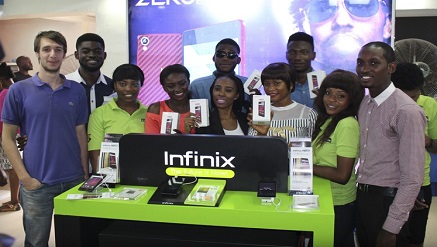
Infinix Mobility has marked a significant turning point in the telecommunication ecosystem. In collaboration with Google, the number one Internet giant, Infinix Mobility released Infinix Hot 2 as the 1st official Android One product with lollipop 5.1 in Africa.
In only three years, Infinix Mobility has built a strong reputation in the Nigerian market and more globally from the East to the West of this world; including Middle East, Europe and South East Asia region.
A successful brand is built by people who know the industry; otherwise brand comes and disappears as fast as it comes.
No High-tech companies are reaching their goals without any strong overview of market. Infinix Mobility has settled its benchmark and here is how.
Infinix Mobility is a Hong Kong based company with head quarter in Shanghai for its research and development center (R&D) and Paris as design center.
Shenzhen the electronic hub of the world is Infinix production center.
To have a better understanding of Infinix Mobility there is no doubt that its success definitely comes from experienced executives of this industry.
Benjamin Jiang, CEO of Infinix mobile, an art bachelor graduated of Hefei Technology offered answers to why Infinix smartphones designs are so trendy, catchy and unique, i.e. Infinix zero 2 made of Kevlar.
Benjamin Jiang joined Bird Co., Ltd. Chinese mobile phone pioneer as Head of project Management.
The following year, the company was listed in Shanghai Stock exchange. In 2009 the company received a government subsidy of 14 million Yuan.
By 2007, Infinix Mobility CEO joined Longcheer holdings a leading Chinese mobile handset design house as GM of International Business Unit.
Since 2012 Benjamin Jiang has been the CEO of Infinix Mobility.
Infinix Mobility: the No.1 online smartphone brand in Africa and Emerging Market’s
Finding the right partners at the right time and on the right place is also part of the smartphone manufacturer success.
When Infinix launched the Infinix Zero with Konga.com last year, it made Infinix Zero the No. 1 and best selling online smartphone in Africa.
Nigerian consumers loved the Infinix Zero and bought 150,000 units.
Made with superior materials—gorilla glass and sporting an octa-core processor from Mediatek, a HD screen and a 13MP camera with flash LED.
The device brings innovation to Nigerian market. The success in Nigeria was later extended to East-Africa and Middle East.
In November 2014, the smartphone manufacturer set Christmas mood with Infinix HOT.
The device seems to match Nigerians taste of 5.0 inches screen, pocket friendly and colorful smartphone—yellow, red, white, black and pink—that reach 100 000 hands.
The worldwide German statistics institute Gesellschaft für Konsumforschung showed that Infinix HOT raised the bar and surpassed brands like Samsung and Nokia in Q1 2015.
Bringing technology and innovation straight at your fingertips.
By April, a technology storm hits Nigeria. African market is a special market—facing energy issues.
Bruno Li, country manager for Nigeria, stated “As a High-tech company, it is our duty to deliver product that brings concrete solutions to the market.” Infinix HOT NOTE a 2 days battery life smartphone and super fast charging technology (30 min charge 7 hours use) was released by manufacturer.
June 2015, the honorable successor of Infinix Zero series, Zero 2 delivered high specs and premium design, first of its kind on the continent.
With its 5 inches HD Super Amoled and an ultra efficient 13 MP camera, Zero 2 brings to Africa bright and sharp vision of the High tech industry.
Talking about design, the device weighs only 118g.
The biggest surprise is the unique material selected by Infinix R&D.
In fact Zero 2 comes with a Kevlar battery back cover that is used in aeronautic equipments, safety and military industry. Kevlar is highly resistive against shock and five times lighter than steel.
This time, Infinix decided to launch the device in the most prestigious university of Nigeria, Unilag University. Bruno Li, Infinix, country manager (Nigeria) said “Being closer to our fans and end-users is what makes us understanding the market. We like to interact with our users either online or offline. “
Infinix Mobility partnered with Google, Jumia and MTN, three pillars of the High-tech ecosystem.
Infinix launched Infinix HOT 2, the 1st official Android One product with lollipop 5.1 in Africa.
Moreover the device comes with a 2GB RAM which will be a standard for the market.
The operating system will be getting an update to the latest Android version up to two years.
With the Hot 2, the largest African operator MTN is offering 1GB data for 500 Naira to fit consumers need in data connection.
Also, HOT 2 has break new records with 30 000 units sold online in within few hours of launch.
“Infinix Mobility willing to focus on Africa: Yes we care!
Customer care is the No.1 concern of Infinix Mobility. The company is controlling the space with more than 100 service centers across Africa with bringing support to its end users.”
From East to West of Africa, users are able to find professional support through service centers.
Most products are providing a 365 days warranty which allow consumers to get customer service from 400 engineers and technicians.
With more than 10000 distribution channels, Infinix Mobility ensures the supply of its devices to billions of Africans.
Infinix and its service centers are bringing to African smartphone users what other brands don’t.


National Information Technology Development Agency (NITDA) has entered into a strategic partnership with the Development Agenda for Western Nigeria (DAWN) Commission through the signing of a Memorandum of Understanding (MoU) aimed at accelerating digital literacy, innovation development, and economic growth across Southwest Nigeria.

Director General NITDA, Kashifu Inuwa CCIE, Director General DAWN Commission Dr Seye Oyeleye alongside representatives of both organisations, display signed copies of the Memorandum of Understanding (MoU) upon its signing at NITDA Headquarters, Abuja.
Speaking at the signing ceremony in Abuja, NITDA Director General, Kashifu Inuwa, described the agreement as a significant step toward leveraging human capital and fostering regional collaboration to drive sustainable national development.
He commended the Southwest region for its longstanding culture of cooperation, noting that collective action remains essential for national progress.
“The Southwest continues to inspire when it comes to collaboration because no one succeeds in isolation. Other regions can learn from this model of cooperation.
“For Nigeria to grow, we must understand our strengths at both the state and regional levels and build on them,” he said.
Inuwa emphasised that Nigeria’s greatest resource is its people, stressing that investments in digital skills, innovation, and technology are critical to creating prosperity and expanding economic opportunities.
According to him, the partnership will facilitate knowledge exchange, capacity building, and innovation-driven initiatives capable of empowering citizens to develop local solutions with national and global impact.
Highlighting NITDA’s ongoing efforts to deepen digital transformation nationwide, he said the Agency is scaling digital literacy programmes, supporting innovation hubs, and promoting technology development across the country.
He noted that innovation flourishes where talent, infrastructure, and supportive policies intersect, making it important for every region to identify and strengthen its comparative advantages.
“Lagos has already established itself as a fintech hub and the commercial centre of the country. Abuja is emerging as a GovTech cluster, while other regions can develop specialised ecosystems around manufacturing, commerce, and other sectors.
“Every region possesses unique strengths that can be transformed into thriving innovation clusters,” he stated.
The NITDA boss expressed optimism that the collaboration would accelerate the implementation of the Agency’s strategic initiatives throughout the Southwest.
He added that both organisations had already begun working together prior to the formalisation of the agreement and called for swift action following the signing.
“We are excited about this partnership and look forward to translating our shared vision into tangible outcomes. While engagements have already commenced, I would like to see even greater momentum after the signing of this MoU,” he added.
In his remarks, the Director General of the DAWN Commission, Seye Oyeleye, highlighted the importance of digital literacy in preparing citizens for future opportunities and ensuring meaningful participation in the digital economy.
He noted that the Commission, which coordinates development initiatives across Ekiti, Lagos, Ogun, Ondo, Osun, and Oyo States, views the partnership as a strategic vehicle for advancing Nigeria’s digital transformation agenda.
Oyeleye highlighted Nigeria’s target of equipping 100 million citizens with digital skills by 2030 through the Digital Literacy for All Initiative, stressing that the Southwest has a pivotal role to play in achieving the national objective.
“Nigeria has committed to equipping 100 million citizens with digital skills by 2030. Southwest Nigeria is not merely a contributor to that vision; it is central to its success,” he said.
He explained that the MoU formalises a shared commitment to ensuring the effective implementation of NITDA’s programmes, particularly the National Digital Literacy Framework, across the region.
He added that the Commission would leverage its extensive network and partnerships across the six Southwest states to bridge federal digital initiatives with local communities, institutions, and young people.
“We will work to ensure that NITDA’s frameworks are not only implemented but strengthened. Our reach across the Southwest positions us to connect federal digital infrastructure and programmes with communities and young people who require the skills needed to thrive in the digital economy,” he stated.
Oyeleye further assured NITDA of the Commission’s commitment to delivering measurable results throughout the five-year duration of the agreement, noting that the true value of development institutions lies in the impact they create rather than the agreements they sign.
The MoU reflects the shared determination of both organisations to advance digital literacy, strengthen innovation ecosystems, and create sustainable economic opportunities for citizens across Southwest Nigeria, further supporting the country’s journey toward a robust and inclusive digital economy.
This version improves readability, strengthens attribution, and adopts a more polished newspaper-style structure suitable for publication.

Airtel Africa Foundation, the philanthropic arm of Airtel Africa plc, has released its inaugural annual report, marking its first full year of delivery and impacting millions of learners and communities across Africa.

During the reporting period, the Foundation committed $6.2 million to interventions across its four strategic pillars; Financial Inclusion, Education, Environmental Sustainability and Digital Inclusion (FEED), with education receiving the largest share of investment.
Key achievements include connecting 1,028 schools to the internet through its partnership with UNICEF, bringing the total to 3,296 schools connected across 13 countries, reaching over 2 million learners and nearly 39,000 teachers. In addition, 64 zero-rated digital platforms enabled over 11 million learners to access free educational content.
The Foundation also improved the condition of public schools, with seven fully renovated and 43 undergoing upgrades under the School Adoption Programme that integrates infrastructure improvements with digital access and holistic student development.
Through the Airtel Africa Tech Fellowship, 257 full university scholarships were awarded in Malawi, Nigeria, Tanzania, the Democratic Republic of Congo, and Uganda, expanding access to STEM (Science, Technology, Engineering and Mathematics) education and building a pipeline of high-potential African technology leaders.
In addition to this, 30,530 youth and women were trained through digital skills initiatives delivered with national, multilateral, and private-sector partners.
Segun Ogunsanya, Chair, Airtel Africa Foundation said: “The Airtel Africa Foundation was established to help dismantle barriers caused by unequal access to opportunity. While talent and ambition are abundant, access to education, digital tools and economic participation remains uneven. Through partnerships and our continental reach, we are committed to investing in communities furthest from opportunity.”
The report also underscores the Foundation’s growing focus on measurable outcomes and long-term systems change.
The Foundation aims to scale proven interventions in the year ahead, including expanding its School Adoption Programme to over 80 schools, increasing scholarships to more than 600 youth, providing free internet connectivity to an additional 2000 schools, and extending digital skills and financial inclusion initiatives to underserved communities.
“As a Foundation, we are positioned to deliver skills development and lasting change at the individual and household level, while partnering with governments to unlock Africa’s economic transformation”, Mr Ogunsanya added.
Zoho Corporation, a global technology company and parent company of Zoho and ManageEngine, announced the launch of Nathu La, a designed-in-house server and a pivotal step in the company’s journey towards building its full technology stack, from the hardware layer to software applications.

Zoho
With Nathu La, Zoho has achieved equivalent performance with 12-18% lower power consumption and 20-30% lower total cost of ownership (TCO), thereby reducing inference costs. The Nathu La server, comprising Intel® Xeon® 6 processors, was developed collaboratively with Intel, leveraging their enablement capabilities and technical expertise.
“Zoho Corporation has invested in building its own technology stack from the ground up over the last three decades. The Nathu La server launch is in line with that goal,” said Kehinde Ogundare, Country Head, Zoho Nigeria.
“With our strategy of using contextual, right-sized models, running on our own platform, on our own servers, in our own data centres, we are compounding the benefits accrued from owning and operating our entire technology stack.
“This ensures that our solutions are more sustainable and accessible for businesses. These long-term R&D investments we are making at every layer of the stack are aimed at delivering customer value.”
Building the Full Technology Stack
The design philosophy behind Nathu La is rooted in the Open Compute Project (OCP), emphasising modularity, thermal efficiency, and ease of maintenance. This enables Zoho’s data centres to significantly reduce total cost of ownership and power consumption.
Zoho plans to host its applications on the Nathu La server platform, enabling the company to optimise the full software-hardware stack for its specific workloads, reduce costs, improve performance, and strengthen data governance for its global customers. This will also help bring down inference costs for Zoho’s AI usage.
Developed Hardware Engineering Talent
In 2020, Zoho established a small R&D team in Nagpur, a Tier 2 town in India, focused on projects such as server design and systems engineering. Members of the Nathu La R&D team include hires from SETU – short for Student’s Engagement for Transformative Upskilling – an initiative designed to build a pipeline of industry-ready engineers, with a focus on advanced learning in Electronics System Design and Manufacturing (ESDM).
The initiative directly addresses the growing need for stronger foundational engineering skills in an era increasingly influenced by AI-assisted development. By prioritising hands-on innovation and first-principles problem-solving, SETU helps cultivate deeper research capabilities, creativity, and applied engineering expertise. To date, over 300 students have been trained through the programme, some of whom have joined Zoho.
What’s Inside
The Nathu La server motherboard and chassis platform is the result of five years of R&D across hardware, firmware, and systems management. Based on Intel® Xeon® 6 Processors, the server is designed to optimise performance for virtualisation (VM), High Performance Computing (HPC), AI inference, and storage applications. This results in improved performance of Zoho applications for end users.
The server features customised power delivery subsystems, an in-house DC-SCM (Data Centre Secure Control Module) design, and modular chassis options compatible with diverse end-user environments, offering flexibility across deployment types.

All modular components – including the DC-SCM and NIC (Network Interface Card) – were designed in-house by Zoho’s hardware engineering team and assembled through electronics manufacturing partners, enabling tighter integration and quality control across the platform. Over five patents have been filed covering advanced thermal management and cost-optimised server architecture designs.
Moving Towards Technological Sovereignty
Nathu La is engineered with hardware-rooted security at every layer of the stack. The platform’s indigenous IP-driven approach reduces dependency on external entities for security audits, firmware updates, and licensing continuity.
The solution aligns with open-source software principles and reflects Zoho’s broader commitment to building sustainable, secure, and scalable digital infrastructure. It also supports the growing global focus on digital sovereignty, local innovation ecosystems, and high-performance computing capabilities.

UK, Nigeria Launch £15 million Growth Programme to Accelerate Economic Transformation

Haleon Introduces New Corporate Identity in Nigeria

NITDA Unveils Ambitious Strategy to Turn Southwest into Nigeria’s Next Innovation Powerhouse

Airtel Africa Foundation Publishes Inaugural Annual Report

Mobile Internet Gender Gap Widest in Africa – GSMA

CBN Extends PoS Geo-Fencing Enforcement Deadline to August 2026

Jumia Nigeria Records Strong Q1 2026 Growth as Technology-Led Strategy Drives Market Expansion

NCC Drafts New Rules for Virtual Mobile Operators

TD Africa, HPE Drive Conversations on the Future of Intelligent Networking

Anthropic Raises $65 Bn to Expand AI Research, Innovation




 E-Business2 days ago
Firm Discovered a New Corporate Phishing Technique using a Popular AI Web Development Platform

 E-Financial3 days ago
Senate Moves to Regulate Crypto Sector, Seeks Investor Protection

 Telecom2 days ago
No More Deleting and Reposting: Instagram Unveils Long-Awaited Profile Update

 General News3 days ago
IMF Warns Nigeria of Risks in $5Bn Swap Deal with First Abu Dhabi Bank

 Telecom2 days ago
Airtel Nigeria Launches Web Data Calculator to Give Customers Greater Visibility into Data Usage

 Telecom2 days ago
All Set for 2026 Nigeria DigitalSENSE Forum and Awards: NLNG, IHS, and others rally support

 Telecom2 days ago
NCC Board Reviews Telecom Sector, Notes Progress in Network Expansion, Consumer Compensation

 Broadcasting3 days ago
MTN Launches One TV with Free-to-View, Pay-as-You-Go