

News
Buhari Says Govs, Others Must Declare Assets, Picks Ministers Month End


President Muhammadu Buhari on Monday in Aburi, Ghana, said that governors, ministers and top civil servants must declare their assets.
The President also reiterated his promise of forming his cabinet by appointing Ministers before the end of September.
President Buhari gave the assurance at a joint press conference with his host, President John Dramani Mahama after bilateral talks at the Peduase Lodge.
The president, who had last week made public his assets said the imperative for elected public officials and top civil servants in the category of permanent secretaries was a constitutional obligation.
The Nigerian leader was responding to a question from the Ghanaian press during a joint press conference with Mahama after bilateral talks at the Peduase Lodge in Aburi on how he could impress it on other African leaders and public office holders to emulate him by making assets declaration a priority in governance.
Buhari said assets declaration had been engrained in the Nigerian Constitution, saying he had done such four times since 1975 that he had served the country in various capacities.
His words: “I recall that in 1975 when late Murtala Mohammed became the Head of State, we were lined up in the corridor – governors, ministers, members of the Supreme Military Council – and officials of Ministry of Justice were brought and every individual was made to declare his assets.
“So right now, all heads of state and government, governors, ministers, permanent secretaries will have to declare their assets because it is a constitutional requirement.
“In Nigeria, it is a constitutional issue and that is why I am blaming you gentlemen of the press. If you really want to do investigative journalism, you don’t have to worry me at this stage; I have declared my assets four times.
“When I was governor in 1975, I declared. After being Minister of Petroleum and as a member of Supreme Military Council, I declared. When I was Head of State and now as a President, I also declared.
“I have declared my assets and all that I have four times, and you (the media) have the right to go and demand for my declaration. Instead, I am being harassed.”
Buhari also challenged Nigerian journalists to go and look for details of his assets declaration instead of harassing him with further questions.
He said since he had declared his assets four times since 1975 that he had served in different capacities in the country, the journalists could be more investigative in their work if they could fish out the details.
Buhari said journalists who had been heckling him to publish the details of what he recently declared could do better by just using the law to dig up the records of his four separate declarations since 1975.
Rcalling that he made the promise after his swearing in May, the President said that Nigerians could judge him after September 30.
“After I was sworn-in, I said I will have my cabinet in September. I expect that Nigerians should ask me questions after the 30th of September if I do not do so,” he said.
Responding to questions on the declaration of his assets, President Buhari also stated he has had to declare his assets 4 times since 1975.


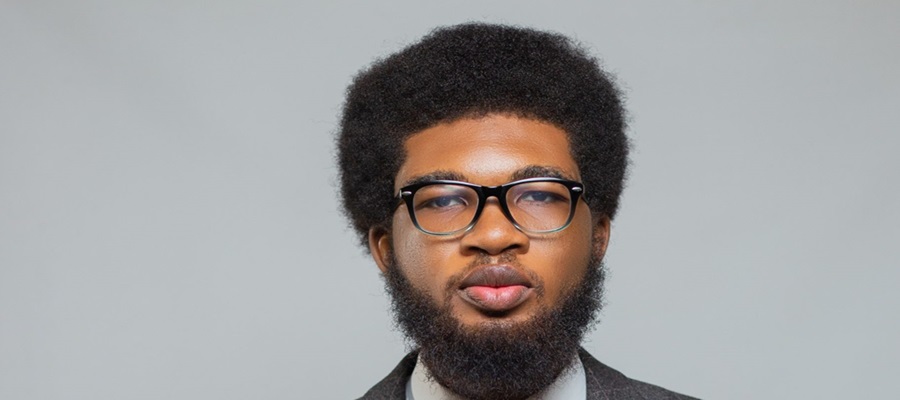
Joshua Ichor, a Nigerian geoscientist and innovator, has secured a rare invitation into the prestigious EWOR Fellowship, one of Europe’s most selective founder programmes built for outlier entrepreneurs with the potential to create billion-euro companies.

Joshua Ichor
The invitation places Ichor inside EWOR’s elite founder ecosystem, a powerful European platform associated with a reported €60 million commitment to backing exceptional founders building the next generation of globally significant companies.
EWOR describes itself as a fellowship for founders who “think in decades and build in days.” The platform says it backs the top 0.1% of founders building potential €10 billion+ companies, with mentorship from unicorn-builders and a founder-first model designed for exceptional entrepreneurs.
For Ichor, the selection is more than another milestone. It is a signal that one of Europe’s most ambitious founder networks sees major global potential in the Nigerian innovator.
While the technology Ichor is currently building has not been disclosed to the public, sources close to the development describe it as a powerful and ambitious piece of technology with the potential to scale internationally.
The project remains under wraps as Ichor continues to refine the product, strategy, and long-term market direction.
According to the fellowship invitation, EWOR believes Ichor is among the few founders with what it takes to build a company that could be valued at €1 billion or more.
That belief places him in a rare class of founders being watched not only for what they have done, but for what they are quietly building next.
EWOR has earned attention for its radical selectivity and founder-first approach.
Its own platform highlights a 0.1% acceptance rate, describing the fellowship as a community of outlier founders who push and sharpen one another.
EWOR’s public materials also reference the fellowship as “Harder than Y Combinator,” built by unicorn founders for founders seeking a higher level of ambition.
The fellowship connects selected founders with a powerful network of unicorn builders, investors, and operators.
Ichor is expected to build alongside a high-calibre founder community that includes names such as Ricky Knox, known for two nine-figure exits; Andrew Nutter, associated with a €180 million revenue company and Sequoia Scout experience; Nick D’Aloisio, widely known for achieving a major technology exit as a teenager; and Jörgen Tveit, who raised one of Europe’s biggest-ever pre-seed rounds by a first-time founder.
The EWOR ecosystem also gives founders access to sessions with globally recognized operators and investors, including Fabrice Grinda, founder of OLX; Kevin Hartz, founder of Eventbrite and Xoom; Mark Ghermezian, founder of Braze; and Michael Baum, founder of Splunk.
For a Nigerian geoscientist to enter this circle is a major statement. It shows that African technical talent is increasingly stepping into the same rooms as some of the world’s most ambitious venture-backed founders.
Ichor’s current technology remains confidential, but the conviction from EWOR suggests that the opportunity is significant.
The details are not yet be public, but the direction is clear: Joshua Ichor is building something with global ambition.
EWOR’s wider network includes some of the world’s leading startup investors and venture names, including A16Z, Accel, Atomico, Balderton, Earlybird, EQT, FJ Labs, Lakestar, Sequoia, Speedinvest, World Fund, and others.
Its platform says fellows raise at 50–300% higher valuations than average, further underlining the strength of the ecosystem around selected founders.

To mark the occasion of World Password Day, Kaspersky experts analysed 231 million unique passwords in major password leaks from 2023 to 2026, and uncovered several key patterns.

First, 68% of modern passwords can be cracked within a day. Second, it turned out that the vast majority of compromised passwords either begin or end with a digit – a common pattern that makes them potentially vulnerable to brute force attacks.
And third, users also favour positive and trending words; for example, over the past couple of years, use of the word “Skibidi” in analysed passwords surged 36 times, mirroring the rise of that Internet trend.
In recent years, secure passwords’ rules have become a widely discussed topic. More and more services now demand passwords that are at least 10 characters long, include an uppercase letter, and contain a number or a symbol.
Yet a comparative analysis of leaked passwords from the past few years shows that even following some of those rules does not guarantee resistance to brute‑force or AI‑driven attacks.
Kaspersky experts share practical advice on how to make passwords more complex and secure, and how not to repeat common mistakes.
Be creative with using symbols and numbers
Among the leaked passwords that contain just one symbol, the “@” sign tops the list, appearing in 10% of cases. The next most common symbol is a dot (.), found in 3% of passwords. Among all analysed passwords “@” takes second place in terms of prevalence, and in third place is “!”.
Numbers also follow similarly predictable patterns:
53% of examined passwords end with digits;
17% begin with digits;
Nearly 12% include a numeric sequence that resembles a date (from 1950 to 2030);
3% of leaked passwords include keyboard sequencies like “qwerty” or “ytrewq”, but most of them are digital sequencies like “1234”.
Alexey Antonov, Data Science Team Lead at Kaspersky, notes that commonly used symbols, numbers, or dates – especially when placed in obvious positions (such as at the beginning or end of a password) – significantly simplify brute force attacks for cybercriminals. That’s why it’s highly recommended to give preference to less popular characters, and avoid numeric or keyboard sequences.
“Bruteforce works by systematically trying every possible character combination until the correct password is found. When attackers already know which characters users tend to favour, the time required to crack a password drops dramatically. To avoid the temptation of choosing predictable symbols, entrust password creation to dedicated generators that produce random letters, numbers, and symbols with equal probability”, says Alexey Antonov.
Between… Eden and hell: Try to avoid using words in a password
The research shows that emotional and trending words frequently become the basis for a password. For example, from 2023 to 2026 the use of the word “Skibidi” in passwords increased 36 times – mirroring the rapid rise of that Internet trend.
Kaspersky experts have also conducted analysis of the occurrence of positive and negative words in passwords, and it turned out that there are more positive ones. Among those regularly appearing are positive words like “love”, “magic”, “friend”, “team”, “angel” and “star”, “eden”. Interestingly, positive words are much more common than negative ones. However, words like “hell”, “devil”, “nightmare” and “scar” also occur.
“Using a single‑word password, even with a trailing number or a special character, is a weak choice. The pattern is too predictable, making it easy for attackers to guess. Instead, craft a passphrase that strings together several unrelated words, each supplemented with internal numbers and symbols, and sprinkle in a few intentional misspellings.
The longer and more random and unpredictable the password is, the harder it is to crack. As an additional way to protect yourself, enable two-factor authentication (2FA) wherever possible,” recommends Alexey Antonov.
Is password length important?
It’s well known that longer passwords are harder to crack, and the analysis of leaked passwords confirms this principle. However, with the rise of AI driven tools, length alone no longer guarantees security: even lengthy passwords can be compromised if they follow predictable patterns.
The research shows that short passwords of up to eight characters that appeared in the leak are typically cracked by brute force attacks in under a day. However, thanks to AI-powered smart algorithms, more than 20% of 15-character passwords can be broken in less than a minute.
What’s more 60.2% of all analysed passwords – regardless of length – can be cracked in about an hour; 68.2% – in a day.
In the examples provided, the calculations assume a single RTX 5090 GPU and the MD5 algorithm. In real‑world scenarios, attackers can rent multiple GPUs – ten, a hundred, or even more. Under such conditions, the cracking rate would increase potentially by several orders of magnitude.
In modern terms, truly secure passwords not only meet the gold standard of 16+ characters, but also consist of random, non-repeating letters, numbers, and symbols, and are unique for each account. To help users create such passwords, Kaspersky has added a password generation feature to the Kaspersky Password Generator website. Now users can not only check their passwords for leaks, but also generate secure passwords for free.
For easy and secure password management, auto-fill, and cross-device synchronisation consider using a password manager in which all credentials are stored in a secure vault and protected by a single master password. This eliminates the need to remember hundreds of passwords while keeping them safe from breaches.
What’s more, not only passwords, but also passkeys can be created and stored directly in Kaspersky Password Manager, which allows not only to sign in to supported services with a single tap, but also to access passkeys on all devices owing to secure synchronisation.
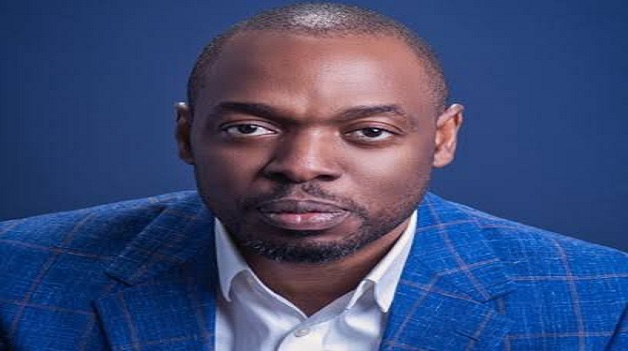
Cybervergent has launched version 3.0 of its artificial intelligence (AI)-native posture management platform and expanded operations into Kenya, Ghana, and SA.

The move, according to the company, introduces automated risk verification for enterprises and aims to position Africa as a force in digital governance technology.
It goes on to say the latest platform upgrade introduces continuous posture management, replacing traditional point-in-time governance, risk, and compliance reporting with real-time verification systems.
An AI engine independently verifies 99.9% of audit and monitoring findings before they appear on enterprise dashboards, according to Cybervergent.
It says risk management, compliance, audit, and data security operations are integrated into a unified system built for cloud and on-premise environments.
According to Cybervergent, the platform maps more than 4 500 controls across frameworks, including the Nigeria Data Protection Act (NDPA), International Organisation for Standardisation (ISO) 27001, and System and Organisation Controls (SOC) 2.
Cybervergent says the rollout of its first South African customer validates the platform’s readiness for highly regulated enterprise markets and strengthens its expansion strategy across Africa’s leading technology and financial hubs.
The company is also adopting a channel-first deployment model, working with local partners and system integrators in Lagos, Accra and Johannesburg to scale verified security infrastructure for enterprises navigating increasingly complex regulatory demands.
“We built verification into the architecture,” said Ayomide Daniels, co-founder and chief scientist at Cybervergent. “If a finding is not traceable back to source documentation, it does not reach the dashboard.”
Cybervergent rebranded from Infoprivacy in late 2023 to reflect its shift towards AI-automated cybersecurity.
The start-up previously focused on data privacy compliance in the West African market before pivoting to its current integrated posture management model.

CPN Begins Crackdown on Quack IT Professionals, Vows Tougher Action against Cybercrime

IMF Fears AI-Powered Cyberattack Could Spark Global Financial Crisis

ATCON Seeks Stiffer Penalities to Deter Infrastructure Attacks, Vandalism

FG Says It May Reject World Bank Loans over Delays

Joshua Ichor, Nigerian Innovator Bags Europe’s €60m Fellowship

Kaspersky Discovers Vulnerability in Qualcomm Snapdragon Chips that can Lead to Data Loss & Device Compromise

FG to Gift Nigerians over 100 Free TV Channels from May 15

MTN Suspends Data, Airtime Borrowing Service over New FCCPC Lending Rules

What Adekunle Gold’s Support Means for ‘The Gathering on 100

Bank Customers to Pay N1,500 for ATM Card Issuance, Replacement – CBN




 E-Financial2 days ago
FCMB Opens Applications for Zero-Interest Loans of Up to ₦10m for Women Entrepreneurs

 E-Business2 days ago
Kaspersky Identifies Ongoing Supply Chain Attack on Official Daemon Tools Website Distributing Backdoor Malware

 Telecom2 days ago
Reps Claim NCC’s Weak Regulatory Oversight Responsible for Poor Telecom Services

 Telecom2 days ago
Vitel Wireless Partners Fintechs to Expand Access to Services

 Telecom2 days ago
GSMA Africa Policy Group Chair Calls for Urgent Tax Reforms to Accelerate Digital Inclusion

 News2 days ago
FG Bans Honorary Degree Holders from Using ‘Dr’ Title, Warns of Academic Fraud

 E-Financial2 days ago
Police Arrest Members of N713m Bank Fraud Syndicate, Chinese Suspect at Large

 E-Financial2 days ago
Firm Unveils Pan-African Financial Operating System to Improve Interoperability