

E-Business
INTEL’s “No-Wire Experience” Leads Workplace Transformation

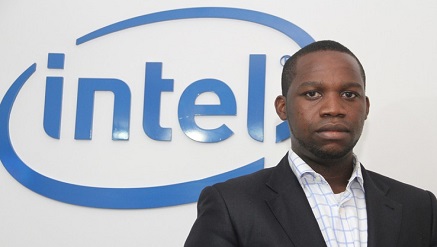
Leading computing and technology innovation company, Intel has again demonstrated leadership in technology advancement by showcasing its wide array of “No-wire Experience” solutions designed for workplace transformation.
According to Intel, the No-wire technology will transform users experience by helping them compute from virtually anywhere without the clutter and burden of wires.
Speaking at a demo session recently on how the new technology is transforming the workplace, Oluwatobi Shada, Enterprise Technology Specialist, Intel Nigeria, stated that with the No-Wire Experience technology, Intel is making great strides to help workers connect and complete tasks in a more natural way, thus freeing them from the burdens of computing as we used to know it.
Shada added, “When it comes to productivity, it is the seemingly minute details that often translate into lost time, whether it is a dead laptop battery or a forgotten password issue. These things interrupt workflow and make work sharing take longer than it should. We have all been there, in the conference room, stuck without the right wire to connect the projector. We would like to make work less complicated. ”
He noted that today’s intensely competitive business climate is creating an unprecedented opportunity for companies to transform how they work. In his words, “A range of new experiences is now possible as the workplace is reinvented for a new era. Workplace transformation means applying inclusive and integrated strategies to facilitate change throughout the organization. This is made possible with the right partnerships and culture change. But most importantly, this transformation starts with people and the enablement of technology.”

On the strategies an organisation needs to adopt in transforming the workplace, Shada emphasised embracing new ways of working, such as virtualizing the workplace and democratizing ideas to unlock hidden business intelligence, using key technologies to empower change through advanced collaboration, personal productivity, and supporting innovation.
Highlighting some of Intel’s solution components for workspace transformation, he said, “The 5th generation Intel Core vPro processors deliver PC-level performance in ultra-mobile devices with optimized performance, battery life, and security. With Intel Pro Wireless Display, devices can be connected securely to conference room big screens and projectors without wires and dongles. Also, Intel Wireless Docking instantly, effortlessly connects your device to your monitor and other USB peripherals with no wires, while Intel Unite unites people, solutions, and platforms with ease. ‘’
Intel is a world leader in computing innovation. The company designs and builds the essential technologies that serve as the foundation for the world’s computing devices.
As a leader in corporate responsibility and sustainability, Intel also manufactures the world’s first commercially available “conflict-free” microprocessors.


X has announced plans to discontinue its Revenue Sharing programme and introduce a new Original Content Rewards programme to reward creators for producing original content on the platform.

The social media company announced the changes at the weekend in a post on its X Creators handle, saying the new programme would reward creators who contribute original content.
“Today, we’re introducing the Original Content Rewards Program, a new way to reward creators who bring original ideas, expertise, reporting, creativity, and commentary to X,” the company said.
X said it would stop accepting new enrolments into the Revenue Sharing programme from Friday, while existing participants would continue earning until September 7, 2026.
“Starting today, we’re no longer accepting new enrollments into Revenue Sharing,” it said.
According to the company, existing Revenue Sharing participants will receive three final payouts, with two scheduled for August 14 and August 28, while the final payment for earnings accrued through September 7 is expected around September 11.
X said existing Revenue Sharing participants would begin getting access to apply for the new programme from September 8, subject to meeting its eligibility requirements.
The first payout under the Original Content Rewards programme will be made on August 28, 2026, while existing Revenue Sharing creators who enrol in the new programme from September 8 will receive their first payment on September 25.
Under the new programme, eligible creators will earn from qualified impressions generated by their original content, with payments made every two weeks.
X defined qualified impressions as unique impressions from Premium users on the Home Timeline feed, where at least 50 per cent of a post is visible.
On the other hand, “The following are excluded from qualified impressions: impressions from the same account counted more than once per post; paid, promoted, or artificially generated impressions; and fraudulent impressions,” it said.
To qualify, creators must be at least 18 years old, live in a country where the programme is available, maintain an account in good standing and have either a personal or vusiness account.
They must also subscribe to X Premium, Premium+ or Premium Business, have at least 500 verified followers and record at least 500,000 Home Timeline impressions from verified users within the previous 90 days.
X said creators must also regularly post original content to remain eligible.
“We want to recognize creators who break news, share expertise, tell stories, create entertainment, and contribute meaningful perspectives to the conversation,” the company said.
The platform said original content could include threads, videos, memes, graphics, illustrations, reporting, analysis, commentary and reactions that add meaningful value to existing conversations.
It said creators who use content produced by others would need to add meaningful commentary, context, analysis, humour or creative transformation for such posts to qualify.
“Building on existing conversations is a core part of X, but simply reposting someone else’s content is not enough,” it said.
X said minor edits such as cropping, filters, borders, watermarks, speed adjustments or simple text overlays would generally not qualify as meaningful transformation on their own.
It also warned that content copied or substantially reproduced from another creator, content downloaded and re-uploaded from X or another platform without being the original author’s, automated content, disinformation and misleading content would be ineligible.
The company said accounts that violate the programme’s requirements could be temporarily or permanently removed from it, depending on the severity of the violation.
It added that creators would be responsible for ensuring they had the necessary rights, permissions or licences to use content created by others.
“Original content is content you personally create that reflects your own voice, perspective, expertise, or creativity,” X said.
The company said the new programme was intended to reward creators who make the platform more valuable by bringing original ideas and perspectives to its conversations.
“The Original Content Rewards Program is designed to reward the creators who start them, shape them, and move them forward,” it said.

National Information Technology Development Agency (NITDA) has introduced so-called Nigeria’s Certified Cloud Register, regulatory framework developed under the agency’s National Sovereign Cloud Initiative to determine which cloud providers are authorized to handle sensitive data, such as banking records.

In effect, from October, NITDA requires banks, fintech companies and other regulated organisations to source cloud infrastructure providers from a national register of certified firms approved to host sensitive financial and government data.
The Certified Cloud Register, is expected to strengthen data sovereignty, improve regulatory oversight and support the implementation of the Central Bank of Nigeria’s (CBN) data localisation policy, which takes effect on January 1, 2027.
Under the framework, banks, fintechs, government institutions and other regulated entities will be able to verify whether cloud service providers, data centre operators, managed service providers and Artificial Intelligence (AI) infrastructure companies have met NITDA’s certification requirements before entrusting them with critical digital workloads.
The initiative is expected to provide regulated institutions with a standardised process for selecting cloud infrastructure providers that satisfy Nigeria’s technical, security and regulatory requirements.
According to NITDA, the framework establishes “a common national standard, an independent assessment process and a public register of approved providers that banks, fintechs and government institutions can rely on when selecting cloud infrastructure partners.”
The register is expected to become a key compliance tool ahead of the CBN’s directive, which requires all payment transaction data generated within Nigeria to be stored and processed locally, effective from January 1, 2027.
The policy applies to deposit money banks, microfinance banks, mobile money operators, payment service providers, switching companies and other financial institutions.
The certification regime is also expected to reshape Nigeria’s cloud computing ecosystem, making regulatory approval a major requirement for cloud providers seeking to handle sensitive data for regulated industries.
Figures cited by NITDA showed that Nigeria’s 10 largest banks spent about N177.91 billion on information technology in the first quarter of 2026, representing a 31 per cent increase over the corresponding period last year.
A sizeable portion of the investment currently supports cloud infrastructure hosted outside Nigeria, a trend the new certification framework is expected to address by encouraging greater utilisation of compliant local infrastructure.
NITDA said the certification programme will apply the same technical and regulatory standards to indigenous cloud providers and international hyperscale operators, creating a level playing field for all companies seeking to provide cloud services to regulated sectors.
The agency also disclosed that more than 85 per cent of Nigerian businesses currently rely on cloud services, with the majority using infrastructure hosted outside the country.
It said the new framework is aimed at improving confidence in Nigeria’s digital infrastructure while promoting local capacity and enhancing oversight of critical national data.
Speaking on the objective of the initiative, Kashifu Inuwa Abdullahi, director-general of NITDA, said the programme is designed to strengthen Nigeria’s position in the global digital economy rather than exclude foreign technology companies.
According to him, the initiative is intended “to redefine the terms under which Nigeria participates in the global digital economy rather than isolate the country from international technology providers.”
The Certified Cloud Register forms part of broader efforts by the Federal Government to deepen digital trust, strengthen cybersecurity and ensure that critical financial and public sector data are managed in line with Nigeria’s evolving data governance and sovereignty objectives.


At the recent Cyber Security Weekend 2026 conference, Kaspersky shared the findings from its survey titled “Cybersecurity in the workplace: Employee knowledge and behaviour” which was conducted among employees from the Middle East, Turkiye and Africa (META) region.

The study highlights that everyday IT habits, including decluttering computers and reducing digital fatigue, can have a direct and often underestimated impact on an organisation’s cyber resilience.
The Kaspersky survey points to a growing challenge of digital fatigue in the workplace. 13.5% of employees surveyed in the META region confirmed that they made IT-related mistakes due to a lack of cybersecurity knowledge – a figure that shows the critical importance of continuous cybersecurity training and awareness programmes.
Among other reasons behind IT mistakes, respondents cited being in a hurry (30%), oversight (14%), being tired or stressed (12.9%) and having too many notifications (10%). The constant barrage of alerts, messages, and on-screen clutter is becoming an acute problem that can lead to costly IT errors, overlooked social engineering attacks, and even to cyber breaches.
The survey also examined employees’ digital workspace habits. An overwhelming 44.5% of respondents in the META region reported having between 10 and 20 icons on their desktop, while 30% admitted to having even more – with half to a full screen covered in them.
Meanwhile, 33% of respondents also keep more than 10 tabs open in their browser at any given time. Excessive icons and open tabs do more than distract attention and fuel procrastination – they can slow device performance and, in the case of unused applications, quietly collect data.
Interestingly, most employees regularly disinfect their keyboards and phone surfaces (21.5% have adopted this habit since the COVID pandemic). However, digital cleanliness has not kept pace: 55% of respondents remove needless files once a month or more often; the rest perform digital clean-ups far less frequently – once a quarter, or even once a year.
Managing digital noise is key to staying alert: only essential notifications should remain active, especially during periods of deep focus on critical project deliverables. Regular breaks are just as vital for maintaining both well-being and cyber vigilance.
According to the survey, 78% of respondents spend their work breaks eating or drinking, while 58% chat with friends and colleagues. However, stretching and physical exercise is a more effective way to relieve stress and recharge focus – a habit adopted by only 14% of employees.
“It is important to recognise that digital fatigue is a real and growing stress factor: the constant stream of notifications, cluttered screens, and information overload gradually erode focus and make employees far more susceptible to mistakes and social engineering attacks. Simplifying your digital environment is not just a productivity tip, it is a cybersecurity measure”, says Brandon Muller, senior security consultant for the META region at Kaspersky.

Fake Agency: ICPC Indicts NITDA, Others over Inadequate Due Diligence

Tax Reform Built on Taxing Prosperity, Not Poverty– Adedeji

UNESCO Taps Oguamanam,Nigerian Scholar to Advisory Body on Science, Tech Ethics

MTN Alerts Subscribers over Fake 25GB Anniversary MTN Data Giveaway

X Replaces Revenue Sharing wit New Creator Rewards Programme

EFCC Busts NIS Visa Overstay Racket, Uncovers N700m in an Account

Fact-Check: Elon Musk’s “Tesla Pi Phone” is Internet Rumor

NBC Tasks Broadcasting Stations over 2028 DSO Global Deadline

NBC Scraps Annual Digital Access Fee on DSO

Glo Sponsored African Voices to Feature Netflix’s “The Polygamist” Stars




 General News2 days ago
Guinness Rewards Consumers with ₦17 Million in First Week of ‘Open for More’ Promo Draw

 News3 days ago
Glovo Pioneers AI Quick-Commerce

 News2 days ago
World Bank Debars United Aviation Services, Owner over Fraudulent Activities

 E-Business2 days ago
NITDA Introduces Cloud Certification Boost Data Localisation Compliance

 Telecom2 days ago
NCC, Enugu Sign Deal to Operate Digital Industrial Park, Learning Centre

 E-Financial2 days ago
BOI Opens N250Bn Bond Offer to Fund Businesses

 News2 days ago
Enugu State Approves Land for ITF’s Digital Fabrication Centre

 General News2 days ago
Meta Hit With $567m US Court Order Over Alleged Harm to Children