

/home/kenneth/web/nigeriacommunicationsweek.com.ng/public_html/wp-content/themes/zox-news/parts/post-single.php on line 153
">
Warning: Undefined array key 0 in /home/kenneth/web/nigeriacommunicationsweek.com.ng/public_html/wp-content/themes/zox-news/parts/post-single.php on line 153
Warning: Attempt to read property "cat_name" on null in /home/kenneth/web/nigeriacommunicationsweek.com.ng/public_html/wp-content/themes/zox-news/parts/post-single.php on line 153
Courier Operators Launch Stickers

Courier operators under the umbrella of Association of Nigeria Courier Operators (Anco), has launched stickers for its members.
Toyin olufade, president of the association, who disclosed this to Nigeria CommunicationsWeek at the weekend in Lagos, said the stickers which will be used on every courier vehicle and motor bikes, is meant to allow members easy passage on the roads. “We are still having discussion with the local governments as a body, to explain to them that they need to welcome our people in their various areas and when they see Anco stickers, it should serve as a license to move ahead, because we carry very urgent, time sensitive, and critical document that may have to do with live, business progress and promotion. But we are surprise that the local government officials sit on Anco bikes and cause delays that may even indirectly affect them,” he said.
He added that because local government workers are not aware of the critical nature of courier business to the development of the economy and information that they often time harass courier bikes and vehicles.
“I am using this opportunity to let the local government know that we are in a critical sector of information dissemination which is required in the business economy, helps the economy to grow. For instance, if a major manufacturer has a slight problem and I have that little bolt or nut for the machine to be put back to work, the industry can be grounded for weeks if that bolt or nut does not get to them as at when due. So the longer you delay in getting the item to the industry, the longer people will stay out of work, so that means it will affect the economy. So since we operate in a sensitive sector, we want every player including the police to ensure that they correct that,” noted.


Warning: Undefined array key 0 in /home/kenneth/web/nigeriacommunicationsweek.com.ng/public_html/wp-content/themes/zox-news/parts/post-single.php on line 493
Warning: Attempt to read property "cat_ID" on null in /home/kenneth/web/nigeriacommunicationsweek.com.ng/public_html/wp-content/themes/zox-news/parts/post-single.php on line 493

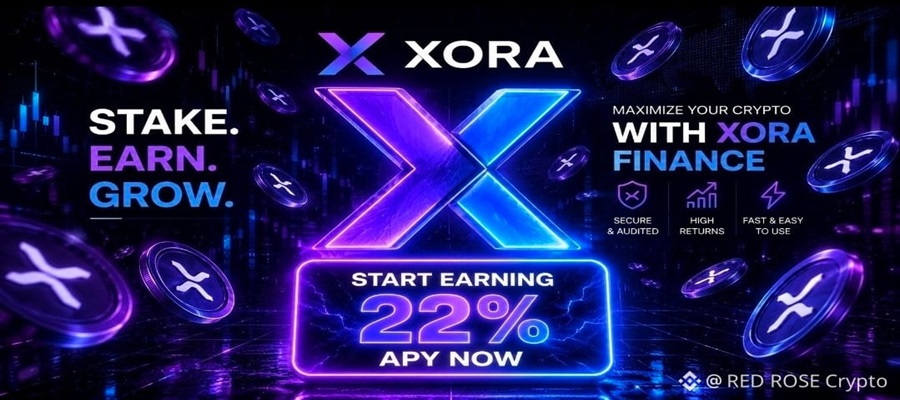
Xora Finance has announced it will no longer consider job applicants from Nigeria.

Xora Finance is a digital bank founded by Joren Lundgren, in February 2026 and allows users to deposit and earn interest on their XRP cryptocurrency.
Lundgren, founder, in an announcement on X (formerly Twitter), cited an ongoing pattern of misconduct, such as dishonesty and theft, from previous Nigerian hires as the reason for the decision.
This sudden blanket ban came just days after the company’s official career page was aggressively recruiting remote workers for marketing and content roles.

The announcement generated heavy backlash online, with many people upset that a blanket rule punishes honest job seekers.
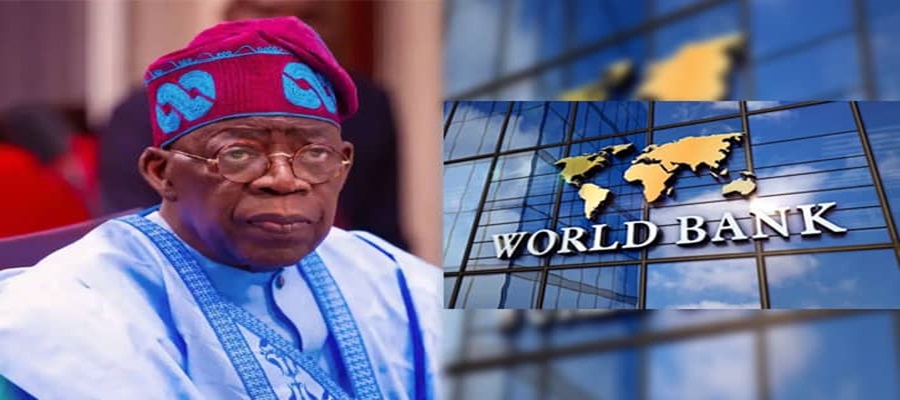
Federal government has secured a fresh $208.3 million financing from the World Bank to strengthen Nigeria’s cash transfer programme targeted at poor and vulnerable households as the country continues to grapple with the economic impact of ongoing reforms.

President Bola Tinubu’
The new facility is expected to bolster the government’s social protection initiative by providing direct cash support to millions of low-income Nigerians affected by rising living costs following the removal of petrol subsidy and the liberalisation of the foreign exchange market.
The funding forms part of the World Bank-backed social safety net programme aimed at cushioning the impact of economic reforms while improving the country’s social protection system.
It is also expected to support efforts to enhance the National Social Register, strengthen payment systems and ensure that financial assistance reaches eligible beneficiaries more efficiently.
The latest financing adds to a growing list of World Bank-supported projects approved under President Bola Tinubu’s administration.
Since the administration assumed office in May 2023, Nigeria has secured more than $11.4 billion in World Bank loan approvals across key sectors, including power, agriculture, healthcare, education, digital infrastructure, financial inclusion and social protection.
However, only part of the approved funding has been disbursed, with several projects still at various stages of implementation.
Government officials have maintained that expanding the cash transfer programme is essential to protecting vulnerable Nigerians from the short-term effects of economic reforms while laying the foundation for long-term economic stability.
However, the fresh borrowing has renewed concerns among economists and policy analysts over Nigeria’s rising debt burden and increasing dependence on external financing.
Critics have called for greater transparency in the utilisation of borrowed funds and improved monitoring of social intervention programmes to ensure that the intended beneficiaries receive the support.
According to data from the Debt Management Office (DMO), Nigeria’s total public debt stood at approximately ₦159.28 trillion as of December 31, 2025, with multilateral lenders, particularly the World Bank, accounting for a significant portion of the country’s external debt portfolio.
Despite the concerns, analysts note that World Bank loans are generally concessional, offering lower interest rates and longer repayment periods than commercial loans.
They argue that the ultimate value of the new financing will depend on effective implementation, accountability and the successful delivery of cash support to vulnerable households across the country.
Some lawyers have said that victims of Ponzi schemes have legal remedies, although recovering lost funds and prosecuting perpetrators remain major challenges.

A Ponzi scheme is an investment fraud that pays existing investors with funds collected from new participants rather than from actual profits.
Operators lure victims by promising high returns with little to no risk.
The scheme inevitably collapses when the flow of new investors slows down.
Some lawyers who spoke to News Agency of Nigeria (NAN) separate interviews with on Sunday, said that victims could pursue civil actions to recover their money.
Mr Chibuikem Opara, a lawyer at Justification Chambers, Ikeja,said many Nigerians continued to fall victim to Ponzi schemes in spite of repeated warnings.
Opara said it was wrong to attribute participation in Ponzi schemes to a lack of investment opportunities, noting that promoters often exploit investors’ greed through promises of unrealistic returns.
“What you cannot take away is the fact that many Nigerians have fallen and continue to fall victim to these schemes every time,” he said.
According to him, victims may individually or collectively institute civil actions against the beneficiary company for breach of contract or refund arising from failure of consideration.
Opara said victims could also unite to seek an order from the Federal High Court to wind up the beneficiary company.
He, however, noted that such efforts might yield little benefit if perpetrators had already siphoned the funds and left behind an empty shell.
The lawyer said available remedies largely depended on the actions of relevant authorities, adding that recipient accounts could be frozen to facilitate fund recovery and support winding-up proceedings.
Opara said regulators and law enforcement agencies often became aware of Ponzi schemes only after substantial losses had occurred.
According to him, victims frequently failed to report suspicious schemes early enough to enable timely intervention.
He added that funds are sometimes moved outside the country before authorities become aware of the fraud.
Opara also cited inadequate information and the deceptive nature of the schemes as major obstacles to investigation and prosecution.
“Most times, everything about the schemes is made to appear elusive, just like the profits promised to victims,” he said.
Also speaking, Mr Vincent Aminu of A.F. Aminu and Co. advised that victims of investment scams should report such cases to appropriate law enforcement agencies on time.
Aminu said victims could petition the Economic and Financial Crimes Commission (EFCC) or file reports with the police.
He said that after investigation, prosecutors could bring charges against suspects under relevant fraud-related laws, including provisions of the Criminal Code and the Advance Fee Fraud and Other Fraud Related Offences Act.
Beyond criminal prosecution, Aminu said .victims could pursue civil actions to recover their money
According to him, such actions may be based on breach of contract, unjust enrichment, or fraudulent misrepresentation, depending on the circumstances.
He added that victims could petition the Securities and Exchange Commission (SEC), which could investigate illegal operators, shut down unauthorised platforms, and freeze assets.
He identified the anonymity of online fraudsters as one of the biggest challenges confronting investigators.
According to him, many operators concealed their identities through fake digital profiles and technologies that made tracking them difficult.
Aminu also noted that victims who delayed taking legal action risked losing opportunities for redress.
He added that prolonged court proceedings often delayed justice for victims.
“Many fraud-related cases take years before the court reaches a verdict, thereby delaying justice for victims,” he said.
Also, Mr Chris Ayiyi of Ayiyi Chambers, Apapa, described Ponzi schemes as a gamble that benefited early participants at the expense of later investors.
Ayiyi said some early entrants received returns on their investments, thereby encouraging others to join the schemes.
He said the schemes eventually collapsed, leaving late investors to bear the losses
The lawyer called for a complete ban on Ponzi schemes or sustained public enlightenment campaigns against them.
He urged the National Assembly to enact laws that would strengthen regulation and provide greater protection for investors.
According to him, stronger legal safeguards are necessary in a country operating a capital-based economy.

Xora Finance, Fintech Firm Refuses to Hire Nigerians over Alleged Dishonesty

FG Secures Fresh $208.3m World Bank Loan for Cash Transfer

How Ponzi Scheme Victims can Seek Legal Remedies — Lawyers

SERAP Sues INEC over Alleged N800Bn 2027 Tinubu Campaign Fund

Kaigama,Catholic Archbishop of Abuja Warns against Misuse of AI

Nigeria Launches FreeTV Nationwide

NASENI Moves to Digitize CCB’s 5m Assets Declaration and Operations
NRC, Ponzi Scheme Collapses Resulting Loss of Billions of Naira

Lebara Nigeria Launches Lebara Play, Africa’s First Telecom-Owned Micro-Drama Platform

CANAL+ Partners Samsung to Pre-Load DStv Stream on New Samsung TVs In Nigeria, Other African Countries




 Telecom2 days ago
DStv, GOtv Owner MultiChoice Officially Joins Canal+ Group

 News2 days ago
Police Busts Syndicate Who Allegedly Stole N3Bn from Financial Institution

 Telecom2 days ago
MTN Accelerates Network Expansion to Meet Surging Telecom Demand

 E-Financial2 days ago
SEC Unveils Plans to Enforce Mandatory ESG Reporting for Large Firms Next Year

 Telecom2 days ago
Airtel Africa to Connect 5,000 Schools to Free Internet by 2027

 Broadcasting2 days ago
From Scarcity to Scale: What Africa Can Learn from India’s Agricultural Transformation

 E-Business2 days ago
TeKnowledge, Equinix Partner to Advance Nigerian Digital Infrastructure

 General News2 days ago
NSIB Faults Runway Identification, Reveals Cockpit Disagreement in Asaba Jet Incident