

News
emc3, Guardian, Five Others Launch Transparency Forum

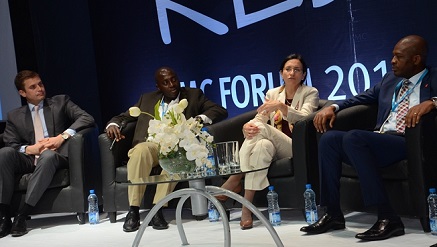
The Transparency Forum Initiative (TFI), a series of targeted roundtables is due for launch on Tuesday 17 November.
TFI consists of committee member firms working in Nigeria. These are emc3, The Guardian Newspaper Nigeria, Control Risks, africapractice, Olisa Agbakoba Legal, The Business Year Publication and The Financial Times Group.
Their goal is to “Identify, Introduce, Engage, Promote and Re-ignite Investments for Sustainable Partnerships”.
The initiative will focus on highlighting the importance of transparency in all aspects of the political and commercial economy, advocating for regulatory reforms around transparency and encouraging public-private collaboration on new approaches and actions required to embed transparency into the business landscape of Nigeria.
The objectives of the initiative are 4 fold including to enable dialogue – To create a platform to enable dialogue between the private and public sectors with a view to identifying opportunities for collaborations centred on the aim of achieving transparency in key sectors of the economy and to build capacity –To educate stakeholders on how to develop and deliver transparency initiatives within their own organisations.
Others are to advocate for solutions – To advocate for changes in policies, laws and regulations that govern data transparency, regulatory reporting and transparency in decision making and to protect the national interest – To increase awareness on the role of transparency in economic development and attracting Foreign Direct Investment (FDI).
The initiative aims to redefine the term “Transparency” by paving a practical platform for the use of improved business training courses and tools i.e. open data, communication, credibility, visibility, data, reporting, corporate governance, ethics, compliance, tax and audit, best practice and that are essential to succeeding in business as well as attracting investment. The medium to long term outcome is to develop private sector Transparency Baseline Index that reports credible data and information on Nigerian companies in all sectors.
The Government welcomes the move by the partners to set up the initiative as President Muhammadu Buhari of the Federal Republic of Nigeria recently stated that “Government business is being conducted with transparency and cynicism is waning as a result”.
Commenting on TFI, Mrs Uju Hassan Baba, executive secretary of the Nigerian Investment Promotion Commission, stated “A strong culture of transparency and corporate governance is imperative if Nigeria is to attract both foreign and local direct investment required to build sustainable economic development. It can be done- through policy, collaboration and determination. This is what the Transparency Forum is about and why we are a part of it. We stand ready to apply our technical expertise and know-how to this critical agenda. We call on the broader private sector community to join us, making transparency a centrepiece of the development drive of the nation.”
Baba-Jallah Epega, emc3 Spokesman for TFI further commented that “With acknowledgement from the Presidency on this private sector’s Transparency Initiative – membered by stalwarts like Dr. Olisa Agbakoba (SAN) – as we launch, gives an indication of the emphasis that needs to be placed on the subject matter. The prospect of increased transparency heralds an exciting prospect for the future of doing business in Nigeria”.
The Transparency Forum Initiative Members
The Transparency Forum Initiative is founded by the following firms;
emc3 is a leading events management and brand marketing firm that are specialists dedicated to building unique and memorable stories and experiences by producing events platforms that inspire, motivate and evolve.
The Guardian is a leading independent newspaper, established in 1983 for the purpose of presenting balanced coverage of events, and of promoting the best interests of Nigeria. It owes allegiance to no political party, ethnic community, religious or other interest group.
Its primary commitment is to the integrity and sovereignty of the Federation of Nigeria, and beyond that to the unity and sovereignty of Africa.
Olisa Agbakoba Legal (OAL), is a multi-service law firm based in Nigeria and offering cutting edge legal services to clients in diverse areas of business.
With state of the art offices in three states, they provide legal solutions to numerous corporate clients including multi-national companies, international and domestic banks, the government, its agencies and parastatals.
africapractice is the leading provider of strategic advisory and stakeholder relationship management services on the continent, it advises industry and governments; helping them to identify opportunity, manage risk and overcome critical communications challenges.
Control Risks is an independent, global risk consultancy specialising in political, integrity and security risk. We help some of the most influential organisations in the world to understand and manage the risks and opportunities of operating in complex or hostile environments.
The Business Year is a leading research firm and publisher of annual economic resources on national economies. Present in over 25 countries, TBY provides first-hand access to the people and ideas shaping business and policy throughout the world.
Financial Times is one of the world’s leading news organisations, recognised globally for its authority, integrity and accuracy. The FT provides a broad range of essential services, including news, comment, data and analysis, to a growing audience of internationally minded professionals.



The UK Government has announced the appointment of Mr Peter Vowles as the next British High Commissioner to the Federal Republic of Nigeria.

Mr Vowles succeeds Dr Richard Montgomery CMG and is expected to take up his post in Abuja in September 2026. Dr Montgomery remains in post until that time.
Mr Vowles brings extensive diplomatic and development experience to the role, having served as His Majesty’s Ambassador to Zimbabwe from 2023 to 2026 and previously as Ambassador to Myanmar from 2021 to 2022.
He has held senior leadership positions across the FCDO and its predecessor department DFID, including as Transformation Director and Director for Asia, Caribbean and Overseas Territories.
Earlier in his career, Mr Vowles worked in international development across South Asia, Central Africa and East Africa, including postings in Bangladesh, India, the Democratic Republic of Congo and Kenya. He began his career in Zimbabwe, where he worked in education and development.
Peter Vowles said: “I am honoured to be appointed as British High Commissioner to Nigeria. Nigeria is a country of immense importance to the United Kingdom, and I look forward to working closely with Nigerian partners to strengthen our relationship across trade, development and security.”

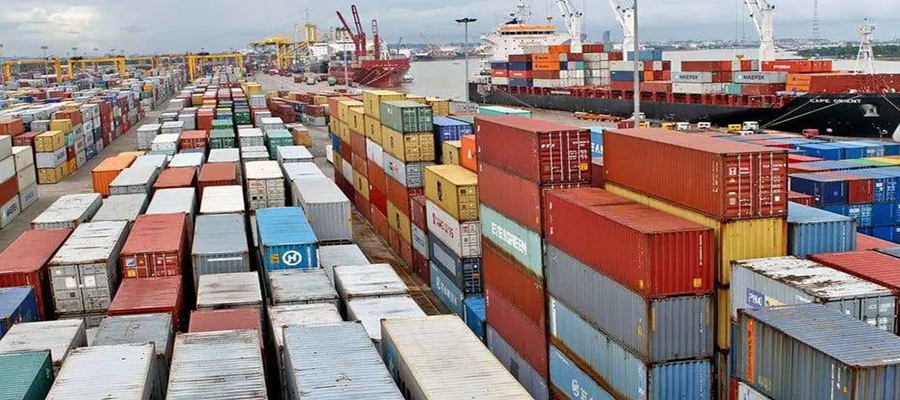
World Bank has ranked the Apapa and Tin Can Island Port complexes in Lagos among the world’s 20 most improved ports in its 2025 Container Port Performance Index (CPPI), released in June 2026.

The ranking places both ports in the “Top 20 Port Improvement Since 2020” category, reflecting significant gains in operational efficiency and vessel turnaround time.
The CPPI is a global benchmark used to assess the efficiency of container ports based on factors such as cargo handling speed, ship turnaround time and overall logistics performance.
According to the report, the improvement highlights ongoing reforms and modernization efforts within Nigeria’s maritime sector.
The Managing Director of the Nigerian Ports Authority (NPA), Mr Abubakar Dantsoho, attributed the recognition to ongoing policy reforms and infrastructure upgrades in the sector.
He said the development reflects the impact of economic policies of President Bola Tinubu and the support of the Minister of Marine and Blue Economy, Mr Adegboyega Oyetola.
“With the investor-friendly policies of President Bola Ahmed Tinubu providing the impetus for increased investment to drive our port infrastructure and equipment modernisation programme, coupled with the unflinching support of the Honourable Minister of Marine and Blue Economy, Adegboyega Oyetola, we have all it takes to further enhance trade facilitation, improve competitiveness and boost the national economy,” he said.
The NPA said the recognition is expected to strengthen investor confidence in Nigeria’s maritime sector and enhance the country’s position as a regional trade and logistics hub.
It noted that improvements in port operations are already contributing to increased efficiency in cargo movement and reduced delays at key terminals.
The authority also pointed to ongoing efforts to modernise port infrastructure and expand digital systems aimed at improving service delivery.
Earlier in February 2026, the NPA said the federal government had intensified efforts to position Nigeria as a leading maritime destination through port rehabilitation and modernization projects.
It also highlighted public-private partnership initiatives, including developments at the Lekki Deep Sea Port, as part of broader reforms aimed at improving efficiency and attracting investment.
The CPPI ranking is expected to further boost Nigeria’s maritime profile and encourage additional investment in the sector.
As digital payment adoption continues to grow across Nigeria and emerging markets, the next phase will depend not just on innovation, but on the strength, reliability, and trustworthiness of the infrastructure behind it.

While the ecosystem has made clear progress in recent years, trust remains a critical issue for users, businesses, and operators alike. Questions around resilience, security, interoperability and transaction reliability continue to shape how the market evolves and how confidently digital payments can scale.
These issues will be central to the deliberations at Digital Pay Expo 2026, where fintech leaders, payment operators, and other ecosystem stakeholders will gather under the theme, “Seamless Digital: Fostering Pan-African Market Expansion in the Era of AI.”
PalmPay’s participation reflects its continued commitment to building trusted and scalable payment infrastructure, while contributing to the broader industry efforts to strengthen systems, standards, and partnerships needed to support long-term ecosystem growth.
Speaking ahead of the event, Olorunfemi Hanson, Head of Marketing and Communications at PalmPay Nigeria, said: “As the financial services ecosystem continues to grow, trust and reliability become even more important.
“The industry’s next phase will be shaped not only by innovation, but by the strength of the infrastructure supporting it. Digital Pay Expo provides an important platform to address the resilience, interoperability, and trust issues that will shape the future of digital payments growth across Africa.”
The event, scheduled to be held from the 17th to the 18th of June, 2026, will feature Chika Nwosu, Managing Director of PalmPay Nigeria, alongside other distinguished guests, including the Director-General, Payment System Management Department (PSMD), Central Bank of Nigeria. The event will examine how the industry can balance innovation, regulation, and scalability while strengthening trust across the digital payments value chain.
For PalmPay, this event reinforces its role in supporting a more resilient, secure and scalable payments ecosystem for Nigeria and emerging markets more broadly.

Nigeria Launches FreeTV Nationwide

NIPOST Plans Digital Postcodes for Every Building in Nigeria

Enugu to Host The Gathering on 100 as MTN-Backed Youth Movement Expands Across Nigeria

Prof. Dzidonu Urges Universities to Produce Deep Thinkers for AI Age

FG Debunks Claims of Plans to Introduce Telecoms, Fuel Taxes

CBN Extends PoS Geo-Fencing Enforcement Deadline to August 2026

NCC Drafts New Rules for Virtual Mobile Operators

London Strengthens Global Investment Ties with Africa @ First Ever London-Africa Business Summit

FG Targets Alleged N3tn Capital Flight, Opens Airtime Credit Market to Nigerian Fintechs

Easybuy Partners WAWUAfrica to Upskill 10 Million Youths and Women, Boosting Nigeria’s Economic and Financial Inclusion




 E-Business3 days ago
AI-Powered Cyber Threats Put Nigerian Banks on Alert

 E-Business2 days ago
Galaxy Backbone @ 20, Pledges Nationwide Connectivity, Data Sovereignty

 E-Financial2 days ago
CBN Orders Banks, Fintechs to Host Payment Data Locally

 E-Financial2 days ago
Analysts Warn of Growing “Crowded Trade” in Foreign Exchange Markets

 Telecom2 days ago
Nigeria Innovation Summit 2026 Set to Convene West Africa’s Brightest Minds to Shape the Future of Innovation

 Telecom2 days ago
UK Bans TikTok, Instagram, Facebook for Under-16s in Landmark Crackdown

 News2 days ago
PalmPay Joins Industry Leaders @ Digital Pay Expo 2026

 E-Financial2 days ago
ACAMB Kicks-off 30th Anniversary Celebration With Tree Planting Initiative