

E-Financial
IHC, MasterCard Boost Humanitarian Relief Via Sector Round Table Series

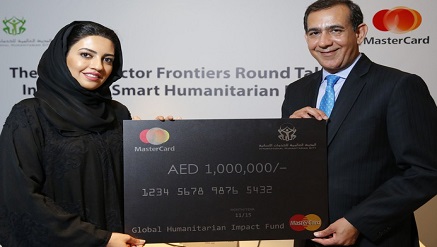
Under the patronage of UN Messenger of Peace and Chairperson of International Humanitarian City (IHC) Princess Haya Bint Al Hussein, wife of HH Sheikh Mohammed Bin Rashid Al Maktoum, vice-president and Prime Minister of the UAE and Ruler of Dubai, the IHC and MasterCard launched today the first session of the Private Sector Frontiers Round Table Series.
The series, which will consist of 11 sessions in total, aims to strengthen the role of the private sector in terms of humanitarian assistance as well as build sustainable partnerships with the sector across the UAE.
Each session will address the role of a specific economic sector and offer recommendations to overcome challenges and pilot initiatives.
The first session, which was held on the first day of the UAE Innovation Week, was attended by CEOs of global champions in private finance, banking and technology as well as high-ranking observers from the United Nations. The attendees engaged in an open dialogue moderated by Dr. Yasar Jarrar, vice chair of the World Economic Forum Global Agenda Council, on the future of Governments and concluded with remarks by Becky Anderson, CNN host of “Connect the World with Becky Anderson”.
“The UAE Private Sector has always proven its commitment and demonstrated benevolent support providing innovative and sustainable collaborations for the benefit of the humanitarian work”, said HE Abdullah Al Shaibani, Secretary General of Executive Council of Dubai and IHC Board Member. “Today’s first session of the Private Sector Frontiers Roundtable is a testament of the commitment of Dubai Government and IHC to foster innovative multifaceted public-private sector partnerships.”

At the end of the session, the IHC and MasterCard announced a new partnership and pilot initiative that aims to utilize modern communication and payment technologies to enhance humanitarian relief funding and efforts.
Together, they launched a smart donation mobile application that will provide a platform for MasterCard cardholders to donate an amount to aid humanitarian efforts. By simply downloading the app, donations will be directed to the Global Humanitarian Impact Fund (GHIF) with every transaction made locally by the private sector.
Furthermore, MasterCard announced the contribution of AED one million, making it the first private company to fund the GHIF since it was launched earlier this year.
Commenting on the initiative and importance of leveraging technology for humanitarian needs, Raghu Malhotra, president, Middle East and North Africa, MasterCard said: “As a leading technology company in the payments industry, MasterCard is always looking to develop innovative solutions that help support the economy towards a future that is more connected, efficient, and secure. Our partnership with IHC and the government represents our commitment to doing well and doing good, and in this case deliver humanitarian relief through the power of innovative payment products and services.”
Through this innovative mobile application , MasterCard cardholders in the UAE are eligible to register and donate to the Fund, and will be empowered to set donation limits, and gain a unique view into the impact of the fund’s contributions to humanitarian efforts around the world run by the IHC’s humanitarian members including UN agencies and international nonprofit organizations.
“The world is witnessing unfortunate increase in the nature, complexity, and frequency of humanitarian crises. In facing these escalating challenges, we need to re-think the private sector support model and to look at establishing smart and sustainable partnerships between all the stakeholders involved,” said Shaima Al Zarooni, CEO of the IHC. “We are excited to be partnering with MasterCard in such a meaningful and impactful way. There’s no better example of public-private sector partnerships than this collaboration, which allows the private sector to pull back the curtain on humanitarian efforts and see what is required to mobilize resources and how they are designated and deployed. This partnership is set to harness the diversity and generosity of the private sector by enabling them to engage with the humanitarian sector in a more tangible manner.”



The Bank of Industry, through BOI Financing SPV Plc, has opened subscriptions for its inaugural Series 1 Fixed Rate Bond worth up to N250bn under its $1bn multi-currency instruments programme, seeking to raise long-term capital to finance businesses across Nigeria’s priority sectors.

The offer, which opened on 5 August and closes on 11 August, is being arranged by Chapel Hill Denham as the lead issuing house. The five-year bond is priced within a yield range of 17.35 per cent to 17.50 per cent and will be listed on the FMDQ Securities Exchange.
According to the offer document, proceeds from the issuance will be deployed to finance eligible businesses and projects across sectors, including agriculture and food processing, healthcare, engineering and technology, renewable energy, petrochemicals, oil and gas, creative industries and solid minerals, in line with BOI’s development finance mandate.
The lender said the financing is expected to improve access to medium and long-term funding for Nigerian enterprises, expand productive capacity, create and preserve jobs, deepen local value addition, support import substitution, boost exports and strengthen domestic value chains.
BOI, Nigeria’s foremost development finance institution, said it has provided funding to more than one million businesses across the country and disbursed over N1.27tn between 2023 and 2025. The institution operates across 34 states and the Federal Capital Territory and is jointly owned by the Ministry of Finance Incorporated and the Central Bank of Nigeria.
The bank also highlighted its financial performance, reporting a 36 per cent compound annual growth rate in gross earnings between 2021 and 2025.
Interest income rose 64 per cent to N884bn in 2025 from N538bn in the previous year, while its capital adequacy ratio stood at 39 per cent, nearly four times the regulatory minimum of 10 per cent. Its non-performing loan ratio was 1.7 per cent, below the CBN’s prudential limit of five per cent.
The bond has been assigned AAA ratings by Agusto & Co. and Intelligence Africa, reflecting the issuer’s strong capitalization, profitability, liquidity and ownership structure.
The issuance is open to institutional and qualified investors with a minimum subscription of N5m and additional investments in multiples of N1m. Interest will be paid semi-annually at a fixed rate, while principal repayment will begin in the third year through equal semi-annual amortised instalments until maturity in 2031.
The bond is also exempt from tax, making it an attractive investment option for investors seeking stable returns amid expectations of declining interest rates.
E-Financial
SEC Unveils Probate/Unclaimed Monies Clinic to Help Families Recover Inherited Investments


Securities and Exchange Commission (SEC) has intensified efforts to reduce unclaimed funds and other dormant investment assets by launching a Probate/Unclaimed Monies Awareness and Investor Clinic aimed at helping beneficiaries recover inherited investments and strengthening investor protection in Nigeria’s capital market.

Speaking at the opening of the clinic in Abuja organised by the Commission in partnership with Meristem on Thursday, Dr. Emomotimi Agama, director-general, SEC, said the initiative was designed to bridge the gap between investors’ legal entitlements and their ability to access inherited assets.
He noted that many Nigerian families face prolonged delays in accessing shares, dividends and other investments after the death of loved ones because they are unfamiliar with probate procedures, documentation requirements and registrar processes.
“For many Nigerian families, the death of a loved one who held shares, dividends, or other investments marks the beginning of a long and often confusing journey,” Agama said.
Describing unclaimed funds and dormant assets as a persistent challenge, he said they represent “real money that belongs to real families, sitting idle, disconnected from the people it was meant to serve.”
According to him, the Commission is committed to closing the gap through policy initiatives and direct engagement with investors.
He explained that the clinic brought together the Federal Ministry of Justice, the Probate Registry, the National Population Commission and capital market registrars to provide practical guidance on probate procedures, required documentation and the recovery of inherited investments.
“Today is not simply an awareness session. It is a working clinic, designed to equip you with practical knowledge: how probate works, how to obtain the right documentation, and how to recover what is rightfully yours,” he said.
Agama stressed that SEC’s mandate to protect investors extends beyond the lifetime of shareholders.
“This Commission exists to protect your rights in the capital market, and that protection does not end when a shareholder passes on. It extends to ensuring their beneficiaries can access what is due to them without unnecessary hardship,” he added.
Also speaking, Ms. Nkechinyelu Okoye, acting chief executive officer, Meristem Registrars and Probate Services Limited, identified lack of awareness and poor estate planning as key reasons billions of naira in financial assets remain unclaimed.
“There are three categories of beneficiaries that we encounter quite often. The first are those who think only land, houses and other physical assets can be transferred legally from deceased loved ones. They do not realise that financial assets such as shares, fixed income investments and even money in savings apps also form part of an estate,” she said.
Okoye said another group consists of beneficiaries who are unaware their deceased relatives owned financial assets, while a third group knows the investments exist but does not understand the claims process or required documentation.
“I dare add a fourth category. These are investors who do not provide or update their KYC documents and, as a result, when they pass on, their loved ones have no idea they have investments to claim,” she said.
According to her, these factors have contributed to the rising volume of unclaimed dividends, dormant accounts and other abandoned financial assets.
“All of these categories contribute to the several unclaimed assets lying all around. Ultimately, financial resources that could have been beneficial to these beneficiaries remain inaccessible,” she said.
She described the investor clinic as more than an awareness programme, saying it would provide practical support to investors, beneficiaries, executors and administrators.
“Our goal is to empower investors, beneficiaries, executors, administrators and the general public with the knowledge they need to navigate probate and estate administration with greater confidence,” Okoye said.
She also urged investors to prepare valid wills, maintain accurate shareholder records and regularly update their Know Your Customer (KYC) information to make it easier for beneficiaries to access inherited investments.
“We want investors to appreciate the importance of preparing a valid Will, maintaining accurate shareholder records and ensuring that their affairs are properly organised. Taking these simple steps today can save families considerable stress and delay in the future,” she added.
The SEC said the clinic forms part of its broader investor protection strategy and provides participants with direct access to experts on tracing investments, verifying shareholder records, resolving probate-related issues and recovering unclaimed capital market assets.

Nigeria Deposit Insurance Corporation (NDIC) has reassured on the multiple layers of protection for the Nigerian banking industry with more than 98 per cent of depositors and 281 million accounts insured by the corporation.

Thompson Sunday, managing director, NDIC, gave the assurance in Lagos at the retreat for members of the House Of Representatives Committee on Insurance and Actuarial Matters.
He said that striking the right balance between innovation, consumer protection, and financial stability remains a key policy imperative.
The theme of the retreat was “Strengthening the Financial Safety Net in an Era of Banking Sector Recapitalisation and Fintech Innovation”.
He said the increasing digitisation of financial services has heightened exposure to cyber threats, fraud, data breaches, and operational risks.
He said that with banks’ adoption of emerging technologies, regulators and safety-net participants must remain proactive in identifying and mitigating these risks while encouraging innovation.
Sunday also highlighted the rapid growth of financial technology (fintech) which has revolutionised the way financial services are delivered.
He said: “Digital banking platforms, mobile money services, payment solution providers, and other fintech innovations have expanded access to financial services and accelerated progress toward financial inclusion. Millions of previously unbanked and underserved Nigerians now have access to formal financial services through digital channels”.
He said that as the banking industry adjusts to higher capital requirements and technological innovations reshape financial service delivery, adding that its imperativefor banks to reinforce rules that safeguard financial stability and protect depositors’ funds.
According to him, a strong and well-coordinated financial safety net system is necessary for maintaining stability and resilience in any modern financial system.
“It promotes public confidence, protects depositors, supports orderly resolution of distressed financial institutions, and helps prevent systemic crises. At a time when Nigeria is pursuing ambitious economic growth objectives, including the goal of attaining a one trillion-dollar economy in 2030, a robust and credible financial safety net is essential to maintaining depositors’ and investors’ confidence and enhancing financial system resilience,” Sunday said.
He said the recently concluded banking sector recapitalisation programme represents a significant milestone in strengthening the capacity of Nigerian banks to support economic development.
“Well-capitalised banks are better positioned to absorb shocks, finance large-scale investments, support enterprise growth, and withstand periods of economic uncertainty. However, while recapitalisation enhances the resilience of financial institutions, it must be complemented by effective regulation, sound governance practices, strong risk management frameworks and good compliance culture, all attribute of a reliable financial safety net,” Sunday said.
He said the stability of the financial system depends largely on the trust that depositors and investors place in financial institutions.
He said: “History has shown that where confidence is low, distress can spread rapidly, threatening the stability of, not only the financial system but the wider economy. It is, therefore, essential that institutions responsible for financial stability continue to strengthen measures that preserve and enhance public trust.
Also speaking, opening remarks, Ahmadu Usman Jaha, chairman, House Committee on Insurance and Actuarial Matters, said financial systems across the globe are being reshaped by rapid technological advancement, digital financial services, artificial intelligence, cybersecurity risks, and changing customer expectations.
He said Nigeria is undertaking one of the most significant banking recapitalisation exercises in its recent history, requiring banks to strengthen their capital base while remaining innovative, resilient and competitive.
“These developments present enormous opportunities for economic growth, financial inclusion and innovation. However, they also introduce new categories of systemic risks that require stronger institutions, modern regulatory frameworks, and robust financial safety nets capable of maintaining public confidence under all circumstances,” he said.
He explained that Nigeria’s banking industry continues to occupy a central position in our economy with banking sector assets running into several trillions of naira and serving tens of million of depositors across conventional banking channels and rapidly expanding digita platforms.
“Equally important is the rapid expansion of financial technology. While fintech innovation has significantly increased financial inclusion and payment efficiency, it also raises complex issues relating to cyber resilience, operational risk, consumer protection, digital fraud, and the scope of deposit insurance coverage. These are issues that require continuous legislative attention and collaborative policy responses,” he stated.

World Bank Debars United Aviation Services, Owner over Fraudulent Activities

NITDA Introduces Cloud Certification Boost Data Localisation Compliance

Enugu State Approves Land for ITF’s Digital Fabrication Centre

BOI Opens N250Bn Bond Offer to Fund Businesses

Guinness Rewards Consumers with ₦17 Million in First Week of ‘Open for More’ Promo Draw

From Scarcity to Scale: What Africa Can Learn from India’s Agricultural Transformation

EFCC Busts NIS Visa Overstay Racket, Uncovers N700m in an Account

Fact-Check: Elon Musk’s “Tesla Pi Phone” is Internet Rumor

NBC Tasks Broadcasting Stations over 2028 DSO Global Deadline

Police Busts Syndicate Who Allegedly Stole N3Bn from Financial Institution




 News2 days ago
Fleeing Southeast Asia Scam Syndicates Find New Homes in Nigeria, Kenya- Report

 Telecom2 days ago
NCC Asks Telcos to Make Budgetary Provisions for Cybersecurity

 News2 days ago
DSS Arraigns Eze for Allegedly Hacking, Stealing N800m from SunTrust Bank

 Telecom2 days ago
MTN Paid 600Bn in Taxes in H1 2026 – Kadri, MTN CFO

 Telecom2 days ago
Glo Leads Internet Growth Figures in Nigeria for May

 News2 days ago
Liquid Intelligent Uses Light Beam Technology to Bridge Lagos Fibre Gaps

 News1 day ago
Glovo Pioneers AI Quick-Commerce

 E-Business2 days ago
Firm Advocates Healthy IT Habits to Strengthen Cyber Resilience