

E-Financial
UBA Treats 20 Customers to Holiday Experience in Dubai

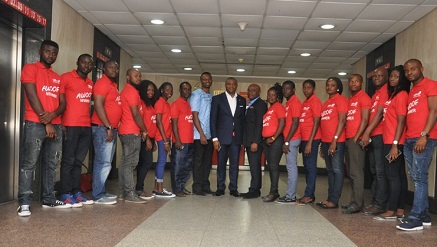
It was a Friday evening at the international wing of the Murtala Mohammed International Airport (MMIA) and 20 lucky customers of United Bank for Africa (UBA) Plc were eagerly waiting for their flight.
These were the people who received their Western Union and MoneyGram transfer at UBA during the UBA Remittance Awoof Promo.
Their destination was Dubai. Courtesy of UBA, they were going on an all -expense paid 3-day trip to the world’s holiday city. For many, it was their time of traveling out of the country and they were excitedly looking forward to it.
One of the lucky customers Benita Ojeh from Asaba, who has never been to Lagos before the trip, could not hide her excitement; “this is more like a miracle to me. I never believed this would ever happen to me. I am immensely grateful to UBA and most importantly very proud that a bank could reward a customer with a dream trip like this”.
In Dubai, the 20 lucky customers were stayed the prestigious J5 Rimal Rotana Apartments, with each customer allocated his or her own room. During their stay they had opportunity to visit many great sites in Dubai including the Burj Khalifa, the tallest man made structure in the world.

The 20 luck customers on the trip had emerged as winners in the Remittance Awoof Promotion organized by the bank to reward customers that had received remittances through MoneyGram and Western Union from any UBA business office across the country. 60 other customers were rewarded with beautiful gift items.
The winners were selected based on money transfers through MoneyGram and Western Union at the bank within the period of January and August 2015.
The trip is part of the bank’s efforts to reward loyalty, give back to the society and impact the lives of individuals that carry out business with the bank.
Welcoming the customers back to Nigeria on November 17, Mr. Oliver Alawuba, directorate head, Public Sector Group, Marketing said UBA is more than happy to reward loyal customers because UBA believes that loyal customers deserve to be rewarded.
He assured that UBA will continue to “reward customers who remain loyal to the bank and do repeat business with us.”
“I am so excited. I have no words to say how I feel now after this trip. All I can say is thank you UBA for making this happen to me. I will never forget my experience in Dubai. It is an experience I will share with my children and it is great to know that UBA made it happen” said Benita Ojeh, who said this was also the first time she is travelling out of the country.
Already, UBA says plans are at an advanced stage to roll out another Awoof promotion in January of 2016.
“Customers who missed this trip should watch out. It could be their turn to have an unforgettable holiday experience for being loyal customers of UBA,” said Mr. Alawuba.



When people and businesses gain genuine access to financial services, they gain the ability to transact securely, build savings, and access credit. That access creates the conditions for progress: more stable revenues, better business decisions, and the capacity to grow. Progress, sustained over time, is what produces financial happiness. This framework is how Moniepoint measures its impact.

According to Moniepoint 2025 Impact Report, titled creating financial happiness; “Financial happiness is the feeling of confidence and ease that comes with financial freedom and well-being. It is a condition that develops over time and requires a specific set of enablers to take hold.
For millions of people and businesses across Nigeria, those enablers, like tools and solutions to manage their finances, have historically been out of reach. Moniepoint was built to change that, and this change, for us, begins with inclusion”.
Across the world, access to digital tools is a key driver of financial inclusion. The World Bank’s Global Findex 2025 report finds that more than 60% of adults in low- and middle income economies now make or receive digital payments. In Nigeria, this figure is around 54%. Moniepoint has been a key driver in expanding this access with its POS terminals. “Our terminals also drive financial inclusion for individuals.
The report stated that, in 2025, Moniepoint enabled 100 million people to make payments via their POS terminals across the country. For customers in communities where bank branches are scarce or non-existent, a Moniepoint terminal at their local shop, market stall, or fuel station provides reliable access to digital financial services.
They can make purchases, withdraw cash, and manage their money without travelling long distances or depending solely on physical currency. Critically, customers without cards can complete transactions through direct bank transfers to the terminal’s account.
Beyond practical benefits, Moniepoint terminals have also introduced a new layer of trust to everyday commerce. “When network issues make it unclear if a payment went through, the Moniepoint terminal’s loud beep provides instant confirmation for everyone, building trust in digital payments with every transaction”.
Moniepoint POS terminals operate across all 774 local governments in Nigeria, ensuring that small sellers and large stores can accept payments reliably, regardless of location.
In 2025, millions of Nigerians, businesses and individuals alike, accessed Moniepoint services through its mobile app. Top among them are groups like women and low-income earners, who have historically been excluded from formal banking. Inclusion of women is particularly important, as they typically manage household spending and informal savings but are frequently left out of structured financial systems. “Through our app, they are gaining financial independence and greater control over their economic decisions,” the report added.
For millions of Nigerians, debit cards represent a move away from the limits of cash transactions. They enable safer, more reliable everyday payments, particularly as more local businesses begin to accept digital payments.
Moniepoint debit cards are designed to meet this need. In 2025, Moniepoint customers completed over 300 million card transactions at physical locations, largely driven by essential, food-related purchases. Most of this spending took place at neighbourhood provision shops where households buy everyday items such as rice, cooking oil, and soap.
“We’ve made access to our cards intentionally simple. Customers can get a Moniepoint debit card by requesting it within their mobile app or from neighbourhood agents, without lengthy paperwork or waiting periods. By lowering these barriers, more people are able to access financial tools and participate in the formal financial system.
“Our cards also safeguard our customers’ financial information. They don’t carry special markings or any identifiers that could expose our customers or put their financial security at risk. In the event of loss, this reduces the likelihood of targeted fraud or misuse.
“When people can pay with their debit cards at their neighbourhood stores, they can manage their spending, reduce cash handling, and transact more securely. Merchants also benefit, recording higher transaction volumes and more consistent customer activity.
“Moniepoint helps millions of businesses and individuals across Nigeria access seamless payments and banking, every day. The widespread adoption of our tools and services, as highlighted, demonstrates our critical role in expanding financial access, supporting everyday commerce, and enabling more Nigerians to participate safely and consistently in the digital economy,” the report noted.

ChatPay has launched Africa’s conversational banking platform, enabling individuals and businesses to access financial services through WhatsApp.

The Lagos-based fintech startup, is in controlled rollout, connecting WhatsApp to linked-bank management, airtime and supported electricity payments through simple conversations.
The company said the platform is designed to enable users to send money, pay bills, buy airtime and manage business transactions within WhatsApp conversations, subject to the completion of regulatory approvals and integration with licensed banking partners.
According to ChatPay, the platform is operated by CP Technology Limited and is currently undergoing a phased rollout ahead of its planned public launch.
The company said the initiative is intended to simplify access to financial services by leveraging WhatsApp, which it estimates is used by more than 50 million Nigerians monthly.
Speaking on the idea behind the platform, Adeoluwasubomi Odebunmi, product lead and co-founder, said the concept emerged while she was studying Software Engineering at Babcock University.
“I saw the gap while I was still in school—how much friction there was just to move money. I didn’t want to just study the problem. I wanted to help fix it,” she said.
Odebunmi said she had previously worked on software solutions spanning e-commerce, real estate management, school administration and artificial intelligence applications before co-founding ChatPay.
Aseoluwa Siyanbola, growth lead and co-founder, said his experience managing Nigerian bank accounts while studying abroad highlighted some of the challenges users face with digital banking services.
According to him, difficulties such as one-time password (OTP) failures and inconsistent banking applications inspired the team to explore conversational banking solutions.
“We each encountered similar challenges and came together to build a solution that simplifies everyday financial transactions,” he said.
cAbraham William, tech lead and co-founder, said the company is focused on improving access to financial services through a platform that many Nigerians already use daily.
“We want to make financial services easier to access by allowing people to carry out transactions through a familiar messaging platform,” he said.
William said he oversees the company’s engineering, technology strategy and system architecture.
ChatPay said its services will be introduced in phases as regulatory requirements are met and integrations with banking partners are completed.
The company added that its newly launched “Founding 2,500” programme will enable selected early users to test features, provide feedback and participate in product development before the platform’s wider rollout.
According to the company, interested users can register for the waitlist and the Founding 2,500 programme through its website.
Founded by Odebunmi, Siyanbola and William, ChatPay said its long-term goal is to expand conversational banking services beyond Nigeria into other African markets after its domestic rollout.


United Bank for Africa (UBA) Plc has been named Nigeria’s Best Bank for Retail Banking and Best Bank for Sustainability Leadership (ESG) at the 2026 Euromoney Awards for Excellence, reinforcing its position as one of Africa’s leading financial institutions.

The awards were presented on July 17 at The Peninsula London in the United Kingdom, recognising financial institutions that have demonstrated outstanding performance, innovation, customer impact and sustainable banking practices.
The double recognition highlights UBA’s growing influence in retail banking and its commitment to advancing environmental, social and governance (ESG) principles across its operations.
According to Euromoney, UBA distinguished itself through a series of sustainability initiatives, including the introduction of a Green Financing Facility designed to support households and businesses transitioning to renewable energy.
The publication also cited the bank’s ₦5 billion financing programme, implemented in partnership with the Bank of Industry (BOI), to provide funding for women-owned businesses.
Euromoney further recognised UBA’s commitment to achieving net-zero carbon emissions by 2050, describing it as a demonstration of the bank’s long-term sustainability strategy.
The publication also highlighted the bank’s efforts to integrate sustainability into its operations through the deployment of solar-powered energy solutions across 50 branches and comprehensive ESG capacity-building programmes that have trained more than 16,000 employees across the UBA Group.
In the retail banking category, Euromoney noted that UBA continued to consolidate its position as one of Africa’s largest retail banking institutions.
According to the publication, the bank expanded its customer base to more than 37 million by the end of 2025, while retail banking revenue increased more than fourfold to ₦429.5 billion.
The awards also recognised UBA’s continued investment in digital banking innovation, particularly enhancements to its artificial intelligence-powered chatbot, LEO.
Euromoney noted that LEO became Africa’s first AI-powered banking platform to facilitate cross-border money transfers in local currencies through the Pan-African Payment and Settlement System (PAPSS).
Commenting on the awards, UBA’s Group Managing Director and Chief Executive Officer, Mr Oliver Alawuba, described the recognition as a validation of the bank’s commitment to delivering value to customers while promoting sustainable development across Africa.
“To be recognised as Nigeria’s Best Bank for both ESG and Retail Banking in the same year sends a powerful message that sustainable banking and commercial success are mutually reinforcing.
“At UBA, we are committed to financing Africa’s future, supporting businesses and communities, promoting financial inclusion, and delivering innovative banking solutions that improve lives.
“These awards belong to our customers for their confidence in us and to every member of the UBA family whose dedication continues to make our vision a reality,” he said.
Also speaking, UBA’s Group Head, Marketing, Brand and Corporate Communications, Mrs Alero Ladipo, said the awards reflected the bank’s unwavering commitment to putting customers at the centre of its operations.
According to her, every innovation, investment and banking solution introduced by UBA is aimed at creating exceptional value for customers while expanding access to financial services.
“These awards are a powerful affirmation of our Customer First philosophy.
“Whether it is supporting entrepreneurs with access to finance, enabling seamless digital payments, advancing clean energy financing or expanding financial inclusion across Africa, UBA remains focused on delivering meaningful impact.
“We are honoured that one of the world’s most respected financial publications has recognised these efforts,” she said.
UBA currently operates in 20 African countries, as well as the United Kingdom, United States, France and the United Arab Emirates, serving more than 45 million customers through a combination of digital banking platforms and physical branch networks.
The bank said it remains committed to strengthening financial inclusion, driving innovation and supporting sustainable economic development across Africa and beyond.

HURIWA, CLO Protests Bill Asking Social Media Firms’ to Open Shops Nigeria

Anambra Govt Bans Graduation Ceremonies in Anambra Schools

Airtel Secures Another 10-year Spectrum Renewal in Nigeria

Moniepoint as a Key Driver in Expanding Financial Access for Businesses in Nigeria

Nigeria, Israel Strengthen Research, Technology Collaboration

NRC, Ponzi Scheme Collapses Resulting Loss of Billions of Naira

EFCC Busts NIS Visa Overstay Racket, Uncovers N700m in an Account

Tokenization, Blockchain Technology will Transform Financial Institutions – IMF

From Scarcity to Scale: What Africa Can Learn from India’s Agricultural Transformation

Spotify partners Afro Nation Portugal to expand African music experience




 E-Business3 days ago
Kaspersky Warns Mobile‑data Buyers about Scammers Posing as Telecoms Operators

 General News3 days ago
Three Entrepreneurs Secure ₦5 Million at The Gathering on 100 Pitchathon

 E-Financial3 days ago
ChatPay Unveils Public Waitlist for WhatsApp-Based Banking Platform

 News3 days ago
African Judges Pledge Support for AfCFTA’s Success

 Telecom3 days ago
Airtel Africa Backs London Listing

 Telecom2 days ago
GSMA Supports Abuja Declaration on Meaningful Connectivity for Africa, Joins Partners to Launch ATLAS Umoja

 Telecom3 days ago
GSMA Says High Smartphone Costs Threatens Africa’s AI Future

 News3 days ago
How 21 Former Almajiri Children Learned to Build Computers and Drones in Months