

News
Shell, Eni to Lose OPL 245 over $1.1Bn Malabo Fraud


Federal government may retrieve one of Africa’s richest oil blocs from oil giants, Shell and Eni, if the recommendations of the Office of Director of Public Prosecution are implemented, according to the Tide Newspaper.
Not only will the two oil giants lose OPL 245, should President Muhammadu Buhari approve the recommendations, they will also be fined billions of dollars for illegal activities, including paying money to fraudulent public officials and private citizens in order to secure the bloc.
The retrieval of the controversial oil bloc, estimated to contain about nine billion barrels of crude, as well as placing heavy fines on the oil giants, is contained in a far-reaching recommendation by the office of Mohammed Diri, director of Public Prosecution (DPP).
According to the Tide, the recommendation was at the instance of Abubakar Malami, Attorney General of the Federation and Minister of Justice, who is set to advise the Federal Government on how to proceed on a controversial deal that is being investigated by authorities in four different countries.
In arriving at its recommendations, the DPP committee, which included lawyers from his office, called for the cancellation of the ‘settlement agreement’ that ceded the oil bloc to Shell and Eni.
Made on April 29, 2011, the settlement deal is made up of three different ‘Resolution agreement’ signed by the parties involved in the OPL 245 saga.
The first, titled “BLOCK 245 MALABO RESOLUTION AGREEMENT” was signed between representatives of the Federal Government and those of Malabu, which was represented during the discussions by a former petroleum minister, Dan Etete.
The second agreement, titled “BLOCK 245 RESOLUTION AGREEMENT” was between the Federal Government and officials of Shell and Eni/AGIP; while the third agreement, titled “BLOCK 245 SNUD RESOLUTION AGREEMENT”, was signed by officials of the Federal Government and Shell.
Mohammed Adoke, immediate past attorney general of the federation, and Diezani Alison-Madueke, immediate past petroleum minister, signed all the agreements on behalf of the Federal Government.
Both are among officials being investigated by Nigeria’s foremost anti-graft agency, the Economic and Financial Crimes Commission (EFFC), for their roles in the scam.
The agreements saw the transfer of OPL 245, first from the Malabu to the Nigerian government and then from the government to Shell and Eni.
The agreements also effectively cancelled all previous law suits and judgements related to the case.
It was based on these agreements that Shell and Eni paid a total of $1.3 billion into Nigerian government accounts, which as stated in earlier reports, largely ended up in accounts of phoney companies and shady characters.
The committee empanelled by the Attorney General, Malami, recommended that the agreement be cancelled, describing it as “null and void”, and saying it “should not be given any legal effect by the FGN (Federal Government of Nigeria) as doing so would amount to the FGN condoning and perpetuating illegality.”
One of the reasons the panel considered the agreement illegal is that Etete, had no legal authority to negotiate the agreement on behalf of Malabo as he was not a shareholder of the company nor had the permission of the shareholders to do so.
Also, the oil bloc was awarded to Malabo in furtherance of Nigeria’s policy to encourage local companies and part of the conditions for the award was that “foreign participation interest in the blocks (OPL 245 and 214) shall not exceed 40%, i.e. 60/40 indigenous to foreign;” a fact Shell was aware of but chose to ignore.
The committee also sought the cancellation of the agreement based on a resolution by the last House of Representatives, which called for the cancellation and demanded that Shell be “censured or reprimanded… for its lack of transparency and full disclosure in its bid to acquire OPL 245.”
Also, although Shell and Eni claimed they only struck an agreement with the Federal Government and that they did not know, before the agreement, that the money they paid was going to Malabo, evidence by investigators in Italy and the Nigerian anti-graft agency, EFCC, shows that the oil firms knew the payment was eventually going to Malabu accounts controlled by Etete, a man once convicted for money laundering in France.
Apart from calling for the cancellation of the agreement, the DPP panel also recommended the full recovery of the money paid by Shell and Eni, describing it as “proceed of crime.”
Apart from recommending the withdrawal of the OPL 245 from Shell and Eni and calling for the retrieval of the money, the panel also asked the Federal Government to collaborate with all foreign agencies investigating the deal as well as prosecute all individuals and firms that violated local and international laws in the process.
In its recommendation, the panel also stated that the Federal Government can make “close to $10 billion” from the scandal.
To make the money, the panel recommended that Shell and Eni be fined at least $6.5 billion (five times the $1.3 billion Shell and Eni originally paid in the 2011 block).
This, the panel stated, should be done “in accordance with the relevant provisions of our laws in conformity with international best practices via the appropriate courts (at) home or abroad as the case may be.”
In other words, from the fine and the amount to be retrieved of the $1.3 billion, the government could make about $8 billion.
Also, in asking that the oil bloc be returned to Malabu’s original owners, the panel asked that the necessary licensing fees, transfer fees, signature bonus, and tax be paid by the firm; while 50 per cent of the rights to the bloc should return to Nigeria after three years based on original intent of awarding the bloc.
It would be recalled that Malabu oil block was awarded in 1998 with its shareholders being Mohammed Abacha, son of late military dictator, Sani Abacha, (50 per cent); Kweku Amafegha (the fictional character created by Etete, 30 per cent); and Wabi Hassan (wife of Hassan Adamu, former Nigerian ambassador to the US, 20%).
Human rights lawyer, Jiti Ogunye, had argued that the oil bloc ought to return to Nigeria and Malabu’s registration cancelled since it was based on falsehood.
“Section 190 and Section 436 (b) of the Criminal Code Act is applicable to the conduct of the promoter of Malabu, in that a false representation or declaration was made to induce the Corporate Affairs Commission to issue an incorporation certificate,” Ogunye said.
“Owing to the false representation, the Corporate Affairs Commission can approach the Federal High Court under Section 563 of CAMA to seek the withdrawal and cancellation of the Certificate of Incorporation of Malabu.”
The DPP report was to be sent to the Attorney General last week, a source at his office told newsmen, but was delayed due to Malami’s trip with President Muhammadu Buhari to the United Arab Emirates.
The report is about now with both the Solicitor General of the Federation, Taiwo Abidogun, and Malami, with the latter expected to advise President Buhari on the next steps based on the recommendations.
A source at the Presidency told our correspondent that the president was keenly following the matter, and recently received a report on it from the office of the Vice President, who is coordinating the actions of the AGF, EFCC and Petroleum Ministry on the matter.
Both the DPP and the Attorney General, in separate phone interviews, confirmed their offices were working on resolving the OPL 245 issue, but would not comment on the details.
“Malabu is a very sensitive issue, and if there’s any resolution, I will have to get clearance before I can speak to the press on it,” the DPP said.
It was learnt that Shell was already aware of the government’s moves to cancel the agreement, and was lobbying against it.
The Tide said that Precious Okolobo, oil giant’s spokesperson, declined comments on the matter.



The UK Government has announced the appointment of Mr Peter Vowles as the next British High Commissioner to the Federal Republic of Nigeria.

Mr Vowles succeeds Dr Richard Montgomery CMG and is expected to take up his post in Abuja in September 2026. Dr Montgomery remains in post until that time.
Mr Vowles brings extensive diplomatic and development experience to the role, having served as His Majesty’s Ambassador to Zimbabwe from 2023 to 2026 and previously as Ambassador to Myanmar from 2021 to 2022.
He has held senior leadership positions across the FCDO and its predecessor department DFID, including as Transformation Director and Director for Asia, Caribbean and Overseas Territories.
Earlier in his career, Mr Vowles worked in international development across South Asia, Central Africa and East Africa, including postings in Bangladesh, India, the Democratic Republic of Congo and Kenya. He began his career in Zimbabwe, where he worked in education and development.
Peter Vowles said: “I am honoured to be appointed as British High Commissioner to Nigeria. Nigeria is a country of immense importance to the United Kingdom, and I look forward to working closely with Nigerian partners to strengthen our relationship across trade, development and security.”

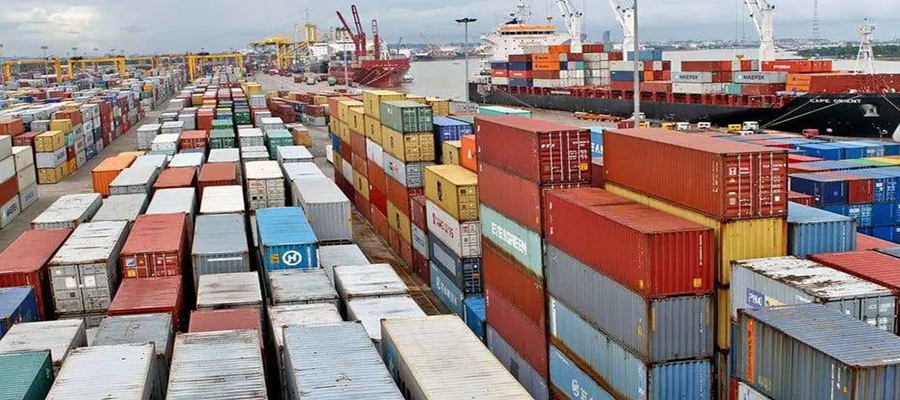
World Bank has ranked the Apapa and Tin Can Island Port complexes in Lagos among the world’s 20 most improved ports in its 2025 Container Port Performance Index (CPPI), released in June 2026.

The ranking places both ports in the “Top 20 Port Improvement Since 2020” category, reflecting significant gains in operational efficiency and vessel turnaround time.
The CPPI is a global benchmark used to assess the efficiency of container ports based on factors such as cargo handling speed, ship turnaround time and overall logistics performance.
According to the report, the improvement highlights ongoing reforms and modernization efforts within Nigeria’s maritime sector.
The Managing Director of the Nigerian Ports Authority (NPA), Mr Abubakar Dantsoho, attributed the recognition to ongoing policy reforms and infrastructure upgrades in the sector.
He said the development reflects the impact of economic policies of President Bola Tinubu and the support of the Minister of Marine and Blue Economy, Mr Adegboyega Oyetola.
“With the investor-friendly policies of President Bola Ahmed Tinubu providing the impetus for increased investment to drive our port infrastructure and equipment modernisation programme, coupled with the unflinching support of the Honourable Minister of Marine and Blue Economy, Adegboyega Oyetola, we have all it takes to further enhance trade facilitation, improve competitiveness and boost the national economy,” he said.
The NPA said the recognition is expected to strengthen investor confidence in Nigeria’s maritime sector and enhance the country’s position as a regional trade and logistics hub.
It noted that improvements in port operations are already contributing to increased efficiency in cargo movement and reduced delays at key terminals.
The authority also pointed to ongoing efforts to modernise port infrastructure and expand digital systems aimed at improving service delivery.
Earlier in February 2026, the NPA said the federal government had intensified efforts to position Nigeria as a leading maritime destination through port rehabilitation and modernization projects.
It also highlighted public-private partnership initiatives, including developments at the Lekki Deep Sea Port, as part of broader reforms aimed at improving efficiency and attracting investment.
The CPPI ranking is expected to further boost Nigeria’s maritime profile and encourage additional investment in the sector.
As digital payment adoption continues to grow across Nigeria and emerging markets, the next phase will depend not just on innovation, but on the strength, reliability, and trustworthiness of the infrastructure behind it.

While the ecosystem has made clear progress in recent years, trust remains a critical issue for users, businesses, and operators alike. Questions around resilience, security, interoperability and transaction reliability continue to shape how the market evolves and how confidently digital payments can scale.
These issues will be central to the deliberations at Digital Pay Expo 2026, where fintech leaders, payment operators, and other ecosystem stakeholders will gather under the theme, “Seamless Digital: Fostering Pan-African Market Expansion in the Era of AI.”
PalmPay’s participation reflects its continued commitment to building trusted and scalable payment infrastructure, while contributing to the broader industry efforts to strengthen systems, standards, and partnerships needed to support long-term ecosystem growth.
Speaking ahead of the event, Olorunfemi Hanson, Head of Marketing and Communications at PalmPay Nigeria, said: “As the financial services ecosystem continues to grow, trust and reliability become even more important.
“The industry’s next phase will be shaped not only by innovation, but by the strength of the infrastructure supporting it. Digital Pay Expo provides an important platform to address the resilience, interoperability, and trust issues that will shape the future of digital payments growth across Africa.”
The event, scheduled to be held from the 17th to the 18th of June, 2026, will feature Chika Nwosu, Managing Director of PalmPay Nigeria, alongside other distinguished guests, including the Director-General, Payment System Management Department (PSMD), Central Bank of Nigeria. The event will examine how the industry can balance innovation, regulation, and scalability while strengthening trust across the digital payments value chain.
For PalmPay, this event reinforces its role in supporting a more resilient, secure and scalable payments ecosystem for Nigeria and emerging markets more broadly.

Nigeria Launches FreeTV Nationwide

NIPOST Plans Digital Postcodes for Every Building in Nigeria

Enugu to Host The Gathering on 100 as MTN-Backed Youth Movement Expands Across Nigeria

Prof. Dzidonu Urges Universities to Produce Deep Thinkers for AI Age

FG Debunks Claims of Plans to Introduce Telecoms, Fuel Taxes

CBN Extends PoS Geo-Fencing Enforcement Deadline to August 2026

NCC Drafts New Rules for Virtual Mobile Operators

London Strengthens Global Investment Ties with Africa @ First Ever London-Africa Business Summit

FG Targets Alleged N3tn Capital Flight, Opens Airtime Credit Market to Nigerian Fintechs

Easybuy Partners WAWUAfrica to Upskill 10 Million Youths and Women, Boosting Nigeria’s Economic and Financial Inclusion




 E-Business3 days ago
AI-Powered Cyber Threats Put Nigerian Banks on Alert

 E-Financial2 days ago
CBN Orders Banks, Fintechs to Host Payment Data Locally

 E-Business2 days ago
Galaxy Backbone @ 20, Pledges Nationwide Connectivity, Data Sovereignty

 E-Financial2 days ago
Analysts Warn of Growing “Crowded Trade” in Foreign Exchange Markets

 Telecom2 days ago
Nigeria Innovation Summit 2026 Set to Convene West Africa’s Brightest Minds to Shape the Future of Innovation

 Telecom2 days ago
UK Bans TikTok, Instagram, Facebook for Under-16s in Landmark Crackdown

 E-Financial2 days ago
ACAMB Kicks-off 30th Anniversary Celebration With Tree Planting Initiative

 General News3 days ago
Guinea-Bissau Taps United Nigeria Airlines to Establish AIR BISSAU, National Carrier