

/home/kenneth/web/nigeriacommunicationsweek.com.ng/public_html/wp-content/themes/zox-news/parts/post-single.php on line 153
">
Warning: Undefined array key 0 in /home/kenneth/web/nigeriacommunicationsweek.com.ng/public_html/wp-content/themes/zox-news/parts/post-single.php on line 153
Warning: Attempt to read property "cat_name" on null in /home/kenneth/web/nigeriacommunicationsweek.com.ng/public_html/wp-content/themes/zox-news/parts/post-single.php on line 153
Debenhams Signs New £113 Million Logistics Contract with DHL

DHL Supply Chain, the world’s leading logistics services provider, has signed a new contract worth £113.2 million (approx. 123.3 million Euros) with Debenhams, extending its 12-year partnership with the famous department store until 2012.
The three-year agreement sees DHL’s specialist fashion unit continue to develop and provide all Debenhams’ warehouse and distribution services to 157 stores across UK and Ireland.
DHL operates all three of Debenhams’ UK distribution centers, providing a full array of transport and warehouse services; including supplier collections, store deliveries, outbase and cross dock operations.
In response to the challenges in the retail market, Debenhams, working with DHL, has undergone a two year cost improvement program delivered through internal process reviews, operational developments and streamlining including advancements in the warehouse picking operations that have provided business growth benefits.
The developments have delivered significant year-on-year cost reductions through which Debenhams has managed to cut the cost per unit by more than ten per cent since 2006/2007, whilst absorbing inflationary pressures in large spend areas such as fuel and energy.
In addition to the cost improvements, there have been significant environmental benefits for the department store. The introduction of super cube trailers and double deck trailers has reduced kilometers traveled in Debenhams’ supply chain by 792,000 kilometers and fuel burnt by 203,000 liters, all this despite delivering to an ever increasing store base.
Since 2006 DHL has introduced vehicles compliant with the Euro 5 standard and has reduced CO2 emissions by 517 tonnes year on year.
Paul Leggett, Head of Logistics for Debenhams, says, "One of the other key changes in recent years has been the evolution of an advanced warehouse solution that now better allows DHL to focus its resources on moving Debenhams high priority product lines more swiftly through the supply chain. This in turn has helped us become more agile with our promotional activity and supported the large transition to more own bought product that occurred this year."
DHL has also taken over the operation of three off-site stock rooms, allowing DHL to develop new services, demonstrating its effectiveness and added value in elements of the supply chain that are normally not considered part of traditional retail logistics.
Paul Richardson, Managing Director, DHL Supply Chain Fashion UK, adds, "Our partnership with Debenhams has a history spanning more than a decade and in this time we have worked together to provide the most efficient solution in a demanding and dynamic business. The achievements of this partnership contributed to Debenhams’ recent commitment, which reflects the strength of the solution and creates exciting opportunities for both companies."
DHL now manages over 120 million units annually which spans Debenhams’ diverse range of products across several market segments including fashion, beauty, home wares, linen and jewelry.


Warning: Undefined array key 0 in /home/kenneth/web/nigeriacommunicationsweek.com.ng/public_html/wp-content/themes/zox-news/parts/post-single.php on line 493
Warning: Attempt to read property "cat_ID" on null in /home/kenneth/web/nigeriacommunicationsweek.com.ng/public_html/wp-content/themes/zox-news/parts/post-single.php on line 493

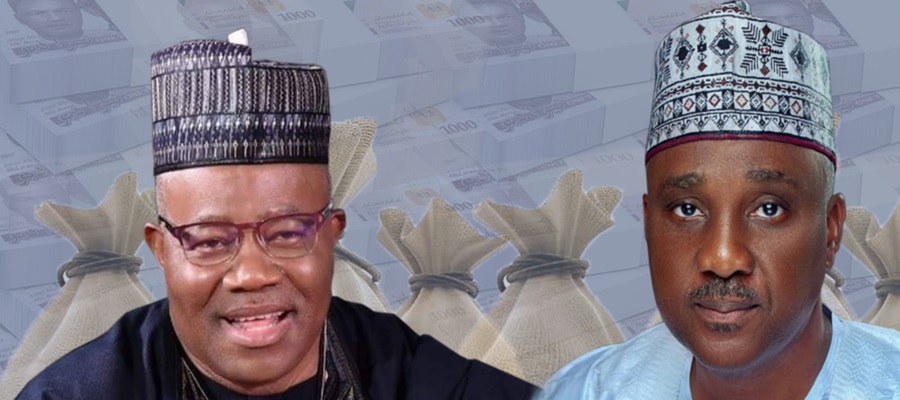
Socio-Economic Rights and Accountability Project (SERAP) has given Godswill Akpabio, Senate President, and Tajudeen Abbas, speaker of the House of Representatives, seven days to explain how over N1.3 billion was allocated in the 2026 Appropriation Act to a presidential council that the Presidency has described as fictitious.

In a Freedom of Information (FoI) request dated July 4, 2026, SERAP asked the National Assembly leadership to release certified copies of all documents related to the approval of the N1,302,978,784 allocation to the Presidential Foreign Intervention Promotion Council (PFIPC)/Presidential Economic Advisory Council.
The rights group also called on the National Assembly to invoke its investigative powers under Sections 88 and 89 of the 1999 Constitution to probe the circumstances surrounding the allocation and identify those responsible for what it described as apparent irregularities in the budget process.
SERAP further requested records identifying the lawmakers and committees that considered the allocation, as well as the public officials or representatives who defended the budget proposal before the committees.
The civil organisation also sought clarification on whether the allocation originated from the Executive’s 2026 Appropriation Bill or was introduced during the legislative appropriation process.
It equally demanded to know whether any lawmaker questioned the legal status or operational mandate of the council before approving the allocation.
The FoI request follows a July 1 statement by the Presidency denying the existence of the Presidential Foreign Intervention Promotion Council and insisting that the Federal Government never created the body.
Describing the conflicting claims as alarming, SERAP said they raised “serious concerns regarding the integrity of Nigeria’s appropriations process, legislative oversight, public financial management, and accountability.”
The FoI request, signed by Kolawole Oluwadare, deputy director, SERAP, stressed that Nigerians have a constitutional right to know whether public funds were appropriated to an entity that does not legally exist.
SERAP said, “Nobody has a more sacred obligation to obey the law than those who make the law, and that the National Assembly has a constitutional responsibility not merely to approve the Executive’s budget proposals but to rigorously scrutinise them before authorising public expenditure.”
The organisation argued that disclosure of the requested documents would enable Nigerians to determine whether the National Assembly fulfilled its constitutional obligations under Sections 80, 81, 88, and 89 of the Constitution in approving the allocation.
SERAP warned that if the requested information is not released within seven days of receipt or publication of the letter, it would initiate legal proceedings to compel the National Assembly to disclose the documents.
The organisation further maintained that making the records public would strengthen confidence in the National Assembly’s credibility, enhance transparency in the appropriation process, and promote accountability in the management of public funds.
It also cited the Freedom of Information Act, the Nigerian Constitution, the African Charter on Human and Peoples’ Rights, the International Covenant on Civil and Political Rights, and the Tshwane Principles as legal bases for its demand for full disclosure.

Dr Karl Toriola, chief executive officer, MTN Nigeria, has assured its subscribers that another telecom tariff increase is not imminent.

Dr Karl Toriola, chief executive officer, MTN Nigeria
He also clarified his recent comments on unlimited mobile data, saying they were taken out of context.
Toriola who spoke during an interview on TVC’s Beyond the Headlines, said his remarks at MTN’s Data on Trial public engagement were intended to explain the technical limitations of mobile networks rather than suggest that consumers could never access unlimited data.
According to him, excerpts of his comments circulated online did not reflect the full context of the discussion.
“People took snippets of the conversation, and the entirety of the conversation is available on YouTube. There’s nothing to be hidden there, and they took it slightly out of context,” he said.
Toriola explained that mobile networks are constrained by finite spectrum resources, making unrestricted data usage technically impossible without affecting the quality of service for other subscribers.
“Mobile wireless technology to offer data is limited by one factor—spectrum—and spectrum is a finite resource. You cannot put an excessive load of data traffic onto a mobile network without having a degradation of the quality of service for other people,” he said.
He added that while many telecom operators market data plans as unlimited, such packages are generally governed by fair usage policies, under which internet speeds are reduced after subscribers exceed specified usage thresholds.
Toriola said MTN is working towards introducing similar products but noted that they would also be subject to fair usage limits to protect network quality.
Addressing concerns over rapid data depletion, the MTN chief executive said operators do not deliberately consume customers’ data, attributing much of the usage to background activities such as automatic cloud backups on applications including WhatsApp, Google Cloud and iCloud.
“A significant amount of data that’s consumed on your handsets is done without your realisation,” he said.
He advised subscribers to review their device settings and configure cloud backups to run only over Wi-Fi or at less frequent intervals.
To illustrate the point, Toriola said an audit of the phone of one of MTN’s chief officers, who had complained about unusually high data usage, revealed that WhatsApp was automatically backing up about 120 gigabytes of data.
On telecom pricing, Toriola said another tariff increase is not expected in the near term, although future reviews would depend on prevailing economic conditions and the cost of sustaining network operations.
“The increment is not imminent. But over time, depending on economic conditions, there might be possible tariff increases,” he said.
He maintained that the tariff adjustment implemented in 2025 was necessary to ensure the sustainability of the telecommunications industry after more than a decade without a price review despite rising operating costs.
Toriola also disclosed that MTN invested ₦390 billion in capital expenditure during the first quarter of the year, exceeding its ₦359 billion profit after tax for the same period.
He identified fibre cuts, vandalism, unreliable electricity supply and restricted access to telecom infrastructure as major factors affecting service quality.
“We have more fibre cuts in a day than the whole Kingdom of Saudi Arabia has in a year,” he said.
Responding to calls for sanctions against MTN over recurring xenophobic incidents in South Africa, Toriola said MTN Nigeria is a Nigerian company in ownership and operations, noting that it is listed on the Nigerian Exchange, has only four expatriates in its workforce and has millions of Nigerian shareholders through direct investments and pension funds.
“We unequivocally condemn any form of xenophobia, any form of violence, any form of attacks against any community in the world,” he said.

Taiwo Oyedele, minister of Finance and Coordinating minister of the Economy, has said there are no secret expenditures or shadow budgets as insinuated.

Taiwo Oyedele, minister of Finance and Coordinating minister of the Economy
This followed comments by the International Monetary Fund (IMF) that discrepancies amounting to about two per cent of Nigeria’s Gross Domestic Product (GDP) exist between reported and actual budget deficits.
In a statement on Sunday, Oyedele said claims that the Federal Government spent over N8 trillion outside the approved budget misrepresented both the IMF’s position and Nigeria’s fiscal framework.
The minister stressed that the federal government does not operate a “shadow budget” or spend public funds outside constitutional and statutory provisions.
“The Federal Government has noted recent public commentary alleging that approximately two per cent of GDP amounting to over N8 trillion was spent outside the approved budget based on references to the IMF Representative in Nigeria and the Fund’s 2026 Article IV Consultation Report. These claims are incorrect and risk misleading the public regarding the government’s financial management,” he said.
According to him, “For the avoidance of doubt, the Federal Government does not operate a ‘shadow budget’ or expend public funds outside the constitutional and statutory framework established for public finance.”
Oyedele explained that under Sections 80 to 83 and 162 of the 1999 Constitution (as amended), public funds can only be withdrawn and spent in accordance with the Constitution and laws enacted by the National Assembly.
He noted that government spending is undertaken through duly enacted Appropriation Acts, Supplementary Appropriation Acts and other statutory authorities approved by the National Assembly, while multi-year capital projects are implemented under existing laws that permit capital rollovers.
“It is inaccurate to suggest that trillions of naira have been secretly spent outside legislative approval. Such allegations should have identified the specific projects purportedly executed without appropriation or legal authority and present credible evidence in support of the claim,” the minister stated.
Oyedele further clarified that several categories of government expenditure, including statutory transfers, first-line charges, debt service obligations, interventions for national security and infrastructure, and allocations to agencies established by law, are authorised under various Acts of the National Assembly.
“These expenditures are neither secret nor illegal. They are established by law, disclosed in various fiscal reports, and subject to applicable oversight, audit and accountability mechanisms,” he said.
The minister added that differences between Nigeria’s budget presentation and international fiscal reporting standards should not be interpreted as evidence of unlawful spending.
He also rejected suggestions that the reported amount translated into a higher fiscal deficit. “It is equally incorrect to suggest that the reported amount represents an increase in budget deficit.
A fiscal deficit is determined by the relationship between total government revenues and total government expenditures.
“Whether a capital project is financed through annual appropriations, supplementary appropriations, statutory transfers, approved intervention mechanisms, or other lawful financing arrangements does not, by itself, increase the fiscal deficit,” he explained.
According to Oyedele, the IMF’s observations relate mainly to “the comprehensiveness, timing and presentation of fiscal reporting rather than the legality of expenditure.”
He noted that the Tinubu administration was already taking steps to harmonise Nigeria’s budgeting process, recalling that President Bola Tinubu had requested the National Assembly during the presentation of the 2026 Appropriation Bill to end the practice of multiple and overlapping budgets in favour of a single, unified budget framework.
The minister maintained that the administration remained committed to prudent fiscal management, transparency and accountability, adding that reforms in revenue administration, treasury management, budget credibility and digitalisation of government financial processes had received recognition from the IMF, other multilateral institutions, international credit rating agencies and investors.
“Public debate is both welcome and essential in a democratic society. However, it should be based on facts and an accurate understanding of Nigeria’s constitutional and fiscal framework. Mischaracterising technical observations as evidence of unlawful expenditure neither advances informed public discourse nor strengthens democratic accountability,” Oyedele added.a
He reaffirmed the Federal Government’s commitment to transparency in the management of public resources and pledged continued collaboration with the National Assembly, oversight institutions, development partners and Nigerians to strengthen fiscal governance in line with international best practices.

SERAP Asks Akpabio, Abbas for Explain N1.3Bn Budgeted for ‘Fictitious’ Presidential Council

No Plans for Fresh Tariff Hike – MTN

FG Denies N8 Trillion ‘Shadow Budget’, Says IMF Quoted out of Context

Tokenization, Blockchain Technology will Transform Financial Institutions – IMF

Weebly Websites to Shut Down for Nigeria, 66 Other Countries from September

Mobile Internet Gender Gap Widest in Africa – GSMA

Nigeria Launches FreeTV Nationwide

NASENI Moves to Digitize CCB’s 5m Assets Declaration and Operations

UK, Nigeria Launch £15m Growth Programme to Accelerate Economic Transformation

Court Deals Fresh Blow to NBC, Throws Out Appeal over Broadcast Fines




 Broadcasting2 days ago
Why We’re Partnering With NIHOTOUR To Bring Nigerians In South Africa Home – Steve Babaeko

 News2 days ago
FG Clears N39Bn Pension Arrears for NITEL, PHCN, Other Retirees

 News2 days ago
How Fraudsters Emptied a Judge’s Account of N7.2 Million in Midnight Attack

 Telecom2 days ago
MTN Nigeria Celebrates Volunteers at Y’ello Care Impact Showcase

 E-Financial2 days ago
SEC Grants Approval to Luno, Other Crypto Firms under Regulatory Sandbox

 Telecom2 days ago
Xenophobia: MTN Nigeria Belongs to Nigerians, Not Only South Africans — Toriola

 Telecom2 days ago
Google Play launches $1m fund to support African game developers

 Telecom2 days ago
MTN Takes ‘The Gathering on 100’ Youth Empowerment Initiative to Kano