

E-Financial
Efficiency Unit Devises Strategies to Manage Procurement Costs

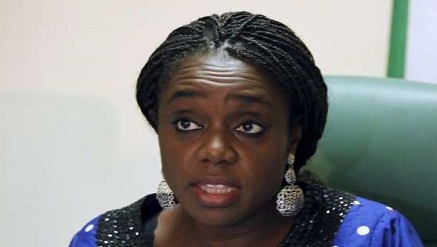
In furtherance of its commitment to re-prioritise spending and cut cost on recurrent expenditure, The Efficiency Unit of the Federal Ministry of Finance has said it is planning to introduce detailed price guidelines to ensure value for money in procurement by Ministries, Departments and Agencies (MDAs). To reduce the incidence of cash, the deployment of Ministerial Debit Cards is being piloted.
The Unit, which carried out an extensive and detailed review of the Overhead Expenditure data of the government for the period 2012 to 2014, found that the overhead spending pattern was concentrated on a limited number of items including travel, maintenance, local and international training, welfare and office stationery / computer consumables.
Speaking at a media interaction in Lagos on Wednesday, Ms Patience Oniha, head of the Efficiency Unit, stated that “The Cumulative Expenditure on these five items was N825 billion, representing 61% of the Cumulative Total Overhead Expenditure of N1,353 billion for 2012 to 2014. This means that the average amount expended annually on these five items during this period was N275 billion. The estimate for 2015 shows a continuation of this trend.” Overhead spending exceeded allocations to capital in all the years reviewed.
Another finding from the review was the large expenditure on honoraria and sitting allowances, refreshment and meals, books, fuel, publicity and adverts.
In relation to procurement, which has been identified as a major source of potential savings for government, the Efficiency Unit has prepared a list of good and services which are regularly procured by MDAs. By pooling the demand of MDAs, there will be opportunities to leverage the resultant bargaining power and secure price discounts and other benefits from suppliers.
This strategy will deliver savings and reduce the administrative costs inherent in the current procurement process, which is rather fragmented.
She recalled that “developed countries such as the USA, UK, Canada and Hong Kong have used this strategy successfully to manage their expenditure. Within Nigeria, large and diversified private sector organizations manage their procurement in a similar manner.
As a country, Nigeria should be no exception, more so when resources need to be managed tightly to promote spending on capital projects such as infrastructure.”
She disclosed that the Unit has initiated discussions with suppliers of air travel services for the purpose of price negotiation. This expenditure area was prioritised because local and international travel represented the single largest overhead expenditure item in the period under review, with an average of N83 billion spent annually. This presents a potential savings opportunity of N4.14 billion annually at an estimated price discount of 5%.
Honoraria and sitting allowances is another expenditure item where the Unit has identified potential for cost savings. This was one of the top eight expenditure areas with an average of almost N13 billion spent annually.
Ms Oniha assured that, with the support of Mrs. Kemi Adeosun, minister of Finance, she is confident that the Unit will pursue the implementation of its recommendations to deliver cost savings to government, while it continues its engagement with stakeholders in order to achieve its objectives.



Nigeria Deposit Insurance Corporation (NDIC) has urged youths to shun investment scams and embrace the habit of saving.

NDIC said that for a nation to be prosperous, its citizens must learn to build legitimate wealth through savings and then advance to investment.
Mr Adegbenga Fagbuyi, assistant director, Communication and Corporate Affairs, NDIC, made the remarks while addressing students of Lagelu Grammar School, Ibadan, during the 2026 Financial Literacy Day.
Delivering his speech on “Smart Money,” Fagbuyi highlighted the importance of having basic knowledge of the financial system, making sound financial decisions, understanding the benefits of saving in banks, setting financial goals, maintaining financial discipline, and avoiding Ponzi schemes that promise high returns.
Fagbuyi said youths are among the major targets of the government’s financial inclusion drive, adding that the Financial Literacy Day formed part of activities marking Global Money Week, adopted by the Bankers’ Committee in Nigeria as a platform for mentoring youths on savings and investment.

He said, “The government wants everybody to be participants in the financial sector. But how can you be a participant if you don’t know how to save? How can you be a participant if you cannot convert your savings into an investment? So, most importantly, youths are one of the major targets of the financial inclusion drive of the government.”
Fagbuyi described financial inclusion as bringing everybody into the financial safety net by encouraging participation in banking, insurance, pensions, and the capital market.
He stressed that the government does not want youths to become adults who lack knowledge of safe banking practices, insurance, and the capital market.
“Government does not want them to grow old, to become adults who do not know about savings, safe banking habits, insurance, and the capital market. That is why we go to schools to sensitise students to all these basic financial matters, particularly savings, so that our students can begin to learn to save, learn credible investment habits through which they can be making legitimate income.
“We also educate them about the deposit insurance system administered by NDIC. When you save in banks, the banks are supervised and regulated. And if eventually they fail, you will not lose your money. That is what NDIC does,” Fagbuyi said.
He revealed that the sensitisation programme, which started about 10 years ago and is organised by the Bankers’ Committee, comprising the Central Bank of Nigeria, the Nigeria Deposit Insurance Corporation, and all the deposit money banks in Nigeria, has been held across states nationwide.
He said, “Minimum, every year, we go to 10 states. And we normally sensitise 200 students in each school. So this year, that means we are targeting 2,000 students.”
Fagbuyi, however, said the objective of the programme is not to cover all schools across the country but to set a standard for state governments and schools to replicate.
“But I must emphasise that the objective is not to cover all schools. It is to set a standard for state governments and for schools to replicate. You agree with me that we cannot be everywhere.
“But as a partner, as a key stakeholder in the financial inclusion drive of the federal government, we go to states to showcase what the government’s intention, so that states and schools can replicate. So it is on this note that we always urge states’ Ministries of Education, Science and Technology to replicate and expand these programmes across their respective states.”
In his address, Olusegun Olayiwola, Oyo State Commissioner for Education, Science and Technology, represented by Alhaji Lukuman Kareem, permanent secretary, Education Inspectorate, Ibadan North, commended the NDIC for selecting a school in Ibadan for the financial literacy sensitisation programme.
He noted that such initiatives must go beyond the classroom to shape young minds, adding that children cannot achieve expected outcomes unless they are properly guided.
“That’s why we significantly appreciate the efforts of the Bankers’ Committee, NDIC, the Central Bank of Nigeria, and all other members for this,” he said.
The commissioner charged the students to take the lessons seriously, noting that opportunities lost may not be easily regained. He also advised the NDIC to expand the programme to include students from neighbouring schools in future editions to maximise its impact without additional transportation costs.
Additionally, Olayiwola urged teachers to cascade the training to other students, who should in turn enlighten their siblings at home.

Nigeria Revenue Service (NRS) has set a July 31 deadline for all large taxpayers to wholly adopt the national e-invoicing and electronic fiscal system (EFS)- called digital exchange of structured invoice data between a supplier and a buyer.

This is sequel to a public notice issued by NRS on February 17, 2026 on the implementation timeline and the mandatory adoption of the national e-invoicing and EFS otherwise known as the Merchant Buyer Solution (MBS).
Zacch Adedeji, chairman, NRS, personally signed the public notice informing all large taxpayers of the need to complete the onboarding, integration, testing, and commencement of invoice transmission to the NRS e-invoicing platform in accordance with the prescribed implementation framework.
According to a statement issued on Sunday by Dare Adekanmbi, special adviser on Media to the chairman, “NRS has already commenced compliance monitoring activities in order to assess the level of adherence to the e-invoicing mandate among large taxpayers.
“Consequently, any defaulting member may be subjected to appropriate regulatory and enforcement actions in accordance with the provisions of the relevant tax laws and regulations.
“Affected taxpayers are, therefore, advised to urgently conclude all outstanding onboarding and integration activities and commence invoice transmission before the compliance deadline.
“The NRS appreciates the cooperation of taxpayers and remains committed to providing the necessary support to ensure the successful implementation of the national e-invoicing regime,” the notice said.
Large taxpayers are companies with gross turnover of N5 billion and above.
As of the first quarter of this year, over 1,000 companies had complied.
Compliance with the e-invoicing and Electronic Fiscal System covers the completion of onboarding on the NRS Merchant Buyer Solution (MBS) and successful integration of taxpayer systems through approved Access Point Providers (APPs) and/or systems Integrators (SIs).
Others are completion of all required validation and testing activities; active transmission of invoices to the NRS e-invoicing platform in line with approved standards and guidelines; and ensuring the receipt of only compliant e-invoices with valid Invoice Reference Number (RIN) from suppliers.

Access Holdings Plc has completed the sale of a 7.44% stake in its Ghanaian subsidiary, a move believe is tied to a Central Bank of Nigeria (CBN) rule capping how much local banks can hold in foreign units.

This was disclosed in a filing with the Ghana Stock Exchange (GSE) recently, which was obtained by our reporter over the weekend.
The corporate disclosure signed by the Company Secretary, Helen De Cardi Nelson, Access Bank (Ghana) Plc, stated that the outcome of the transaction reflects continued investor interest in Access Bank (Ghana) Plc and confidence in the long-term prospects of the Bank.
According to the release, the sale attracted strong participation from a well-diversified pool of investors, including pension funds, institutional investors and high-net-worth individuals.
Access Bank (Ghana) Plc, listed on the Ghana Stock Exchange, disclosed that its parent, Access Bank Plc, sold 12,085,318 ordinary shares representing 7.44% of the unit’s issued shares on July 15, 2026.
The sale went through the Ghana Stock Exchange with regulatory clearance, including a no-objection from the Bank of Ghana.
Buyers included pension funds, institutional investors, and high-net-worth individuals. IC Securities (Ghana) Ltd acted as adviser and executing broker.
Commenting on the deal, Managing Director of Access Bank (Ghana), Ms. Pearl Nkrumah, said the transaction deepens local ownership and liquidity in the bank’s shares, and keeps management focused on turning its scale into value for stakeholders.
Before the sale, Access Bank Plc held 93.40% of Access Bank Ghana, with the remaining 6.60% already in the hands of other shareholders from the unit’s GSE listing.
Stake sold: 7.44%; Estimated holding after the sale: 85.96%; Public and other investors: approximately 14.04%
Access Holdings therefore retains firm majority control of its Ghanaian unit; this is a partial dilution, not an exit.

Adebutu, PDP Chieftain Accuses Nigerian Governors of Embezzling LG Allocations

ICPC Secures Final Forfeiture of N941m Linked to IPPIS Fraud

NDIC Urges Youths to Shun Ponzi Schemes, Embrace Savings

NRS Issues July 31 Deadline for e-Invoicing Compliance

SERAP to Sue NASS over Bill Empowering NDPC to Regulate Social Media

NRC, Ponzi Scheme Collapses Resulting Loss of Billions of Naira

NASENI Moves to Digitize CCB’s 5m Assets Declaration and Operations

Lebara Nigeria Launches Lebara Play, Africa’s First Telecom-Owned Micro-Drama Platform

CANAL+ Partners Samsung to Pre-Load DStv Stream on New Samsung TVs In Nigeria, Other African Countries

Tokenization, Blockchain Technology will Transform Financial Institutions – IMF




 News2 days ago
EFCC Busts NIS Visa Overstay Racket, Uncovers N700m in an Account

 News2 days ago
NCC, NDLEA Partner to Fight Piracy and Drug Trafficking

 General News2 days ago
Dangote Refinery’s Private Placement Reportedly Hits $2.5Bn

 Telecom2 days ago
NCC Leads Tecno, Hyperspace, Digital Realty To NITRA Forum On Scientific Innovation

 E-Financial2 days ago
CBN to Monitor Every Dollar with FXBT, Forex Tracker

 Telecom2 days ago
Tinubu Moves to Protect Nigerians From Crypto Scams With New Executive Order

 E-Financial2 days ago
FG Moves to Crack Down on Crypto Fraud with Virtual Assets Executive Order

 Telecom2 days ago
PayPal Rejects $53bn Stripe-Advent Takeover Bid, Says Offer Undervalues Company