

E-Business
Wikimedia Calls on Nigerians to Write Wikipedia Articles.


Wikipedia has come a long way since it was established in January 15, 2001. At first, the founder of the encyclopedia, Jimmy Wales wondered if the project will survive.
The first version of Wikipedia was called Nupedia.
Initially, Wikipedia was intended to complement Nupedia, an online encyclopedia project edited solely by experts, by providing additional draft articles and ideas for it.
In practice, Wikipedia quickly overtook Nupedia, becoming a global project in multiple languages and inspiring a wide range of other online reference projects.
Today, Wikipedia has grown rapidly into one of the largest reference websites, attracting 374 million unique visitors monthly as of September 2015. There are over 73,000 active contributors working on more than

38,000,000 articles in 290 languages including Yoruba, Hausa and Igbo language.
There are vital opportunities for Wikipedia to tap external expertise and enlarge its base of editors. It is also the most promising way to solve the considerable and often-noted gender gap among Wikipedia editors.
In 2011, less than 15 percent of Wikipedia’s editors were women. Africa is among the continents where Wikipedia recorded low number of active editors.
If Wikipedia ever hopes to be able to achieve is vision of providing “the sum of human knowledge to everyone, everywhere, for free” then increasing the size of the editing communities on African language Wikipedia is extremely important.
There is no doubt that larger and stronger community of editors will leads to more articles of higher quality, which in turn makes that language version of Wikipedia ever more useful and relevant.
Like most African countries, there are low number of people contributing to Wikipedia from Nigeria. This could be as a result of lack of awareness and lack of periodic training to new volunteers.
Currently, the Yoruba Wikipedia have few active editors, the Hausa and Igbo Wikipedia have no active editors. These appears to be a major priority to the Wikimedia Foundation’s affiliate in Nigeria, the Wikimedia User Group Nigeria.
“Yoruba, Hausa, and Igbo language Wikipedia need urgent attention. These language versions of Wikipedia remain a topmost priority of our group. Over 90% of the contents in these language Wikipedia are written by bots and they are poorly written”. Said Olaniyan Olushola, a co-founder of the Wikimedia Foundation’s affiliate and the Team Lead of Wikimedia User Group Nigeria.
On 12 January 2016, a notable Wikipedia editor in Nigeria, and advocate for the improvement of Nigeria-related content on Wikipedia who is also the Manager of Wikipedia Education Program in Nigeria, Olatunde Isaac established the Yoruba language branch of “The Wikipedia Library”.
There is no doubt that this idea will improve the quality of contents on these language Wikipedia. Outreach to Nigerian universities is most likely to increase the number of editors from Nigeria.
Over 85% of Nigerian students and scholars Visit Wikipedia on a daily basis to source for information. Student use Wikipedia as a major resource for assignments and classwork.
A recent research suggests that student prefer a computer based assignment to the traditional paper-based assignment.
Nigeria’s Government, through the ministry of education could partner with the Wikimedia Foundation (WMF) that owns Wikipedia through their affiliate in Nigeria to train academics on how to use Wikipedia as a teaching tool as well as to train students on how to edit and create articles on Wikipedia.
This will not only improve the students skills in reading, writing, researching, critical thinking, translation, communication, and collaboration but students will also gain information and media literacy; and deepen their understanding of copyright, plagiarism, citation, and digital citizenship.
In 2014, the Israel’s Government through the Ministry of Education and Wikimedia Israel, an affiliate of the Wikimedia Foundation engaged in similar partnership.
Education Minister Rabbi Shai Piron said, “It is important to us that the education system in Israel leads in innovation and cooperating with Wikipedia is a wonderful opportunity to think outside the box and enable students in Israel to do things that make a difference from which others can also benefit.”
The founder, Jimmy Wales, says; the mission of Wikipedia is much more bigger than just creating a killer website. That is, it has a larger mission of affecting the world in a positive way.


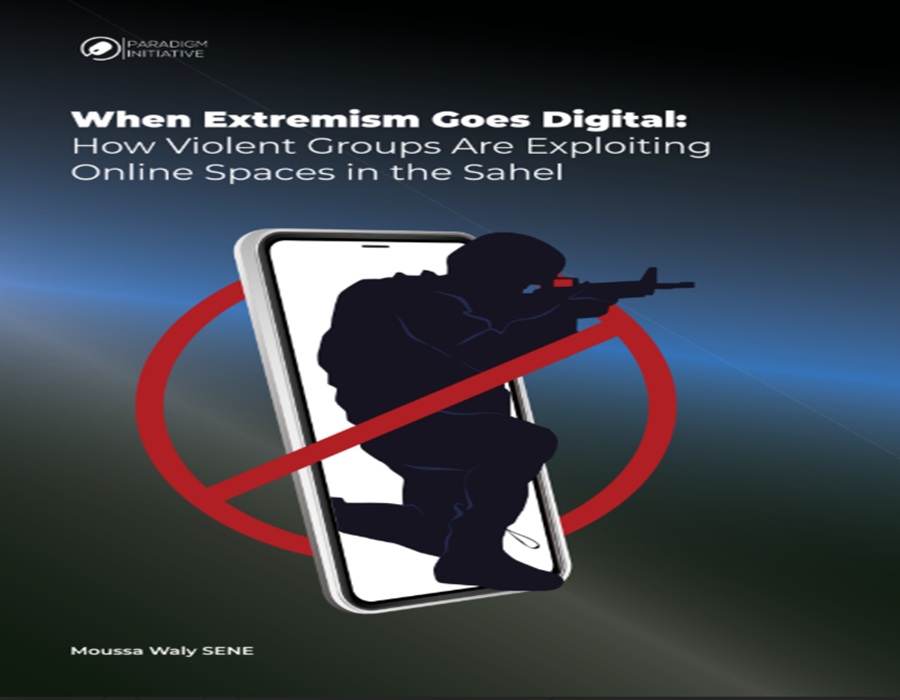
Pan-African digital rights organisation Paradigm Initiative (PIN) has warned that violent extremist groups are increasingly exploiting digital platforms to recruit, radicalise and manipulate young people across the Sahel region.

The organisation raised the concern in a new policy brief titled “Digital Frontlines: Countering Online Radicalisation and Violent Extremist Narratives in the Sahel.”
According to the publication, extremist groups are shifting from traditional recruitment methods to digital platforms, including social media, encrypted messaging applications, short-form video platforms and online financial incentives, to target vulnerable populations.
PIN noted that unemployed youths and people facing insecurity and limited economic opportunities are particularly susceptible to online recruitment campaigns.
The organisation said that although governments have intensified efforts to combat violent extremism, responses to the digital dimension of the threat have failed to keep pace with rapidly evolving online tactics.
It argued that addressing online radicalisation requires more than surveillance and restrictive measures, recommending investments in digital literacy, stronger community resilience, improved early-warning systems and credible counter-narratives.
PIN also urged governments to work closely with technology companies and civil society organisations to disrupt extremist recruitment while protecting citizens’ digital rights.
The report further highlighted the growing convergence between organised crime and violent extremist groups, noting that online propaganda increasingly promises financial rewards, belonging and purpose to vulnerable young people.
According to the organisation, this trend underscores the need for policymakers to prioritise prevention alongside conventional security responses.
Speaking on the findings, Moussa Waly SENE, Programmes Officer for Francophone Africa at Paradigm Initiative, described the digital space as a new frontline in the fight against violent extremism.
“As more young Africans come online, stakeholders must ensure that digital platforms remain spaces for opportunity, innovation and civic participation, not recruitment grounds for violent extremist groups. Protecting digital rights and protecting vulnerable communities should be mutually reinforcing objectives,” he said.
Among its recommendations, the policy brief called for stronger regional cooperation to tackle cross-border online extremist networks, rights-respecting content moderation and greater accountability by digital platforms.
It also advocated expanded digital literacy programmes to strengthen resilience against online manipulation and community-led initiatives that empower young people to identify and reject extremist narratives.
The organisation further urged policymakers to develop security measures that balance national security objectives with the protection of privacy, freedom of expression and access to information.
E-Business
Kaspersky Reveals a New Malicious Framework Targeting Cryptocurrency Users with the Use of OkoSpyware


At its recent annual Cyber Security Weekend for the Middle East, Turkiye and Africa (META) region, Kaspersky Global Research and Analysis Team (GReAT) shared insights about the new OkoBot campaign targeting cryptocurrency users.

The new sophisticated framework employs TookPS to exfiltrate seed phrases and uses a new OkoSpyware module to monitor Chromium-based browsers and deploy various malware strains, including the Rilide stealer.
It has already targeted hundreds of victims across over 25 countries, with the highest number of affected end users recorded in Brazil, Vietnam, Canada, Mexico and Turkiye. According to Kaspersky experts, the threat remains active and primarily poses a risk to cryptocurrency users.
In January 2026, experts from the Kaspersky Global Research and Analysis Team (GReAT) identified multiple attacks involving a previously unknown malware capable of capturing the contents of cryptocurrency wallet windows. Dubbed Okobot, the new sophisticated malware framework comprises more than 20 malicious payloads and implants designed to perform a wide range of functions, including collecting local files, executing remote commands, downloading arbitrary browser extensions, stealing cryptocurrency wallets, harvesting seed phrases and credentials, recording video and carrying out other malicious activities.
One of the new implants used in the campaign is a loader that modifies browser memory to load and hide malicious extensions. OkoBot also includes a new OkoSpyware module, which captures keystrokes and the video stream of a target application’s window.
Currently available information does not allow the campaign to be attributed to any known crimeware actor with high confidence. However, the techniques and infostealer involved are widely used by Russian-speaking threat actors, and technical analysis has also revealed code artifacts in Russian.
The initial infection typically occurs through two main vectors: ClickFix attacks, in which threat actors use social engineering to trick users into running malicious code, and malware distributed via GitHub under the guise of legitimate software. During the investigation, researchers identified one such case involving a fake installer for SQL Server Management Studio (SSMS), a widely used Microsoft database management tool.
The malicious framework includes SeedHunter, a malware component that monitors active system processes and injects an implant into Trezor Suite, Ledger Wallet, and Ledger Live, – official applications used to manage cryptocurrency assets. When it detects a connected Trezor or Ledger hardware wallet, it triggers the hooked functions to display a hard-coded phishing page aimed at stealing the user’s seed phrase, using a distinct layout for each wallet type.
“The OkoBot campaign has been active for more than a year and remained ongoing as of July 2026. The observed infection vectors strongly suggest that developers are among its primary targets. Of particular concern is the malware’s continued evolution, which indicates that the framework is being actively maintained. As distribution efforts persist, the campaign has the potential to reach more users and expand into additional countries in the near term,” says Dmitry Galov, Head of the Russia and CIS unit at Kaspersky Global Research and Analysis Team.

Afri Invoice, one of Nigeria’s leading accredited e-invoicing service providers, has announced plans to recruit more than 100 professionals nationwide to strengthen support for the Nigeria Revenue Service’s (NRS) mandatory e-invoicing compliance programme.

The recruitment campaign, is aimed at expanding the company’s workforce to meet the growing demand for digital tax infrastructure and help businesses transition smoothly to the country’s evolving e-invoicing regime.
According to the company, the new positions will be spread across Nigeria’s six geopolitical zones to ensure businesses receive timely, localised support as they adapt to the new tax compliance framework.
The vacancies cut across several key departments, including Information Technology (IT), Marketing and Digital Marketing, Audit, Legal, Human Resources and multi-site office operations.
Afri Invoice said applicants are expected to possess relevant professional experience, particularly in managing operations across multiple locations and supporting organisational growth.
The company explained that the latest recruitment drive builds on a similar exercise conducted last year, which significantly expanded its operational reach and increased its capacity to onboard clients nationwide.
With the NRS intensifying the implementation of mandatory e-invoicing, Afri Invoice said it is investing in additional manpower to ensure uninterrupted service delivery, efficient client onboarding and expert technical support for businesses of all sizes.
Speaking on the expansion, the Founder and Chief Executive Officer of Afri Invoice, Mark Odenore, said the company remains committed to helping Nigerian businesses comply with the new tax regulations through innovative technology and professional support.
“As the national drive toward comprehensive e-invoicing gathers momentum under the Nigeria Revenue Service, our mission is to ensure that Nigerian businesses have a reliable, accredited partner to navigate this transition effortlessly,” Odenore said.
He added that recruiting more than 100 professionals across the country’s geopolitical zones would significantly strengthen the company’s ability to provide quality technology solutions and customer support nationwide.
Interested and qualified candidates have been encouraged to submit their applications through Afri Invoice’s official careers portal.
Afri Invoice is an accredited e-invoicing service provider that offers digital solutions designed to simplify financial processes, improve tax transparency and support businesses in complying with national tax regulations while enhancing supply chain and financial management.

ITUC-Africa Faults FG’s Plans to Remove Electricity Subsidy

SEC Begins Full e-Registration for Capital Market Services

NAICOM Revokes Nigeria Reinsurance’s Licence over Failure to Meet MCR

Many Nigerian Airlines May Collapse within 30 Days – Onyema

Ogbaga, Abuja Lawyer to Sue Telcos, DStv over Alleged Unfair Practices

NRC, Ponzi Scheme Collapses Resulting Loss of Billions of Naira

From Scarcity to Scale: What Africa Can Learn from India’s Agricultural Transformation

EFCC Busts NIS Visa Overstay Racket, Uncovers N700m in an Account

BON Establishes Six Ad Hoc Committees to Modernize Broadcasting

How EFCC Turned Recovered Loot Into School Supplies for Thousands of Nigerian Students




 E-Business2 days ago
Kaspersky Identifies Cyberespionage as a Growing Threat Across Africa, Others

 Broadcasting2 days ago
NBC Files Fresh Appeal against Judgment Barring it from Imposing Fines on Broadcast Stations

 News2 days ago
INTERPOL Report Shows AI Powers 55% of Cybercrimes in Africa Amid $484m Losses

 Telecom2 days ago
Why Strong Institutions Remain Africa’s True Growth Engine

 E-Financial2 days ago
Nigerians Lost N25.85Bn to Digital Payment Fraud in 2025 –CBN

 General News2 days ago
ASUS and Konga Unveil West Africa’s First Flagship Experience Store in Lagos

 News2 days ago
Nigeria Expands Deep-tech Skills Pipeline

 E-Financial2 days ago
NRS Announces 30 Percent Tax on Corporate Crypto Income