

E-Financial
Ericsson ConsumerLab Report Shows 63% Sub-Sahara Africans Are Unbanked


Ericsson ConsumerLab’s study of five countries in Sub-Saharan Africa (SSA) reveals that 63% of the population are unbanked, and 52% use mobile money through agents.
According to populationpyramid.net, Sub-Saharan Africa’s population as at 2015 was 962.286.000.
Similarly, the United Nations (UN) predicts for the region a population between 1.5 and 2 billion by 2050 with a population density of 80 per km2 compared to 170 for Western Europe, 140 for Asia and 30 for the Americas.
But, Ericsson’s latest findings show that 20% of the SSA population uses mobile money services on a mobile phone, and half of these people are unbanked.
Even as mobile money services become part of daily life for millions in Sub-Saharan Africa, many potential customers face basic barriers to accessing the services on their own mobile phones. Lack of awareness and basic prerequisites, and low appreciation of the benefits are some of the hurdles.
More than half of consumers in Sub-Saharan Africa are using mobile money services through an agent, and some 20 percent use mobile money themselves on a mobile phone.

However, among the lower socioeconomic groups, four out of 10 people do not meet the basic requirements for independent access – such as a valid form of ID or ownership of a mobile phone.
Others simply do not know about the services or consider mobile money unnecessary or too complicated, according to the new report, Financial Services for Everyone, from Ericsson ConsumerLab.
However, the report presents insights from a sample of 6,215 respondents aged 17-59, representing 150 million people across five countries: Angola, Democratic Republic of Congo, Ghana, Nigeria, and Uganda.
According to the findings, 63% of adults in the region have no bank account.
Patrik Hedlund, senior advisor, Ericsson ConsumerLab, said that for this large, unbanked proportion of society, cash is the predominant way of receiving and making payments, as well as saving and borrowing.
Yet, since more people have mobile phones than bank accounts, mobile financial services offer a stepping stone to financial inclusion.
According to the report, consumers find cash easy to use, but the study shows that they also recognize the risk of theft and loss.
“Consumers have to make long journeys to reach the location where they can pay their bills,” Hedlund said. “Saving money and taking loans also becomes problematic in unbanked Africa, with many hiding cash in their homes and relying on informal lenders who charge high interest rates. So, mobile money is really beneficial to them – if they can use it.”
The barriers to adoption of mobile money are basic.
“Lower income people and the unbanked are the ones who are least involved in the formal financial system, due to factors such as distance to banks, education, and the inability to authenticate their identity,” Hedlund says.
Many turn to agents to access mobile money services. The report states that 52 percent of the total population uses mobile money through agents, who help with registration and transactions such as cash-in and cash-out.
Agents also play a role in driving demand for self-sufficiency.
Of the 20% who use mobile money themselves on their own phones, one in four were encouraged by an agent to start using the services independently.
The survey data was collected in July and October 2015 and compiled during face-to-face interviews, each lasting 40 minutes.
Interviews were also conducted with experts from the World Bank’s Consultative Group to Assist the Poor (CGAP) and the Bill & Melinda Gates Foundation.



PalmPay, one of Africa’s leading digital financial services companies, is considering a listing on the Hong Kong Stock Exchange after attaining a valuation of more than one billion dollars, according to a Bloomberg report.

PalmPay
The report, citing sources familiar with the matter, said the fintech company was also seeking to raise between 150 million dollars and 200 million dollars in fresh funding ahead of a potential Initial Public Offering (IPO).
According to the sources, the additional capital is expected to support PalmPay’s next phase of expansion across Africa and selected Asian markets.
If completed, the IPO would rank among the most significant public market debuts by an African fintech company and could encourage other technology firms on the continent to explore listings beyond the traditional financial centres of London and New York.
Founded in 2019, PalmPay has emerged as one of Africa’s fastest-growing consumer fintech platforms, providing digital payments, money transfers, savings, lending and merchant payment solutions.
The company has established its strongest market presence in Nigeria while expanding operations into Ghana, Tanzania and Bangladesh as part of its international growth strategy.
PalmPay says it currently serves more than 35 million registered users and supports over one million businesses and merchants, processing millions of transactions daily.
Its rapid growth has positioned it among Africa’s leading fintech firms, alongside companies such as Flutterwave, Moniepoint, OPay, Wave and Onafriq.
Unlike many technology startups that have prioritised rapid customer acquisition over profitability, PalmPay reportedly achieved profitability in 2025, a development analysts say could enhance investor confidence as the company prepares for another fundraising round and an eventual stock market listing.
The report noted that Hong Kong could offer strategic advantages for PalmPay due to its strong commercial ties with Asian investors and the company’s growing presence in emerging Asian markets.
PalmPay’s early investors include Transsion Holdings, the maker of the Tecno, Infinix and itel smartphone brands, as well as investors linked to NetEase and MediaTek.
Industry analysts believe these long-standing relationships could make Hong Kong a natural destination for PalmPay’s public listing while broadening access to investors already familiar with its business model.
The company’s IPO plans come as venture capital investment in African startups has slowed considerably since the record funding years of 2021 and 2022, prompting many technology firms to focus on profitability, stronger balance sheets and sustainable long-term growth.
Against that backdrop, PalmPay’s proposed fundraising and listing are expected to serve as an important test of international investor appetite for profitable African fintech companies.
The company’s valuation also underscores the resilience of Africa’s digital payments sector, driven by rising smartphone adoption, expanding internet access and increasing demand for cashless transactions across the continent.
Although PalmPay has yet to make a final decision on either the fundraising or the IPO timetable, the reported preparations indicate that the company is positioning itself for its next phase of growth.
Industry observers say a successful Hong Kong listing could provide fresh momentum for Africa’s technology sector and create an alternative pathway for high-growth startups seeking access to global capital markets.

Hackers have hit the database of Zenith Bank, one of Nigeria’s largest financial institutions, stealing customers’ information.
Zenith confirmed the attack in an email to customers on Tuesday.
The bank said the hackers accessed limited customer information, “including email addresses and phone numbers, during a cyberattack that forms part of a broader global attack on organisations across different sectors”.
The lender stressed that the incident involved only limited customer information, adding that its banking services and digital channels remain secure and fully operational.
The bank said it is investigating the attack, noting that its incident response protocols and other cybersecurity measures were immediately activated after the breach was discovered.
“As a precaution, we encourage our customers to remain vigilant against phishing emails, text messages, or phone calls, and to never disclose their password, PIN, One-Time Password (OTP), or other security credentials to anyone,” the bank said.
Zenith Bank said it remains committed to protecting customers’ information and thanked them for their continued trust, adding that investigations into the incident are ongoing.
In August 2024, Guaranty Trust Bank (GTB) reported experiencing a similar incident.
The commercial bank said there were attempts to compromise its website domain, but customers’ data was not affected.
The latest attack comes months after the Central Bank of Nigeria (CBN) warned the public of cyber hack attempts to gain access to personal accounts of Nigerians.
The CBN said the hackers were circulating fraudulent messages and emails falsely claiming to originate from the bank.
According to the financial regulator, there were misleading messages circulating, designed to deceive Nigerians and compromise their personal information.
The regulator said the fake communications, which include emails and online messages, often prompt recipients to click suspicious links while spreading false claims about the bank’s leadership, licensing activities, and policy decisions.

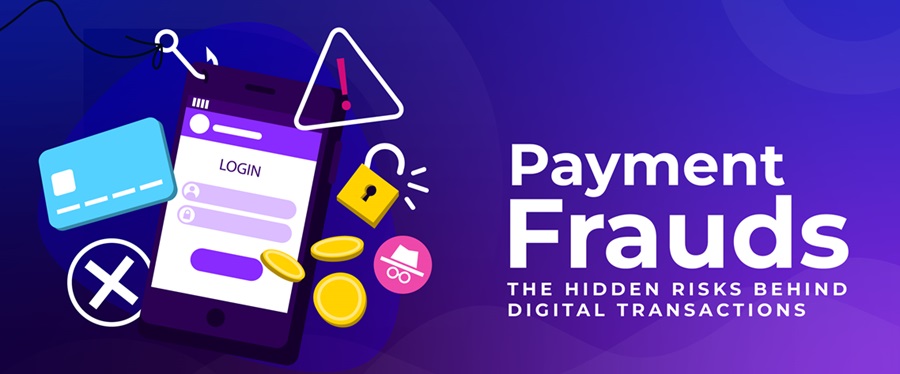
Nigerians lost N25.85 billion to digital payment fraud in 2025, according to Central Bank of Nigeria (CBN).

Though the figure represents a significant decline from the N52.26 billion recorded in 2024, CBN, said the losses remained substantial for payment service providers (PSPs).
According to the report, although the value of digital payment fraud declined significantly year-on-year, when compared to the N52.26 billion recorded in the previous year, the losses remained substantial for Payment Service Providers (PSPs), underscoring the need for stronger fraud prevention measures across the industry.
In the report, the CBN, also identified systemic risks, cyber threats, the dominance of a few systemically important payment service providers, and the activities of unlicensed payment companies as major concerns confronting the financial sector.
According to the report, although the value of digital payment fraud declined significantly year-on-year, the losses remained substantial for Payment Service Providers (PSPs), underscoring the need for stronger fraud prevention measures across the industry.
“Digital payment fraud in Nigeria stood at N25.85 billion in 2025,” the apex bank said.
It noted that while this represented a considerable improvement from the N52.26 billion lost in 2024, the amount remained significant.
“Though this was lower than N52.26 billion in the preceding year, it represented a substantial loss for PSPs,” the report stated.
The CBN attributed the reduction in fraud losses to enhanced security measures implemented across the financial sector.
It said, “The lower losses in 2025 reflected improvements in monitoring, BVN-NIN integration, and tighter controls.”
Beyond fraud, the report warned that Nigeria’s rapidly expanding digital payments landscape faces increasing systemic vulnerabilities as banks and fintech companies become more interconnected through shared payment infrastructure.
According to the report, a major operational failure involving a single payment service provider could quickly spread across the financial system because of the growing dependence on integrated payment platforms.
The CBN observed that despite ongoing efforts to strengthen payment system integration, interoperability remains a significant challenge.
It disclosed that about half of fintech stakeholders continued to express dissatisfaction with the current level of system-wide interoperability.
The report stated that “about 50.00 per cent of fintech stakeholders continued to rate system-wide interoperability as poor, primarily due to the lack of universal APIs and data-sharing standards.”
The apex bank also expressed concern over the concentration of payment activities among a few Systemically Important Payment Service (SIPS) providers, warning that operational failures involving any of them could have widespread consequences.
It explained that the failure of such providers could trigger a “domino effect”, where insolvency or operational glitches in one payment service provider spread rapidly to others, disrupting the smooth functioning of the financial system.
Cybersecurity also featured prominently among the risks identified in the report.
The CBN warned that payment service providers remain vulnerable to ransomware attacks, data breaches and credential theft, noting that cybercriminals are becoming increasingly sophisticated in targeting financial institutions.
According to the report, “Banking and fintech institutions remained prime targets for ransomware, data leaks, and credential theft.”
It added that, “Cyber threats in Nigeria are no longer random cybercrimes, but increasingly targeted, organised, and identity-driven campaigns.”
The report further cautioned Nigerians against transacting with unlicensed payment companies, stressing that such entities operate outside regulatory oversight and expose users to significant financial risks.
It warned that customers using unlicensed PSPs are not protected by existing regulatory safeguards and that such operators could facilitate illicit financial activities.
“Users of unlicensed PSPs are not covered by regulatory protection that comes with effective oversight and supervision,” the CBN said.
It further warned that, “Unlicenced payment companies are gateways for money laundering which could undermine regulatory efforts and corrode public trust.”
The report underscores the growing importance of strengthening fraud detection systems, improving payment infrastructure interoperability, enhancing cybersecurity resilience, and intensifying regulatory oversight as Nigeria continues to expand its digital payments ecosystem.

Dimension Data to Channel Funds to Support Nigerian Fibre Expansion

FG Commences 90,000km Fibre Optic Rollout within Weeks

Kaspersky Reveals a New Malicious Framework Targeting Cryptocurrency Users with the Use of OkoSpyware

PalmPay Targets Hong Kong IPO after $1Bn Valuation

NITDA Sets New Standards for Cloud Infrastructure with National Sovereignty Initiative

NRC, Ponzi Scheme Collapses Resulting Loss of Billions of Naira

From Scarcity to Scale: What Africa Can Learn from India’s Agricultural Transformation

EFCC Busts NIS Visa Overstay Racket, Uncovers N700m in an Account

BON Establishes Six Ad Hoc Committees to Modernize Broadcasting

NELFUND Investigates 34 Universities Over Students’ Missing Tuition Refunds




 News2 days ago
Atte, Nigerian Develops AI Algorithm for Hair Transplants

 News2 days ago
FG to Abolish Subsidies in Power Sector in 2027 – Minister

 E-Financial2 days ago
CBN Exposes over 13,000 BVNs Tied to Fraud as Banks Tighten Security

 E-Financial2 days ago
FCT Court Awards Ex-Customers N15m against Stanbic IBTC over Data Privacy Breach

 Telecom2 days ago
Starbase Technologies Introduces Yolly, a Reward-Based Social Entertainment Platform

 General News2 days ago
Dare Tackles Onaiyekan over Criticism of Tinubu, Says Economic is Working

 General News2 days ago
SERAP Asks Tinubu to Probe Alleged N6.79Bn Missing Police Funds, Firearms

 E-Business1 day ago
Kaspersky Identifies Cyberespionage as a Growing Threat Across Africa, Others