

Telecom
Nigeria Still Haven for Telecom Investors- Danbatta

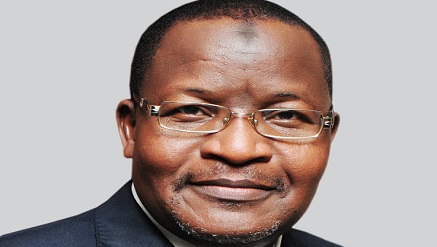
With over 107 percent teledensity for voice segment of telecommunications services already achieved in Nigeria, Prof. Umar Garba Danbatta, executive vice chairman (EVC) and CEO, Nigerian Communications Commission (NCC) recently assured International and potential investors that Nigeria remains a sure haven for ICT investments.
Danbatta spoke during a panel discussion in Barcelona, Spain, on the topic “is closing the digital divide in Sub-Saharan Africa myth or reality”.
He assured the International Community that the NCC’s eight-point agenda has been carefully packaged to cushion all aspects of investments, especially “as we move to the next frontier of ICT revolution – broadband for internet connectivity”
The panel discussion was a part of the Regional summit for Sub-Saharan Africa at the just concluded, Mobile World congress (MWC) by GSM Association, in Barcelona, Spain.
Danbatta told the panel which was moderated by Nigeria’s Shola Taylor who is also the Secretary General of the Commonwealth Telecommunications Organisation (CTO) that the NCC has put in place the agenda to encourage investors. “Two of the prominent goals are related to deployment of infrastructure for broadband and efficient utilization of Spectrum to benefit all Nigerians in all the regions”

He told the audience which included Secretary General of African Telecommunications Union (ATU), Mr. Abdoukarim Soumaila, Deputy Minister, Telecoms and Postal Services for South Africa, Prof. (Ms) Nlengiwe Mkhize, Meg. Charles-Horn (Africa mobile Networks), Shiletsi Makhofane (Ericsson Sub-saharan Africa), Mr. Mortimer Hope, Director Africa for GSMA, Alan Marcus (World Economic Forum) and Nkateko Nyoka of Vodacom Group among others, that the NCC will keep fate with the National Broadband Plans and in line with this, the country now has seven zones and each zone will have one operator which will deploy broadband services to every part of that zone.
So far, two infrastructure licences have been issued for Lagos and North Central Zones including the Federal Capital Territory, Abuja and the process for issuing licenses for the other five zones has begun.
Danbatta assured that “the regulatory framework has been put in place to ensure a transparent licensing process because we really want to bridge the digital divide”.
“We want to bridge the digital divide by addressing infrastructure divide and we will be transparent and open about this, Danbatta further submitted.
Earlier in his presentation, Soumaila bemoaned the general poor connectivity of African continent despite huge investments so far by the 46-member Nations of ATU.
Nkateko Nyoka, chief officer, Regulatory Affairs, Vodacom, said to bridge the digital divide, emphasis has shifted from voice to data and “we need skills to run sustainable businesses”. He advised regulators to make clear goals in terms of Spectrum allocation”.
For Shiletsi Makhafane, head, Government and Industry Relations, Ericsson Sub-Saharan Africa, despite the seeming digital divide, there are more mobile phones than TV sets but admitted that “we can reach more people through mobile broadband”
Meg Charles-Horn of Africa Mobile Networks, said adequate connectivity is the only way to bridge the digital divide and “we want to galvanize the opportunity for everyone to have connectivity hence our partnership with the operators across Africa”.
Alan Marcus explained that the digital divide is everyone’s problem and it is not exclusive to Africa.
On the South African experience, Prof. Mkhize told the audience that internet provides GDP growth and has helped to connect remote communities that have been cut off by the outlawed apartheid regime of the past.
“Mobile technology has brought the people together and this has transformed the social and economic activities across the country”.


Clydestone Ghana Plc has filed a writ of summons and statement of claim against MTN Ghana, MTN Group Limited and Mobile Money Fintech Limited, alleging unauthorized use of its intellectual property.

The company announced the court action at the Ghana Stock Exchange, confirming proceedings in the Commercial Division of the High Court of Ghana.
The case relates to work commissioned in 2007 that Clydestone alleges was later used without authorisation or compensation.
Clydestone said the claim involves proprietary intellectual property, confidential commercial information and operational methodology developed during the engagement. The company is seeking declarations, damages and equitable remedies.
In a statement, Clydestone said MTN Ghana engaged it in 2007 to develop a commercial and operational framework for a mobile money business.
“The work was developed and delivered by the company’s founder and Group CEO, Paul Jacquaye, and included a full mobile money ecosystem covering the commercial model, operational architecture, implementation methodology and business case.”
Clydestone said the work was commissioned on the understanding that a non-disclosure agreement and memorandum of understanding would be signed.
It alleges these agreements were not finalised despite repeated requests.
The company further alleges MTN Ghana later used its proprietary work and methodology without authorisation or compensation, including in MTN Mobile Money Ghana and other markets.
Clydestone said the alleged use has continued since the launch of MTN Mobile Money Ghana in 2009.
“The wrongful use of that work has been ongoing since 2009. What has changed is the availability of independently verifiable information that documents its scale and commercial significance,” the company said.
It cited the GSMA State of the Industry Report on Mobile Money 2026 and MTN Ghana’s 2025 annual report as evidence of the platform’s scale.
According to Clydestone, the reports show approximately 19.3 million active users and annual revenue of about GHS 6.0 billion ($516m).
The company said it reviewed its records following these publications and concluded there were sufficient grounds to initiate legal proceedings.
It added that it has received no payment or acknowledgement for the work since December 2007, and that pre-action correspondence in 2026 received no substantive response.
“The Board of Directors has unanimously authorised the commencement of these proceedings,” the company said.
Jacquaye said: “This case is about accountability for commissioned intellectual property.
“When independent publications in 2025 and 2026 revealed the scale of the mobile money business, we reviewed all documentation relating to the original engagement and concluded these proceedings were necessary.”
MTN Group Limited, named as a defendant, had not commented at the time of publication.

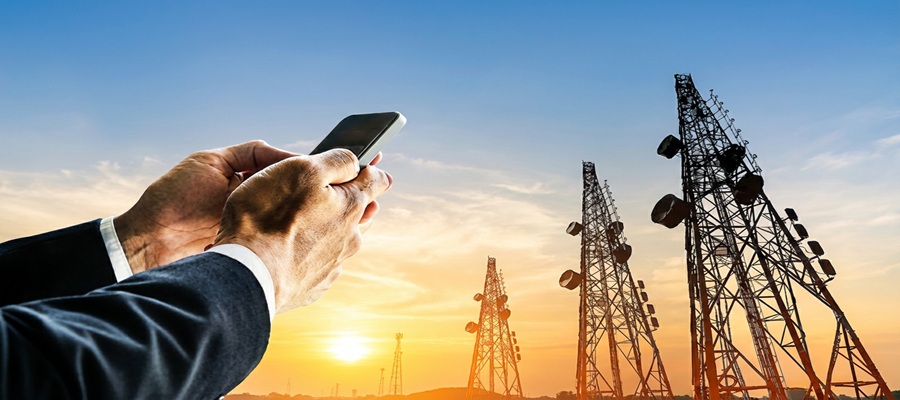
In a development that underscores the fragile state of Nigeria’s telecommunications grid, an incident of infrastructure vandalism in Delta State has severely disrupted network connectivity, leaving thousands of subscribers stranded.

The breach, where a robber attacked the sites, occurred at an IHS-managed telecom node in the ASB region on July 8, 2026, immediately knocking 33 base stations offline across 2G, 3G, and 4G spectrums.
The situation in the region escalated drastically by morning when a separate fibre-optic cable cut severed primary transmission lines. Because the compromised node serves as a critical fibre convergence point, the secondary fibre cut triggered a cascading failure.
This secondary disruption ballooned the number of dark sites from 33 to 103, temporarily paralysing digital communications, banking, and commerce in the affected communities.
Industry sources reveal that the financial and logistical toll of such incidents is becoming unsustainable for Mobile Network Operators (MNOs).
Currently, network providers are utilising 20 per cent more spare parts than initially budgeted for the fiscal year.
This unpredictable depletion of technical reserves has stripped operators of their supply buffers, making inventory management and financial forecasting increasingly difficult for telecom executives.
Consequently, engineering teams have been forced to cannibalise materials originally designated for network expansion and new site rollouts just to perform emergency restorations on the damaged sites.
This diversion of resources significantly delays the rollout of new infrastructure, stifling the nation’s broader broadband penetration targets and stalling anticipated revenue generation for the telecom companies.
The Nigerian Communications Commission (NCC) recently noted an average of 1,744 weekly attacks on telecom infrastructure nationwide, including over 1,100 fibre cuts.
As operators endure protracted back-and-forth negotiations with insurance firms to cover these sudden hardware losses, stakeholders are intensifying calls for the strict enforcement of the Federal Government’s recent designation of telecom assets as Critical National Information Infrastructure (CNII) to safeguard Quality of Service (QoS).

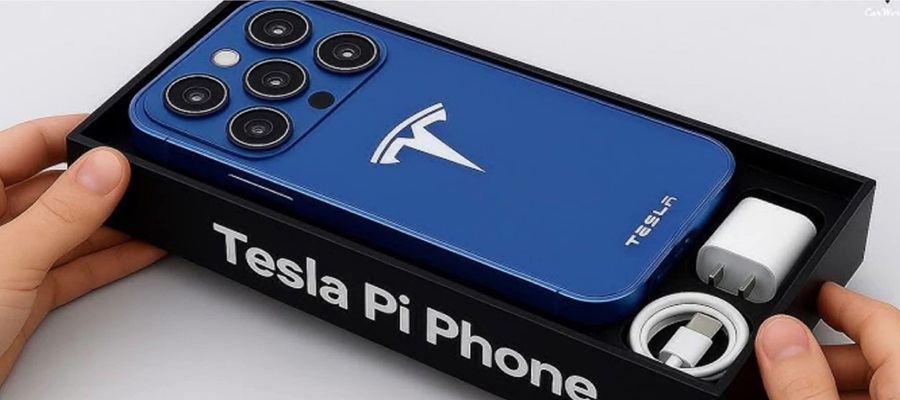
Viral rumors about a “Tesla Pi Phone” a new phone, being developed by Elon Musk, CEO and largest shareholder of Tesla and SpaceX, are entirely fake.

AI Generated Tesla Pi Phone and Elon Musk
Instead, the tech giant said on Monday it has filed an application with the US Federal Communications Commission for permission to deploy the constellation by 2028.
It said the system would provide voice, messaging, data and emergency services.
A quick fact-check revealed that Tesla Inc. has never manufactured, developed, or released a smartphone.
Videos and articles claiming a release (often priced between $150 and $800 with solar charging or satellite-only connections) rely on AI-generated concept art and recycled internet hoaxes dating back to 2021.
Musk has only mentioned a phone in hypothetical remarks, stating Tesla would build one only if major app stores completely blocked or censored essential apps like X (formerly Twitter).
On Monday however, his company said that “Amazon looks forward to delivering on the promise of D2D [direct-to-device] connectivity, including to the millions of people living, travelling and working in places beyond the reach of existing networks today,”
The filing is the first step from Amazon into satellite mobile connections, which has until now been dominated by SpaceX’s Starlink service.
Musk’s group has signed partnerships with existing operators such as T-Mobile US and the UK’s Virgin Media O2 to provide phone services for customers where their conventional networks do not reach.
Starlink operates across more than 150 countries, offering high-speed internet connections through its constellation of satellites.

Nwokolo, Nollywood Actor Claims Internet Fraud is “Keeping Economy Afloat’

SEC Begins Full e-Registration for Capital Market Operators

Elon Musk Launches Invite-only X Money with Visa Debit Card

CBN Fines Banks N430m for Ignoring Customers’ Complaints

Kaspersky Uncovers New Mirage Kitten Malware Used in Cyber-espionage Campaign Across Africa, Others

NRC, Ponzi Scheme Collapses Resulting Loss of Billions of Naira

EFCC Busts NIS Visa Overstay Racket, Uncovers N700m in an Account

Tokenization, Blockchain Technology will Transform Financial Institutions – IMF

From Scarcity to Scale: What Africa Can Learn from India’s Agricultural Transformation

BON Establishes Six Ad Hoc Committees to Modernize Broadcasting




 News2 days ago
History as Lagos Becomes First Nigerian State to Launch Greenhouse Gas Registry

 E-Business2 days ago
UNN to Partner Firm on AI, Smart Mobility Innovation Centre

 Telecom2 days ago
AI Investment Gap Threatens Africa’s Future Growth

 Telecom2 days ago
AMCON Puts ntel Up for Sale, Seeks Investors

 E-Financial2 days ago
Remita Raises Alarm Over Nigeria’s Digital Divide, Calls for More Investment

 Telecom1 day ago
Fact-Check: Elon Musk’s “Tesla Pi Phone” is Internet Rumor

 Telecom2 days ago
Court Affirms NDPC’s Powers to Register Major Data Controllers, Processors

 General News2 days ago
Pan-Africanism: Why Integration is Non-Negotiable for Africa’s Future