

E-Financial
Gwarzo Reelected as Chair of IOSCO’s AMERC


Mr. Mounir Gwarzo, director general of Securities and Exchange Commission (SEC), has been unanimously re-elected to continue providing leadership to the Africa Middle East Regional Committee (AMERC) of the International Organization of Securities Commissions (IOSCO) as its chairman.
The AMERC comprises securities regulators who are IOSCO members within the Middle East and North Africa as well as sub-Saharan African regions. He would serve for another term of two years.
Mr. Gwarzo’s reelection is a clear testament to Nigeria’s growing influence and improved image in the international community, but also a strong indication of the overwhelming support he enjoys among peer regulators following a very successful first tenure.
It would be recalled that in February 2015 members of the regional body elected Mr. Gwarzo as Chairman of AMERC during their 34th annual meeting in Muscat, Oman to complete the outstanding term of his predecessor.
Upon his election, Mr. Gwarzo had outlined to members his agenda for the regional committee pledging to focus on advancing issues that improve voice, visibility and inclusiveness for African/Middle Eastern markets while working towards more cooperation, especially to boost capacity building and cooperation.
This agenda aims to tackle three major challenges facing the frontier and emerging markets within the AMERC region which are dearth of capacity, inadequate visibility and poor level of integration.
By this unanimous reelection, members have expressed desire to see Mr. Gwarzo continue to lead the Committee to keep addressing these challenges.
For example, AMERC members had for years been yearning for the inclusion of Arabic as one of the official languages of IOSCO since about 50% of the member countries within the AMERC region are Arabic-speaking nations.
Knowing that adopting Arabic will engender greater visibility and participation in IOSCO’s decision-making,
Mr. Gwarzo promised to vigorously advocate its adoption by the IOSCO Board. He persuasively argued on the importance of the systemically important Arabic-speaking member jurisdictions who regulate capital markets worth trillions of dollars in combined capitalization.
His argument has been effective as the IOSCO Board recently considered and approved the adoption of Arabic as one of its official languages, a decision that pleases countries like Saudi Arabia and the UAE but also elevates the inroads non-interest finance could begin to have on the global financial system.
In the area of capacity building, Mr. Gwarzo’s tenure has been even more remarkable. He has championed ideas within the IOSCO Board that will enhance the capacity of AMERC markets, especially tapping from their more developed counterparts in Asia, Europe and North America.
Three notable ideas are already being implemented by IOSCO and will certainly be critical to addressing capacity gaps, particularly in frontier markets within the AMERC region. They are the establishment of regional hubs, the roll out of an online toolkit and commencement of a global certificate programme.
In fact, Mr. Gwarzo was chosen by the IOSCO Board to lead the first effort by facilitating the setting up of a pilot regional hub for capacity building for the AMERC region.
The hub will be domiciled in Dubai, an internationally accessible travel destination. It will integrate a tailored program of regionally focused workshops, seminars and conferences to be delivered by experienced regulators and members of the academia.
The hub will deliver an exceptional platform for members to exchange expertise, experience and knowledge. Considering the resource limitations facing African countries, Mr. Gwarzo has advocated for scholarships within the design, sponsored by IOSCO, to subsidize the programmes so that countries are able to enhance their capacity within a modest budget.
The second idea, creating an online toolkit, aims to leverage technology to make information and knowledge sharing among regulators as seamless as possible.
It will be a rich bank of data, information and resources from which regulators can frequently tap in their day-to-day operations.
This is particularly useful for emerging market jurisdictions that require more resources to achieve capacity building tools as the toolkit comes in handy and at no cost. In addition to these efforts, Mr. Gwarzo has focused on partnering with fellow IOSCO members within sub-Saharan Africa to benefit from capacity building programmes of bigger markets such as Nigeria.
The proposed global certificate programme aims to standardize knowledge of financial markets across regions.
It is designed to be really global with equal amounts of time spent by participants in Madrid and at the prestigious Harvard University in the United States.
Again, Mr. Gwarzo is stressing the importance of awarding scholarships to less developed markets to enable them benefit from this programme, as they certainly need it most in spite of their resource constraints.
Already, a lot of work has gone into implementing these ideas and members of AMERC have made a strong statement of support to their continued implementation by re-electing Mr. Gwarzo to keep leading the efforts.
Ultimately, we should see more and more integration of the region as that is among the AMERC’s key objectives.
Prior to Mr. Gwarzo’s first election, West Africa was the least integrated capital market of all other sub-regions within AMERC. Following discussions with counterparts from Ghana and the francophone West Africa, Mr. Gwarzo hosted in Abuja, discussions which led to the establishment of the West African Securities Regulators Association (WASRA) with the signing of a Memorandum of Understanding in July 2015.
WASRA was set up to give fillip to the integration efforts already being championed by the region’s exchanges within the West African Capital Markets Integration Committee (WACMIC).
Currently, WASRA’s membership consists of the Conseil Régional de l’Épargne Publique et des Marchés Financiers which regulates securities markets in Francophone West Africa as well as the Securities and Exchange Commissions of Ghana and Nigeria.
The Association aims to accelerate the harmonization of rules and regulations that will facilitate integration.
By this reelection, Gwarzo is to serve on the Executive Committee of the highest decision making organ of IOSCO for the next two years.
The term will commence at the inaugural meeting of the new IOSCO Board during the annual meeting in 2016 in Lima, Peru which holds later in the year. His completed tenure gives a lot to cheer, especially for less-developed members of the region, and also gives a lot of room for optimism going into new tenure.



Central Bank of Nigeria (CBN) has said that the cost of issuing or replacing a standard debit or credit card will rise by 50 percent to about N1,500, up from about N1,000.

The new charge is contained in the Exposure Draft of the Guide to Charges by Banks and Other Financial Institutions in Nigeria, 2026, released by the Central Bank of Nigeria.
The draft followed a circular issued to banks, other financial institutions and the public, dated April 21, 2026, and signed by Rita I. Sike, director, Financial Policy and Regulation Department.
Under the revised guide, issuance and replacement of regular or basic debit and credit cards will attract a N1,500 fee, while charges for premium debit, credit or hybrid cards will be negotiable.
In the 2020 guide, debit card charges were fixed at N1,000 as a one-off fee for issuance, replacement of lost or damaged cards, and renewal upon expiry, applicable across all card types.
The CBN said the review is part of its mandate to promote a safe and sound financial system, accelerate the adoption of innovative financial services, and enhance financial inclusion, particularly in micropayments and transactions.
According to the regulator, the revised guide expands the range of financial services, encourages innovation, strengthens oversight and accountability, and promotes financial inclusion through lower tariffs for micropayments. It also updates certain banking charges to support increased use of electronic channels and accommodate new industry participants since the 2020 version.
The apex bank said the draft has been exposed to the public for comments and input on the proposed fees, with submissions expected via [email protected] on or before May 08, 2026.
The guide provides a framework for the application of charges, including fees and rates, on products and services offered by financial institutions in Nigeria. It applies to all institutions licensed or regulated by the Central Bank of Nigeria.
The charges, according to the regulator, were developed following extensive consultations with stakeholders and are aimed at enhancing flexibility, standardisation, transparency and competition in the financial system.
It added that where charges are designated as negotiable, financial institutions must inform customers of their right to negotiate at the start of transactions and reach mutual agreement on applicable fees through verifiable means.
Where limits are specified, charges must not exceed the prescribed maximum or fall below the minimum.
The apex bank noted that the guide is not exhaustive and that financial institutions must seek prior approval before introducing new products, services or charges not covered.
The framework applies to a wide range of institutions, including commercial banks, merchant banks, payment service banks, non-interest banks, microfinance banks, finance companies, primary mortgage banks, development finance institutions, credit guarantee companies, mobile money operators, and other institutions designated by the regulator.
In line with existing consumer protection regulations, the apex bank said non-credit charges can only be applied to the extent of the available account balance, with any outstanding fees deferred until the account is funded. Such deferred charges will not attract interest.
The guide is to be read alongside the relevant guidance notes and glossary provisions and will supersede the 2020 version when it takes effect on May 1, 2026.
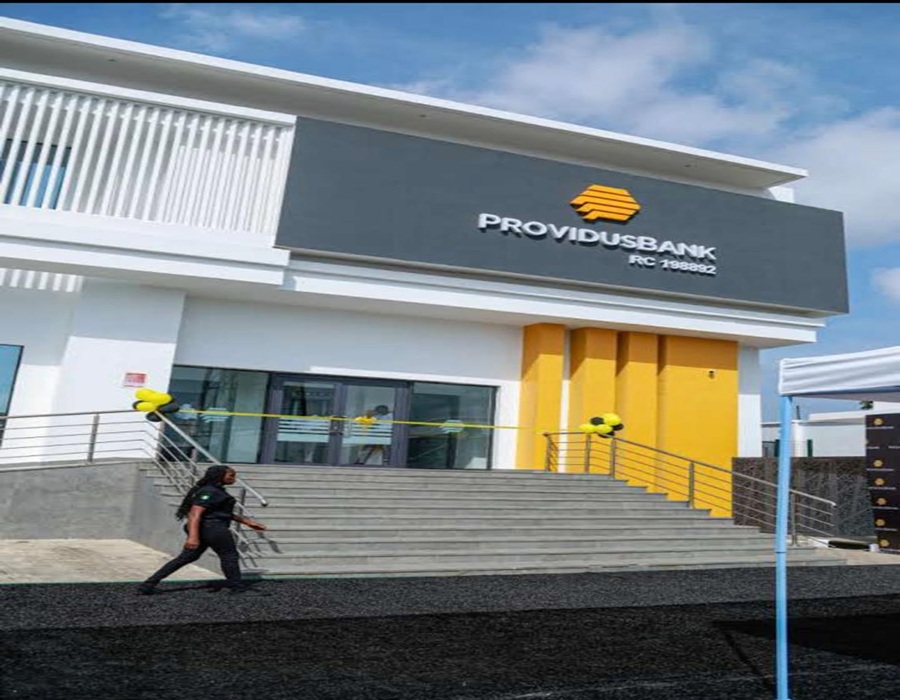
ProvidusBank Plc has commissioned a new branch in Ado-Ekiti, advancing its expansion strategy across Nigeria’s high-growth markets while leveraging its compliance with the Central Bank of Nigeria’s (CBN) recapitalisation directive since January 2025.

ProvidusBank
The move aims to enhance financial inclusion, support local enterprises, and deliver banking services closer to communities and businesses.
At the event, Executive Director/Chief Financial Officer, Deoye Ojuroye, described the rollout as part of a 12-month plan to bolster the bank’s nationwide presence.
“Our approach is deliberate—we are growing in the right places, supporting real economic activity, and building a bank that is both resilient and responsive to customer needs,” Ojuroye said.
He emphasised the bank’s robust capital and risk management, stating: “We are well capitalised within our regulatory category, giving us confidence to expand responsibly while aiding businesses and communities.”
ProvidusBank plans further branches in strategic locations over the next year, underscoring its focus on scalability, accessibility, and sustainable growth as a trusted partner for individuals and enterprises.
E-Financial
Fidelity Bank Bolsters SME Growth with April Masterclass Series on Pricing, Digital Tools, Global Trade


Fidelity Bank Plc has launched a series of high-impact masterclasses in April 2026 to empower Nigerian Small and Medium Enterprises (SMEs) with practical skills for pricing, digital expansion, and international growth.

Fidelity Bank
The initiative aligns with the bank’s drive to boost SME operational efficiency and market access amid Nigeria’s economic challenges.
The flagship session, “Pricing That Works: How to Charge Right and Earn More,” took place on April 10 at the Fidelity SME Hub in Gbagada, Lagos. It drew about 100 entrepreneurs from diverse sectors, offering insights into costing, value-based pricing, pricing psychology, and customer perception to ensure profitable, customer-friendly strategies.
Buoyed by positive feedback, the bank rolled out three more sessions. The second, “Baking Masterclass: From Kitchen to Cashflow,” ran on April 14 and 15, providing hands-on training for bakers and food businesses to enhance product quality and profitability.
Divisional Head, SME Banking, Ugochi Osinigwe, stated: “At Fidelity Bank, we believe that when SMEs succeed, the economy grows. That is why we have curated masterclasses on pricing, product improvement, online sales, and global expansion to equip entrepreneurs with immediate, actionable tools.”
She highlighted the series as part of broader SME support via the Fidelity SME Hub, including advisory services, funding, and nationwide programmes. The bank recently earned the Best Retail and SME Bank Award from Independent Newspapers.
Upcoming events include “Grow Online Sales on a Budget” today, April 24, focusing on low-cost digital strategies for visibility and sales; and “Take Your Business Global: One-on-One Trade Advisory” on April 29, covering export readiness, payments, markets, and compliance.
Fidelity Bank, ranked among Nigeria’s top lenders, serves over 10 million customers via 255 branches, digital platforms, and its UK subsidiary, FidBank UK Limited. It has clinched awards like the 2024 Excellence in Digital Transformation & MSME Banking from BusinessDay BAFI Awards, Most Innovative Mobile Banking App from Global Business Outlook, Best Bank for SMEs from Euromoney, and Export Financing Bank of the Year from BusinessDay BAFI.

NCC Blames Growing Data Demand Network Quality Issues

EFCC Detains Ayeni, Ex-Skye Bank Chairman over Alleged N36.5Bn, $30m Fraud

Bank Customers to Pay N1,500 for ATM Card Issuance, Replacement – CBN

Summit Factory Opens in Ogun, Targets Hygiene Market Expansion

Kaspersky Discovers Vulnerability in Qualcomm Snapdragon Chips that can Lead to Data Loss & Device Compromise

NBC Boss Urges Content Ceators to Participate in DSO

NITDA Takes Over National Digital Architecture System

FG Shifting Focus to “Meaningful Connectivity” to Drive Inclusion – Minister

FG to Gift Nigerians over 100 Free TV Channels from May 15

Jury Finds Meta, Google Liable for Woman’s Social Media Addiction




 E-Business3 days ago
FCCPC Licenses 5 Firms for Airtime, Data Lending as Telcos Step Aside

 E-Financial3 days ago
CBN Warns of Cyber Hack Attempt Days after CAC Attack

 E-Financial3 days ago
Ecobank in Talks with Bank of China for Direct Yuan Settlement

 Telecom3 days ago
Deadline Extended! MTN Nigeria Offers More Time for Media Innovation Programme

 Telecom2 days ago
MTN to Pay Subscribers After NCC Cracks Down on Service Failures

 E-Financial2 days ago
EXPLOSIVE: How Titan Trust Bank Allegedly Used Union Bank’s Own Assets to Fund Its Takeover

 Telecom3 days ago
Payments Forum Nigeria (PAFON 3.0) Holds This Friday in Lagos

 E-Business3 days ago
Government, Industrial Sectors became the Primary Targets for Cybercriminals in 2025 – Report