

Telecom
Confusion over MTN’s Payment Of N50Bn Fine to FG

There was a mild drama yesterday when Adebayo Shittu, minister of Communication Technology, distanced the ministry from the negotiation deal which culminated in the payment of N50bn by MTN Nigeria Limited instead of N1.04trn fine imposed on the telecommunications giant by the Nigerian Communications Commission (NCC) for SIM deactivation defaults.
According to Leadership, Abubakar Malami (SAN), minister of Justice and Attorney-General of the Federation, also denied entering any agreement so far with MTN over the fine.
The revelations were made yesterday before the House of Representatives Standing Committee on Telecommunications on the heels of the payment of N50bn by MTN to the Federal Government as against as the actual fine imposed on it by the NCC.
The Committee had summoned both ministers, Prof. Garba Dambatta, executive vice chairman of NCC, and the chief executive officer of MTN over the circumstances surrounding the payment of N50bn by MTN and an alleged offensive letter earlier written to the lawmakers by the MTN CEO.
But the MTN CEO earlier apologised to the committee members and consequently withdrawn the letter as demanded by the lawmakers.
“I will like to say categorically that MTN and I takes this body in high esteem. And I apologise wholeheartedly for not attending the previous meeting. I withdraw the letter the committee is referring to. I beg for your forgiveness,” he said.
For his part, Shittu told the lawmakers that he only got to know about the matter through a letter dated February 3, 2016 addressed to him, Finance Minister and the Accountant-General of the Federation on the settlement proposal by MTN.
But Malami, also contended that his resolve to wade into the issue surrounding the out-of-court settlement was in line with the provisions of Sections 86 and 87 of the NCC Act which permits him as a key operative of the Executive arm to exercise such oversight function.
Arguing that the language of the NCC Act on violation should not be misconstrued to be committal of an offence, he said: “What has been imposed by the NCC is not a fine in the strict sense, it was a penalty and substantially certain part of the NCC Act was categorical on that. So, a penalty is different from a fine because a fine can only be imposed by a court of law after due determination of a penal case when an offence of guilt is eventually entered. So, what has been happening about the imposition of the NCC is an imposition of penalty and not a fine.
“The determination of the commission of an offence or otherwise of an offence is the discretion of a court of law. In the absence of such pronouncement of a court of law regardless of the issue at stake, one cannot jump to conclusions that an offence has been committed. So further rider to Sections 86 and 87 of the NCC Act.”
He also justified why he ordered that the N50 billion initial payment by MTN be lodged in the asset recovery account as against lodging it into the consolidated revenue account that belongs to the three tiers of government.
Insisting that he had not violated the constitution, which specifies that all government monies be paid into the consolidated revenue account, he said that the out-of-court negotiation with MTN is yet to be conclusive.
Faulting the notion that he had usurped the powers of the NCC going by the role he played on the issue, he said as far as he was concerned, there is yet to be an out of court deal with MTN.
He said: “I have never made reference to the inconclusiveness of negotiations. I stated clearly that no negotiations had taken place. They only put their positions in writing and accordingly circulated to the stakeholders.
However, Malami opted to remain silent when confronted by the lawmakers that he erred in law since Sections 88 and 89 of the constitution prescribed that monies belonging to the government should be paid into the consolidated revenue account.
This prompted the lawmakers to summon Mrs. Kemi Adeosun, minister of Finance, to appear tomorrow to shed light on the whereabouts of the N50 billion initial payment by MTN.


National Information Technology Development Agency (NITDA) has reiterated the Federal Government’s commitment to leveraging innovation, digital skills, and emerging technologies to accelerate Nigeria’s transition into a globally competitive digital economy.

NITDA
This commitment was reaffirmed at the Port Harcourt Tech Expo 2026, held at the EUI Centre, Port Harcourt, Rivers State, where NITDA participated as a key stakeholder in discussions aimed at advancing technology-driven economic growth and innovation across Nigeria.
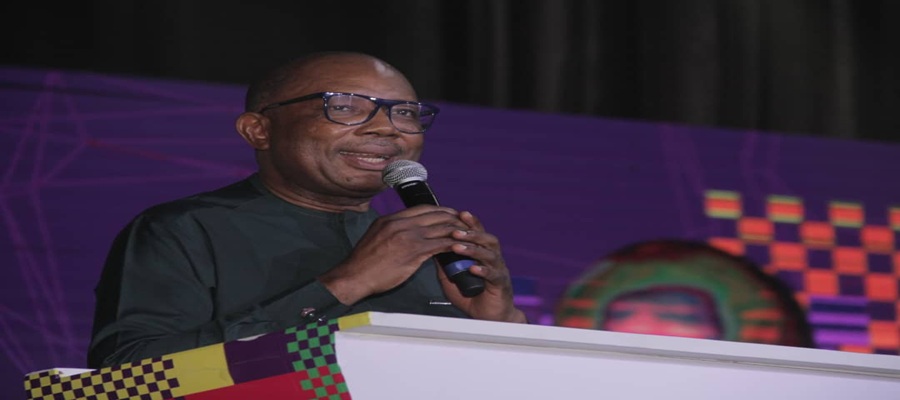
Dr. Kashifu Inuwa Abdullahi, CCIE, Director-General/Chief Executive Officer of NITDA, who is represented by the Director of Stakeholder Management and Partnerships, Dr. Aristotle Onumo, delivered the Opening Keynote Address at the two-day event themed “Syntropy: Collective Futures – Systems, Solutions, Synergy and Societies.”
Addressing policymakers, technology leaders, startup founders, investors, academics, development partners, and young innovators, Kashifu emphasized that the future of Nigeria’s prosperity would increasingly be determined by its ability to harness technology, innovation, and human capital rather than reliance on natural resources.
According to him, the global digital economy presents unprecedented opportunities for Africa and Nigeria to create jobs, attract investments, and improve productivity through emerging technologies such as Artificial Intelligence (AI), data analytics, cloud computing, cybersecurity, and digital platforms.
“The future is not something we inherit; it is something we build. Nigeria’s greatest resource is not oil but its people. Our ability to develop digital talent, foster innovation, and create enabling ecosystems will determine our competitiveness in the digital age,” he stated.
He noted that AI and digital technologies are rapidly transforming industries across the world and urged stakeholders to embrace innovation as a catalyst for economic diversification and sustainable development.
He further highlighted NITDA’s ongoing implementation of the Strategic Roadmap and Action Plan (SRAP 2.0), which focuses on digital literacy, emerging technologies, innovation, cybersecurity, digital infrastructure, and inclusive economic growth.
The keynote also underscored the need for stronger collaboration among government, industry, academia, development partners, and the startup ecosystem to unlock the immense potential of Nigeria’s youthful population.
The Port Harcourt Tech Expo brought together a broad spectrum of stakeholders to deliberate on issues relating to Artificial Intelligence, startup development, digital skills, innovation financing, technology adoption, entrepreneurship, and ecosystem growth.
Participants explored opportunities for positioning the Niger Delta as a major hub for technology, innovation, and digital entrepreneurship while discussing strategies for addressing challenges related to skills development, startup financing, infrastructure, and technology commercialization.
During the event, NITDA engaged with technology companies, startups, innovation hubs, academic institutions, and development partners on potential areas of collaboration aimed at advancing digital inclusion and innovation-led development.
The Agency also used the platform to amplify the several of its flagship initiatives, including the Digital Literacy for All (DL4ALL) programme, the National Centre for Artificial Intelligence and Robotics (NCAIR), and programmes under the Office for Nigerian Digital Innovation (ONDI).
Observers at the event commended NITDA’s leadership in driving Nigeria’s digital transformation agenda and noted the growing impact of the Agency’s interventions in supporting startups, promoting digital literacy, and strengthening the country’s innovation ecosystem.
The Expo concluded with a renewed commitment by stakeholders to deepen collaboration, support innovation, and create opportunities for young Nigerians to participate actively in the digital economy.
As Nigeria continues its digital transformation journey, NITDA reaffirmed its commitment to fostering partnerships, developing talent, enabling innovation, and creating a technology-driven economy that delivers sustainable prosperity for all citizens.
Mr Khalil Suleiman Halilu, executive vice chairman and chief executive officer of the National Agency for Science and Engineering Infrastructure (NASENI), has reaffirmed the Agency’s commitment to strengthening Nigeria’s healthcare sovereignty through local manufacturing of medical diagnostic technologies.

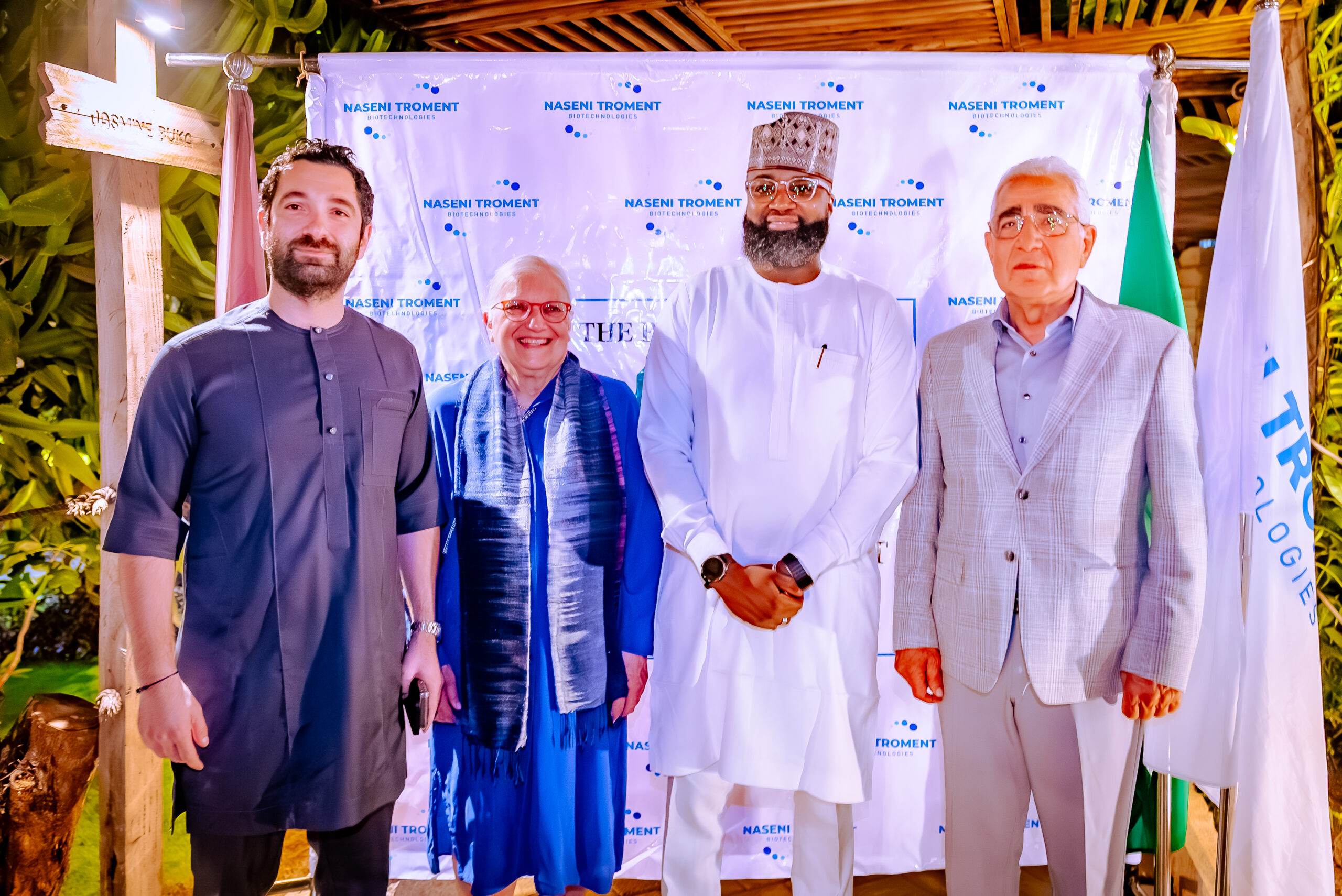
L-R: CEO/Co-Founder, NASENI-Troment Biotechnologies Limited, Dr. Selim Hani; Team Lead, Science of Defeating Malaria initiative, Professor Dyann F. Wirth; EVC/CEO of NASENI, Khalil Suleiman Halilu; and Dr. Sami Hani, Board Member, NASENI-Troment Biotecnnologies during the dinner organized for the delegates of the initiative in Abuja at the weekend.
Halilu made the remark while hosting participants of the Harvard University-led Science of Defeating Malaria programme at a closing dinner in Abuja at the weekend, following their visit to the NASENI-TROMENT Biotechnologies Factory, where they commended the facility’s role in advancing disease control and healthcare innovation in Africa.
The delegation, led by Professor Dyann F. Wirth of Harvard University and comprising about 85 global health professionals, scientists and policymakers, toured the state-of-the-art facility and described it as a significant step towards combating malaria and other infectious diseases across the continent.
Speaking at the dinner, Halilu noted that the commendation further validated the vision behind the NASENI-TROMENT Biotechnologies Factory, a strategic project initiated 18 months ago to reduce Nigeria’s dependence on imported diagnostic kits and strengthen local healthcare manufacturing capacity.
He explained that the facility is designed to produce up to 600 million diagnostic kits annually, enough to meet about 80 per cent of Nigeria’s diagnostic testing needs while creating opportunities for export to other African countries and global markets.
The factory manufactures rapid diagnostic tests (RDTs) and in-vitro diagnostic (IVD) products under the N-CheckUP brand for diseases and conditions including malaria, hepatitis B and C, HIV, typhoid, syphilis, COVID-19, pregnancy and blood glucose monitoring.
According to Halilu, the project aligns with NASENI’s broader mandate of deploying science, technology and innovation to address national challenges, create jobs and build industrial capacity.
He expressed appreciation to Professor Wirth and members of the Harvard delegation for their recognition of the progress made at the facility and reaffirmed NASENI’s commitment to developing innovative solutions that improve lives and position Nigeria as a leading healthcare manufacturing hub in Africa.
The Science of Defeating Malaria programme, which was held in Abuja from June 7 to 13, brought together global experts committed to advancing strategies for malaria elimination and strengthening public health systems worldwide.

National Information Technology Development Agency (NITDA) has entered into a strategic partnership with the Development Agenda for Western Nigeria (DAWN) Commission through the signing of a Memorandum of Understanding (MoU) aimed at accelerating digital literacy, innovation development, and economic growth across Southwest Nigeria.

Director General NITDA, Kashifu Inuwa CCIE, Director General DAWN Commission Dr Seye Oyeleye alongside representatives of both organisations, display signed copies of the Memorandum of Understanding (MoU) upon its signing at NITDA Headquarters, Abuja.
Speaking at the signing ceremony in Abuja, NITDA Director General, Kashifu Inuwa, described the agreement as a significant step toward leveraging human capital and fostering regional collaboration to drive sustainable national development.
He commended the Southwest region for its longstanding culture of cooperation, noting that collective action remains essential for national progress.
“The Southwest continues to inspire when it comes to collaboration because no one succeeds in isolation. Other regions can learn from this model of cooperation.
“For Nigeria to grow, we must understand our strengths at both the state and regional levels and build on them,” he said.
Inuwa emphasised that Nigeria’s greatest resource is its people, stressing that investments in digital skills, innovation, and technology are critical to creating prosperity and expanding economic opportunities.
According to him, the partnership will facilitate knowledge exchange, capacity building, and innovation-driven initiatives capable of empowering citizens to develop local solutions with national and global impact.
Highlighting NITDA’s ongoing efforts to deepen digital transformation nationwide, he said the Agency is scaling digital literacy programmes, supporting innovation hubs, and promoting technology development across the country.
He noted that innovation flourishes where talent, infrastructure, and supportive policies intersect, making it important for every region to identify and strengthen its comparative advantages.
“Lagos has already established itself as a fintech hub and the commercial centre of the country. Abuja is emerging as a GovTech cluster, while other regions can develop specialised ecosystems around manufacturing, commerce, and other sectors.
“Every region possesses unique strengths that can be transformed into thriving innovation clusters,” he stated.
The NITDA boss expressed optimism that the collaboration would accelerate the implementation of the Agency’s strategic initiatives throughout the Southwest.
He added that both organisations had already begun working together prior to the formalisation of the agreement and called for swift action following the signing.
“We are excited about this partnership and look forward to translating our shared vision into tangible outcomes. While engagements have already commenced, I would like to see even greater momentum after the signing of this MoU,” he added.
In his remarks, the Director General of the DAWN Commission, Seye Oyeleye, highlighted the importance of digital literacy in preparing citizens for future opportunities and ensuring meaningful participation in the digital economy.
He noted that the Commission, which coordinates development initiatives across Ekiti, Lagos, Ogun, Ondo, Osun, and Oyo States, views the partnership as a strategic vehicle for advancing Nigeria’s digital transformation agenda.
Oyeleye highlighted Nigeria’s target of equipping 100 million citizens with digital skills by 2030 through the Digital Literacy for All Initiative, stressing that the Southwest has a pivotal role to play in achieving the national objective.
“Nigeria has committed to equipping 100 million citizens with digital skills by 2030. Southwest Nigeria is not merely a contributor to that vision; it is central to its success,” he said.
He explained that the MoU formalises a shared commitment to ensuring the effective implementation of NITDA’s programmes, particularly the National Digital Literacy Framework, across the region.
He added that the Commission would leverage its extensive network and partnerships across the six Southwest states to bridge federal digital initiatives with local communities, institutions, and young people.
“We will work to ensure that NITDA’s frameworks are not only implemented but strengthened. Our reach across the Southwest positions us to connect federal digital infrastructure and programmes with communities and young people who require the skills needed to thrive in the digital economy,” he stated.
Oyeleye further assured NITDA of the Commission’s commitment to delivering measurable results throughout the five-year duration of the agreement, noting that the true value of development institutions lies in the impact they create rather than the agreements they sign.
The MoU reflects the shared determination of both organisations to advance digital literacy, strengthen innovation ecosystems, and create sustainable economic opportunities for citizens across Southwest Nigeria, further supporting the country’s journey toward a robust and inclusive digital economy.
This version improves readability, strengthens attribution, and adopts a more polished newspaper-style structure suitable for publication.

AI-Powered Cyber Threats Put Nigerian Banks on Alert

Guinea-Bissau Taps United Nigeria Airlines to Establish AIR BISSAU, National Carrier

IMF Urges FG to Introduce Fuel, Telecom Taxes

CBN to Expand eNaira for Salaries, Pensions and Welfare Payments

CSOs Raise Alarm over Nigeria’s Data Protection Crisis

CBN Extends PoS Geo-Fencing Enforcement Deadline to August 2026

NCC Drafts New Rules for Virtual Mobile Operators

TD Africa, HPE Drive Conversations on the Future of Intelligent Networking

Anthropic Raises $65 Bn to Expand AI Research, Innovation

Easybuy Partners WAWUAfrica to Upskill 10 Million Youths and Women, Boosting Nigeria’s Economic and Financial Inclusion




 News3 days ago
UK, Nigeria Launch £15m Growth Programme to Accelerate Economic Transformation

 General News3 days ago
Haleon Introduces New Corporate Identity in Nigeria

 General News3 days ago
Elon Musk Makes History as the World’s First Trillionaire

 Telecom3 days ago
NITDA Unveils Ambitious Strategy to Turn Southwest into Nigeria’s Next Innovation Powerhouse

 General News13 hours ago
₦5m up for Grabs as 10 Startups Clash at the Gathering on 100 Pitchathon Aba
 E-Financial13 hours ago
CBN to Expand eNaira for Salaries, Pensions and Welfare Payments
 E-Business13 hours ago
CSOs Raise Alarm over Nigeria’s Data Protection Crisis

 General News13 hours ago
CBN Moves to Stop Banks From Using Customers’ Money for Fintech Subsidiaries