

E-Business
Shoppers Scramble, ignite Sell-out on Yudala Mobile Monday


A number of over-subscribed products were sold out as early as 5pm on Monday, April 18, as thousands of shoppers scrambled to take advantage of market-wide best prices and other special attractions in the latest edition of Yudala Mobile Monday, a weekly sales promotion exclusive to Yudala, Nigeria’s first composite online and offline retail chain.
Just last week, feedback from the market had seen many shoppers credit the promotion as the most reliable outlet and source of best prices for a wide range of mobile devices.
Launched in February, Yudala Mobile Monday has witnessed huge acceptance and is now widely recognized as the biggest single day sales of mobile devices; a day on which to enjoy best prices and mouth-watering deals on a wide range of mobile devices from the biggest brands including mobile phones, laptops, tablets, smart TVs and accessories, among others.
Leading the line-up of best-selling products in Monday’s edition of the nation-wide promotion were a trio of new products including the X-Touch E1, a sleek and high specifications smartphone; the HP 250 G4 Pentium laptop and the Infinix Hot 3 smartphone. Multiple orders were also processed from shoppers and B2B customers for the Apple MacBook Pro and InnJoo Max 2.

For the many shoppers who thronged the website and Yudala Experience Stores across the country, Monday’s edition will live long in the memory as unprecedented discounts went on offer during the flash sales which have also become one of the most popular and regular features of the promotion.
And as a response to the demands of customers, Yudala had decided to extend its flash sales from its usual three slots to four, with the one-off discount offer going live by 9am, 12pm, 3pm and 6pm.
Unsurprisingly, the Samsung 20’’ LED TV sets were sold out as shoppers scrambled for this and other featured products such as the Samsung J2 and Huawei G Power smartphones during the flash sales.
Interestingly, Yudala has enjoyed a symbiotic relationship with two brands, Intel and Lenovo who have maintained their partnership and sponsorship of the weekly promotion which has gone a long way in offering Nigerians a pocket-friendly avenue of upgrading their lifestyles and meeting their mobile needs at a cost that makes sense in line with current economic realities.
This much was echoed by Afam Anyika, marketing communications manager, Yudala, who posited that the promotion has come to stay as the biggest single day sales of mobile devices in Nigeria.
“The huge surge witnessed today (Monday) is a testimony to the popularity of Yudala Mobile Monday which has indeed surpassed our expectations. We witnessed sell-outs of a number of products and our website almost crashed as a result of the massive hits and orders being processed by many who didn’t want to miss out on the promotion. Thankfully we were able to manage the increased activity to serve our teeming customers,” he stated.
“Another interesting dimension to today’s edition of Yudala Mobile Monday was the fact that we offered unprecedented discounts to shoppers during the flash sales which happened at 9am, 12pm, 3pm and 6pm. Discounts on offer today were the highest in the history of the promotion while prices of the Samsung J2, Huawei G Power and many other devices were unmatched anywhere in the country.
“We understand the current economic situation in the country which has severely eroded the spending power of most Nigerians. This is why we have set aside every Monday to offer all classes of shoppers a chance to upgrade their lifestyle and businesses with guaranteed best prices on genuine mobile devices.
“Already, many of those who missed out on the sold-out products have begun inquiring about next week’s promotion but we must restate here that Yudala also stocks the best-priced mobile devices every day of the week,” he concluded.
A pioneer composite retail outfit which took the African continent by storm with its bold entry late last year, Yudala launched with great panache and marketing blitz, successfully expanding the nation’s e-commerce and offline retail space with several innovative strategies including the first ever drone delivery in Africa, Neighbour to Neighbour Mega Deals, Gyming with the Stars series, Monthly Mid-Day Madness and Yu-jara – Nigeria’s biggest festive season’s sales, among others. Yudala prides itself for genuine products and for being the fastest pay-on-delivery composite e-commerce company in the country.



Nigeria has emerged as one of Africa’s most regulated online gambling markets, even as illegal operators continue to dominate the continent, according to a new report by Gaming Compliance International (GCI).

The report, the first comprehensive assessment of online gambling across all 54 African countries, showed that Africa’s online gambling Gross Gaming Revenue (GGR) reached $23 billion in 2025.
However, only $5.2 billion (23 per cent) was generated by licensed operators, while $17.8 billion (77 per cent) remained in the unregulated market.
In West Africa, total online gambling revenue rose to $4.8 billion in 2025 from $4.3 billion in 2024. Of the 2025 figure, regulated operators accounted for $1.5 billion (31 per cent), while $3.3 billion (69 per cent) flowed to unlicensed platforms, highlighting the region’s persistent enforcement challenges.
Nigeria stood out as the region’s strongest performer, recording the lowest unregulated market share at 56 per cent, compared with the West African average of 69 per cent and the African average of 77 per cent.
The study also found that online gambling participation across Africa increased from 198 million people (13 per cent of the population) in 2024 to 215 million (14 per cent) in 2025.
Despite this growth, GCI estimated that illegal operators deprived African governments of about $3.55 billion in tax revenue in 2025. The number of unlicensed gambling platforms targeting African consumers also rose to 4,129, up from 3,644 in 2024.
Commenting on the findings, Matt Holt, chief executive officer, GCI, said the report provides regulators with the first continent-wide benchmark for strengthening oversight and consumer protection.
Ismail Vali, president, GCI, urged governments to develop competitive and well-regulated markets that encourage consumers to patronise licensed operators, boost public revenue and attract greater investment.
Online gambling in Nigeria is regulated by the Nation Lottery Regulatory Commission.


At the height of the Northern Hemisphere tourist season, demand for communications and mobile Internet services rises sharply. Kaspersky’s security experts have uncovered scams that target anyone purchasing mobile connections or SIM cards worldwide.

Fraudsters create counterfeit websites that look like the portals of major regional and international telecom providers to trick users into revealing their phone numbers, personal details or banking information.
Kaspersky is sharing several examples of these fake login pages that mimic legitimate telecom operator sites and giving recommendations on how not to be deceived.
In the first case, scammers exploit the brand name of an international telecommunications company operating services in Asia, Africa and Europe. Fake authentication pages encourage users to put in their phone number and credentials.
While the first example shows the different design, the second scam site closely mimics the original log in page, making it hard for users to tell the difference and spot a fake. Entering authentication or payment data on fraudulent web sites may result in money or data loss and become a reason for more frequent spam and fraudulent calls.
Another example is a scam page which poses as another international communications company, working in North Africa, the Middle East and Southeast Asia. In this scheme scammers encourage users to top up their mobile data/Internet plans by entering their personal information and bank cards details.
Kaspersky experts have also identified a scam when cyber criminals suggest users enter their personal data to check and pay a bill inquiry. Such scam schemes are usually aimed at gaining victims’ personal data for further fraud or account hacking and stealing money.
“Because of the active use of AI, scammers can now create fake pages with ever increasing accuracy and speed, targeting the most popular user interest areas. We constantly see scams revolving around sports events, music concerts, seasonal sales and holidays. Unfortunately, the telecoms industry is no exception.
To keep your data and money safe, be vigilant when purchasing mobile or Internet plans online. Using an eSIM – purchased through an official app – is one way to avoid fake telecom sites, as it eliminates the need to enter personal details on questionable web pages.
If you’re unsure about a site’s legitimacy, search for the brand name directly in a search engine and enable a security solution that blocks phishing links for you,” comments Tatyana Kulikova, cybersecurity expert at Kaspersky.

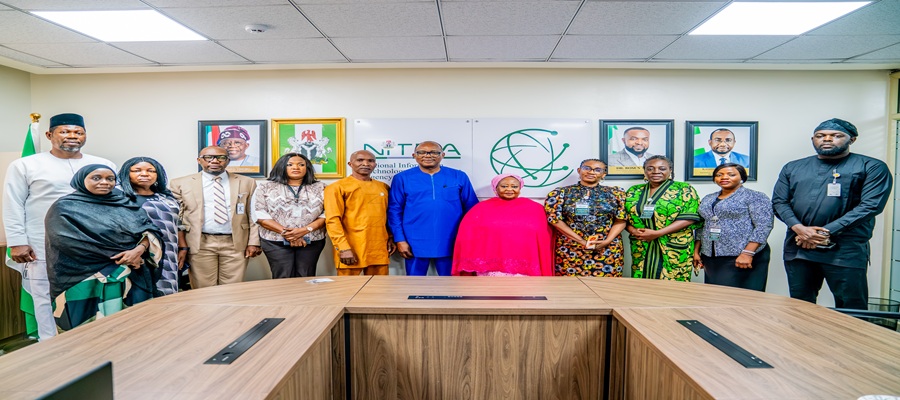
In a strategic push to bridge the gender digital divide, the National Information Technology Development Agency (NITDA) has partnered with the Nigeria Association of Women Journalists (NAWOJ) to advance women’s digital inclusion and drive the nation’s transformation agenda.

Dr Aristotle Onumo and some NITDA staff, pose for a group photograph with the President of the National Association of Women Journalists (NAWOJ), Comrade Aisha Ibrahim, and members of the delegation following a strategic engagement at the Agency’s Headquarters in Abuja.
The partnership was cemented during a courtesy visit to NITDA Director General, Kashifu Inuwa, CCIE, by a NAWOJ delegation led by National President Comrade Aishatu Ibrahim, who introduced the agency to the forthcoming Women in Security (WINSEC) Summit & Awards 2026.
Inuwa, represented by Dr. Aristotle Onumo, the Director of the Stakeholders Management and Partnerships Department, assured the association that NITDA would not only participate in the conference, but also support the success of the conference.
Inuwa hailed the NAWOJ for creating a platform for peacebuilding, dialogue on security and women’s inclusion, which he described as one of the critical areas NITDA is focused on to ensure that more women obtain digital literacy and skills under the National Gender Inclusive Strategy.
Beyond NITDA’s plan to participate in the conference, the DG noted that a robust partnership between the organisations would engender meaningful opportunities and initiatives through which many more women can access digital literacy.
“Inclusivity is the key to everything we do at NITDA. We clearly defined that 40 per cent of our programmes must recognise the issue of gender. We ensure that women are adequately represented and positioned to benefit greatly from the programmes that we organise in the agency.
“We graciously accept to participate actively in that conference. Apart from acquiring skills among journalists themselves, partnership with NAWOJ will also serve as a platform through which we can also reach out to various women’s groups across the federation,” Inuwa said.
Earlier, Comrade Ibrahim commended the DG for his visionary and transformational leadership which has continued to position NITDA as the catalyst for Nigeria’s digital economy through its various programmes.
She explained that the Women in Security (WINSEC) Summit and Awards 2026 is an initiative of NAWOJ designed to promote collaboration among government institutions, security agencies, technology experts, the media, and other stakeholders to address contemporary security challenges.
According to Comrade Ibrahim, the association also aims to recognise outstanding individuals and institutions that have demonstrated excellence in security, governance, and innovation while fostering meaningful dialogue on the role of technology in building a safer and more resilient Nigeria.
“We deeply appreciate your exemplary leadership, passion for innovation, and unwavering commitment to building a digitally empowered Nigeria. We respectfully invite the agency to partner with NAWOJ in making this landmark initiative a success.
“We look forward to establishing a long-term partnership with NITDA that will empower women journalists with cutting-edge digital skills, support digital inclusion and contribute to innovation, digital literacy, and human capital development,” the NAWOJ president added.
Both organisations expressed optimism that the meeting would lay a solid foundation for a rewarding partnership agreement with specific and clearly defined objectives that will support digital inclusion and contribute to innovation, digital literacy, and human capital development.

Nigeria Leads Africa in Online Gambling Regulation – GCI

CBN Has Not Published Annual Financial Statements Since 2022 despite Legal Requirement

ChatPay Unveils Public Waitlist for WhatsApp-Based Banking Platform

GSMA Says High Smartphone Costs Threatens Africa’s AI Future

Dangote Refinery Completes Landmark $2.5bn Private Equity Placement

NRC, Ponzi Scheme Collapses Resulting Loss of Billions of Naira

NASENI Moves to Digitize CCB’s 5m Assets Declaration and Operations

Lebara Nigeria Launches Lebara Play, Africa’s First Telecom-Owned Micro-Drama Platform

Tokenization, Blockchain Technology will Transform Financial Institutions – IMF

EFCC Busts NIS Visa Overstay Racket, Uncovers N700m in an Account




 General News2 days ago
FG Launches C.L.I.C.K.D., Consumer Credit Scheme for Tech Devices

 Telecom2 days ago
Airtel Nigeria Expands Retail Footprint to Strengthen Customer Access Nationwide

 Telecom2 days ago
MTN Nigeria Opens Applications for Next Afrobeats Star Season 2 with Bigger Prizes

 News2 days ago
NPC Opens Nationwide Digital Birth, Death Registration Platform

 Telecom2 days ago
Kaspersky Survey Highlights the Need for Smartphone Security

 E-Financial2 days ago
CBN Retains Interest Rate at 26.5% as Cardoso Cites Global Uncertainty Despite Inflation Drop

 E-Business2 days ago
Ovaloop Technologies Unveils Digital Tools to Formalize SMEs Operations Across Africa

 Telecom2 days ago
Why Africa’s Top ICT Ministers Are Gathering in Abuja This Week