

News
NCC, NiTDA Drum Support for DigitalSense Forum on IG4D, IPV6

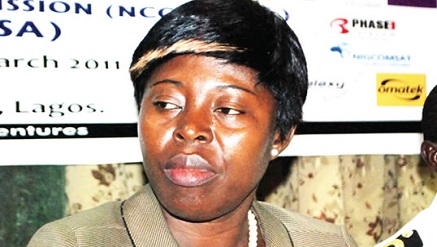
The Nigerian Communications Commission (NCC) and the National Information Technology Development Agency (NITDA) have expressed support for the 2016 Nigeria DigitalSENSE Forum on Internet Governance for Development (IG4D) and Nigeria IPv6 Roundtable.
Mrs. Nkemdilim Nweke, executive director, Operations, DigitalSENSE Africa Media, the organisers of the two-day event, said the forum which is on its 8th edition, would hold at Digital Bridge Institute (DBI), former NITEL Training School, Cappa-Oshodi in Lagos on June 2 and 3, this year.
According to her, Professor Umar Danbatta, executive vice chairman (EVC) of NCC and Acting Director-General of NITDA, Dr. Vincent Olatunji are expected to lead discussions on day 1 and 2 respectively.
She also revealed that the 2016 theme is on Day 1 IG4D is ‘Internet Governance: Creating Opportunities for All Nigerians’ scheduled for Thursday, June 2, 2016, while Day 2 is the Nigeria IPV6 Roundtable in commemoration of the World IPv6 Day with the theme ‘Creating Opportunities for Nigerians with IPv6’ on Friday, June 3, 2016.
She said that DigitalSENSE Africa (DSA) Media, an At-Large Structure (ALS) certified by the Internet Corporation for Assigned Names and Numbers (ICANN), has sustained the tempo since 2009 in collaboration with the Nigerian Communications Commission (NCC), National Information Technology Development Agency (NITDA) and beckon on other corporate Nigeria to join the queue in enlightening Nigerians on the positive use of the Internet for the good of all, especially the youth through creation of opportunities.

NCC, she explained is the apex telecom regulator in the country with over-arching role among others to assist communications industry stakeholders and practitioners with a view to the development of the industry, whereas NITDA’s mandate encompasses among other things the establishment of human and infrastructure development within the Information Technology (IT) industry and maximization of these nationwide.
These, opportunities, she said, when well assimilated could be translated into job and wealth creation, noting that the forum also known as Nigeria ICT4D event has been streamlined to act as a rallying point for Nigerian internet stakeholders in raising and addressing salient issues concerning the ICT sector.
“The two-day forum is aimed at encouraging positive usage of the Internet among the youths, women, students and offers product sellers and manufacturers in Nigeria the opportunity to engage, with global contest in mind,” she said.


As the world marks International Youth Day, attention once again turns to the opportunities and challenges facing young people as they prepare for work, financial independence, and adulthood.

In Nigeria, the urgency is clear. According to UNICEF, about 7% of young people aged 15–24 possess basic ICT skills, highlighting a wider gap in the skills required to participate effectively in an increasingly digital economy.
At the same time, the Federal Government, through the Federal Ministry of Youth Development, continues to prioritize skills development, job creation, entrepreneurship and social inclusion.
For PalmPay, youth empowerment goes beyond corporate social responsibility. It is an investment in the people who will shape Nigeria’s workforce, businesses and economy.
This belief is reflected in initiatives focused on financial literacy, employability, digital skills and access to opportunities.
Through its Graduate Trainee Programme, PalmPay provides young graduates with opportunities to gain workplace experience, develop professional skills and build careers in a fast-evolving industry.
The investment also extends to financial education. Through its NYSC Financial Literacy Programme, PalmPay brings practical financial education to young Nigerians at an important transition point, helping Corps members develop better habits around saving, spending, budgeting and protecting their money.
For young women, Purple Woman provides another pathway to economic empowerment, creating opportunities for internships, learning and professional development while supporting greater female participation in the technology sector.
Speaking on the importance of youth empowerment, Chika Nwosu, Managing Director of PalmPay Nigeria, said: “Nigeria’s young population is one of its greatest assets, but unlocking its potential requires access to the right skills, knowledge and opportunities. At PalmPay, we are committed to equipping young Nigerians to learn, earn and thrive in an increasingly digital economy. We believe that investing in young people today is an investment in a stronger, more inclusive Nigeria.”
These initiatives reflect a broader belief that youth empowerment is most meaningful when young people are given the knowledge, exposure and opportunities to apply what they learn.
A graduate given workplace exposure today can become tomorrow’s business leader. A Corps member who develops sound financial habits can carry those lessons into their career and personal life. A young woman given access to professional opportunities can gain the confidence, experience, and networks to create opportunities for others.
Investing in young people is a great strategy for building a stronger, more productive, and more inclusive economy.
This International Youth Day, PalmPay reaffirms its commitment to investing in young Nigerians and contributing to a broader national ambition where the young population is not just counted, but equipped, employed, empowered, and positioned to lead.
Mobility technology company, Moove has raised $250 million in a Series C funding round at a valuation of $2.1 billion, reaching unicorn status.

The startup will deploy the fresh capital to build out autonomous vehicle infrastructure, expand fleet ownership, construct robotics-focused “Nests” for charging and maintenance, and grow its autonomous workforce from 150 to 500 by year-end.
The company plans to enter additional global markets, reflecting a strategy to build the operational infrastructure required for large-scale autonomous transportation rather than simply supplying vehicles.
Led by Mubadala Investment Company and co-led by Woven Capital, Toyota’s Growth Fund, and Ion Pacific, the round also included new investors BlueCrest Capital Management, Sona Asset Management and The Raptor Group, alongside existing backers BlackRock, MUFG, Franklin Templeton and Uber.
“Autonomous mobility is becoming an infrastructure race requiring fleets, charging systems, maintenance, data infrastructure and continuous city-level operations,” said Ladi Delano, co-founder, co-CEO and advisory board chairman of Moove.
Founded in Lagos in 2020, Moove has grown into a global mobility platform employing about 3,300 people across 29 cities in 13 countries, operating approximately 42,000 vehicles and reaching $420 million in annualised recurring revenue.
It has expanded organically and through acquisitions, including Kovi in Brazil and Tokyo Taxi in Japan. Moove also operates autonomous vehicle fleets in partnership with Waymo in Phoenix and Miami, with London expected to join its footprint.
The $2.1 billion valuation places Moove among Africa’s small group of tech unicorns, alongside Flutterwave, OPay, Moniepoint, Andela, Chipper Cash, Wave, Tyme, MNT-Halan and Interswitch.
The $250 million round is the largest single funding deal announced by an African startup this year, though EV mobility firm Spiro raised $270 million cumulatively across two separate rounds.


Heirs Life Assurance, the specialist life insurance company of Heirs Insurance Group, has appointed Pastor Jerry Eze as an Independent Non-Executive Director on its Board, effective August 10, 2026.

L – R: Tony Elumelu, Chairman, Heirs Life Assurance; Pastor Jerry Eze, incoming director, Heirs Life Assurance
The appointment reinforces Heirs Life Assurance’s commitment to expanding financial inclusion and accelerating insurance adoption by strengthening public trust, consumer education, and long-term financial resilience across Nigeria.
Despite being Africa’s largest economy, Nigeria’s insurance penetration remains below one percent – among the lowest globally – highlighting the need to expand financial protection and build greater public trust in insurance.
As Heirs Life continues to pursue its mission of making insurance accessible to every Nigerian, Eze’s appointment brings a unique perspective on community engagement, value-based leadership, and broad societal impact.
Pastor Jerry Eze is the Founder and Lead Pastor of Streams of Joy International Ministry, a growing multinational ministry with 34 branches across West Africa, Southern Africa, Europe and North America.
He is also the convener of the New Season Prophetic Prayers and Declaration (NSPPD), one of the world’s largest digital prayer platforms, reaching millions of people daily. Through his ministry and humanitarian initiatives, he has become one of Africa’s most influential voices, championing hope, compassion, and community transformation.
Beyond ministry, Eze is the Founder of the Jerry Eze Foundation, a faith-led philanthropy where he provides housing support and grants to vulnerable and underserved communities.
In 2026, he announced N1billion in grants to support young entrepreneurs across agriculture, technology, and manufacturing, further advancing enterprise development and economic opportunity.
Before entering full-time ministry, Pastor Jerry Eze built a career in development communications, serving as a Communications Specialist on a World Bank HIV/AIDS programme and with the United Nations Population Fund (UNFPA).
He holds a Bachelor’s degree in History and International Relations from Abia State University and a postgraduate degree in Business Administration from Enugu State University of Science and Technology.
Speaking about the appointment, Tony O. Elumelu, CFR, Chairman, Heirs Life Assurance, said: “Pastor Jerry brings an exceptional combination of integrity, influence, and a deep understanding of people and communities.
“As we continue our mission to democratise access to insurance, his insight will help strengthen consumer trust, deepen financial inclusion, and reinforce our commitment to protecting the financial future of millions of Nigerians.
“We are delighted to welcome him to the Board of Heirs Life Assurance and the broader family of Heirs Insurance Group.”
Commenting on his appointment, Pastor Jerry Eze said: “I am honoured to join the Board of Heirs Life Assurance at a defining moment for the insurance industry. Financial security empowers individuals, families, and businesses to pursue their aspirations with greater confidence and resilience.
“I look forward to working with the Board and Management to advance the company’s mission of making insurance more accessible, relevant, and impactful for every Nigerian.”
Heirs Life Assurance has become one of Nigeria’s leading specialist life insurance companies, ranking 7th on the Financial Times list of Africa’s fastest-growing companies.
It is one of the three insurance businesses of Heirs Holdings, the leading pan-African investment company, with investments across 24 countries and four continents.
Combining an omni-channel digital presence with physical branches spread across the country, Heirs Life continues to redefine life insurance through innovation, customer-centric solutions, and a commitment to making financial protection accessible to every Nigerian.
Heirs Insurance Group, comprising Heirs Life Assurance, Heirs General Insurance, and Heirs Insurance Brokers, collectively serves over 3 million people directly and indirectly.
The Group is championing financial inclusion and leading the digital insurance play in Nigeria, demonstrating its mission to democratise access to insurance.

NUPRC Warns of Counterfeit, AI-Generated Appointment Letters

KudiWave Asks for Clarification over N750m Transfer from PalmPay Account

NCC Reports over 5,000 Fibre Cuts in 6 Months

PalmPay Reinforces Commitment to Youth Empowerment on International Youth Day

ipNX Joins Calls for Innovation-Friendly Ecosystem and Stronger Local Opportunities at Regenesys AI Summit

EFCC Busts NIS Visa Overstay Racket, Uncovers N700m in an Account

Fact-Check: Elon Musk’s “Tesla Pi Phone” is Internet Rumor

NBC Tasks Broadcasting Stations over 2028 DSO Global Deadline

NBC Scraps Annual Digital Access Fee on DSO

Glo Sponsored African Voices to Feature Netflix’s “The Polygamist” Stars




 E-Business2 days ago
X Replaces Revenue Sharing wit New Creator Rewards Programme

 Telecom2 days ago
MTN Alerts Subscribers over Fake 25GB Anniversary MTN Data Giveaway

 E-Financial2 days ago
Interswitch, Temenos Commit to Advancing Nigeria’s Digital Banking Technology

 E-Financial2 days ago
FG Spent N3.1 Trillion on Domestic Debt Servicing in Q1- DMO

 General News2 days ago
Fake Agency: ICPC Indicts NITDA, Others over Inadequate Due Diligence

 General News2 days ago
UNESCO Taps Oguamanam,Nigerian Scholar to Advisory Body on Science, Tech Ethics

 General News2 days ago
Tax Reform Built on Taxing Prosperity, Not Poverty– Adedeji

 Telecom1 day ago
MTN Nigeria Clocks 25, Connects over 90m People