

News
NPP Plans N100m Jackpot For 2016 Winner


The Nedola Initiative Ltd (TNIL), Nigeria’s leading sustainability management firm, has announced commencement of the Nigeria Prize for Patriotism (NPP), a program aimed at celebrating the average Nigerian living the ideals of our heroes past.
The initiative which plans to reward the overall winner with 100m prize money is designed to foster national unity.
In a statement released to the media, Abidemi David Edmond, chief responsibility officer, TNIL, said that the initiative intends to bring Nigerians together behind a unified purpose. “Nigeria is a great country and I believe strongly that one of the biggest things holding back our greatness as a people is the lack of a unifying purpose, a common ideal. With the NPP, we have a platform that allows us to celebrate those Nigerians that have lived a life of purpose, serving Nigerians and Nigeria, often to their detriment – who have demonstrated a ‘love for country’ and ‘appreciation of unity in diversity’, values that shall prevail over the destructive divides that exist in our country.”
The prize is structured to reward endeavours from patriotic Nigerians in the area of Education, Health, Civil service, Business, Agriculture, Sports, and Entertainment amongst others.
The overall winner of the prize is expected to receive N50m in winnings and another N50m in a grant to further the cause for which they had been nominated.

Elucidating further on the need for this program at this time in Nigeria, Mr Edmond said that having a sense of pride in nationality and purpose in unity sets a nation apart. “As Nigerians become more aware of the challenges we face as a nation, the time to call for a unified purpose as Nigerians would have been many years ago, but the second best time is NOW. There is an urgency with which we must all approach this in order to see the excellent Nigeria we all desire. ”
Lending their support and voice to the initiative are respected Nigerians like Prof. Pat Utomi, Dr. Christopher Kolade and Fela Durotoye.
In a video posted on the NPP, YouTube page, Prof Utomi said that when a nation’s citizens realise that “I am because we are, a national character perception takes hold and the country can hardly go wrong.” Dr Christopher Kolade added that with NPP recognising and celebrating those that Nigerians believe are examples of genuine patriotism, those recognised will be encouraged and will inspire others to do even more for Nigeria, while Fela Durotoye also corroborated this point saying, he had come to realise that whatever gets recognised and rewarded is what gets repeated.
The TNIL team has stipulated a 5-month process that will lead to unveiling the winner of the first edition of the annual prize as part of our nation’s Independence celebrations on the eve of Independence day this year – 30th of September 2016.
Commenting further, Mr Edmond said: “Over the next few months, Nigerians can expect to receive information on how to nominate and vote for the various categories. We intend to keep Nigerians at the heart of all that we are doing. They have been involved in setting the criteria for selections, a process that is still on-going, and they will be responsible for choosing all of the winners as well. Unlike many award initiatives, this is a program that is about celebrating and recognising the ‘average Nigerian’– the unsung heroes of our great country (not just a subsection of our population) with the ultimate goal of moving her to nationhood.”
—


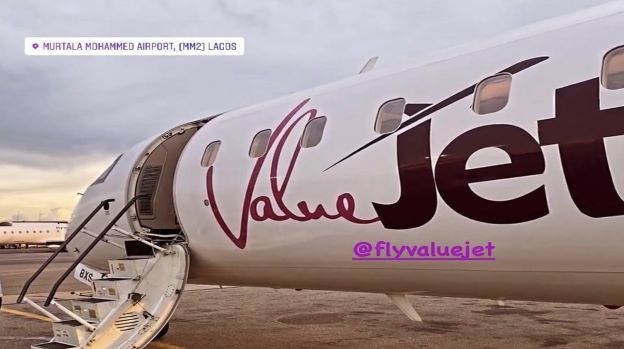
ValueJet is set to expand its fleet with the introduction of Boeing aircraft. The airline in a statement said that the introduction of Boeing aircraft was part of its effort at increasing capacity, strengthen its regional operations and position the airline for wider connectivity across Africa.

The acquisition of Boeing aircraft is coming after its successful operations with the Bombardier CRJ aircraft, which have supported its domestic and regional expansion since it commenced commercial operations.
Omololu Majekodunmi, Managing Director of ValueJet, said the move would enable it to accommodate more passengers and cargo, operate longer routes and respond to the growing demand for air travel within Nigeria and across the African continent.
Majekodunmi, also said that the fleet expansion was a defining moment in the company’s journey, noting that the introduction of the Boeing aircraft would open a new chapter for the carrier.
According to him, ValueJet has remained focused on building a safe, reliable and customer-oriented airline since its entry into the market, adding that the transition to Boeing aircraft was being supported by investments in manpower development and technical capacity.
He said: “The arrival of Boeing aircraft into our fleet represents an exciting new chapter for ValueJet. Since commencing operations with our CRJ aircraft, we have remained focused on building a safe, reliable, and customer-centric airline.
“As we prepare to induct the Boeing aircraft, we are also investing in our people by ensuring our engineers receive world-class training that will enable us to maintain the highest standards of safety, reliability, and operational excellence. This investment positions us for the next phase of our growth and reinforces our commitment to delivering an exceptional travel experience.”
According to Majekodunmi, as part of preparations for the fleet upgrade, ValueJet’s aircraft maintenance engineers are already undergoing intensive technical training on Boeing aircraft in Lagos.
The training, delivered by Boeing through its partnership with Nigeria’s Federal Ministry of Aviation and Aerospace Development, focuses on the Boeing 737 Next Generation (737NG), covering aircraft systems, maintenance procedures, safety standards and operational best practices.
The airline said the training would equip its engineers with the required expertise to maintain the new aircraft type in line with global aviation standards, including European Union Aviation Safety Agency (EASA) requirements.
Also speaking, Adekunle Soname, Chairman of ValueJet, said the introduction of Boeing aircraft was not just a fleet expansion programme, but a strategic investment aimed at supporting the airline’s long-term growth ambitions.
With the planned arrival of the Boeing aircraft, ValueJet is targeting expansion into more African destinations, including Abidjan in Côte d’Ivoire, Libreville in Gabon, Douala in Cameroon, as well as cities in Kenya and South Africa.
The airline said the new routes would form part of its strategy to strengthen intra-African connectivity and provide passengers with more travel options.

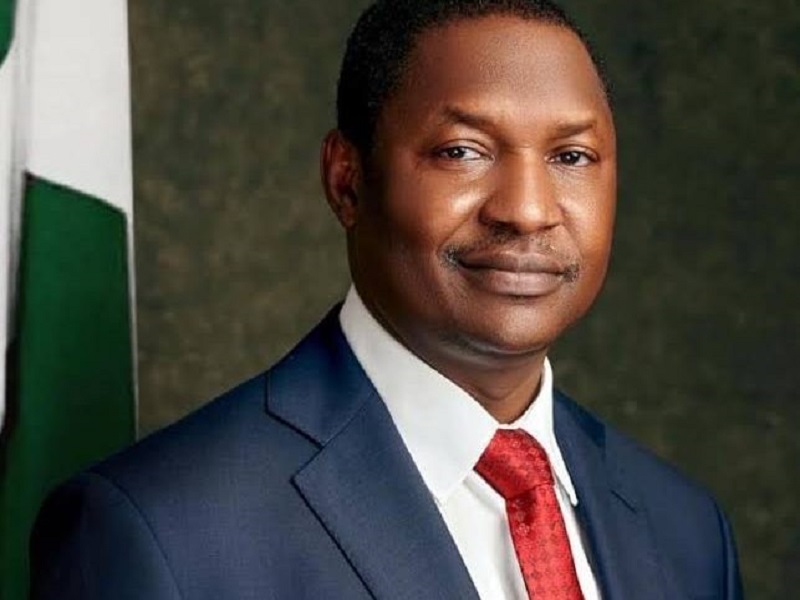
The Federal High Court in Abuja on Wednesday, July 15, ordered the final forfeiture of 48 properties linked to the immediate past Attorney-General of the Federation and Minister of Justice, Mr. Abubakar Malami, who is facing money laundering charges.

Abubakar Malami
The court, in a judgment delivered by Justice Joyce Abdulmalik, held that the properties, allegedly acquired with proceeds of crime, should be permanently seized by the federal government.
It held that Malami, who served as Justice Minister from November 11, 2015, to May 29, 2023, under former President Muhammadu Buhari’s administration, failed to rebut the reasonable suspicion that the properties were acquired through unlawful activities. The court dismissed contentions that some of the affected properties belonged to the larger Malami family in Kebbi State. According to the court, the legal issue was not “who owns the property, but how legitimate were the funds used to acquire them”.
Justice Abdulmalik held that Section 17 of the Advance Fee Fraud and Other Fraud Related Offences Act empowered the court to order the final forfeiture of illicitly acquired assets to the government. The judgment followed an application filed by the Economic and Financial Crimes Commission (EFCC).
Although the anti-graft agency sought the forfeiture of 57 choice properties it said were traced to the former minister, the court held that there was credible evidence establishing the genuine ownership of nine of the listed properties. The EFCC and Malami had adopted their final written addresses in the matter on May 26.
It will be recalled that the anti-graft agency had earlier secured an interim forfeiture order for the assets, valued at over N212 billion. According to the anti-graft agency, the properties, spread across three states (Kebbi, Kano, and Kaduna) as well as the Federal Capital Territory, Abuja—were believed to have been acquired with proceeds of crime. In an ex parte motion brought before the court, the agency said the interim order was needed as a precursor to the final forfeiture of the properties to the federal government.
Malami is currently facing a 16-count money laundering charge. He was arraigned before the court alongside his son, Abdulaziz, and one of his wives, Hajia Bashir Asabe. The defendants were alleged to have laundered public funds totalling about N9 billion.
According to the EFCC, the former Justice Minister, in a bid to hide his proceeds of crime, resorted to acquiring choice properties in various cities and states. Having granted the interim forfeiture order, the court directed the agency to publish, within 14 days, a notice inviting anyone with an interest in any of the properties to appear before it and show cause why they should not be forfeited to the government.
Dissatisfied with the EFCC’s application, Malami’s legal team approached the court to have it set aside, insisting the properties were legitimately acquired. He told the court that the properties were appropriately listed in various asset declaration forms he filed with the Code of Conduct Bureau (CCB), insisting the EFCC had failed to adduce any prima facie evidence that they were acquired through proceeds of crime.
Accusing the EFCC of suppressing material facts, Malami maintained that the agency moved against him over properties that “were lawfully acquired post-appointment of the respondent/applicant and declared with the Code of Conduct Bureau as legitimate assets of the respondent/applicant, in compliance with the 5th Schedule to the Constitution of the Federal Republic of Nigeria, in 2019 and 2023”.
He argued that the interim forfeiture order was obtained through “manifest exaggeration, malicious inflation of the value of the assets, and unreasonable and incompetent valuation deliberately manipulated to mislead the court, negatively affecting its discretion in granting an order based on manipulated facts and conclusions deliberately cooked up by the applicant/respondent (EFCC)”.
While adopting his final brief of argument, counsel to the EFCC prayed the court to grant the final forfeiture order, relying on a 47-paragraph affidavit and 46 exhibits filed in support of the motion. The EFCC counsel argued that Malami had failed to satisfactorily explain the legitimate sources of the assets and urged the court to order their permanent forfeiture.
In response, the counsel representing the former AGF urged the court to dismiss the application and set aside the interim forfeiture order earlier granted. The defense counsel relied on a counter-affidavit deposed to by Malami to argue that the EFCC’s case was founded on suspicion rather than credible evidence.
The court-ordered list of confiscated properties includes:
A luxury duplex at Amazon Street within Cadastral Zone A06, Maitama, purchased in December 2022 at N500,000,000.00 (value after enhancement, N5,950,000,000).
A two-wing, large storey building situated at No. 3, Onitsha Crescent, Area 11, Garki, Cadastral Zone A03, Abuja (formerly Harmonia Hotels Limited), FCT, purchased in December 2018 at N7,000,000,000.00.
Plot 683, Jabi District, Cadastral Zone B04, comprising a five-storey building (now Luxurious Meethaq Hotels Ltd, Jabi, with 53 rooms/suites), purchased in September 2020 at carcass level at N850,000,000.00, with an additional N300,000,000 to take possession (value after completion, N8,400,000,000).
Property No. 3130, within Cadastral Zone A04, Asokoro District, FCT, Abuja, comprising terraces, purchased in January 2021 at N360,000,000.00.
Property No. 3, Rhine Street, Maitama, Abuja (Meethaq Hotels Ltd, Maitama, with 15 rooms), purchased in February 2018 at N430,000,000.00 (current value after rehabilitation, N12,950,000,000).
Plot No. 1241B, Asokoro District Zone (No. 11A Yakubu Gowon Crescent), Asokoro District, purchased in July 2021 at N325,000,000.00.
Shop No. C82, Citiscape — Shariff Plaza, Plot 739, Cadastral Zone A07, Aminu Kano Crescent, Wuse II, FCT, Abuja, purchased in March 2024 at N120,000,000.00.
No. 4, Ahmadu Bello Way, Nasarawa GRA, Kano, purchased in December 2022 at N300,000,000.00.
Plot 157, Lamido Crescent, Nasarawa GRA, Kano, purchased in July 2019.
A plaza, commercial toilets, laundry facility, and warehouse tanks adjacent to Birnin Kebbi Market, purchased in 2021 at N100,000,000.00.
100 hectares of land along Birnin Kebbi–Jega Road, purchased in 2020 at N100,000,000.00.
A four-bedroom bungalow, Gesse Phase, Birnin Kebbi, purchased in 2023 at N101,000,000.00.
Shops Nos. A36 and B3, Vegas Mall, Wuse 2, Abuja, purchased in July 2023 at N158,000,000.00.
No. 26, Babbi Drive, BUA Estate, Abuja, purchased in 2022 at N136,000,000.00.
No. 27, Efab Estates Avenue, 59th Crescent, Gwarimpa, Abuja, purchased in January 2016 at N120,000,000.00.
A four-bedroom house with two-room boys’ quarters at No. 10B, Doka Crescent, Abakpa GRA, Kaduna, purchased in January 2018 at N40,000,000.00.
Plot No. 13, Ipent 7 Estate, Karsana District, Abuja, purchased in June 2018 at N85,000,000.00.
A four-bedroom duplex with boys’ quarters at No. 12, Yalinga Street, off Adetokunbo Ademola Crescent, Wuse II, Abuja, purchased in October 2018 at N150,000,000.00.
Two warehouse shops, B40 and B46, Wuse Market, Abuja, purchased in July 2020 at N50,000,000.00.
Twin houses at Zone E, Apo Legislative Quarters, Cadastral Zone B01, Plot 14014, Gudu District, Abuja, purchased between February and May 2017 at N250,000,000.00.
Properties acquired by the Khadimiyya for Justice & Development Initiative at Academic Garden City, Birnin Kebbi, sold by the Federal Housing Authority Mortgage.
Nine units of three-bedroom bungalows, three units of two-bedroom bungalows, and 5.4 hectares of land, purchased between February and September 2023 at N187 million.
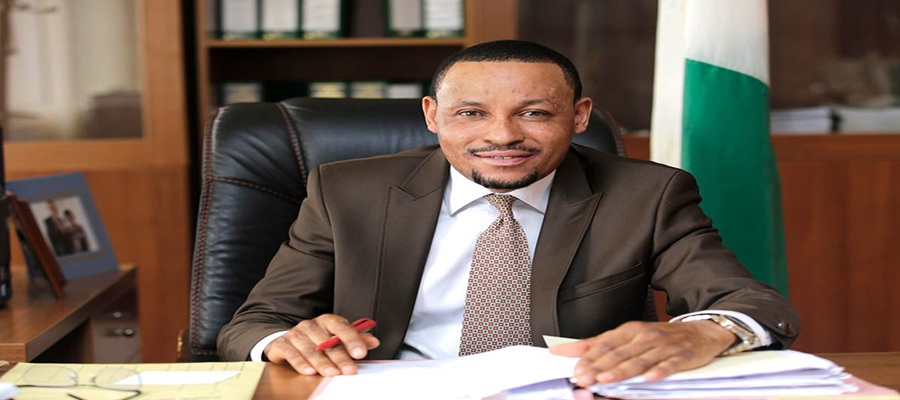
A Federal Capital Territory (FCT) High Court sitting in Maitama has granted bail to former Chairman of the Code of Conduct Tribunal (CCT), Mr Danladi Umar, in the sum of N100 million with one surety in like sum.

Danladi Umar
Justice Peter Kekemeke granted the bail on Wednesday following Umar’s arraignment by the Economic and Financial Crimes Commission (EFCC) on a four-count charge bordering on alleged abuse of office and conferring undue advantage on himself while serving as Chairman of the CCT and Chairman of the CCT Tender Board.
Umar was arraigned by the EFCC on July 9.
During Wednesday’s proceedings, counsel to the defendant, Mr Sunday Edward, urged the court to admit his client to bail pending the determination of the case, citing relevant provisions of the 1999 Constitution and the Administration of Criminal Justice Act (ACJA).
Edward argued that the defendant was entitled to bail as guaranteed under the law.
However, EFCC counsel, Mr Christopher Mshelia, opposed the bail application, urging the court to deny bail and order an accelerated hearing of the matter.
In his ruling, Justice Kekemeke held that bail could not be denied based on mere suspicion that an accused person might commit another offence if released.
The judge said bail could only be refused on established grounds, including the likelihood of the defendant evading trial or interfering with witnesses.
Justice Kekemeke noted that Umar was no longer in a position to intimidate witnesses, adding that the prosecution failed to provide sufficient evidence showing that he would abscond or interfere with the trial process.
He held that it would be wrong for the court to deny bail based on an unsubstantiated belief.
Consequently, the judge admitted Umar to bail in the sum of N100 million with one surety in like sum.
The court directed that the surety must own a property within the jurisdiction of the court.
The matter was adjourned until Oct. 29 for trial.
Umar served as Chairman of the Code of Conduct Tribunal from 2011 until 2024, when he was removed from office by President Bola Tinubu following recommendations by the National Judicial Council.

NBC Scraps Annual Digital Access Fee on DSO

Surge in Fibre Cuts Hobbles Service Provisioning

Why Bandits, Kidnappers are Hard to Trace despite NIN-SIM Linkage – FG

First Securities Brokers Empowers Nigerians to Trade in the Stock Market with the Launch of FirstInvest App

Quest Merchant Bank Hosts Great Place to Work® Nigeria Study Mission

NRC, Ponzi Scheme Collapses Resulting Loss of Billions of Naira
Nigeria Launches FreeTV Nationwide

NASENI Moves to Digitize CCB’s 5m Assets Declaration and Operations

Lebara Nigeria Launches Lebara Play, Africa’s First Telecom-Owned Micro-Drama Platform

CANAL+ Partners Samsung to Pre-Load DStv Stream on New Samsung TVs In Nigeria, Other African Countries




 Telecom3 days ago
MTN Nigeria Slashes Cost of Broadband Internet Router, Unwraps New Data Bundles for Low-Budget Users

 E-Financial3 days ago
Nigerians Accumulate $59Bn in Cryptocurrency Assets —FDC

 E-Financial3 days ago
Flutterwave Partners Xoom on Transfers into Nigeria

 General News3 days ago
Nearpays, Nigerian Fintech Becomes First African Startup to Win UN’s AI for Good Innovation Factory

 News3 days ago
DataPro Upgrades Dangote Cement’s Credit Rating to AA+

 Telecom3 days ago
Nokia’s 14 Years of Mobile-Phone Supremacy Ended in an Afternoon

 E-Business3 days ago
Tinubu Orders NIMC to Enrol Every Nigerian by End of this Year – DG

 General News3 days ago
Fintech Brands Should Communicate Right in a VUCA Economy