

General News
Electronic Fraud is Online Equivalent of Stealing – Akindeinde

_0.jpg)
Oluseyi Akindeinde is the chief technical officer of Digital Encode, a cyber- security company involved in the implementation of security measures and certification for banks and others.
Akindeine is a thoroughbred cyber-security expert with over 10 years working experience in cyber-security space in Nigeria.
He started his career with a company called Datasphir from where he joined Digital Encode as a co-founder.
His company has initiated and implemented measures aimed at fighting cybercrime and electronic fraud such as managing of Nigerian Electronic Fraud Forum and cyber-security operation centre.
He spoke to chike onwuegbuchi on issues around fighting cybercrime in the country.
State of Cybercrime and Fight in Nigeria
Cybercrime is still on the rise despite efforts to curtail it. To be honest it is not unexpected as most transactions are concluded online end-to-end.
Organizations have done quite a lot in reducing this menace but in my opinion, people (as opposed to technology and process) still remain the critical part of this.
Impacts of Cybercrime Law
For one, it is expected that anyone found to have committed any type cybercrime act will be brought to book and made to face the consequences.
Cybercrime or electronic fraud, is the online equivalence of stealing and such same measures should be meted out to anyone found to have committed the act.
Things to Ensure Maximum Benefit of the Law
Oh yes there are and it has already been set in motion by the formulation of the Cybercrime Advisory Council by the office of the National Security Adviser (ONSA). Part of the mandate of the advisory council is to reinforce and enhance the implementation of the Cybercrime (Prohibition, Prevention, etc.) Act, 2015 and the National Cybersecurity Policy and Strategy adopted on the February 5, 2015, which outline the legal, institutional and technical frameworks needed to drive the nation’s preparedness to fight cybercrime and protect Nigeria’s national interests in its engagements in cyberspace.
Computer Emergency Response Team (CERT)
Of course it is needed. Just as we have people securing and safeguarding Land, Sea and Air, we need a national CERT to secure our cyberspace.
The battles of the future will not be fought by fighter jets but in cyberspace. Furthermore, efforts should be put in capacity building and training of the people who would man the CERT.
Banks on Implementation of Security Certification such as PCI DSS
Again Fraud cannot be totally eliminated once you have the ‘people’ factor. No matter the amount of technical controls you put in place, if someone is going to fall for a social engineering attack, those controls cannot stop it.
It is incumbent on the financial institutions to sensitize the public on the dangers of phishing and social engineering tricks.
Personal information should never be given online as NO bank will request for it. This includes, Passwords, Passcodes, PINs. These are to remain private and never handed to anyone.
Cyber-Security Operation Centre (CSOC) and Fight against Cybercriminal
It’s the first independently operated SOC. It’s our attempt at assisting organisations, especially financial institutions, monitor their systems and networks for anomalous traffic patterns.
We not only monitor but also alert at imminent danger if any.
We do this all day, every day freeing the Financial Institutions to conduct business without thinking about security. We also assist in cybercrime investigation, recovery and digital forensics.
Digital Encode and the Nigerian Electronic Fraud Forum (NeFF)
NeFF was inaugurated by the bankers’ committee in 2011 to address and proactively manage the incidences of electronic fraud and related matters in the industry. The forum is made up of the CBN, the deposit money banks (DMB), law enforcement agencies (LEA) and other stakeholders in the financial services sector.
Our mandate is to assist the forum in gathering, analysing and reviewing fraud data, conducting forensics and predictive analytics as well as training and capacity building for industry personnel.
Digital Encode in Cyber Security Space
We are the foremost cybersecurity company in Nigeria and we constantly assist organisations achieve optimum security by providing services such as Advanced penetration tests, compliance to global information security standards such as PCIDSS, ISO 27001 and CoBIT.
Emergence as the Cyber Security Company at Beacon of ICT Awards
It’s a fantastic award for our organisation and it only goes to show recognition for what we have been doing. We truly appreciate it.


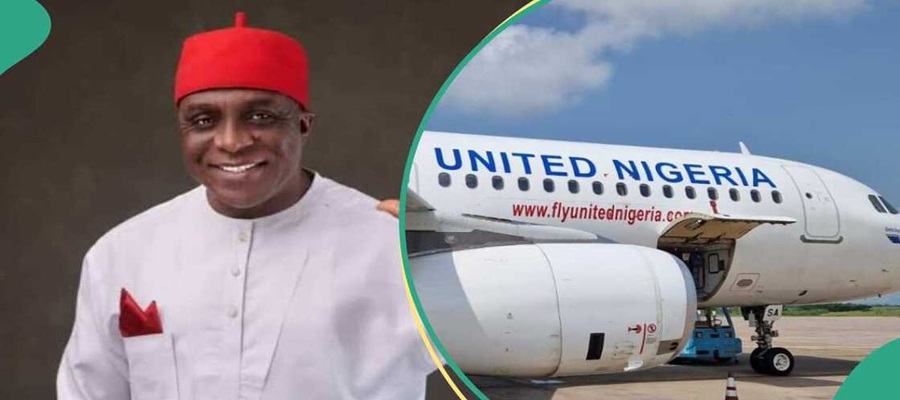
Government of Guinea-Bissau has signed a Memorandum of Understanding (MoU) with Nigeria’s United Nigeria Airlines to establish AIR BISSAU, a national carrier, for the West African country, to boost its aviation industry and reduce its dependence on foreign airlines.

The agreement, signed in Bissau, the capital of Guinea-Bissau, was disclosed in a statement made available by the airline on Sunday.
The MoU was signed by Dr Florentino Pereira, minister of Transport, Telecommunications and Digital Economy, Guinea-Bissau and Prof Obiora Okonkwo, executive chairman of United Nigeria Airlines.
Recall that Nigeria currently has no national carrier despite repeated calls by industry stakeholders for its establishment to facilitate reciprocal flight rights to foreign destinations, particularly the United States.
Attempts to establish a national carrier through a partnership with Ethiopian Airlines also hit a brick wall following lawsuits by the Airline Operators of Nigeria, an association for which Okonkwo once served as spokesperson.
Other factors that contributed to the failure of the national carrier project included deep-seated political issues, allegations of fraud and a controversial ownership structure.
In the latest agreement between the Nigerian airline and Guinea-Bissau, which was made available to our correspondent, both parties will “explore a comprehensive cooperation framework aimed at establishing a fully operational national airline with Osvaldo Vieira International Airport in Bissau serving as the operational base and hub for the carrier’s initial routes.”
For decades, Guinea-Bissau has relied largely on regional carriers and charter services to connect its citizens and businesses to other countries.
A key component of the MoU is the creation of a joint venture company that will operate as Guinea-Bissau’s national airline.
Under the arrangement, United Nigeria Airlines will provide the majority of the financial investment, operational expertise, aircraft and management for the new carrier.
Extending beyond commercial operations, the Nigerian carrier is expected to “provide and operate an executive jet for the use of the President and Government of Guinea-Bissau.”
To facilitate the project, the government pledged to “facilitate the registration and licensing of the new national carrier in line with domestic laws and streamline authorisation processes through both the Civil Aviation Authority of Guinea-Bissau and the Civil Aviation Authority of Nigeria.”
Guinea-Bissau also agreed to designate AIR BISSAU as its official national carrier, granting it “full rights over all existing Bilateral Air Services Agreement entitlements.”
According to the MoU, the designation would give the airline “significant leverage in securing route rights and authorisations to regional and international destinations,” described as an important commercial and diplomatic asset.
The government further committed to ensuring that Osvaldo Vieira International Airport receives the infrastructure support required for the airline’s operations, including access provisions, ground support services and assistance with customs, immigration and security compliance.
Additionally, Guinea-Bissau pledged to invest in the establishment of the airline and create mechanisms that would protect and incentivise investment through the existing Investment Code and applicable tax frameworks.
As part of efforts to develop local aviation expertise, United Nigeria Airlines plans to train “qualified Guinean nationals including pilots, cabin crew, and technical maintenance personnel” and employ local staff wherever feasible in line with government employment policies.
The MoU makes it clear that operational control of the airline will remain with the Nigerian carrier.
“For the purposes of safety, reliability, and efficiency, the overall management, operational control, and general direction of the new airline will rest with the management team of United Nigeria Airlines,” the statement noted.
Both parties also agreed to provide full liability and hull insurance coverage for all flight operations, conduct annual independent safety and maintenance audits, and establish asset protection mechanisms for investors.
The agreement takes immediate effect and will remain valid for 18 months or until a substantive joint venture agreement is concluded.
The International Monetary Fund (IMF) has recommended introducing taxes on fuel products and telecommunications services in Nigeria.

According to the IMF, this is part of broader measures to increase government revenue and create fiscal space for development spending and social interventions.
The international financial organization argued that stronger revenue mobilisation had become increasingly important as Nigeria’s fiscal position remained under pressure despite recent reforms.
This comes as Nigerians are protesting against worsening standard of living made worse by widespread insurgency.
The recommendation was contained in the IMF’s 2026 Article IV Consultation report on Nigeria, where the Fund argued that additional tax measures would be needed over the medium term despite the recent overhaul of the country’s tax system.
“Further tax policy changes will likely be needed—such as increasing the VAT rate, extending VAT to fuel products, rationalising tax expenditures in particular VAT exemptions on extractive industries and some customs duties, and introducing telecom excises—to complement administrative gains,” the IMF said.
The institution, however, cautioned that the timing of any new taxes must take into account Nigeria’s rising poverty levels and worsening food insecurity.
“The timing of reforms must consider the poverty and food insecurity situation and ensure that the cash transfer system is in place and funded,” the Fund added.
A previous attempt by the Federal Government to impose a five per cent excise duty on telecom services met strong resistance from operators, subscribers and consumer advocacy groups before it was suspended and eventually scrapped.
Telecommunications firms had maintained that the industry was already weighed down by multiple taxes, rising energy costs, foreign exchange challenges and infrastructure constraints.
They warned that any additional levy would likely be transferred to consumers through higher call and data tariffs.
Similarly, proposals to tax fuel products have faced opposition from labour unions and private sector organisations amid concerns over the rising cost of living following the removal of petrol subsidies and increases in transport and food prices.
The IMF’s latest recommendation comes as the Fund projects that Nigeria will require stronger revenue mobilisation efforts to sustain planned increases in public spending and provide support for vulnerable households.
According to the report, revenue-enhancing tax policies could generate additional revenue equivalent to 3.9 per cent of Gross Domestic Product within three years of implementation.
The Fund identified a two-percentage-point increase in the Value Added Tax rate as the largest contributor, with a projected revenue gain of 0.8 per cent of GDP.
The report also projected that removing pioneer status incentives and revising free zone regulations would generate an additional 0.7 per cent of GDP.
Reforms to capital gains taxation and adjustments to personal income tax bands, allowances and rates were each estimated to contribute 0.6 per cent of GDP.
The IMF further estimated that a top-up tax on multinationals and large firms could raise 0.5 per cent of GDP, while rationalising investment allowances would contribute another 0.4 per cent.
Notably, the category labelled “others”, which includes telecom excise duties and measures such as a carbon tax on fuel, was projected to generate an additional 0.4 per cent of GDP in revenue.
Beyond new tax measures, the Fund said Nigeria could achieve even greater gains through improved tax administration.
It projected that administrative reforms would generate an additional 3.1 per cent of GDP through better compliance, stronger enforcement and efforts to reduce informality in the economy.
According to the report, measures such as fiscalisation, electronic invoicing and cross-validation of tax deductions could generate 1.5 per cent of GDP, while expanded tax identification registration and consolidation of taxpayer databases could contribute a further 1.6 per cent of GDP.
The IMF acknowledged that some of Nigeria’s recently enacted tax reforms would reduce government revenue in the short term because they were designed to support households and small businesses.
It estimated that revenue-reducing measures would lower revenues by 2.4 per cent of GDP.
Expanded VAT input credits, additional zero-rated items and broader exemptions on basic consumption goods were projected to account for 1.7 percentage points of the decline.
Lower corporate income tax obligations for smaller firms would reduce revenues by 0.4 per cent of GDP, while lower personal income tax rates and expanded exemptions for low-income earners would account for another 0.3 percentage-point reduction.
Overall, the IMF projected that the combined impact of revenue-enhancing measures, administrative reforms and revenue-reducing policies would result in a net increase in government revenue equivalent to 4.6 per cent of GDP over the medium term.Nigerian investment opportunities

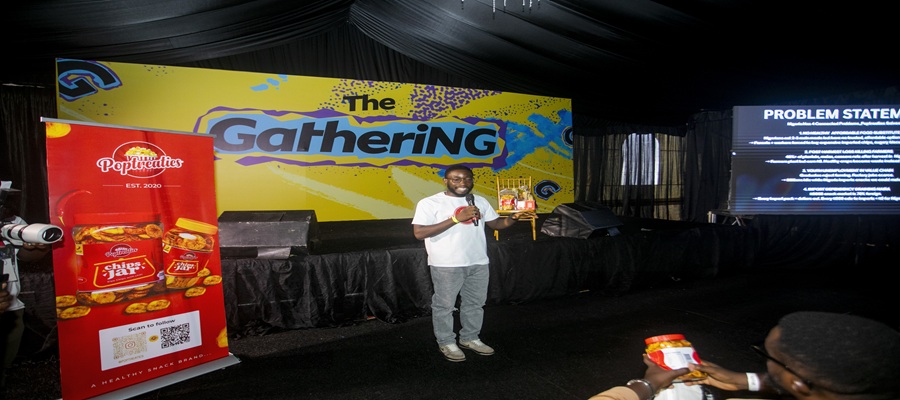
MTN Nigeria, through The Gathering on 100, has officially unveiled the next chapter of its youth cultural and creative movement in Aba, the home of entrepreneurship and innovation in Eastern Nigeria.

The initiative transformed the Prime Time Event Centre in Osisioma into a vibrant hub of innovation, culture, lifestyle, and entertainment.
As the second major activation of MTN’s ‘Live It 100’ campaign, this event underscores a bold commitment to encouraging young Nigerians to live life to the fullest of their potential, whether in business, tech, culture, or entertainment.
Central to this immersive experience is the highly anticipated Pitchathon, where 10 standout startups are vying for a total prize pool of ₦5 million.
The participating startups represent a cross-section of Aba’s burgeoning innovation ecosystem, tackling challenges ranging from logistics to artisanal tech.
Among them are Trashverse Recycling Technology Limited, a climate-first recycling solution founded by Charles Ikechukwu; SkillsCircle by Together, an ed-tech platform championed by Ijeoma Irene to empower young professionals in Nigeria; and Poptreaties, a healthy snack alternative founded by Ifeanyichukwu Dominion to curb junk food consumption.
These founders and their peers are showcasing solutions that blend local ingenuity with scalable technological frameworks, highlighting the immense potential of the region’s entrepreneurial spirit.
The pitchathon is judged by three esteemed figures in the African innovation ecosystem: Chiemela Anosike (Founder, Solaris GreenTech Hub), Dr. Chime Chimezie-Uche (Founder, Abia Startup Limited), and Justina Nwokedi (Digital Transformation Specialist).
This competition is designed to spotlight and empower early-stage founders in the city, providing them with a platform to validate their business ideas before investors, consumers, and industry stakeholders.
The prize structure offers ₦2.5 million to the winning startup, ₦1.5 million for the first runner-up, and ₦1 million for the third-place winner.
This Aba edition builds on the success of the Lagos edition, which took place from April 22 to 26 at the National Stadium, Surulere. There, eight startups received a collective ₦45 million in seed funding for solutions ranging from fintech to creative technology.
By bringing this platform to Aba, a city renowned for its industrial and entrepreneurial spirit, organizers aim to deepen access to opportunity and support the next generation of business leaders.
For these 10 startups, the Pitchathon is a vital opportunity to gain visibility, engage with potential partners, and accelerate their growth within a high-density environment of innovation.

AI-Powered Cyber Threats Put Nigerian Banks on Alert

Guinea-Bissau Taps United Nigeria Airlines to Establish AIR BISSAU, National Carrier

IMF Urges FG to Introduce Fuel, Telecom Taxes

CBN to Expand eNaira for Salaries, Pensions and Welfare Payments

CSOs Raise Alarm over Nigeria’s Data Protection Crisis

CBN Extends PoS Geo-Fencing Enforcement Deadline to August 2026

NCC Drafts New Rules for Virtual Mobile Operators

TD Africa, HPE Drive Conversations on the Future of Intelligent Networking

London Strengthens Global Investment Ties with Africa @ First Ever London-Africa Business Summit

Easybuy Partners WAWUAfrica to Upskill 10 Million Youths and Women, Boosting Nigeria’s Economic and Financial Inclusion




 News3 days ago
UK, Nigeria Launch £15m Growth Programme to Accelerate Economic Transformation

 General News3 days ago
Haleon Introduces New Corporate Identity in Nigeria

 General News3 days ago
Elon Musk Makes History as the World’s First Trillionaire

 Telecom3 days ago
NITDA Unveils Ambitious Strategy to Turn Southwest into Nigeria’s Next Innovation Powerhouse

 General News24 hours ago
₦5m up for Grabs as 10 Startups Clash at the Gathering on 100 Pitchathon Aba
 E-Business24 hours ago
CSOs Raise Alarm over Nigeria’s Data Protection Crisis
 E-Financial24 hours ago
CBN to Expand eNaira for Salaries, Pensions and Welfare Payments

 E-Financial24 hours ago
CBN to Bar HoldCos from Influencing Banks’ Lending Decisions