

General News
ICT is Fast Becoming A Way of Life – Nnoruka

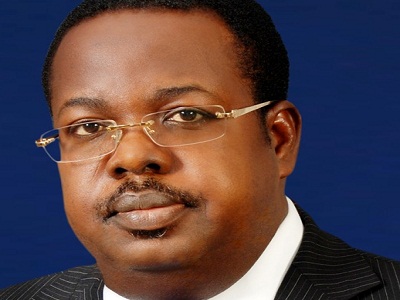
Nnamdi Nnoruka is the chief executive officer of IT & C Networks Limited, a leading distributor and supplier of MSI Computers range of products in Nigeria and West Africa. Nnoruka has had multifaceted exposure to technology having started as an Air force Pilot. In the course of going through the officer cadre, he got exposed to various forms of management training courses. He is also a lawyer by profession. Before moving on to the ICT space, Nnoruka went to the London Business School where he bagged a Post Graduate Degree in business management and strategy. He spoke to funmi ilesanmi.
Internet Connectivity in Nigeria Then and Now
Well, not much has changed from when I started because quality bandwidth still remains a very scarce and expensive commodity in Nigeria as at now. Most of the satellites in orbit are facing away from where we are; only very few have good footprints in sub-Saharan Africa. That is why there is not much to choose from, you have to work with particular satellite bandwidth providers to be able to deliver home form of bandwidth and quite often because it’s scarce and very expensive because demand is very high, they are not meeting up with the demand so the price keeps going up. That is why these things are very expensive and that is why very good quality bandwidth is also very scarce. That is as at now but the good news is that all these is about to change. With the arrival on the scene of players like MainOne and Glo1, obviously by the time they have really rolled out, which will happen definitely in the next couple of months, the story will be totally different. I am not saying they will solve all the problems, I am not saying all of a sudden we would be like anywhere else in the world like Europe and the entire East Asia but we would improve tremendously to the betterment of everybody.
As we speak, it is still very problematic. One of the things that has changed though from when we were trying to provide the services and now is that the big boys like MTN, Globacom and so on have to into the internet service provision space and that has made it very difficult for smaller players like us to continue even in doing what we were trying to do because due to economy of scale, there is no way we can match the big players in terms of pricing and possibly quality of service. This made internet more ubiquitous than it was but still the quality is still lacking and the pricing is still comparable to what it was then but now that MainOne and Glo 1 are in the picture, we are looking forward to a drastic change. We are hoping that we would see a very significant price drop, people should be able to pay N5,000 in a month and get very decent bandwidth on a 24 hour basis.
Patronage of Obsolete Products
A lot has happened in that area with people like us coming into the field with a brand like MSI that was not too well known in Nigeria. MSI has been in Nigeria for a long time but MSI being the manufacturer of very good quality PCs have always been known for their mother boards, VGA cards and other components. A couple of years back they made a strategic decision to go ahead and manufacture their own personal computers so now they have a very wide range of fantastic laptops, netbooks and all in one PCs. They also have other products- they have servers and so on. One thing is very clear; they are of very good quality and good pricing. Keeping the pricing within the affordable limit is what has been driving us, otherwise their products are premium products and because they are premium products they tend to be highly priced. A friend of mine who is one of our resellers traveled to Dubai recently and apparently a PC that we normally give to him at N50,000, he saw it there and they gave it to him at $420. He called me and was screaming literarily on the phone and I am not pretending about this; that is to tell you what we are trying to do. What we have done is that we are not driven by excessive profits. I am not telling you that we are not trying to make profit, we are trying to run a business naturally the business that should sustain itself, pay salaries and all that and also for us to get something out of but the ultimate thing we want to do is to make very good quality and affordable PCs available to members of the public. We are not the only one doing this, a whole lot of other players have come into the field and because of our activities pre-existing players have taken a clue and they have come down with their pricing in order to compete with us. The net effect of what we have done is that we have brought down the prices of good quality PCs, desktops, laptops and all that.
Hopefully, we will continue to drive down these prices but you know there is a limitation because the components are generally controlled by monopolies in the world. I mean at least 80 percent of the chips, the processors are produced by Intel and everybody buys them. About the same percentage of operating systems are produced by Microsoft so everybody must buy from Microsoft. That kind of practice puts a limit to what we can do but in the next couple of months we are coming with something that would literarily place a laptop in the hands of every school child at lesser prices. This is what we are working on and we will continue to do what we are learning to do better now.
Expansion Plans
Basically, we are distributors. What we are mainly concerned with is bringing our range of products and making them available to members of the public through our resellers. We are not set up as a reseller. What you are seeing here is just for you to have an idea of the range of what we have but we are not hoping that if we are looking to sell here, then we would not be here, we would be on the high street with well appointed shops and well decorated places where people would want to come in and buy. We are not set up as resellers, we are basically distributors.
What we may look forward to doing in future might be to open a reselling outlet but why I am not too hot on doing that immediately is that I do no want to compete with my customers, my customers are the resellers. People walk in here and talk to me, we are still in the process of trying to make people know the brand and the only way we can do that is to put these things in the hands of people and get them to use and experience the MSI brand. If an individual walk in here, he or she will still be able to buy but that is not what we are set up to do. What we are set up to do is to make ourselves available to our customers so that our customers who are resellers will be able to buy maybe 50 units, 100 units to sell. Again, you know the internet is everywhere, if you go to www.itcafrica.com, you will see a range of our products an0.d we have put prices there. The reason is for it to guide our resellers. If you to a MSI reseller and you say that the price of this is this, by this we try to control the price. We are in business to deliver to people at affordable prices and for us to achieve that we have to impress it on our resellers as well. If you already know that the price of a U130 is N55,000 and our reseller tells you it is N60,000, you will tell him no, that the price is N55,000. If he fails to sell it to you, you come to us, we will give it to you at that price, which is why we have put our prices transparently on the internet so everybody can see. Also, our address is there so any reseller that is serious to do business with us at least for the first time will come here. Subsequently, we can know where he is or have other arrangements of moving the goods to him so we don’t have to be everywhere.
Support
Another aspect to our business is to provide technical support. Having brought the goods in, it is also our responsibility to make sure that when our resellers sell to end users, the end users get good value for their money. So if you bought our system that has a year warranty for instance and two months into use you suddenly realize that the power is not good enough or the scene is not working, not that you allowed it to fall or you allowed it to get damaged physically, then naturally the warranty kicks in and we are the people to provide that warranty support to you ultimately.
Training for Resellers
We have tried to institute training for our resellers at least pricing. We held the first one sometime towards the end of May and during this type of session, we bring in resource persons to talk to them and tell them about what the computer is basically all about. We also talk to them about our mindset, about our orientation, our values and our culture. Why we do things the way we do them so that they would understand the IT & C Networks Limited framework. What is driving us is making ICT available to people so that this can change the way we do things. We also try to make them feel part of the passion that we feel as to what we do. We believe that MSI is a very good brand and we are passionate about it. MSI is one of the biggest brands whose owners do their own manufacturing which others do not. MSI maintains a standard, they have control over their schedules and conduct very extensive research and development and that is why if you point to any of the MSI brand, I will tell you something unique about it. There is always something very unique about it because they do their own production and are always moving with time.
Challenges in Distributing the MSI Brand
Very serious challenges I must tell you. The fact that the MSI brand is relatively new, most people have not heard about. It is a new brand coming into an environment that is already dominated by the better known brands, that is number one. Number two is the fact that ICT is still at the infant stage in Nigeria and as a result users are not yet discerning. Whereas if they were discerning, they would know the features they are looking for in the PCs that we have but they do not know. Government does it, corporates do it and of course the average Nigerian does it.
Impact of Economic Meltdown on Volume of Business
It has affected it adversely. The rate of uptakes of ICT slowed down definitely. A lot of people who desired to purchase laptops, PCs and so on cannot do so because disposable income has shrunk and people are more concerned about basics needs like food, shelter, school fees, then they can now start talking about computers. But you know something, ICT is fast becoming a way of life and most people have discovered that this is no longer a luxury. Though there has been a slow down but then this is something that is becoming increasing inevitable that everybody must have access to his or her own computer.
IT & C Networks Limited
IT & C Networks Limited was incorporated in 2004 for the purpose of carrying out the business of ICT generally. That came about when I was at the London Business School. It became clear to me that that would be the way to go. I saw ICT as a way of bridging the yearning and growing gap in terms of infrastructural development between Nigeria and the rest of the developed world. I saw ICT as a means of bridging that gap and I decided that whatever happens, I was going to play in that space so I went ahead and incorporated the company. We started business towards the end of 2005 in Abuja and then we were providing internet access to people. The aim of doing so was that most people could not have access to decent internet connections, we bring bulk internet and give it to people at affordable prices. In doing that we went into partnership with a Canadian company called Omni-globe and we started running services in Abuja. We met a whole lot of challenges because I was coming from the angle of an entrepreneur and I wasn’t an ICT professional in that sense. Obviously, I had to learn on the job so we made a lot of mistakes, a lot of them very costly mistakes. We had a whole lot of challenges trying to cope with technologies involved in the lastmile delivery of internet services. I must tell you that we did do a lot, we achieved a lot, I also learnt a lot in that process. First of all, I realized that one of the major barriers to people having access to internet was access to personal computers, unfettered access to personal computers. It was so bad then that people resulted to buying used and dumped PCs, laptops being shipped in by very unscrupulous Nigerians and foreigners from all over the world and been sold to people at very exorbitant prices. People were parting with their monies and not getting good values for them. I saw that as a very big challenge and at some point, I realised that this was a major problem, I identified it and decided to address it. In the course of trying to do that, I got in touch with MSI and we agreed to partner to bring in quality PCs and make them available to Nigerians at affordable prices.
Again, one of the areas that I saw where we could make a lot of impact is in the educational sector because people have to acquire the capacity to use ICT to change the way things are done in Nigeria and to bring about that bridging of the gap I mentioned. From the scratch, we realized that for children of priviledged people who constitute not less than five percent of the entire society, they go to schools where they have access to these things, the rest of the children do not have access to these so, that portends a lot of problems in the future and we decided that we are going to make a lot of emphasis on the educational sector. We tried to provide internet access and we try to deal particularly with the educational sector where we think we can make a whole lot of difference.
Again, we corporate with ICT giants like Microsoft, Intel and so on to bring in very affordable solutions to government and other agencies involved in the delivery of education. That is what IT & C is all about.


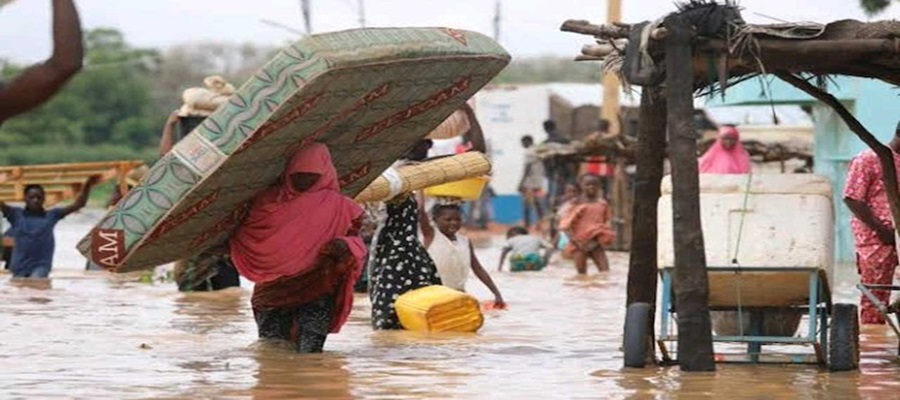
Nigeria Hydrological Service Agency (NIHSA) has warned of possible floods in parts of Adamawa, Bauchi, Edo, Imo, Enugu, Akwa Ibom, Cross River, Kaduna, Plateau, Niger, Benue, and Borno states within the next seven days.

According to information posted on NIHSA X handle, the Agency announced medium flood advisory in force for the next 7 days across Adamawa, Bauchi, and 11 other States.
“Localised inundation is forecast along the main channel; named communities below sit on the projected footprint. Stations: Saminara on the Karam river, Waya Dam Site on the Waya river, Amber on the Amber river.
“Adamawa; Lemsa, Lamurde, Numan Exposure: 147 comm. 49 schis 40 hith 6 mkts17 relig. Bauchi-Bauchi, Ningi, Shira. Exposure: 4 comm. Kaduna; Chikun, Giwa, Igabi, Jaba, Jema’a, Kachia, Kaura, Kauru, +6 more. Exposure: 1 comm.
“Borno-Gubio, Mobbar. Exposure: 680 comm. 8 schls 6 hith 5 mkts 21 relig. Edo-Akoko-Ed, EtsakoEa, EtsakoWe, Ikpoba-Okha, Orhionmw, OviaNort, OviaSo.. Exposure: 3 comm.

“Imo-Aboh-Mba, Oguta, Ohaji/Eg, Okigwe, Owerri North, Owerri West. Exposure: 3 comm. 7 more states affected and severity LGAs”.
NIHSA advised people in the affected areas to “do NOT cross flooded roads, bridges, or fast-moving water on foot or by vehicle.
“Clear drainage channels and river-mouth blockages; avoid building or living in the floodplain and move people, livestock and valuables from the floodplain to pre-identified higher ground,” NIHSA stated.
General News
First Trustees Advocates Estate Planning as an Essential Tool in Every Wealth Creation Strategy


First Trustees Limited, a subsidiary of FirstHoldCo Plc., and a leading provider of fiduciary and trusteeship services in Nigeria, is encouraging individuals, professionals, entrepreneurs, and investors to view Estate Planning not as an end-of-life exercise, but as a strategic investment tool for protecting, preserving, and transferring wealth across generations.

As more Nigerians focus on wealth creation through businesses, real estate investments, and other income-generating assets, experts are emphasizing that building wealth is only one part of the equation.
Equally important is creating structures that ensure those assets remain protected, properly managed, and seamlessly transferred to succeeding generations in accordance with the asset owner’s wishes. Importantly, Estate Planning is not solely for the wealthy, it is a prudent step for anyone with assets, dependants, or a business to protect, regardless of age, profession, or net worth.
Speaking on the importance of Estate Planning, Ereifemi Akeredolu, Managing Director/CEO, First Trustees Limited, noted that Estate Planning should be considered a core pillar of every long-term financial strategy.
“Many people focus on creating wealth but give litle thought to preserving it. Estate Planning is a wealth protection strategy that helps individuals safeguard their assets, secure their family’s future, and ensure that the value they build today continues to benefit future generations.”
Using tools such as Trusts, Wills, and advanced succession plans, individuals can build structures that support wealth preservation, business continuity, asset protection, and intergenerational wealth transfer.
For entrepreneurs and business owners, Estate Planning serves as a powerful tool for ensuring business sustainability, helping organizations remain stable and operational regardless of unforeseen circumstances.
First Trustees continues to emphasize and educate on the importance of Estate Planning as a comprehensive strategy for proactive planning. It remains one of the most important financial decisions an individual can make: it provides clarity, minimizes uncertainty, and protects assets from unnecessary erosion and disputes. It also creates financial security for loved ones, supports business succession and continuity, and facilitates long-term investment and legacy planning.
General News
Nearpays, Nigerian Fintech Becomes First African Startup to Win UN’s AI for Good Innovation Factory

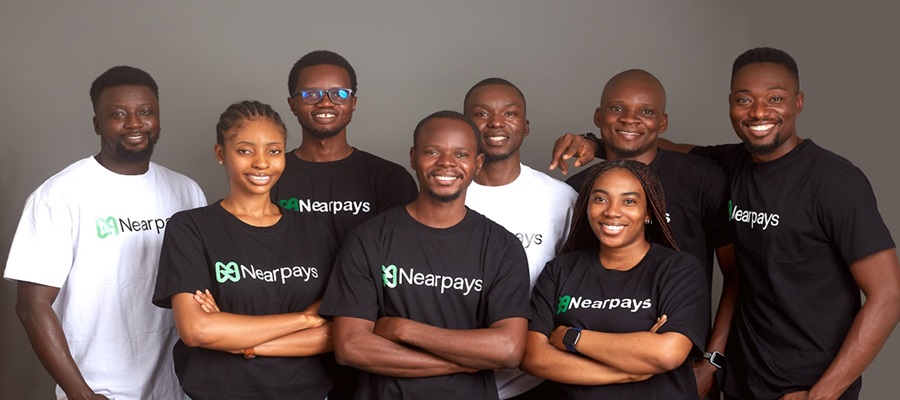
Nearpays, Nigerian fintech, has won the AI for Good Innovation Factory grand finale — the first African startup ever to take the global title in the competition, which runs as part of the United Nations’ AI for Good Global Summit.

The competition drew more than 500 startups worldwide, each pitching AI solutions aimed at social and economic challenges.
The summit itself is organised by the UN through the International Telecommunication Union (ITU) in partnership with several UN agencies, convening governments, researchers, startups, and technology companies around AI’s role in development.
Nearpays’ route to the title ran through Johannesburg, where it won the African regional competition, before advancing to the global finals in Geneva.
There, the company progressed through the semi-finals and claimed the grand finale — a first for the continent.
The company describes the win as bigger than a corporate milestone, calling it a victory for African innovation and proof that technology built to solve local problems can compete, and win, on the world stage.
Nearpays was founded to close a stubborn gap in African payments: small and medium-sized businesses that can’t afford or access traditional point-of-sale terminals.
Cost, availability, and deployment hurdles have kept many merchants — particularly in rural and underserved communities — locked out of digital payments.
Its answer is SoftPOS: an AI-powered platform that turns compatible Android smartphones into payment acceptance devices, letting merchants take contactless card payments with nothing more than their phones. AI is embedded across the platform, supporting payment processing, compliance, fraud detection, and business operations.
Crucially, the platform was built for African infrastructure realities — it works both online and offline, so merchants can keep accepting payments even without internet connectivity.
The company credited its team’s years of product development and customer engagement for the result, and thanked the UN, the ITU, and the AI for Good initiative for building a platform where innovators can apply AI to real-world problems.
It also said it hopes the win encourages more African founders to build technology that answers local needs while competing internationally.
For Nearpays, the title closes one chapter and opens another, as the company pushes on with expanding digital financial infrastructure across Afric

Next Currency Crisis May Turn $300Bn in Stablecoins into National Currencies

NIHSA Warns States of Possible Flood within Seven Days

FG to Raise N1.2 Trillion via Fresh Bond Offer – DMO

Gigbanc Nigerian Fintech Startup Closes Shop after 3 Years

Mbunabo, Nigerian Filmmaker Accuses Ghana TV Stations of Pirating Nollywood Films

NRC, Ponzi Scheme Collapses Resulting Loss of Billions of Naira

Nigeria Launches FreeTV Nationwide

NASENI Moves to Digitize CCB’s 5m Assets Declaration and Operations

Lebara Nigeria Launches Lebara Play, Africa’s First Telecom-Owned Micro-Drama Platform

CANAL+ Partners Samsung to Pre-Load DStv Stream on New Samsung TVs In Nigeria, Other African Countries




 News3 days ago
Xora Finance, Fintech Firm Refuses to Hire Nigerians over Alleged Dishonesty

 Telecom3 days ago
NCC Advances Dig Once Policy, Engages Stakeholders on Cost-Based Framework for Duct Sharing

 Telecom3 days ago
NCC to Keynote Telecom Sector Sustainability Forum 7.0

 General News3 days ago
FG Secures Fresh $208.3m World Bank Loan for Cash Transfer
 News3 days ago
How Ponzi Scheme Victims can Seek Legal Remedies — Lawyers

 Telecom2 days ago
MTN Nigeria Slashes Cost of Broadband Internet Router, Unwraps New Data Bundles for Low-Budget Users

 News3 days ago
PalmPay Nigeria Appoints Samuel Oluyemi as Chief Operating Officer

 General News3 days ago
SERAP Sues INEC over Alleged N800Bn 2027 Tinubu Campaign Fund