

/home/kenneth/web/nigeriacommunicationsweek.com.ng/public_html/wp-content/themes/zox-news/parts/post-single.php on line 153
">
Warning: Undefined array key 0 in /home/kenneth/web/nigeriacommunicationsweek.com.ng/public_html/wp-content/themes/zox-news/parts/post-single.php on line 153
Warning: Attempt to read property "cat_name" on null in /home/kenneth/web/nigeriacommunicationsweek.com.ng/public_html/wp-content/themes/zox-news/parts/post-single.php on line 153
Arik Air Commissions Aviation Fuel Depot

Arik Air, one of Nigeria’s largest commercial airline, last week commissioned its privately owned mini-depot for the storage of Jet A1, popularly known as Aviation fuel.
The depot, which is located within the Arik Air Aviation Centre at the Murtala Muhammed Domestic Airport, Lagos, will serve as a strategic reserve, according to Chris Ndulue deputy executive vice president of the company.
Ndulue, said the fuel depot built to assist the airline manage its fuel requirements properly, has capacity for 100, 000 litres of Jet A1 and comes equipped with the full compliments of a depot with an above ground facility which makes the fuel free from water.
Also, Owolabi Oriola, technical director of the depot, said the facility has an added advantage of a relaxing chamber which will remove sediments and water from the fuel before being dispensed.
Oriola added that the depot also has a double wall tank to control spill.
“The mini-depot is to have five browsers, two of which are on ground while three others are on the way. The browsers also have the facility to remove sediments and water from the fuel before dispensing,” Oriola said.
Speaking at the commissioning ceremony, Sir Joseph Akinola Arumemi-Ikhide, chairman of the company, said it was a thing of joy for the airline to build its first private depot.
“We are doing this because more often than not we have challenges with fueling our aircraft which have caused flight delays. Doing 150 flights daily, with plans for another 45 flights to make 200 within the next one year, means we have to remove all obstacles to smooth operation,” Arumemi-Ikhide said.
He stated that the commissioning of the depot is just a tip of the iceberg. “We are going to expand this facility to over five million litres in the next one year. We are going to commission one million litres in Abuja, Port Harcourt already has some and we are adding to it.”
However, he reiterated the commitment of Arik Air to safe and reliable operations. “We have the youngest fleet in Africa; all our aircraft are modern. We believe life does not have a duplicate and we want to ensure that people enjoy and not endure flying. There is difference between enjoying and enduring flying.”
He expressed gratitude to President Goodluck Jonathan for setting up a committee to look into the disagreement airlines have with Nigerian Airspace Management Agency (NAMA) and other aviation agencies. The committee, he said, has started work and will make its recommendations known soon.
Arik Air is West Africa’s leading commercial airline. It now operates a fleet of 26 state-of-the art regional, medium haul and long haul aircraft. The airline currently serves 22 airports across Nigeria as well as Accra (Ghana), Banjul (Gambia), Cotonou (Benin), Dakar (Senegal), Freetown (Sierra Leone), Monrovia (Liberia), London Heathrow (UK), Johannesburg (South Africa) and New York JFK (USA).
The airline currently operates over 150 flights daily from its hubs in Lagos and Abuja.


Warning: Undefined array key 0 in /home/kenneth/web/nigeriacommunicationsweek.com.ng/public_html/wp-content/themes/zox-news/parts/post-single.php on line 493
Warning: Attempt to read property "cat_ID" on null in /home/kenneth/web/nigeriacommunicationsweek.com.ng/public_html/wp-content/themes/zox-news/parts/post-single.php on line 493


Department of State Services (DSS), statutory known as the State Security Service (SSS), Nigeria’s premier domestic intelligence agency has reportedly acquired spyware that enables it illegally wiretap and detains citizens.

According to a report by The International Centre for Investigative Reporting (The ICIR), court filings and victim testimonies reviewed by it in the course its investigation revealed how spyware equipment acquired by Nigeria’s secret police for “national security” has become an instrument for illegal wiretapping.
In Nigeria, unlawful phone tapping and wiretapping are serious crimes as they violate privacy rights unless authorized by a judge.
The ICIR, an independent, non-profit news agency that promotes transparency and accountability through robust and objective investigative reporting in its report said the DSS, targets are monitored in secret, picked up, and hauled into horrible detention camps without trial dates or accountability.
Section 37 of the 1999 Constitution protects the privacy of citizens, their homes, correspondence, and telephone conversations.
But in exceptions, under the Constitution and the Lawful Interception of Communications Regulations 2019, authorized agencies (like the DSS and Police) can only intercept communications with a valid court order or warrant for reasons of national security or public safety.
Here is the full The ICIR report:
FIRST, the phones pinged. Then the knocks came. For suspects apprehended by operatives of the Department of State Services (DSS) since 2021 and taken to the military detention facility at Wawa, a border town in Niger State, the pattern was identical: strange calls, dropped signals, then arrests without warrants.
Court filings and victim testimonies reviewed by The ICIR in this investigation reveal how spyware equipment acquired by Nigeria’s secret police for “national security” has become an instrument for illegal wiretapping.
Targets are monitored in secret, picked up, and hauled into horrible detention camps without trial dates or accountability.
He sounded like a fan from America
On his way to Abuja from Abia State, a social media critic, Saheed Jamilu, got a call from a strange number.
The caller claimed to be a fan of his based in the United States who once lived in Abia.
“He hailed me and professed love for the South-East,” Jamilu said in a viral Facebook video. The caller later advised him to “soft-pedal” criticism of leaders, including the Ogun State governor, Dapo Abiodun.
Thirty minutes later, Jamilu checked the number.
Curiously, it carried a Nigerian code, not that of the U.S.
“It occurred to me something was fishy. I shared the number with my lawyer for verification. We later confirmed the caller was from the DSS,” Jamilu said.
He wondered why the secret police would chase critics instead of kidnappers holding hostages in forests across Nigeria.
Stories like his have flooded the social media space in Nigeria.
Activists and content creators, including the popular VDM (Very Dark Man), allege DSS surveillance and threats of arrest.
Where is ‘Blood’?
For lawyer Pius Awoke, 49, student Onyibe Chinonso, 34, and builder Nwocha Chinedu, 43, it was not an online alarm.
It was years of unspeakable horrors in detention.
On a wet Thursday morning in June 2021, along the Abuja-Lokoja highway, their Enugu-bound Sienna was flagged down near the Murtala Mohammed Bridge close to Lokoja.
Soldiers manning a checkpoint said the DSS had ordered a stop for a suspected IPOB (Indigenous People of Biafra) member.
Fifteen minutes later, plainclothes operatives arrived in an unmarked SUV. Among the eight passengers in the intercepted Sienna, the trio were ordered out and forced to surrender their phones.
Awoke recalled: “One operative brought out a paper and started dialling numbers with each phone. ‘Where is Blood?’ they barked, searching for a contact.”
Chinonso said they repeated the dialling three times and found nothing. After body and vehicle searches, the operatives began beating them.
“They kept beating and asking us ‘who is Blood?’ while we showed ID cards. After five hours of torture, they handcuffed us and took us to their Lokoja office,” Chinonso recalled.
The next day, they were ferried to DSS headquarters, Abuja, with face masks, phones and money seized. They were dumped in an underground cell called “Basement-2.”
Chinonso said one of the operatives, Jonah Daniel, urinated in a bottle and sprinkled it on their heads. “After that, our legs were chained together. We were kept incommunicado in a dark, cold, unventilated cell for two days,” he said.
Torture at the ‘Hell’ called Wawa
Wawa Military Cantonment in Borgu LGA, Niger State, near Benin Republic, is used for training and operations.
However, some ex-detainees told The ICIR that their ordeals in the hands of the DSS ended with detention at Wawa, describing it as “hell.”
For full details go to https://www.icirnigeria.org/how-dss-spyware-acquisition-enables-illegal-wiretaps-and-detentions/
Microsoft has announced plans to cut about 4,800 jobs, representing roughly 2.1 percent of its global workforce, with Xbox, its gaming division, expected to bear the largest share of the layoffs.

The company said more than 1,600 positions at Xbox would be eliminated immediately, while another 1,600 jobs would be phased out over the next year as part of a major restructuring of the gaming business.
In a memo to employees, Amy Coleman, executive vice president, Microsoft, said the company was streamlining its operations to focus on areas that deliver greater value to customers in a rapidly changing technology industry.
Asha Sharma, chief executive officer, Xbox, described the move as “the most significant restructure in Xbox history,” saying the changes are intended to position the gaming business for long-term growth rather than downsizing.
News
Access Bank, Fifth Chukker and UNICEF Renew Commitment to Expanding Educational Opportunities for Nigeria’s Most Vulnerable Children

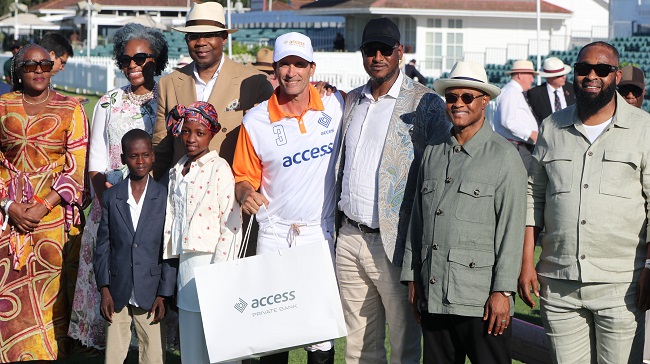
The transformative power of collective action in expanding access to education took centre stage in London as Access Bank UK, Fifth Chukker, UNICEF and the Kaduna State Government reaffirmed their shared commitment to creating brighter futures for Nigeria’s most vulnerable children.

Hosted by Access Bank UK, Access UK Polo Day celebrated more than 15 years of impact driven by a shared vision to expand educational opportunities for underserved children. What began as a modest initiative has evolved into one of Africa’s most impactful education programmes, with the Access Bank Fifth Chukker School in Kaduna State and its associated interventions positively impacting more than 14,000 children across underserved communities in Northern Nigeria.
At the heart of this transformation is the Access Bank Fifth Chukker School, where investments in educational infrastructure, learning resources and student support have created lasting opportunities for thousands of children.
Between 2018 and 2026 alone, the school recorded 2,538 graduates, with female pupils accounting for more than 54 per cent of the total, underscoring the programme’s contribution to advancing girls’ education and promoting inclusive access to learning.
More than 1,000 pupils benefit from the school’s internationally recognised foundational learning programme each year, contributing to improved literacy and numeracy outcomes and a reported 15 per cent increase in learning performance. Students continue to secure admission into leading secondary schools, while teachers receive ongoing professional development and digital learning support.
Enhanced infrastructural facilities and expanded learning resources have further strengthened the overall learning environment, helping to sustain the programme’s long-term impact.
This year’s event reinforced a compelling message: Every pledge should lead to a classroom, every classroom should empower a child, and every child should have the opportunity to shape a brighter future.
Speaking at the event, the Managing Director and Chief Executive Officer of Access Bank Plc, Roosevelt Ogbonna, reflected on the remarkable growth of the initiative and the unwavering commitment of its supporters.
“What began as a dream to transform the lives of 100 children has grown into a movement that has positively impacted more than 14,000 young people. We want to return next year talking about 28,000 children. Education remains the greatest leveller, giving every child a genuine opportunity to realise their potential and contribute meaningfully to society.”
Ogbonna expressed appreciation to donors and partners whose support has sustained the initiative, noting that investment in education creates lasting intergenerational impact.
Kaduna State Governor Uba Sani described education as one of the most valuable investments any society can make. He praised the longstanding alliance between Access Bank, Fifth Chukker and UNICEF, noting that it has restored hope and opportunity to thousands of children from underserved communities.
Highlighting Kaduna State’s ongoing education reforms, the Governor revealed that approximately 300,000 out-of-school children had been returned to classrooms over the past year through partnerships with organisations including UNICEF and other development partners.
He also announced plans to construct an additional 120 classrooms at the Fifth Chukker Access Bank UNICEF School, enabling even more children to access quality education.
“What we are doing here is about humanity. By giving children access to quality education, we are empowering them to dream, to lead and to build a better future for themselves and their communities.”
Governor Sani also paid tribute to the late Herbert Wigwe, acknowledging his vision, leadership and enduring commitment to improving educational outcomes for underserved populations.
For Aigboje Aig-Imoukhuede, Chairman of Access Holdings, the true success of the initiative is reflected in the lives being transformed.
“The most meaningful measure of success is not the number of buildings we construct, but the opportunities we create. Every child who receives an education, every young person who discovers their potential, and every community strengthened through learning represents the lasting impact of this partnership. Together, we are proving that when purpose meets collaboration, we can create opportunities that change lives for generations.”
Welcoming guests, Jamie Simmonds, Chief Executive Officer of The Access Bank UK, described the gathering as polo with purpose, a celebration not only of sport but of a shared mission to create opportunity through education.
He highlighted the institution’s commitment to supporting initiatives that deliver sustainable social impact and broaden access to learning for underserved children.
The event concluded with a renewed commitment from all stakeholders to deepen investment in education as a catalyst for national development and social progress.
The Access Bank Fifth Chukker School continues to demonstrate the impact of sustained collaboration among the private sector, government and development partners, delivering measurable outcomes for vulnerable children in Northern Nigeria.

DSS Spyware Acquisition Enables Illegal Wiretaps, Detentions – The ICIR

Microsoft to Lay Off 4,800 Workers

Access Bank, Fifth Chukker and UNICEF Renew Commitment to Expanding Educational Opportunities for Nigeria’s Most Vulnerable Children

IHS Nigeria, FCT-HSES Concludes Clean Cooking Energy Campaign “Project Breathe Clean Air” in Abuja

Kaspersky Transforms Threat Intelligence Reporting into an Interactive Content Hub

Mobile Internet Gender Gap Widest in Africa – GSMA

Nigeria Launches FreeTV Nationwide

NASENI Moves to Digitize CCB’s 5m Assets Declaration and Operations

CANAL+ Partners Samsung to Pre-Load DStv Stream on New Samsung TVs In Nigeria, Other African Countries

UK, Nigeria Launch £15m Growth Programme to Accelerate Economic Transformation




 General News1 day ago
NIS Deploys Advanced Surveillance Masts, other Critical Infrastructure to Boost Border Security

 E-Financial1 day ago
Tokenization, Blockchain Technology will Transform Financial Institutions – IMF

 E-Business1 day ago
Weebly Websites to Shut Down for Nigeria, 66 Other Countries from September

 Broadcasting1 day ago
Obi, NDC Presidential Candidate Faces N50Bn Defamation Claim over Alleged Podcast Remark

 Telecom1 day ago
No Plans for Fresh Tariff Hike – MTN

 E-Financial1 day ago
FG Denies N8 Trillion ‘Shadow Budget’, Says IMF Quoted out of Context

 General News1 day ago
PufferPay CEO to Keynote Business Journal Fintech & Financial Inclusion Roundtable 2026

 Telecom1 day ago
Airtel Africa Foundation Equips 200 Young Women with Digital Skills to Drive Nigeria’s Tech Economy