

News
NITEC and Need For IoT Future-Ready Nigeria

For emphasis sake, the latest edition of the Ericsson Mobility Report, published on Tuesday reveals that the Internet of Things (IoT) is set to overtake mobile phones as the largest category of connected device by 2018. Really?
Oh yes! See, between 2015 and 2021, the number of IoT connected devices is expected to grow 23% annually, of which cellular IoT is forecast by Ericsson to have the highest growth rate. Of the 28 billion total devices that will be connected by 2021, close to 16 billion will be IoT devices.
The report continues, as usual, Western Europe will lead the way in adding IoT connections – the number of IoT devices in this market is projected to grow 400 percent by 2021. This will principally be driven by regulatory requirements, for example for intelligent utility meters, and a growing demand for connected cars including the EU e-call directive to be implemented in 2018.
Rima Qureshi, Senior Vice President & Chief Strategy Officer, Ericsson, says: “IoT is now accelerating as device costs fall and innovative applications emerge. From 2020, commercial deployment of 5G networks will provide additional capabilities that are critical for IoT, such as network slicing and the capacity to connect exponentially more devices than is possible today.”
Wait. Is Nigeria in the number even with the estimated population of 173million, mobile subscriber level standing at 97,032,543 as at first quarter 2016 and with over 107 percent teledensity for voice segment of telecommunications services. Is Nigeria really ready for the Internet of things with not more than 15% broadband penetration, although the national broadband plan sets 30% target by 2018. Oh, wait, among the telcos, how many have sincerely deployed 4G LTE services. If 4G is still an allusion in certain cities, should we be concerned or just hope 5G will come. But, what are the factors inhibiting the telcos from deploying the 4G LTE technologies as quick as possible. Are they surmountable or we are now in a pariah state. Will the funds in the Universal Service Provision fund (USPF) kitty be enough to deploy services especially to the underserved. In fact, what are the practical steps have been Barrister Adebayo Shittu led Ministry of Communications to ensure Nigeria is on course for IoT.
We need to hear from the horses mouth, which emphasizes the need all hand must be on deck to push for the success of the Nigeria International Technology Exhibition & Conference (www.nitec.com.ng) (NITEC 2016).
The conversation around IoT is such important, because if I find it difficult at the moment to stream videos, whether live or plug and play, how will my refrigerators be ‘empowered’ with enough broadband to inform me while I am miles away from home.
And IoT is developing another massive market, because by the time it becomes ubiquitous, ‘we shall live in/on apps’.
Ericsson reports that smartphone subscriptions continue to increase and are forecast to surpass those for basic phones in Q3 2016. By 2021, smartphone subscriptions will almost double from 3.4 billion to 6.3 billion.
“In 2016, a long anticipated milestone is being passed with commercial LTE networks supporting downlink peak data speeds of 1 Gbps. Devices that support 1 Gbps are expected in the second half of 2016, initially in markets such as Japan, US, South Korea and China, but rapidly spreading to other regions. Mobile users will enjoy extremely fast time to content thanks to this enhanced technology, which will enable up to two thirds faster download speeds compared with the fastest technology available today”.
More highlights from the Ericsson Mobility Report include:
“A global growth story: mobile broadband subscriptions will grow fourfold in the Middle East and Africa between 2015 and 2021; mobile data traffic in India will grow fifteen times by 2021; and despite being the most mature market, US mobile traffic will grow 50 percent in 2016 alone.
“Data traffic continues unabated growth: global mobile data traffic grew 60 percent between Q1 2015 and Q1 2016, due to rising numbers of smartphone subscriptions and increasing data consumption per subscriber. By the end of 2021, around 90 percent of mobile data traffic will be from smartphones.
“Growing up streaming: teenage use of cellular data for smartphone video grew 127 percent in just 15 months. This, and the fact that teens are the heaviest users of data for smartphone video streaming (Wi-Fi and cellular combined), makes them the most important group for cellular operators to monitor.
“LTE subscriptions grew at a high rate during Q1 2016: there were 150 million new subscriptions during the quarter – driven by demand for improved user experience and faster networks – reaching a total of 1.2 billion worldwide. LTE peak data speeds of 1 Gbps are anticipated to be commercially available in 2016.
“Additional spectrum harmonization needed between countries planning early 5G deployment: 5G is expected to start more quickly than anticipated, and spectrum harmonization is needed between countries planning early roll-outs. This is in addition to the current process for WRC-19, which focuses on spectrum for commercial 5G deployments beyond 2020.
“A bright future for microweather: microwave backhaul links can be used as accurate rainfall measurement tools – they are more numerous than rain gauges and offer higher resolution than weather radars. This has the potential to bring enormous value to people, business and society, for example in relation to the impact of severe weather conditions around the world”.
In preparation for the IoT rainy day, NITEC 2016 will present a holistic look at the concept of Internet of Things. Will Africa rise to develop its own local talents to take advantage of this trend? Or would it just seat down like the mobile revolution era and consume everything created from abroad?
Thus, NITEC 2016 holding at Civic Centre, Lagos from 23rd-24th June remains a formidable to bridge the gap between the private and public sectors and the international technology community in re-engineering the African technological ecosystem for greater impact on the continent’s GDP.
Likewise, through plenary sessions and exhibitions the worth of our technology system will be showcased to thousands of attendees; exhibition booth (2 days); placement of brand logo on event brochure and website; complimentary wifi, place web banners and share branded gifts at booths.
The renowned speakers will spark deepened conversation and help through up new innovations that will help Nigeria and indeed, Africa, become IoT-future ready.



A Nigerian development scholar, Evans Woherem, has argued that Africa’s slow pace of development is rooted less in the capabilities of its people and more in the weakness of its institutions, systems, and governance culture.

In a sweeping article titled *_“Institutions, Culture, and the African Development Question: Why Systems Matter, and How Africa Can Leapfrog Development,”_* Woherem said “human beings are broadly similar biologically and intellectually across races and geographies,” stressing that the real difference between prosperous and struggling societies lies in “systems, institutions, cultures, incentives, and historical environments.”
According to him, one of the clearest demonstrations of this reality is the conduct of Africans living abroad.
“Individuals who, within certain African environments, may tolerate disorder, circumvent rules, participate in patronage systems, or adapt to corruption often relocate to countries such as the United States, Germany, Japan, Singapore, or Canada and quickly become highly compliant with laws and institutional expectations,” he wrote.
Woherem, a former Executive Director at both First Bank Plc and Unity Bank Plc, noted that such individuals suddenly obey traffic regulations, respect public infrastructure, pay taxes, and operate efficiently within merit-based systems, insisting that “the human material did not suddenly change. The surrounding institutional architecture did.”
He lamented that many African countries still approach development through what he described as a “project-based conception of development” rather than a systems-driven model capable of sustaining progress across generations.
The author of best-selling books- “Building a New Africa,” and “Information Technology in Africa,” criticised the nature of governance conversations across the continent, saying public discourse often centres almost exclusively on visible infrastructure projects such as roads, bridges, schools, and empowerment schemes, while deeper institutional questions are ignored.
“What institutions have been strengthened? What systems have been redesigned to outlive the present administration? What governance mechanisms now function automatically regardless of who occupies office?” he asked.
The scholar argued that sustainable development cannot be measured merely by the number of projects completed but by whether nations are building durable institutions capable of continuously producing results irrespective of political transitions.
“A nation does not become advanced merely because it constructs roads,” he stated. “It becomes advanced when it builds systems capable of continuously producing, maintaining, financing, regulating, and improving those roads across generations regardless of changes in leadership.”
Woherem further blamed Africa’s institutional fragility partly on colonial structures that were designed primarily for extraction rather than national development.
He said many post-independence governments inherited centralized but weakly accountable systems and merely “localized the machinery of extraction” instead of transforming the state into a developmental institution.
The information technology expert also highlighted the absence of what he called “developmental consciousness” across many African societies, noting that issues such as industrial policy, bureaucratic reform, technological sovereignty, manufacturing competitiveness, and state capacity rarely dominate mainstream public debate.
Drawing comparisons with countries such as Japan, Singapore, South Korea, and China, Woherem said successful industrialisation was driven by strong institutions, disciplined bureaucracies, educational excellence, and long-term planning.
“Their rise was not accidental, nor was it merely infrastructural. It was deeply institutional and civilizational,” he wrote.
The development expert also challenged African media organisations to move beyond “cosmetic” reporting of governance performance by interrogating structural reforms instead of simply celebrating project commissioning ceremonies.
“Instead of merely asking how many roads were constructed, they should ask whether procurement systems have become more transparent, whether regulatory agencies function independently, whether educational outcomes are improving systematically, and whether industrial policies are producing measurable manufacturing expansion,” he said.
Woherem further stressed the importance of “Developmental Industrialists,” pointing to African billionaire Aliko Dangote as an example of economic actors whose contributions extend beyond personal wealth accumulation to building industrial ecosystems and national productive capacity.
He maintained that Africa’s future depends on stronger bureaucracies, impartial legal systems, technologically enabled governance, industrial strategy, educational reform, and a civic culture that rewards competence over patronage.
“Roads alone do not produce civilization. Systems do,” Woherem declared.
He concluded that Africa’s greatest challenge is not a lack of human potential but the absence of institutional structures strong enough to consistently bring out the best in its people.
“And until systems become the centre of African developmental thinking,” he warned, “progress will remain slower, more fragile, and more reversible than it ought to be.”

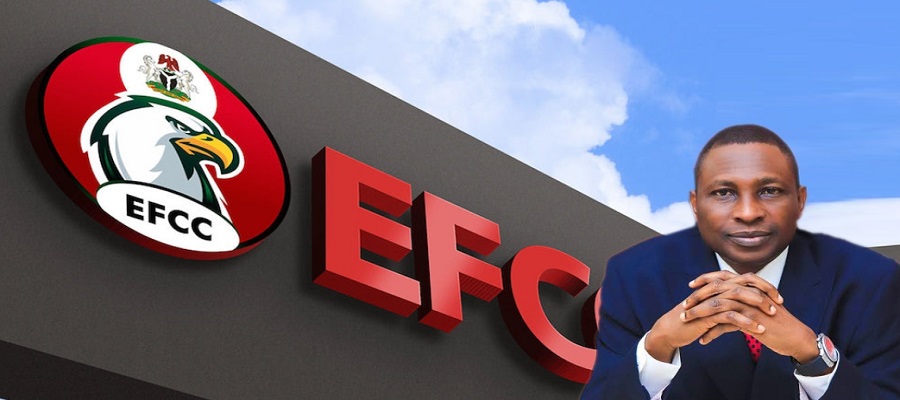
Economic and Financial Crimes Commission (EFCC) does not currently maintain a public privacy policy on www.efcc.gov.ng, its official website.

Ola Olukoyede, EFCC chairman, EFCC
This is despite partnering with the Nigeria Data Protection Commission (NDPC) to ensure data compliance according to findings by Foundation for Investigative Journalism (FIJ)
As a law enforcement agency, the EFCC handles highly sensitive personal data and financial records, but its main web portal does not currently provide a formal, publicly available privacy policy detailing how user data is collected, stored, or processed.
According to the National Information Technology Development Agency (NITDA), all government websites are mandated to have privacy policies.
Section 10.4 (i, ii) of the NITDA Privacy Policy mandates all government websites to exercise diligence when collecting personal details or information about visitors to their websites.
It equally requires all government websites to incorporate prominently displayed privacy statements clearly stating the purpose for which information is being collected where the government institution seeks to or collects personal information from visitors through its website.
In addition, the Nigeria Data Protection Act (NDPA) 2023 requires every data controller to make a privacy notice available to citizens before or at the point of collecting their personal data.
That notice must state the specific lawful basis of processing, the purposes of the processing, the categories of recipients of the personal data, the existence of data subject rights, and the right to lodge a complaint with the Commission.
The law further states that such information must be contained in a privacy policy and expressed in a clear, concise, transparent, intelligible and easily accessible format, taking into consideration the class of data subjects targeted by the data processing.
However, on Monday, FIJ checked the anti-graft agency’s website and found that it had no privacy policy or privacy notice informing users how their personal data is collected, processed, stored or shared.
FIJ found that Nigerians can submit petitions to the EFCC on the website.
During this process, the website compulsorily collects personal data such as names, National Identification Numbers (NIN), email addresses, local government areas (LGAs), phone numbers and residential addresses.
Also, organizations and financial institutions (such as commercial banks) are legally mandated to share customer information and suspicious transactions with the EFCC to prevent financial crimes.
However, the website collects this information without specifically informing users what happens to the data they provide.
Ironically, in September 2024, the EFCC and the Nigeria Data Protection Commission (NDPC) agreed to forge a partnership and collaboration towards strengthening cyber data protection in the country.
The agreement was reached in Abuja on September 18, 2024, when Vincent Olatunji, national commissioner and chief executive officer of the NDPC, led a delegation of management staff on a courtesy visit to Ola Olukoyede, EFCC chairman, at the commission’s corporate headquarters.
Despite partnering with Nigeria’s data protection regulator, the EFCC still has no privacy policy on its website.
At press time, the EFCC met none of the privacy policy requirements stipulated by both NITDA guidelines and the NDPA 2023.
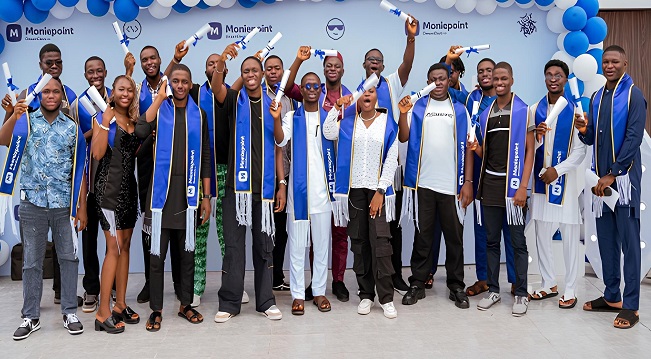
Moniepoint is proud to announce that the second cohort of its flagship DreamDevs Bootcamp is set to culminate in a Demo Day celebration on May 26, 2026, at its Ikeja facility. The event, themed “Training Done! Demo Up!”, will showcase the capstone projects built by participants following nine weeks of intensive, industry-grade software engineering training.

The DreamDevs Bootcamp is Moniepoint’s commitment to identifying and developing the brightest engineering talent across Africa. The nine-week intensive programme is designed to immerse participants in real-world, practical software engineering through a curriculum spanning Java OOP Foundations, Data Structures & Algorithms, Testing, MySQL & JDBC, Spring Boot APIs & System Design, Docker & Messaging Queues, Frontend UI & Cloud Infrastructure, and core Practical Software Engineering Concepts. In recognition of their commitment and effort, cohort participants are paid monthly throughout the duration of the programme.
The curriculum was developed by the Engineering Unit at Moniepoint and delivered in partnership with Semicolon, a leading technology education institution. Admission to the DreamDevs Bootcamp is highly competitive, with only top performers advancing through multiple stages of assessment, including a HackerRank technical test and an in-person code challenge, before earning a place in the programme.
Felix Ike, Co-Founder and CTO of Moniepoint, reflected on what the programme means to the company and the country, “Engineering excellence is a curated and intentionally built process that requires the right systems, resources, and time. The DreamDevs Bootcamp is our way of taking that responsibility seriously.
“We designed a programme that does not just teach syntax or frameworks, but develops engineers who can think, solve, and build at the highest level. Seeing graduates from our first cohort already thriving within our engineering team tells us we are on the right track, and we are excited to see what this second group brings to Demo Day.”
Some of the first cohort’s successful graduates are now active members of the Moniepoint engineering team, a testament to the programme’s effectiveness and its role as a genuine pipeline for world-class engineering talent.
The DreamDevs Bootcamp reflects Moniepoint’s broader mission to invest in Nigeria’s talent and build engineering capacity that can compete and lead on a global stage. Moniepoint looks forward to welcoming the second cohort to the fold and witnessing the innovative solutions they have built.

CBN to Simplify Bank Alerts over Rising Customer Complaints

Otedola Plans $100m Investment in Dangote Refinery ahead of Proposed IPO

Telcos in Nigeria, other Emerging Markets Squeezed by Diesel Crisis

Immigration, Lasaco Assurance Partner on Institutional Growth

Nigeria gets AI-ready Lagos data centre

MTN, VDT, Zoracom, Digital Realty Back 2026 Girls in ICT Campaign

Vitel Wireless Partners Fintechs to Expand Access to Services

Kaspersky Discovers Vulnerability in Qualcomm Snapdragon Chips that can Lead to Data Loss & Device Compromise

Bank Customers to Pay N1,500 for ATM Card Issuance, Replacement – CBN

FCCPC Licenses 5 Firms for Airtime, Data Lending as Telcos Step Aside




 E-Financial2 days ago
FG Says All Taxable Nigerian Must Obtain Taxpayer ID

 News2 days ago
FG Unveils Free Tax Dispute Resolution Platforms for Nigerians

 News2 days ago
EFCC Which Handles Sensitive Data, Financial Records has No Privacy Policy on Website- FiJ

 Telecom2 days ago
Relief for SMEs as NACAN Launches Fight Against Expensive Broadband in Nigeria

 E-Business2 days ago
TD Africa, HPE Drive Conversations on the Future of Intelligent Networking

 E-Business2 days ago
Identy.io, US Firm Eyes 1Bn Biometric Verification Transactions in Nigeria

 News2 days ago
Moniepoint DreamDevs Bootcamp Second Cohort Set for Demo Day

 General News2 days ago
Lagos Unveils Plan for 24-hour Electricity Supply in the State