

General News
No Alternative to Internet Local Content-Kalu

Ndukwe Kalu is president, Nigeria Internet Registration Association (NIRA) and also the chief executive, Amsco Telecom
Kalu is an accomplished engineer with robust credentials. He has been on the forefront of improving Internet penetration and inking Nigeria positively on the Internet map. He told emeka okafor how in this interview
Making .ng Lucrative
That is a very good question because clearly there are contentious issues about how national registry should operate. The Nigeria Internet Registration Association (Nira) board has taken a decision to grow the Nira domain and make it something that registrars would be want to be part of and in fact make it the number one preferred domain in Africa and one of the few domains for the world and the steps taken are the following:
First of all, we have radically changed our few key policies. We have proposed a retail price of N5, 000 during the consultation period and after consultation the published price now comes to N1,000 through the registrar. You know with competition, it would be low but that means .ng will be the cheapest domain second only to .com in the world at the price the registrars buy it. In fact, it is cheaper than .com if you factor in the charges on top of the domain that people pay for.com or registrars pay. That is for pricing. Secondly, we are trying to put together what we call the pioneer registrars and we have given a lot of concession like lowered price, paid some fees so that we can have registrars and we are going to have 10 expressions of interest from registrars outside the country. Some of them are Nigerians in diaspora while others foreigners. There’s a foreign company in Senegal that is applying so we are looking at registrars from across the world pushing the domain so that the domain becomes a primary preference.
The third area is technical infrastructure which is very fundamental. We are looking at immediate automated domain registration. We are looking at immediate domain propagation which means if you registrar your domain now it will just take a few minutes you will see it. It will be propagated all over in the internet. It won’t be like take 48 hours. No, it will now be propagated instantly and then you can register a domain 12 midnight or whatever time and it is done in seconds. We are very confident that before the end of this month (August) we will be able to achieve that particular payment of automated registration and immediate propagation so what means is like a domain of preference. I can access it if I meet the criteria and then once it’s registered, I can easily pick up my site, there’s no delay of one week, ten days, etc.
These are the three things that we are trying to do with provision of .ng as a primary domain for Africa and basically the domain of preference globally.
Plans Embrace .ng
First of all, the first plan we have is that we have made it cheaper. You know Nigerians love things that are very cost effective. They want the best of good ones at low price and high value and that is what we have been able to achieve with .ng.
Secondly, we are working on a major awareness campaign that we already have indicative interest from corporate sponsors that are multifaceted .We are talking about website competition across many categories that create the consciousness of the type of website you should put out there, whether in the public or private sector. We are talking about a drive for content with intent on the people are ready to put their money on, a site they feel will be +able to generate revenue. We are talking about a drive for content with intent on the one people are ready to put their money on , a site they feel will be able to generate revenue .We are talking about a drive for local role play, trying to push hosting providers to provide facilities that are of international standard. All these are geared towards ensuring that Nigerians can embrace .ng fully because if you remove the impediments of. .ng and bring them at par with those of other countries, if there’s awareness and facility to host and register it, if the price is cheap, then the issue is why shouldn’t I. So that is what we want to do. Then, you know there are issues of course it is not critical now of setting IP from Nigeria. It is not just. ng even if it is .com and the IP resolved is a Nigerian IP, Nigerian IP club , there are issues about that and we are working on that .Hopefully we feel with time we should be able to resolve that to ensure that something from Nigeria is respected except when there are issues of fraud then the necessary organizations, both the service providers like ISPON and ATCON and the enforcement agencies like the Nigeria police and EFCC can step in and do something but then Nigerians should be given benefit of the doubt that they are legitimate customers and not the other way round.
Shutting Out Fraudsters on .ng
Our conditions for registrars are stringent. There are two issues that tackle that. First are the conditions for registrars, second are the conditions for registrants. Now the registrars, we have an accreditation process to ensure that they are credible people and we also have a bond that they must deliver, because once you become a newly accredited registrar, the registrants will begin to meet you and give you money and say I want to register and if the registrar is not a credible person, he may pack up and go. So, that is why we insisted that all registrars must produce a bond. So, in the case of failure we can call on the bond to use it to compensate the registrants. So, we feel with the accreditation process and the bond , we should be able to ensure that we have minimal default from registrars. Now the other aspect is for registrants.
New registrant is listed for domain and we have said these are the criteria for getting a domain so if you don’t meet those criteria you cannot have a domain. Now if you have the domain and that is why we have also emphasized that every registrant will sign an agreement electronically and say I accept this agreement and if you are registering a domain you are to be enlightened both in competition and global best practice informing you that the registry which is like Nira from Nigeria has the ultimate right over that domain .It can be withdrawn from you because you manage it on behalf of Nigeria.
Also the listed things like pornography, fraud and generally other things that are against the constitution of the Federal Republic of Nigeria are against charters Nigeria has signed to which you cannot use the domain for .
Structure in Place
You know it is not easy for a new organization by any stretch. When we came in, it was like coming in from all the issues, all the misunderstanding that happened. We were coming into a situation whereby there was really nothing on ground. We had no technical infrastructure, no physical infrastructure, basically nothing. So, we had to take a decision and priorities and our first priority went to technical because we felt if we have a wonderful office and people can’t register their domain still, it comes to nothing. So, we put everything into the technical infrastructure that you should be seeing this month . And the next thing we are tackling is the structure itself, the physical structure, the office and the manpower as it should be. We already have some reports about the structure of the operational base of Nira and it is our hope that when we finalize on that, get to the next stage of equipment, get to the next stage of acquiring an administrative office stage , we should have been able to tidy that and have it fully in place . Right now we have a temporary secretariat based here. Give or take, we are expecting that to take 3 months because we are going to choose the right set of people, get the right place and put it in order. We are feeling that by September/October, we should have tidied all that in place. But we are also working towards moving to the permanent site even with temporary structures in place. Our key priority is to ensure that we have a technical infrastructure that will pride the .ng goal in place.
Web Juries
Well, the intention of the board was to take over the web juries and expand it to various sectors and be a barometer for the value of content on the Nigerian .ng domain which is critical.
One or two companies have shown an enormous appreciation in value content. Some people have mentioned it to us that they look at some government sites, they look at some private sector sites and they are amazed that people could put out those candid things.
But unfortunately in our negotiations and discussions with Philip Consulting, we could not really find a common ground where Nira, a fully independent body could get managed and expanded working with them. So, the board decided to withdraw from that and rather set up a broad web assessment platform that will involve all sectors , not just banking, the industrial sector, the public sector itself .So, we are going to come up with web assessment platform that will truly become effective from 2009, but we are going to publish the details this year so that people will know the barometers, the inspections and so on and so forth and be able to integrate .So web juries will remain as it is but we appreciate what they had in mind and what they wanted to do by initiating a programme such as the web juries.
Increasing Local Content
Well, like I have said it over and over and people have said, well is that not over-emphasizing the issue and the issue of local content can never be over-emphasized. First of all, broadband plays a critical role in a nation’s development. It played a critical role for India, America. There is a report done in America 10 years about the impact of broadband and why some states were ahead of the others and so on. It clearly showed benefits from different areas from broadband. Then by having local content, let’s say most of your traffic end locally then it means that 80-90% of our cost for internet access will be cut simply because of going local. In china, over 95% of their traffic is local and the same in the U.S whereas n in the U.K it is over 90%. So the cost for them for internet access is the cost to get to that content which is within their country and the price of bandwidth within the country is less than 1% of the price of bandwidth to any other country which is likely to be the U.S which is called the backbone of the backbone. So with that you achieve a cost effective internet access. If you want broadband it will be affordable and there is no alternative to having local content. And when you are talking about local content, we are not just saying you build any site you see. No, you are talking about things people want. If you measure the traffic, a lot of it is on email, chat. you are going to build the same world-class email and chat that Yahoo and Google are known for . Anything short of that, Nigerians won’t patronize it and you are back to square one. So, it is a lot of effort but every country has done it by seeing the need for it and promoting it. They promote it through the internet exchange point and initiative that put people in them.



A recent study – Nigeria’s Credit Landscape Report 2025 – has revealed a striking paradox in the nation’s financial ecosystem, revealing that while more Nigerians are becoming financially included, only about 6% of adults currently access credit through formal financial institutions.

Published by Credit Direct in June 2026, the report highlights that although more than 64% of Nigerian adults are financially included, formal credit penetration remains significantly low. Credit to the Nigerian private sector stands at just 13.1% of GDP, well below peer African economies such as Kenya and South Africa. The findings point to persistent barriers to credit access for households, entrepreneurs and small businesses, despite improving economic conditions and growing business activity across key sectors of the economy.
The report also notes that Nigeria’s real sector recorded sustained expansion throughout 2025, with manufacturing, services and agriculture posting positive growth indicators, creating increased demand for working capital and business financing.
Reacting to the findings, Mutual Benefits Assurance Plc said the report reinforces the urgent need for a more holistic approach to financial inclusion, one that combines access to finance with savings, insurance protection and long-term financial planning.
The leading insurer noted that while access to credit remains important for economic growth, financial protection mechanisms are equally essential in helping individuals and businesses withstand economic shocks.
Through its diverse portfolio of solutions, Mutual Benefits continues to provide Nigerians with tools to build, preserve and protect wealth. These include education-focused protection plans, life assurance products, savings-oriented solutions, motor and property insurance and business protection products designed to safeguard livelihoods and future goals.
According to the Managing Director, Mutual Benefits Assurance Plc, Femi Asenuga: “The conversation around financial inclusion must go beyond opening bank accounts and accessing loans. True financial empowerment is achieved when individuals and businesses can access financing opportunities while also protecting their income, assets, families and future aspirations from unforeseen risks.
“For many Nigerian families and business owners, a single unexpected event such as a medical emergency, fire incident, business disruption or loss of income, can erase years of financial progress. This is why insurance and disciplined savings remain critical pillars of long-term financial resilience.”
The report further reveals that Microfinance Banks account for only 5.4% of Nigeria’s total loan book, underscoring the need for stronger support for SMEs and underserved communities that often struggle to access conventional bank financing.
As part of its commitment to advancing financial inclusion, Mutual Microfinance Bank continues to deliver accessible financing solutions tailored to the needs of small businesses, traders, salary earners, entrepreneurs and emerging enterprises across Nigeria. As at December 31, 2025, the Bank had disbursed loans totaling N1.372 billion, further strengthening access to formal credit for individuals and businesses across its target segments. This growth trajectory continued into 2026, with the loan portfolio rising to N1.558 billion by the end of Q1 2026, reflecting sustained momentum in supporting productive economic activity
Asenuga added: “Small businesses remain the backbone of Nigeria’s economy, yet many continue to face significant barriers in accessing affordable financing. Through Mutual Microfinance Bank, we are helping to bridge this gap by providing flexible financial solutions that enable entrepreneurs to grow, create jobs and contribute meaningfully to economic development.
“At the same time, we encourage individuals and businesses to think beyond borrowing by adopting a culture of saving, risk management and financial protection. Sustainable prosperity is built not only by generating income but also by protecting it.”
With economic activity expected to strengthen further and demand for financing projected to increase across several sectors, Mutual Benefits believes that the future of financial inclusion in Nigeria will depend on creating an ecosystem where access to credit, savings and protection work together to improve financial well-being.
The company reaffirmed its commitment to supporting Nigerians through innovative insurance solutions and accessible financial services that empower individuals, families, and businesses to build resilience, pursue opportunities confidently, and achieve lasting financial security.
Mutual Benefits Assurance Plc is one of Nigeria’s leading insurance companies with over 30 years of experience in providing reliable and innovative life and non-life insurance solutions to individuals, families and businesses. Through innovation, customer-centricity and a commitment to financial inclusion, the company continues to deliver value, protection and peace of mind to customers across Nigeria.
On its part, Mutual Microfinance Bank is committed to expanding access to financial services for individuals, micro-enterprises and small businesses through innovative savings products, accessible financing solutions and customer-focused banking services that promote economic empowerment and financial inclusion.
General News
Trashverse Recycling Technology Emerges Winner as MTN’s The Gathering on 100 Pitchathon Concludes with N5m Awarded in Aba

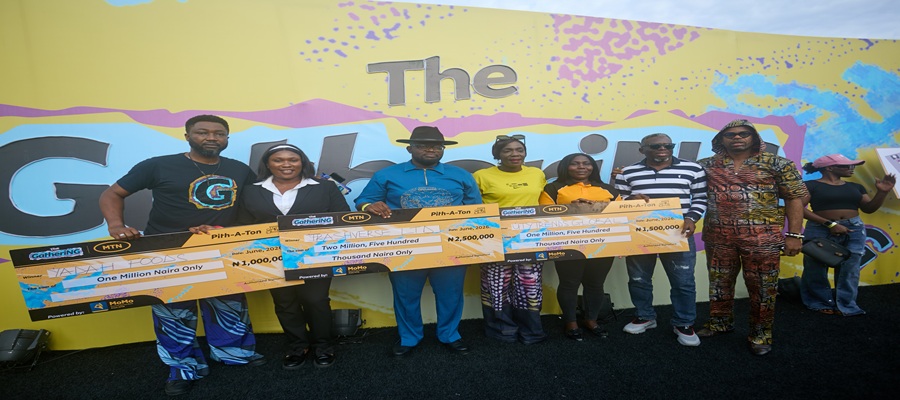
MTN Nigeria has successfully concluded the Aba leg of its youth cultural and creative movement, The Gathering on 100. The 18-hour event marks a significant milestone for entrepreneurship in Eastern Nigeria.

The event, which took place at the Prime Time Event Centre in Osisioma from June 14 to 15, 2026, transformed the venue into a tech hub for young innovators in Aba.
The Pitchathon had 10 standout startups compete for a total prize pool of ₦5 million. The competition showcased the immense potential of Aba’s youth, encouraging them to live life to the fullest through technological and creative excellence.
The participating startups, representing a cross-section of Aba’s burgeoning innovation ecosystem, impressed judges with solutions ranging from logistics to artisanal tech. Among the finalists were Trashverse Recycling Technology Limited founded by Charles Ikechukwu, Yadah Food, founded by Deborah Enyinnaya and Utytrends Global Ventures led by Utibe Akwa.
After a rigorous evaluation by judges Chiemela Anosike, Dr. Chime Chimezie-Uche, and Justina Nwokedi, the winners were officially announced. Trashverse Recycling Technology Limited, led by Charles Ikechukwu, claimed the first-place prize of ₦2.5 million.
Ikechukwu, founder of Trashverse Recycling Technology Limited, shared his excitement “Winning this pitchathon is a dream come true for our team. The support from The Gathering on 100 and MTN validates our vision and provides the financial backing we need to scale our production and serve more customers in Aba and the global stage.”
Utytrends Global Ventures secured the second-place prize of ₦1.5 million, while Yadah Food took home ₦1 million. These founders showcased solutions that blended local ingenuity with scalable technological frameworks, reinforcing Aba’s reputation as a powerhouse of Nigerian manufacturing and entrepreneurial spirit.
The Gathering on 100’s Pitchathon provided a platform for these early-stage founders to validate their business ideas before an audience of investors and industry stakeholders. For the winners, the funding serves as a catalyst to scale their operations and fulfill market demands, effectively bridging the gap between innovative concepts and industrial-scale production.
Reflecting on the Pitchathon, the Regional Manager, Operations, Southern Region, MTN Nigeria, Ifeanyichukwu Odom, said “Aba has always been a city of creators, innovators, and dreamers. Today, we witnessed young people expressing their passions across business, creativity, culture, and technology. The Gathering is about giving them a platform to be seen, heard, and celebrated.”
She noted that the Pitchathon had showcased the depth of talent and innovation emerging from the region, with participants presenting solutions capable of creating meaningful impact in their communities. “The Pitchathon winners made one thing clear, the Eastern Nigeria startup ecosystem is not waiting to be discovered. It is already forming, and it is ready when structure and support meet ambition. Through the power of connectivity and digital innovation, MTN remains committed to helping young Nigerians unlock their potential and Live It 100.”
This Aba edition built on the momentum of the Lagos edition held at the National Stadium, Surulere, in April, where eight startups received ₦45 million in funding. With its Aba execution, MTN has deepened access to opportunity and visibility for the next generation of business leaders.

Dominion Consultancy Concepts has officially announced the second edition of the KidsCook Showdown, a unique educational and creative cooking competition designed to foster leadership, teamwork, creativity and accountability among children ages 6 to 8.

Following its successful debut in 2025, this latest edition marks a significant milestone by securing the official approval of the Lagos State Universal Basic Education Board (LASUBEB). For the first time, the initiative will shine a spotlight on public education, featuring 20 children within the ages of 6 to 8 years old, selected from 10 public primary schools across the Kosofe Local Government Area.
The KidsCook Showdown is far more than a typical cooking contest. Under the close guidance of professional chefs, the young participants will work in teams to tackle fun, high-energy culinary challenges.
Rather than focusing solely on the final dish, a panel of judges will evaluate the children on essential life skills: teamwork, confidence, time management, communication, and hygiene.
Speaking about the vision behind the program, Enitan Tanimowo, Director of Dominion Consultancy Concepts, emphasised the importance of introducing children to household chores early.
“Our goal is to inspire children to see cooking not just as a chore, but as a fun, creative way to develop themselves, learn discipline, and build confidence and these skills help them into the future,” Tanimowo stated.
“By expanding into our public schools with LASUBEB’s vital support, we are ensuring that children from all backgrounds get an equal opportunity to develop leadership and accountability in a structured, inspiring environment.”
Tanimowo added that the initiative directly aligns with the United Nations Sustainable Development Goals—specifically SDG 3 (Good Health and Well-being) and SDG 4 (Quality Education)—by using hands-on, practical learning to promote balanced nutrition and social development. The event is bringing together parents, teachers, and professionals to champion the next generation.
The grand scale of this edition is made possible through the robust corporate and media backing of industry-leading brands. This year’s KidsCook Showdown is proudly supported by Zuri Seasoning, Ribena, Channels TV, Integrated Indigo Limited, and other partners committed to youth development and impactful community engagement in Nigeria.
Together, these partners are helping transform the kitchen into a classroom where future leaders are shaped, one recipe at a time.

Nigeria Launches FreeTV Nationwide

NIPOST Plans Digital Postcodes for Every Building in Nigeria

Enugu to Host The Gathering on 100 as MTN-Backed Youth Movement Expands Across Nigeria

Prof. Dzidonu Urges Universities to Produce Deep Thinkers for AI Age

FG Debunks Claims of Plans to Introduce Telecoms, Fuel Taxes

CBN Extends PoS Geo-Fencing Enforcement Deadline to August 2026

NCC Drafts New Rules for Virtual Mobile Operators

London Strengthens Global Investment Ties with Africa @ First Ever London-Africa Business Summit

FG Targets Alleged N3tn Capital Flight, Opens Airtime Credit Market to Nigerian Fintechs

Easybuy Partners WAWUAfrica to Upskill 10 Million Youths and Women, Boosting Nigeria’s Economic and Financial Inclusion




 E-Business3 days ago
AI-Powered Cyber Threats Put Nigerian Banks on Alert

 E-Financial2 days ago
CBN Orders Banks, Fintechs to Host Payment Data Locally

 E-Business2 days ago
Galaxy Backbone @ 20, Pledges Nationwide Connectivity, Data Sovereignty

 E-Financial2 days ago
Analysts Warn of Growing “Crowded Trade” in Foreign Exchange Markets

 Telecom2 days ago
Nigeria Innovation Summit 2026 Set to Convene West Africa’s Brightest Minds to Shape the Future of Innovation

 Telecom2 days ago
UK Bans TikTok, Instagram, Facebook for Under-16s in Landmark Crackdown

 General News3 days ago
Guinea-Bissau Taps United Nigeria Airlines to Establish AIR BISSAU, National Carrier

 E-Financial2 days ago
ACAMB Kicks-off 30th Anniversary Celebration With Tree Planting Initiative