

Telecom
As Stakeholders Await New Study on Health Impacts of Telecom Equipment

Telecommunications operators in the country are having long running battle with the National Environmental Standard and Regulatory Enforcement Agency, (Nesrea) over what it terms environmental and health hazard of transmission base stations. The agency had decommissioned two based-stations belonging to MTN Telecommunication Company for non-compliance with the Environmental Impact Assessment Act as well as its regulations on set-back of based-stations from residential areas.
The decommissioning operation, which was jointly led by the Mr. Timothy Okewo, director of administration and finance of Nesrea, and the legal adviser to the agency Barrister Bola Odugbesan, effected the shut-down of the based-station with emergency inscription placed on the two facilities.
The two stations are located at No 27, Asheik Jarma street, Jabi Abuja, and at 2, Oyo street Area 2 Garki all within the centre of the Federal Capital Territory (FCT).
Okewo said the agency’s action was based on complaints of noise pollution, vibration of buildings, environmental degradation resulting from oil spill and effect of the radio-active waves by the residents of the area.
According to the provisions of environmental impact assessment Act, based stations are only allowed to be located 10metres away from the fence of any resident or 12meters away from the building in the case of an unfenced building.
Okeowo who lamented on the negative impact of oil-spillage from the based stations on the environment, regretted that previous complaints by Nesrea has not attracted any remarkable response from the communication firms.
"Most of the telecommunication companies are defaulters of the environmental laws which we are meant to protect" he said.
One wonders the basis of claims of health impact upon which Nesrea is decommissioning and closing down telecommunications operators’ base stations without following due process as recommended by law on such actions.
The agency recently sealed base stations belonging to three telecommunication operators in Ilorin, Kwara State again over non compliance with the Environmental Impact Assessment (EIA) and audit report by the Federal Ministry of Environment. The telecommunication companies affected are MTN, Zain, and Starcomms.
The sealed base stations are located on Police Road, GRA, Ilorin, belonging to MTN, another on Kontagora Road, opposite Taqwa College, belonging to Zain and that of Starcomms behind Tanke LEA Primary School ,Tanke area of the state, were all sealed by the agency.
Nesrea on April 9, 2010 placed a public notice to all telecommunications agencies over its decision to start the sealing of facilities of the operators over their non-compliance with the Environmental Impact Assessment requirement as entailed in the law.
Similar concerns have been expressed by some stakeholders on the impact of both the use of mobile phones and microwave equipment on health of people, although presently there is no scientific proof to these concerns.
Concerns have also been raised about the normal mobile phone, which has the antenna in the handset. In this case, the antenna is very close to the user’s head during normal use of the telephone and there is concern about the level of microwave emissions to which the brain is being exposed.
Telephones that have the antenna mounted elsewhere are of little concern, since exposure levels decrease rapidly with increasing distance from the antenna.
Reports have appeared in the media linking the use of mobile telephones with, among other things, headaches, hot spots in the brain and brain cancer.
Media reports have claimed that up to 70 percent of the microwave emissions from hand-held mobile telephones may be absorbed in the user’s head. This is not supported by the evidence, but nevertheless leads to speculation that hot spots may be created in the user’s brain, thereby raising concerns that the telephones may be a health risk. Other reports have indicated that mobile telephone users suffer localized headaches when they use their telephone. At this stage, it is difficult to evaluate the evidence supporting these reports, since they have not been published.
Against these backdrops that a new decades-long study has just been launched to investigate whether there is a link between the use of mobile phones and long-term health problems such as cancer.
The cohort study on mobile communications (COSMOS) forms part of the Mobile Telecommunications and Health Research (MTHR) Programme. The international study will run for 20-30 years and will follow the health of at least 250,000 participants, aged 18-69 in five European countries.
There are currently over six billion mobile phone devices in use worldwide, with over 70 million in use in the UK, which has a population of 61 million people.
Studies of short term use of mobile phones and health have been reassuring, other than well known associations with risk of motor accidents. However, there are still some uncertainties about the health effects of mobile phone use, since some diseases take many years to develop and so far few people have been using mobile phones for that period of time.
Dr. Mireille Toledano, co-Principal Investigator of the study from the School of Public Health at Imperial College London, said: "For the benefit of current users and for future generations, it is important for us to carry out long-term health monitoring of a large group of mobile phone users so that we can identify if there are any possible health effects from this new and widespread technology that has become so central to our everyday lives."
Professor Paul Elliott, Principal Investigator of the study from the School of Public Health at Imperial College London, said: "Scientists have been looking at the effects of mobile phones on health for several years and so far, reviews of the research have been reassuring with respect to mobile phone use and health problems in the short term. However, as mobile phones have only been in widespread use for a relatively short time, we haven’t been able to carry out long-term studies until now.
"COSMOS aims to fill in important gaps in our knowledge of mobile phones and health. By looking at large numbers of people across Europe over a long period of time, we should be able to build up a valuable picture of whether or not there is any link between mobile phone use and health problems over the long term," added Professor Elliott.
Through four major mobile phone operators, the COSMOS project team from Imperial College London is inviting 2.4 million mobile phone users in the UK to take part in the study.
Participants who agree to take part in the study will complete an on-line questionnaire about their mobile phone use, health and lifestyle. The researchers will monitor participants’ mobile phone use and any health problems they might develop, e.g., cancers and neurological diseases such as Alzheimer’s disease, for at least the next 20 years. They will also analyse whether any changes in the frequency of symptoms, such as headaches and sleep disorders, are related to mobile phone usage.
"Over the past decade, mobile phones have become a normal part of everyday life for the majority of people in Britain. The COSMOS study is the largest research study worldwide investigating mobile phone use and health and is a very important step towards finding out whether there are health implications of using a mobile phone over a long period of time," said Dr Toledano.
Professor Lawrie Challis from the MTHR Programme Management Committee said "We still cannot rule out the possibility that mobile phone use causes cancer. The balance of present evidence does not suggest it does but we need to be sure. The best way of doing this is through a large cohort study such as COSMOS and I am very pleased that the UK is to play an important part in this international endeavour."
The study follows on from successful pilot studies carried out between 2004 and 2008 during the first phase of the MTHR Programme.
Microwaves are but one type of electromagnetic field. One of the ways that these fields are described is by specifying their frequency. The range of frequencies that is useful for telecommunications include microwaves.
Some public concern about mobile telephones is erroneously based on media attention to the possibility of adverse effects from exposure to power-line electromagnetic fields, which have a much lower frequency than the microwaves emitted by mobile telephones. The physical properties and biological effects of these fields are very different from microwaves and it is meaningless to extrapolate the results of those studies to the subject of this Information Bulletin.
Some research has indicated that non-thermal effects resulting from low-level microwave exposure may also occur. However, the existence of these effects and their implications has not been sufficiently established to allow for them in the standard.
The World Health organization (WHO) states that "current scientific evidence that exposure to RF fields, such as those emitted by mobile phones and their base stations, is unlikely to induce or promote cancers".


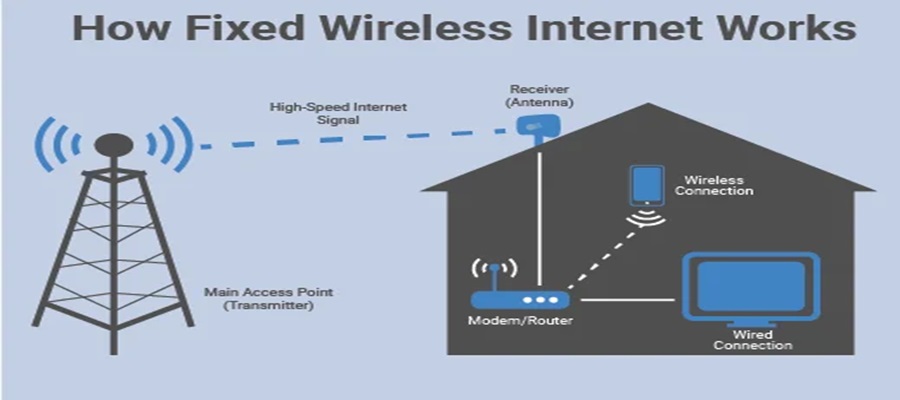
Nigeria has exactly 156,662 active fixed wired internet subscriptions as of mid-2026.

This is a tiny fraction compared to mobile GSM networks, which dominate the market with over 154 million subscribers.
The fixed wired market primarily consists of homes and offices using direct physical cables like fiber optics.
Fixed wired services use physical cables, like glass fiber or copper wire, to bring internet directly into a building.
It is like a dedicated, private water pipe for your home. It provides very fast speeds, unlimited data, and is reliable.

In contrast, mobile GSM uses radio waves transmitted from tall towers to phones, acting more like a sprinkler that sprays a signal across an entire neighborhood.
Because laying physical cables across cities is expensive and hard to do, these subscriptions are very rare.
However, the market has seen recent growth, driven largely by Fiber-to-the-Home (FTTH) services.
The top players are: MTN FibreX with 110,564 subscribers, which is roughly 88.7 per cent of the entire market.
SWIFTNG accounts for about 13,945 connections.
The others are ipNX and 21st Century Technologies which make up the number.


Nigerian Communications Commission (NCC) says it is intensifying efforts to implement Nigeria’s planned 112 national emergency number following its approval by the National Economic Council (NEC).

NCC
The commission disclosed this during a meeting between Vice President Kashim Shettima and an NCC delegation led by the Chairman of its Governing Board, Chief Idris Ibikunle Olorunnimbe, at the Presidential Villa, Abuja.
Briefing the Vice President, Olorunnimbe said the NCC had already established about 35 Emergency Communications Centres (ECCs) across the country to support a unified national emergency response system.
He said the next phase of implementation would focus on closer collaboration with state governments and emergency response agencies to ensure the effective rollout of the initiative.
The development follows the recent approval by the NEC, chaired by the Vice President, for the adoption of 112 as Nigeria’s single national emergency number across all tiers of government and emergency response agencies.
The council also approved the establishment of a multi-agency implementation committee to be jointly coordinated by the Office of the Vice President and the NCC.
Olorunnimbe stressed that the success of the initiative would depend on the commitment of state governments to support and maintain emergency communications infrastructure, as well as the readiness of response agencies to promptly attend to distress calls.
“We need commitment at every level of all response agencies—from top to bottom—including the Nigeria Police Force, ambulance services across the states and, at the national level, the National Emergency Management Agency (NEMA),” he said.
Responding, Shettima directed the NCC to develop a comprehensive roadmap for the nationwide implementation of the single emergency number in line with international best practices.
He also urged the commission to work closely with the National Emergency Management Agency (NEMA), citing the agency’s experience in disaster management, relief and rehabilitation.
The Vice President assured the commission of the Federal Government’s commitment to sustaining the initiative, saying funding would be mobilised through the National Economic Council and partnerships with the private sector.
He also called for greater dedication from all emergency response agencies to ensure the success of the programme.
The adoption of 112 is expected to harmonise emergency communications across Nigeria by providing a single number through which citizens can quickly access police, fire, ambulance and other emergency services.
The initiative is also expected to replace multiple emergency contact numbers currently in use and improve coordination and response during emergencies.
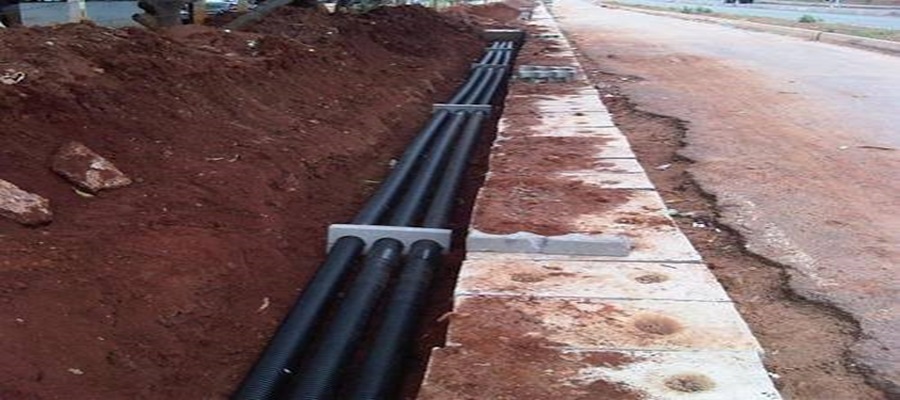
Nigerian Communications Commission (NCC) has said that it was strengthening collaboration with state governments and industry players to develop a transparent, cost-based pricing framework for sharing telecom ducts as part of efforts to speed up broadband expansion across Nigeria.

Ayuba Shuaibu, director of Policy, Competition and Economic Analysis, NCC, disclosed this at the Stakeholders’ Forum in Abuja.
Shuaibu said the initiative was designed to build consensus among all parties.
“The primary purpose of this forum is to ensure seamless synergy between the Commission and all stakeholders,” he said.
The director said the consultation was prompted by longstanding complaints over permits, levies and other charges imposed by different levels of government.
He said bringing together state commissioners, telecom operators, tower companies and representatives of the Nigeria Governors’ Forum had helped improve understanding of the issues.
“This engagement is a work in progress. We expect more input from stakeholders before presenting the outcome to the Nigeria Governors’ Forum,” he added.
Dr Helen Adeneye, commissioner for Innovation, Science and Technology, Kogi State. welcomed the consultation, saying Nigeria needs a harmonised policy that clearly defines the responsibilities of both the federal and state governments.
“We need a harmonised policy that allows states to collaborate better with telecom operators and creates a more business-friendly environment,” she said.
Dr Adeneye added that adopting the Dig-Once policy would establish a uniform pricing system and help resolve disputes over charges for telecom infrastructure deployment.
Chidi Ajuzie, chief executive officer, WTES Projects Limited, whose firm is conducting the consultancy study, said the proposed framework would introduce a common cost structure for duct sharing to support broadband investment and economic growth.
“The study is designed to create a uniform pricing model that will drive broadband growth, economic development and wider adoption across the country,” he said.
Ajuzie explained that the consultants had developed preliminary floor and ceiling prices to guide operators while allowing flexibility within the approved range.
He added that the recommendations remain open to industry input before the NCC finalises the framework.
The Dig-Once Policy is designed to reduce the cost and disruption of deploying broadband infrastructure by requiring fibre ducts to be installed whenever roads are constructed or rehabilitated.
The NCC is developing a cost-based pricing framework for sharing these ducts to promote fair pricing, reduce duplication of infrastructure and encourage investment.
The proposed model is expected to support the Federal Government’s broadband expansion targets while improving collaboration between telecom operators and state governments.

Court Adjourns Alleged Binance Tax Evasion Case over Settlement Talks

Fixed Wired Internet Market Lags as Mobile Gains Ground

Xenophobic Attacks: OYC Threatens to Picket MTN Nigeria Offices

New NIMC Act Strengthens Data Protection, Privacy – Director

BON Establishes Six Ad Hoc Committees to Modernize Broadcasting

NASENI Moves to Digitize CCB’s 5m Assets Declaration and Operations

Mobile Internet Gender Gap Widest in Africa – GSMA

Nigeria Launches FreeTV Nationwide

CANAL+ Partners Samsung to Pre-Load DStv Stream on New Samsung TVs In Nigeria, Other African Countries

Lebara Nigeria Launches Lebara Play, Africa’s First Telecom-Owned Micro-Drama Platform




 News3 days ago
NRC, Ponzi Scheme Collapses Resulting Loss of Billions of Naira

 News3 days ago
NSITF Partners South African Insurer on Digital Transformation

 E-Financial3 days ago
FCT-IRS Unveils New Digital Platform, Taxporta

 General News3 days ago
KPMG Urges Africa’s Most Innovative Tech Entrepreneurs to Enter the Global Tech Innovator 2026 Competition

 E-Business3 days ago
FG Suspends New Internet Regulations to Prevent Overlapping Rules
 E-Business3 days ago
NIN Enrollment Hits over 136m as New ID Law Takes Effect

 E-Business3 days ago
Plateau PCC Collects Nigerians’ Data without Privacy Policy – FIJ

 Telecom2 days ago
NCC Seeks Cost-Based Pricing Framework for Ducts