

Telecom
NigComSat Reposition for Excellence

Ahmed Rufai, chief executive officer, Nigerian Communication Satellite (NigComSat), has said that with nearly 150 young engineers fully trained and equipped to fit into any global engineering field, limited is ready to take on the world, its (CEO),.
Taking a cursory look at the genesis of the organization and the blue print endorsed by former President Olusegun Obasanjo to make sure that “ we get the right technology and the know-how that will bail Nigeria out of the woods”, Rufai said, “we went to work immediately to go beyond the satellite bandwidth backbone for multimedia industry by sending our engineers abroad to acquire knowledge not only for satellite communications engineering and its applications but also other areas of ancillary and foundation technology including software and hardware engineering such as algorithms for various micro electronic based products such as Printed Circuit Board (PCB) laptop and desktop computers, cameras, decoders, industrial control boards, GSM phone manufacturing, e-voting solution, staff attendance smart card for time theft and ghost workers control and management among others”.
According to him, “May 13th, 2007 became for us a watershed when we launched NigComSat- 1 at the cost of $256m, of which China Export Import Bank gave a seed loan of $200m, and offer to control and manage it for two years. But unfortunately, due to solar array power assembly problems, the satellite was de-orbited on November 10th, 2008, 18 months after launch”. Rufai said, that did not in any way discourage the noble objective to take Nigeria to the next level in space.
The Chinese authorities quickly commenced replacement of the satellite at no cost to Nigeria.
Presently, NigComSat is urging the government as a matter of urgency to address the issue of back-up satellite (NigComSat -2and 3) respectively to guarantee smooth business operation as soon as NigComSat-1R is launched. The broadcasting industry and the medical circle will enjoy tremendous improvement in their respective operations if these back-up satellites are available. Other services like telepresence, community telecenters, broadband availability will also be available to users.
Hopefully the re-launch will take place in the 3rd quarter of 2011, he explained.
With a passion to imbibe technology in all area of natural life including e-voting systems, e-governance and taking telecommunications services to uncovered areas of Nigeria via satellite, Rufai lamented that even though GSM services have been well received in parts of Nigeria more than 70 percent of the land mass in the rural areas has not been covered either because the operators think that such areas are not economically viable or the resources are dutifully channeled to economically viable areas. But communication satellite will correct this imbalance.
Rufai said, Nigeria is well endowed with the requisite man-power to take this country to the next level “our engineers here at NigComSat can match and compete favorably with their colleagues else where in the world. They came in on merit and have been well trained by this organization and ready to serve the world. They do all the hard ware and write all the soft ware for all the manufacturing processes here in our Lugbe, Abuja office. That is why we canvass for merit in all appointments whether at state or federal levels.
“Appointment of ministers and commissioners should be on merit so that those appointed should be challenged to deliver, both from ethical and professional points of review.
We have tried that in NigComSat and it has worked, let us replicate this at federal and state appointments and I am sure the country will experience meaningful economic, social and political growth. We should not ask for less”, Rufai emphasized.



WhatsApp’s introduction of usernames ostensibly to increase privacy for users so they don’t have to swap phone numbers – could backfire if hackers turn usernames into a new avenue for privacy attacks.

This is according to two experts, who both note that usernames will be fair game for hackers, while also being accessible to governmental agencies and advertisers, upending WhatsApp’s key to success: conversations and calls are end-to-end encrypted by default.
WhatsApp has always stated that its encryption “ensures that only you and the person you are communicating with can read or listen to them, preventing anyone in between – including WhatsApp, Meta, or cyber criminals – from accessing your data”.
Over the weekend, the messaging app said it was introducing usernames so that users provide these as contact details instead of phone numbers, which it calls “a major privacy feature”. It is encouraging users to “reserve your username now, before the feature launches later this year”.
“Sometimes you just want to chat without handing over your digits,” WhatsApp says, noting that a phone number is personal and tied to many parts of a user’s life.
The Facebook and Instagram owner says: “This is also true for group conversations. You want to join the parent chat for the soccer team but you’re not ready to give your phone number to people you’ve never met.”
Trading View, a financial markets analysis platform, says: “The approach could help Meta position the update as a controlled privacy tool rather than a discovery feature, while bringing WhatsApp closer to rival messaging apps such as Signal, which already allows username-based conversations.”
It adds there will be no directory or username suggestions, so users will need to know a person’s exact username to contact them for the first time. An optional username key can be enabled to further restrict who is able to message them.
Meta is also introducing safeguards as the feature rolls out to reduce the risk of impersonation and scams, Trading View explains. Existing Facebook and Instagram usernames will be reserved for their current owners during the reservation period, and certain usernames associated with public figures, celebrities and government entities will remain permanently protected.
ICT veteran commentator Adrian Schofield, however, questions whether the feature will deliver the privacy benefits users expect. “Short usernames will not be difficult to find and are likely to become a new ‘game’ for those who enjoy breaking privacy protection,” he says.
The big issue is privacy, says T4i director Mark Walker, formerly with research company IDC. WhatsApp built its reputation on shielding users’ identities regardless of which groups they joined, or who they associated with. That promise, he argues, is now being quietly redefined.
“‘Privacy’ now means protection from impersonation by other users, not privacy from the platform’s own surveillance, data linkage, or other entities. It’s a security feature rebranded for a privacy-sensitive audience, directly trading away individual privacy for a form of collective safety,” he says.
Walker adds: “Users value WhatsApp for its privacy; none of the groups you join or people you associate with are shared externally with advertisers. That is what is being eroded.”
This move, Walker says, is “a sophisticated monetisation play,” using privacy, security and regulation to motivate users to verify their identities – for a fee – while positioning Meta as what he calls “the all-seeing trusted eye” attractive to both advertisers and government agencies.
In its announcement, Meta says users can reserve a username to use later this year when the feature launches. “A lot of names overlap, which is why we’re opening reservations early so everyone has the opportunity to select the username that matters to them.”
Content creators, small businesses and organisations that want to maintain a consistent online presence will be able to claim their existing Instagram or Facebook username on WhatsApp through reserved username options, says Meta.
“For most people, choosing a WhatsApp username should be something unique that only people you want to contact you will know. If you need help picking one, we have a username generator to make one work just for you,” Meta says.
WhatsApp had reached three billion users globally as of Meta’s 2025 first quarter results, or 36% of the world’s population. “WhatsApp now has more than three billion monthly actives, with more than 100 million people in the US and growing quickly there,” CEO Mark Zuckerberg said at the time.
During Meta’s latest results, Zuckerberg said: “WhatsApp continues to see strong momentum too, including in the US.”
Schofield questioned whether desirable short usernames could become targets for impersonation. “Look at the older Gmail accounts! Time to take a good look at alternative platforms? This feature will be rolled out in tranches,” Meta says.
Telecom
Airtel Nigeria CEO Urges Adoption of Intelligent Technology Platforms to Accelerate National Growth

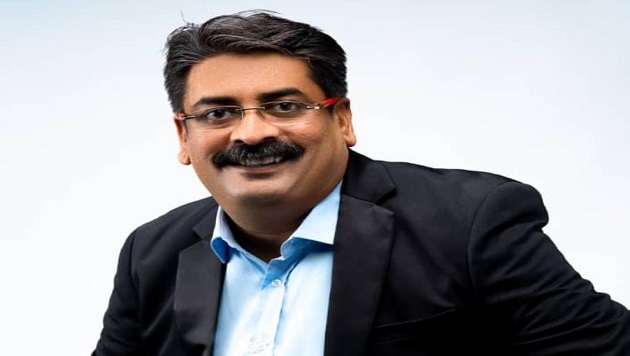
Dinesh Balsingh, Airtel Nigeria’s Chief Executive Officer, has called on business leaders to accelerate Nigeria’s digital future by embracing intelligent technology platforms that drive innovation, productivity, and sustainable economic growth.

Speaking at the Lagos Business School (LBS) Breakfast Club on the theme, “From Telco to Techno,” Balsingh said the telecommunications industry is evolving beyond connectivity to become the foundation for enterprise transformation and the country’s digital economy.
Balsingh explained that while previous generations of mobile technology connected people through voice, internet access, and mobile broadband, the future lies in intelligent ecosystems powered by artificial intelligence (AI), the Internet of Things (IoT), satellite connectivity, and integrated enterprise solutions.
“The role of telecommunications has fundamentally changed. Businesses are no longer asking only for connectivity; they want solutions that improve productivity, strengthen security, and accelerate digital transformation. That is the journey Airtel is leading. We are evolving from a telecommunications company into a technology partner that helps organisations unlock growth and create long-term value,” he said.
Noting that value is no longer measured by the volume of data consumed but by the business outcomes technology delivers, he highlighted a key shift in telecommunications to AI-powered customer protections, industry-specific digital solutions, IoT platforms, and hybrid satellite-terrestrial networks that extend reliable connectivity to underserved communities and remote business locations.
“Technology should do more than connect people. It should protect them, simplify operations, and help businesses make better decisions. Investments are now focused on building smarter, more resilient digital infrastructure that supports organisations across every sector of the economy.”
He added that sectors including retail, education, healthcare, government, manufacturing, and oil and gas increasingly require integrated digital solutions that combine connectivity with cloud services, intelligent networking, surveillance, automation, and data analytics.
Balsingh also urged business leaders to rethink their digital priorities, noting that future competitiveness will depend on how connected, intelligent, secure, automated, and resilient their organisations become.
“The organisations that will lead the next decade are those that invest today in intelligent digital infrastructure. Our customers are no longer buying connectivity alone. They are investing in productivity, intelligence, and digital transformation.”
The session, which also featured the IMF Resident Representative for Nigeria, Christian Ebeke, formed part of the Lagos Business School Breakfast Club, a platform that brings together business executives and industry leaders to examine emerging trends shaping the future of enterprise and economic development.
Airtel Nigeria’s participation reinforced its commitment to supporting Nigeria’s digital transformation by enabling businesses with innovative technologies that improve efficiency, strengthen resilience, and unlock new opportunities for growth across the country’s rapidly evolving digital economy.

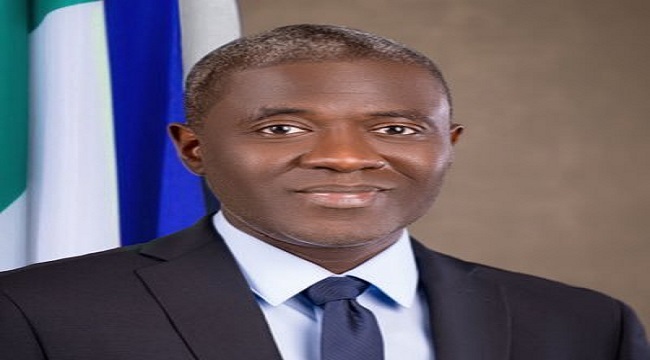
Nigerian Communications Commission (NCC) has called for accelerated deployment of Fibre-to-the-Home (FTTH) infrastructure, saying robust broadband connectivity is critical to achieving Nigeria’s ambition of building a one trillion-dollar economy.

Dr Aminu Maida, Executive Vice Chairman of the NCC, made the call while delivering a keynote address at the Association of Telecommunications Companies of Nigeria (ATCON) High-Level Industry Forum on FTTH in Lagos.
Maida said that although demand for high-speed internet continues to rise due to the growth of artificial intelligence, cloud computing, streaming services and digital businesses, fixed fibre broadband remains significantly underdeveloped in Nigeria.
According to him, the country currently has about 265,000 active FTTH subscriptions, a penetration level below the African average of 2.5 per cent and far behind the 47 per cent average recorded in more mature broadband markets.
“This low base should not discourage us. It should focus us.
“It shows the scale of the opportunity before Nigeria and reinforces the need to create the right conditions for fibre infrastructure to expand more rapidly, more sustainably and more widely across the country,” he said.
Maida said fibre infrastructure provides the speed, resilience and scalability required to support increasingly data-intensive applications and future technology upgrades.
He added that improved broadband infrastructure would enhance business competitiveness, expand digital services, improve productivity and attract greater investment into the country’s digital economy.
The NCC boss disclosed that the commission is conducting a Wholesale Fixed Broadband Market Assessment to evaluate competition in the wholesale broadband segment and identify measures to encourage infrastructure investment.
He said the assessment would also promote infrastructure sharing, strengthen open access models and improve affordability for consumers.
Maida renewed the commission’s call on state governments to remove barriers to fibre deployment, identifying Right of Way (RoW) approvals as one of the major obstacles to broadband expansion.
He said excessive RoW charges, prolonged approval timelines and multiple permitting requirements continue to increase deployment costs and delay network rollout.
According to him, 13 states have completely waived Right of Way charges, while 16 others have adopted the National Economic Council’s recommended rate of N145 per linear metre.
He said the commission would continue engaging the remaining states to eliminate impediments to broadband investment.
The NCC also disclosed that it had launched an Ease of Doing Business Portal to provide investors and network operators with state-by-state information on Right of Way charges, approval procedures and regulatory requirements.
Maida urged governments, property developers and urban planners to incorporate telecommunications infrastructure into the design of new residential and commercial developments.
He also stressed the need to enforce technical and safety standards in fibre deployment projects, warning that poor installation practices and substandard materials could lead to service disruptions and increased maintenance costs.
“Our priority is not simply that fibre is deployed quickly, but that it is built to last and capable of supporting Nigeria’s digital ambitions for decades to come,” he said.

Court Asks CBN, NIBSS to Seek Settlement in N98.5Bn Patent Suit

World Bank Approves Fresh $1.25Bn Loan for Nigeria

WhatsApp Usernames Spark Privacy Fears

Report Reveals More than Half of Users Encountered Fraud or Scams Online

Airtel Nigeria CEO Urges Adoption of Intelligent Technology Platforms to Accelerate National Growth

Mobile Internet Gender Gap Widest in Africa – GSMA

London Strengthens Global Investment Ties with Africa @ First Ever London-Africa Business Summit

FG Targets Alleged N3tn Capital Flight, Opens Airtime Credit Market to Nigerian Fintechs

Japan, UNESCO Boost Digital Learning in 15 CoEs with Donation of ICT Equipment

African Electric Vehicle Platform Raises $215m to Scale Electric Mobility in Nigeria, Others




 E-Financial3 days ago
Wema Bank Suspends Telegram Operations over Scams

 E-Financial3 days ago
NDIC Says 281m Depositors Protected against Bank Failure

 E-Financial3 days ago
NAICOM Moves to Deepen Penetration Through Licensing of a New Insurtech

 Telecom3 days ago
NCC Ranked Among Nigeria’s Top 3 Best-Performing Federal Agencies

 E-Business3 days ago
Kaspersky Reveals Malware Attacks on SMBs Disguised as AI Services Surged by Five Times in 2026

 General News3 days ago
EVC NCC, Aminu Maida, to Lead Speakers @ Business Journal Fintech & Financial Inclusion Roundtable 2026

 News3 days ago
FG Captures 32m Students DNEMIS ahead July 1 Rollout

 Telecom3 days ago
Womenovate, MTN Foundation Lead Charge for Inclusive Tech at Women in Technology and Engineering Summit