

E-Business
5 Great Biometric Alternatives to Password


Passwords are the most popular means to protect access to different devices. However, passwords are being relegated as biometric technology is gradually taking over.
Biometrics is the measurement and statistical analysis of people’s physical and behavioral characteristics.
The technology is mainly used for identification and access control, or for identifying individuals who are under surveillance. The advantages of biometric cannot be understated.
This is why it rapidly being adopted. In line with this, JumiaTravel, Africa’s No.1 hotel booking portal shares 5 great biometric alternatives to passwords.
Face Recognition
Face recognition is already being used by many organisations and law enforcement agencies.

For this to be successful, there must be reliable and up-to-date databases for the software to recognise all visitors.
Heartbeat
The interesting thing about Heartbeat biometric is that it can rarely be duplicated, especially the electric signals that it sends in and out of the body.
These electric signals can be decoded and has been miniaturized to fit into sensing devices.
Today, many wearable fitness devices can read a person’s heart rate.
Ear Shape
The shape of your ear can also be used to access any device. With the right software and phone, they can detect the shape of the ear and Ergo Android app is making this possible.
To use it, simply press the screen of your phone against your ear and it immediately grants you access if it matches.
Walk
With repeated analysis, motion sensors can protect your phone based on how you walk.
This is made possible with the aid of high-speed video camera which can analyze a person’s walk and can determine if to allow anyone in or out.
Same thing goes for mobile phones as sensors can be fitted into smartphones and decide the rightful owner of the device by the way they walk.
Typing Speed
Typing speed varies in individuals. No two typing speed is similar.
There is what is called Keystroke biometrics that records and calculates your typing speed, rhythm, and pattern. The typing speed and pattern must match to be verified.



National Information Technology Development Agency (NITDA) has introduced so-called Nigeria’s Certified Cloud Register, regulatory framework developed under the agency’s National Sovereign Cloud Initiative to determine which cloud providers are authorized to handle sensitive data, such as banking records.

In effect, from October, NITDA requires banks, fintech companies and other regulated organisations to source cloud infrastructure providers from a national register of certified firms approved to host sensitive financial and government data.
The Certified Cloud Register, is expected to strengthen data sovereignty, improve regulatory oversight and support the implementation of the Central Bank of Nigeria’s (CBN) data localisation policy, which takes effect on January 1, 2027.
Under the framework, banks, fintechs, government institutions and other regulated entities will be able to verify whether cloud service providers, data centre operators, managed service providers and Artificial Intelligence (AI) infrastructure companies have met NITDA’s certification requirements before entrusting them with critical digital workloads.
The initiative is expected to provide regulated institutions with a standardised process for selecting cloud infrastructure providers that satisfy Nigeria’s technical, security and regulatory requirements.
According to NITDA, the framework establishes “a common national standard, an independent assessment process and a public register of approved providers that banks, fintechs and government institutions can rely on when selecting cloud infrastructure partners.”
The register is expected to become a key compliance tool ahead of the CBN’s directive, which requires all payment transaction data generated within Nigeria to be stored and processed locally, effective from January 1, 2027.
The policy applies to deposit money banks, microfinance banks, mobile money operators, payment service providers, switching companies and other financial institutions.
The certification regime is also expected to reshape Nigeria’s cloud computing ecosystem, making regulatory approval a major requirement for cloud providers seeking to handle sensitive data for regulated industries.
Figures cited by NITDA showed that Nigeria’s 10 largest banks spent about N177.91 billion on information technology in the first quarter of 2026, representing a 31 per cent increase over the corresponding period last year.
A sizeable portion of the investment currently supports cloud infrastructure hosted outside Nigeria, a trend the new certification framework is expected to address by encouraging greater utilisation of compliant local infrastructure.
NITDA said the certification programme will apply the same technical and regulatory standards to indigenous cloud providers and international hyperscale operators, creating a level playing field for all companies seeking to provide cloud services to regulated sectors.
The agency also disclosed that more than 85 per cent of Nigerian businesses currently rely on cloud services, with the majority using infrastructure hosted outside the country.
It said the new framework is aimed at improving confidence in Nigeria’s digital infrastructure while promoting local capacity and enhancing oversight of critical national data.
Speaking on the objective of the initiative, Kashifu Inuwa Abdullahi, director-general of NITDA, said the programme is designed to strengthen Nigeria’s position in the global digital economy rather than exclude foreign technology companies.
According to him, the initiative is intended “to redefine the terms under which Nigeria participates in the global digital economy rather than isolate the country from international technology providers.”
The Certified Cloud Register forms part of broader efforts by the Federal Government to deepen digital trust, strengthen cybersecurity and ensure that critical financial and public sector data are managed in line with Nigeria’s evolving data governance and sovereignty objectives.


At the recent Cyber Security Weekend 2026 conference, Kaspersky shared the findings from its survey titled “Cybersecurity in the workplace: Employee knowledge and behaviour” which was conducted among employees from the Middle East, Turkiye and Africa (META) region.

The study highlights that everyday IT habits, including decluttering computers and reducing digital fatigue, can have a direct and often underestimated impact on an organisation’s cyber resilience.
The Kaspersky survey points to a growing challenge of digital fatigue in the workplace. 13.5% of employees surveyed in the META region confirmed that they made IT-related mistakes due to a lack of cybersecurity knowledge – a figure that shows the critical importance of continuous cybersecurity training and awareness programmes.
Among other reasons behind IT mistakes, respondents cited being in a hurry (30%), oversight (14%), being tired or stressed (12.9%) and having too many notifications (10%). The constant barrage of alerts, messages, and on-screen clutter is becoming an acute problem that can lead to costly IT errors, overlooked social engineering attacks, and even to cyber breaches.
The survey also examined employees’ digital workspace habits. An overwhelming 44.5% of respondents in the META region reported having between 10 and 20 icons on their desktop, while 30% admitted to having even more – with half to a full screen covered in them.
Meanwhile, 33% of respondents also keep more than 10 tabs open in their browser at any given time. Excessive icons and open tabs do more than distract attention and fuel procrastination – they can slow device performance and, in the case of unused applications, quietly collect data.
Interestingly, most employees regularly disinfect their keyboards and phone surfaces (21.5% have adopted this habit since the COVID pandemic). However, digital cleanliness has not kept pace: 55% of respondents remove needless files once a month or more often; the rest perform digital clean-ups far less frequently – once a quarter, or even once a year.
Managing digital noise is key to staying alert: only essential notifications should remain active, especially during periods of deep focus on critical project deliverables. Regular breaks are just as vital for maintaining both well-being and cyber vigilance.
According to the survey, 78% of respondents spend their work breaks eating or drinking, while 58% chat with friends and colleagues. However, stretching and physical exercise is a more effective way to relieve stress and recharge focus – a habit adopted by only 14% of employees.
“It is important to recognise that digital fatigue is a real and growing stress factor: the constant stream of notifications, cluttered screens, and information overload gradually erode focus and make employees far more susceptible to mistakes and social engineering attacks. Simplifying your digital environment is not just a productivity tip, it is a cybersecurity measure”, says Brandon Muller, senior security consultant for the META region at Kaspersky.

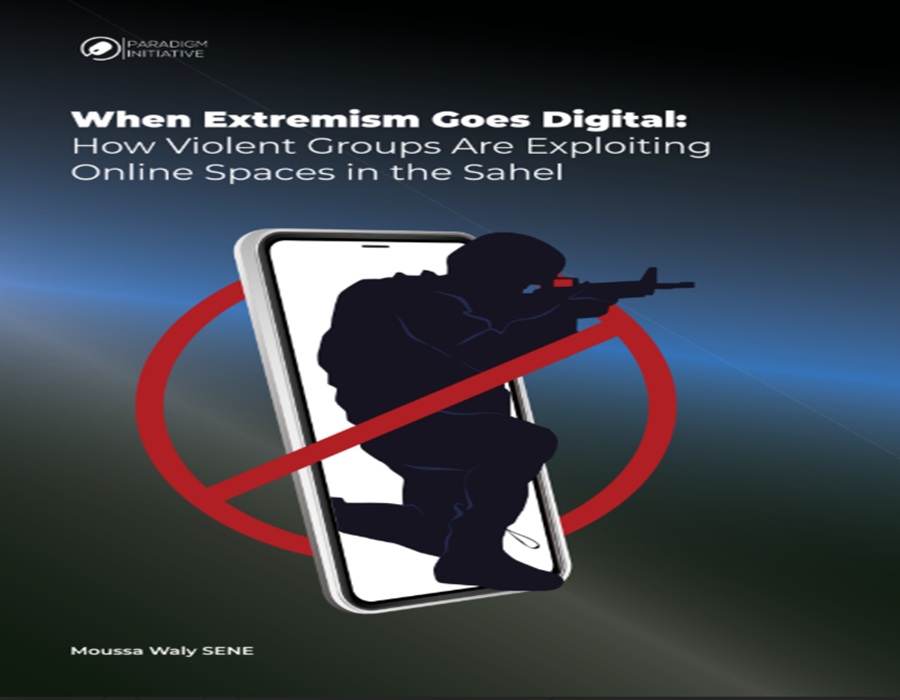
Pan-African digital rights organisation Paradigm Initiative (PIN) has warned that violent extremist groups are increasingly exploiting digital platforms to recruit, radicalise and manipulate young people across the Sahel region.

The organisation raised the concern in a new policy brief titled “Digital Frontlines: Countering Online Radicalisation and Violent Extremist Narratives in the Sahel.”
According to the publication, extremist groups are shifting from traditional recruitment methods to digital platforms, including social media, encrypted messaging applications, short-form video platforms and online financial incentives, to target vulnerable populations.
PIN noted that unemployed youths and people facing insecurity and limited economic opportunities are particularly susceptible to online recruitment campaigns.
The organisation said that although governments have intensified efforts to combat violent extremism, responses to the digital dimension of the threat have failed to keep pace with rapidly evolving online tactics.
It argued that addressing online radicalisation requires more than surveillance and restrictive measures, recommending investments in digital literacy, stronger community resilience, improved early-warning systems and credible counter-narratives.
PIN also urged governments to work closely with technology companies and civil society organisations to disrupt extremist recruitment while protecting citizens’ digital rights.
The report further highlighted the growing convergence between organised crime and violent extremist groups, noting that online propaganda increasingly promises financial rewards, belonging and purpose to vulnerable young people.
According to the organisation, this trend underscores the need for policymakers to prioritise prevention alongside conventional security responses.
Speaking on the findings, Moussa Waly SENE, Programmes Officer for Francophone Africa at Paradigm Initiative, described the digital space as a new frontline in the fight against violent extremism.
“As more young Africans come online, stakeholders must ensure that digital platforms remain spaces for opportunity, innovation and civic participation, not recruitment grounds for violent extremist groups. Protecting digital rights and protecting vulnerable communities should be mutually reinforcing objectives,” he said.
Among its recommendations, the policy brief called for stronger regional cooperation to tackle cross-border online extremist networks, rights-respecting content moderation and greater accountability by digital platforms.
It also advocated expanded digital literacy programmes to strengthen resilience against online manipulation and community-led initiatives that empower young people to identify and reject extremist narratives.
The organisation further urged policymakers to develop security measures that balance national security objectives with the protection of privacy, freedom of expression and access to information.

World Bank Debars United Aviation Services, Owner over Fraudulent Activities

NITDA Introduces Cloud Certification Boost Data Localisation Compliance

Enugu State Approves Land for ITF’s Digital Fabrication Centre

BOI Opens N250Bn Bond Offer to Fund Businesses

Guinness Rewards Consumers with ₦17 Million in First Week of ‘Open for More’ Promo Draw

From Scarcity to Scale: What Africa Can Learn from India’s Agricultural Transformation

EFCC Busts NIS Visa Overstay Racket, Uncovers N700m in an Account

Fact-Check: Elon Musk’s “Tesla Pi Phone” is Internet Rumor

NBC Tasks Broadcasting Stations over 2028 DSO Global Deadline

Police Busts Syndicate Who Allegedly Stole N3Bn from Financial Institution



 General News2 days ago
Guinness Rewards Consumers with ₦17 Million in First Week of ‘Open for More’ Promo Draw

 News2 days ago
Glovo Pioneers AI Quick-Commerce

 News3 days ago
Fleeing Southeast Asia Scam Syndicates Find New Homes in Nigeria, Kenya- Report

 Telecom3 days ago
MTN Paid 600Bn in Taxes in H1 2026 – Kadri, MTN CFO

 Telecom3 days ago
NCC Asks Telcos to Make Budgetary Provisions for Cybersecurity

 News3 days ago
DSS Arraigns Eze for Allegedly Hacking, Stealing N800m from SunTrust Bank

 Telecom3 days ago
Glo Leads Internet Growth Figures in Nigeria for May

 News3 days ago
Liquid Intelligent Uses Light Beam Technology to Bridge Lagos Fibre Gaps